
Taken from Lynne’s weekly column ‘Green Scene’ for the Western Mail
23rd January 2021

Love Life

St Valentine’s Day has grown to be a popular event for the romantics (and commercial sector) over the years, but did you know that Wales has their very own version? St Dwynwen is the Welsh patron saint of lovers and therefore the Welsh version of St Valentine. St Dwynwen’s Day is celebrated on the 25th January. You could think of it as a practise run for the 14th of February, I suppose.
Like all folklore, there are several different versions of how it came about, but most seem to involve a Dafodrill (not daffodil, as I first thought), a block of ice and three wishes. Maybe it’s where Disney got the inspiration for ‘Frozen’ from.
Like every other celebration in the last 12 months, it will be very different this year, not being able to take your loved one for a romantic meal or day out. But a friend is insisting that she and her husband both dress up in their ‘posh clothes’ and have dinner at the table to celebrate.
You can always impress your loved one with three little words – ‘Rwy’n dy garu di ‘ and no, it doesn’t mean ‘keep your distance’; it means ‘I love you’, in Welsh.
It’s safe to say that I will be spoiling the ‘love of my life’, who will be having a nice walk, a new squeaky toy and a couple of extra dog treats! It is said that St Dwynwen prayed for true lovers to have better luck than she did. I can identify with that!
A good friend says that just like charity, love should begin at home – but not end there, and my favourite bit of heart-led advice is, ‘fall in love with your own life’. And you should celebrate that every day – not just the 25th January or the 5th of February.
Puppy Love
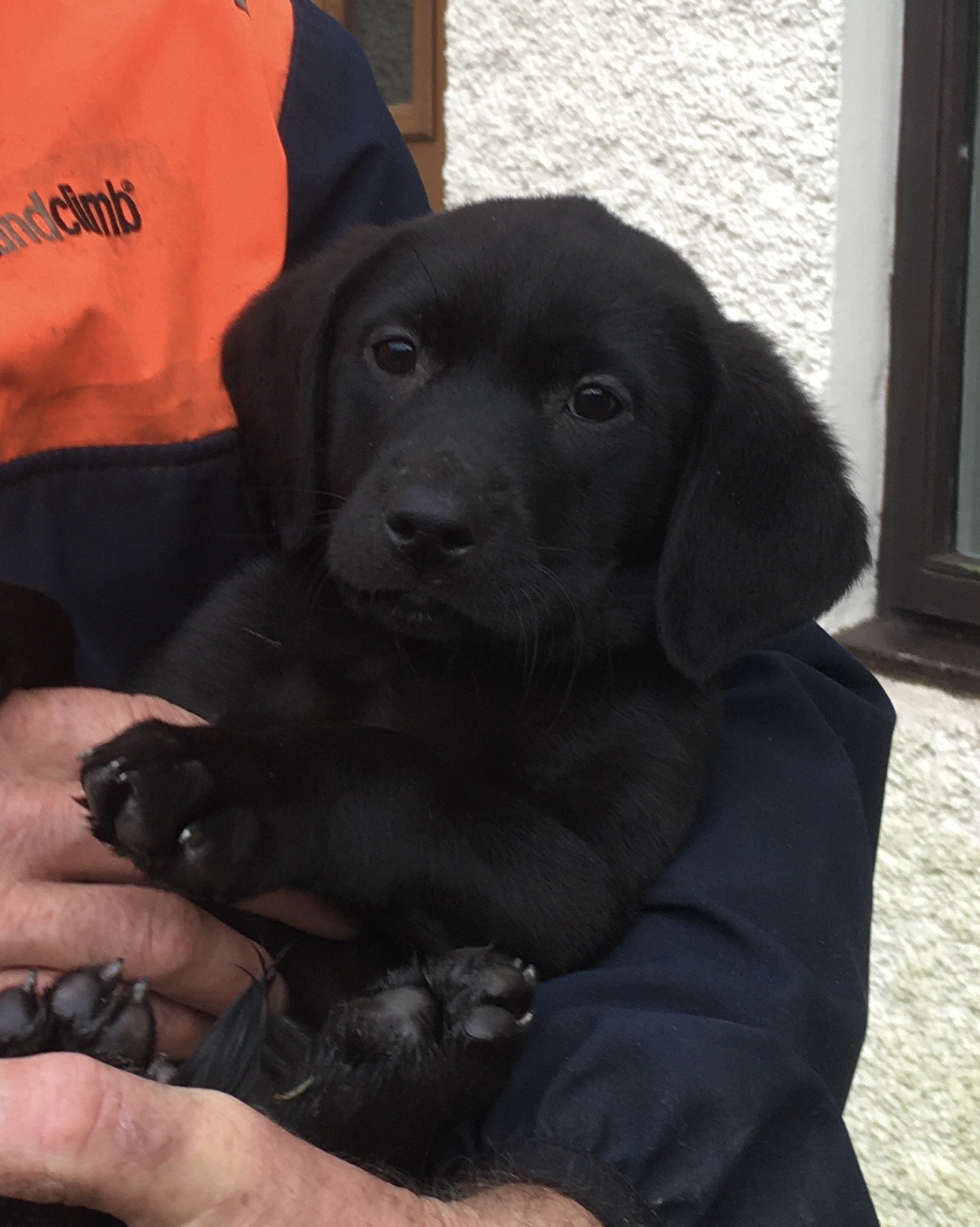 Last year saw a sharp increase in the number of puppies being bought and sold in the UK, as more and more people stayed at home due to the pandemic.
Sadly, not everyone has had experience of being a ‘dog-parent’, and it can be a daunting (as well as a delightful) experience. Essential puppy training classes have been cancelled and statistics show that people have been turning to the Internet for help. But like every topic researched online, the advice is not always accurate and/or applicable to your individual dog and situation.
My brother now has a new four legged friend, called Fidget, after losing his 14 year old ‘Wing Dog’, Diesel, just before the pandemic. And even he has confessed to forgetting just how ‘full on’ a pup can be. His daily routine – and his kitchen – has had to be completely rearranged to accommodate a very energetic little black lab.
To help new ‘puppy parents’, canine rehab and behaviour practitioner, Gemma Hodson, has joined forces with her good friend and colleague, Louise Boyle, and created a dedicated Facebook group, called Pupdemic, to help and support people with puppies purchased during, or affected by, the pandemic. Perplexed puppy owners can ask for advice about specific issues and get individualised responses. Gemma and Louise are qualified trainers and behaviourists with years of experience in using positive, choice led, science based techniques.
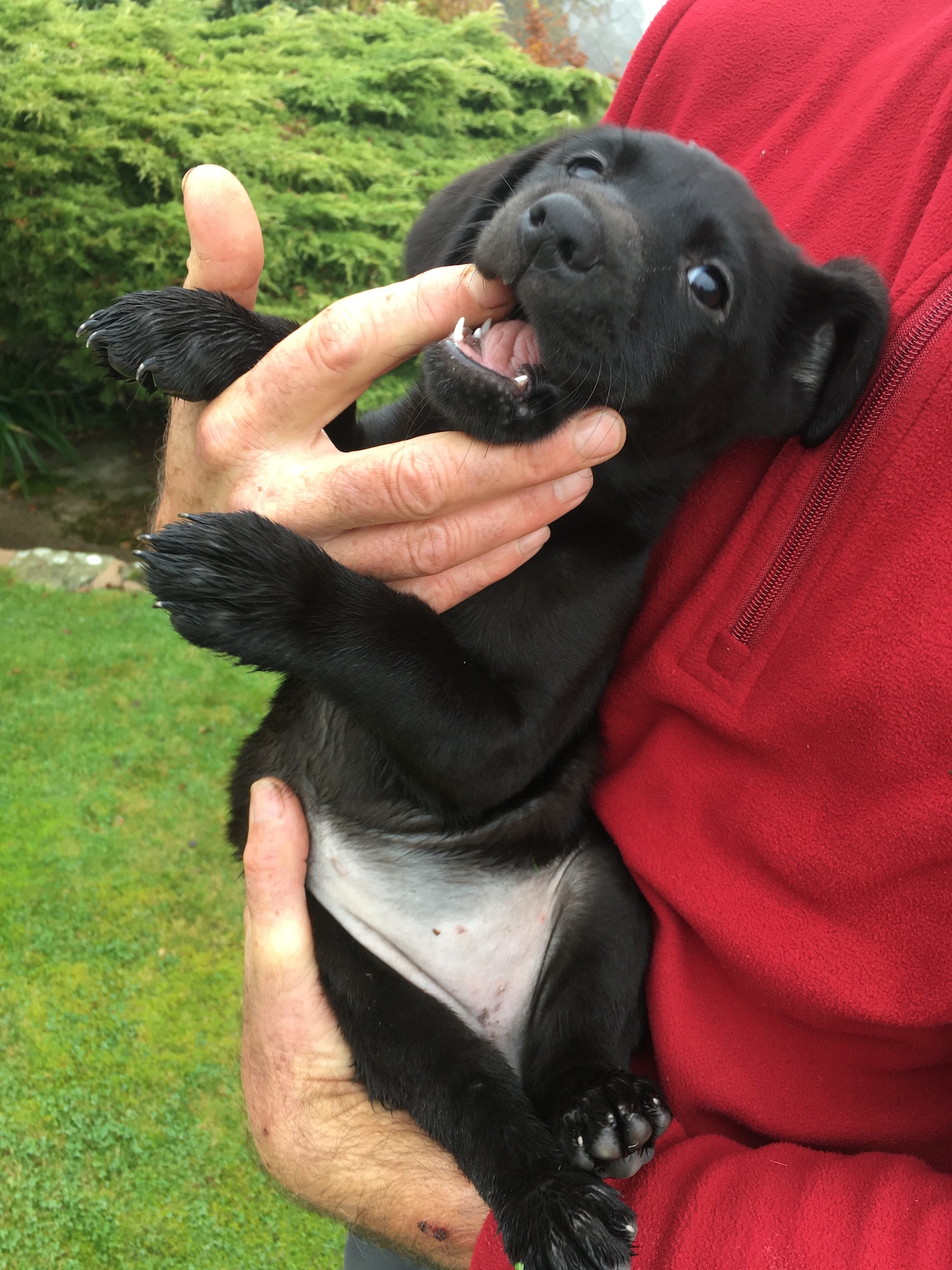 As well as helping you to navigate puppyhood, they also offer support through the difficult teenage months of a dog’s life. Gemma explained, “It’s a crucial time for a young dog, when they can be just as confused and troubled as human teenagers, with growing pains and hormones triggering some frustrating, puzzling and exhausting behaviours.
“Unfortunately this is when some owners make the hard decision to surrender the dog to a rescue, and we want to reduce the likelihood of this happening.”
You can find the group at www.facebook.com/groups/pupdemic or you can contact Gemma and Louise via email: allaboutthedogtherapy@gmail.com or call 07479 452244.
Snow-drop Dead Gorgeous
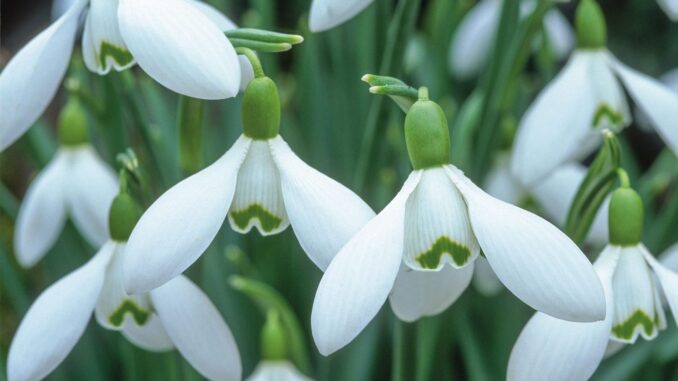
 It’s so lovely seeing the little snowdrops bowing their heads shyly in the garden now. Traditionally described as ‘the first sign of spring’, I can’t help feeling that’s a bit ambitious, but they are definitely a welcomed reminder that we are the right side of the winter.
I don’t think they are quite so ‘showy’ this year, which is probably due to the lack of really cold weather (thus far). They dislike warm winters, and a distinct disadvantage of living in a hot climate, is that you wouldn’t be able to grow snowdrops! As I keep reminding myself during the very worst of the Welsh weather.
Although they look fragile, they are well adapted to cope with the coldest of temperatures and the toughened leaf tips are designed to be able to push up through frozen soil and thick leafy carpets.
Snowdrops are also known as Candlemas Bells, probably due to them flowering over Candlemas on 2nd February. An excerpt from a 19th century Old English floral calendar states:
‘The snowdrop, in purest white arraie,
First rears her hedde on Candlemas daie.
While the Crocus hastens to the shrine
Of Primrose lone on St Valentine.’
Years ago, an old gardener told me that they are also able to generate their own heat, but there is very little proof. I obviously like the concept, as I have remembered it. Like most other plants, they also have medicinal properties, and the Galanthus nivalis is currently contributing to treatments for Alzheimer’s. Their Latin name translates as ‘Milkflower of the Snow’ and the Welsh word for them, ‘Eirlys’, translates as ‘Snow Lily.’
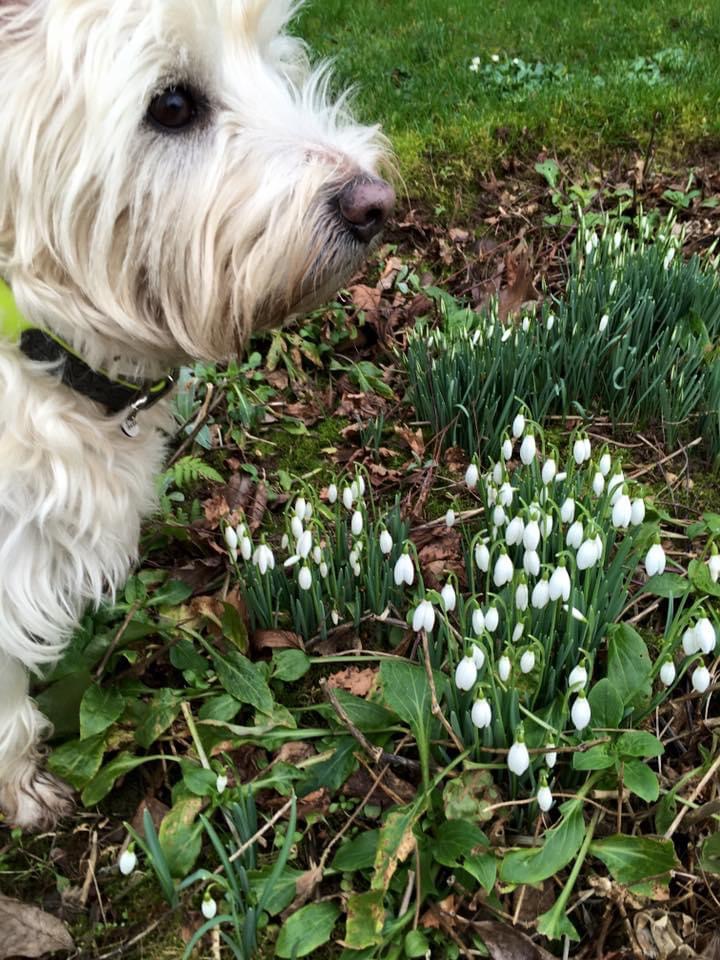 The thing that never ceases to amaze me about snowdrops is the fact that their pollen is bright orange. I love watching my honey bees feed on them on a sunny day and seeing them reverse out of the bright white flower heads with the orange pollen on their legs. They are one of the earliest sources of food for bees.
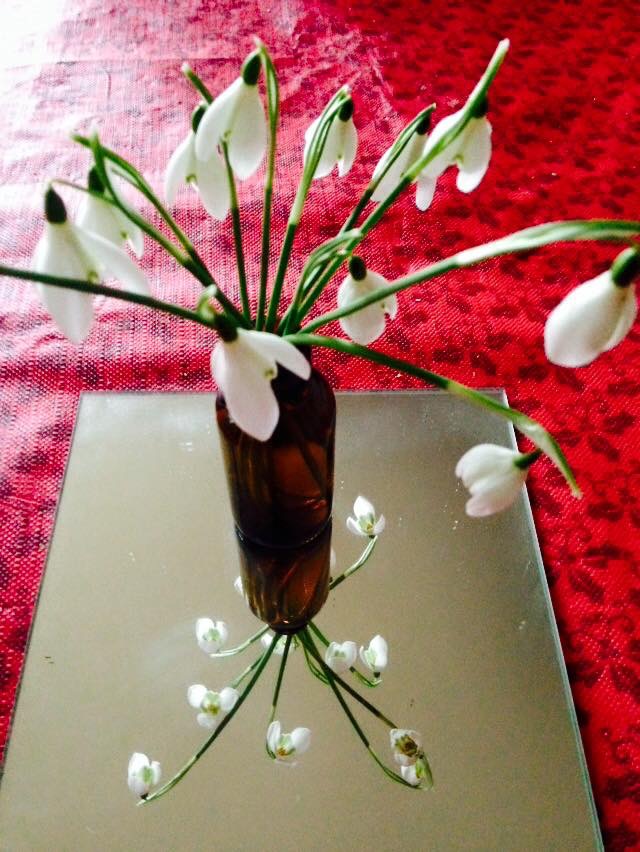
The inside of the bowed flower heads are really pretty and a great way to display snowdrops indoors is in a little vase placed on a mirror tile, so you can see up inside the blooms. The superstitious should be warned though, Victorian superstition warned that bringing snowdrops into the house would result in a death in the family within the year.
If you want to introduce the fascinating little flower into your garden, it is best to buy and plant them ‘in the green’ once they have finished flowering. They don’t often multiply from seed, but by offsets instead. Offsets are new bulbs that grow attached to the mother bulb. They can be lifted and divided every few years to create a wonderful snowdrop carpet.
I’m beginning to think I’m a white witch, a couple of weeks ago I wondered if your brother had taken on another dog….and then I see your article (so pleased for him and Fidget)! Thank you for another interesting read.