

Taken from Lynne’s weekly column ‘Green Scene’ for the Western Mail
29th August 2026

Water Summer It’s Been

And all of a sudden, here we are – August Bank Holiday weekend. The last Bank Holiday until Christmas. Not that Bank Holidays means anything to self employed gardeners – and a whole host of other workers – but it is a bit of a milestone nonetheless. Despite the ‘threat’ of another heatwave, summer is definitely packing its bags and getting ready to depart. And what a summer it’s been. I feel I have had a watering can ‘welded’ to my hand.
Yogi’s hairdresser, Clair, asked me last week how to deal with various shrubs that appear to have succumbed to the numerous heatwaves and arid conditions we have had. It’s a tricky question to answer, as basically I can’t be 100% sure. Each shrub, and even herbaceous plant, will be different and have different chances of success and survival, depending on soil conditions and the ‘will to live’.
I recall a surgeon telling me, with reference to Mum, that one of the best survival indicators when deciding whether or not to operate on an abdominal aneurysm was the patients ‘will to live’. It has always stayed with me, and I suspect is relevant for a lot of circumstances – even in the plant world.
I have already cut back a lot of crispy herbaceous growth in beds and borders – and it has been concerning to realise how much of the root systems are dead too. However, I will still give everything the benefit of the doubt (one of my favourite ‘prescriptions’) and hope for new little green shoots – either late this year or early next.
Some shrubs seem to have ‘ceased to be’. I have noticed a lot of azaleas, rhododendrons, hydrangeas and even hypericums – which are tough cookies, usually – look dead. Of course, it’s all to do with the competency and depth of the root system – and even the soil health. One of my clients has diligently treated her beds and borders to copious amounts of homemade compost for years and it’s noticeable how much better her plants have coped with the drought conditions, just by being in good, healthy soil.
But I will still be giving all the ailing plants the benefit of the doubt, or ‘BoD’. I have been removing some top growth of some shrubs to try and reduce the foliage and therefore transpiration rate, but not all shrubs will appreciate that either. It is a bit of a lottery and really down to individual species. Not very helpful, I know. The best you can hope for is that some of the shrubs will regenerate from the base, or lower down their stems – be vigilant for those little green shoots. But as I say, this might be either side of the winter.
I suppose, in short, I would say don’t be in too much of a hurry to remove anything yet. But I do predict the garden centres will be busy next spring.
I Spider
As well as still needing rain for our gardens and parched countryside, it will also be very useful in so far as it might mean I get some housework done. I have never seen so many cobwebs in my cottage. Now, housework has never been a priority for me (sorry Mum), but I always do my best to ensure that should I get an unexpected visitor, they wouldn’t look around and worry that ‘I wasn’t coping’. That has always been my rather odd ‘gauge’.
At the moment, I think any unexpected visitor may wonder if the cottage is inhabited at all, due to the excessive cobwebbage (new word).
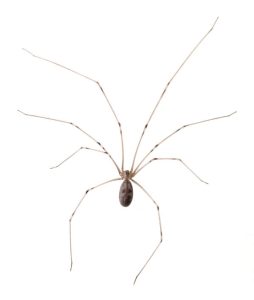
Whilst I have been totally absorbed with outdoor tasks, the cottage seems to have been taken over by those extremely industrious cellar spiders – the ones with the tiny bodies and very long legs. Where they get all their silk from is beyond me – they have no storage facilities for it – assuming they store silk in the same way post menopausal women seem to store visceral fat.
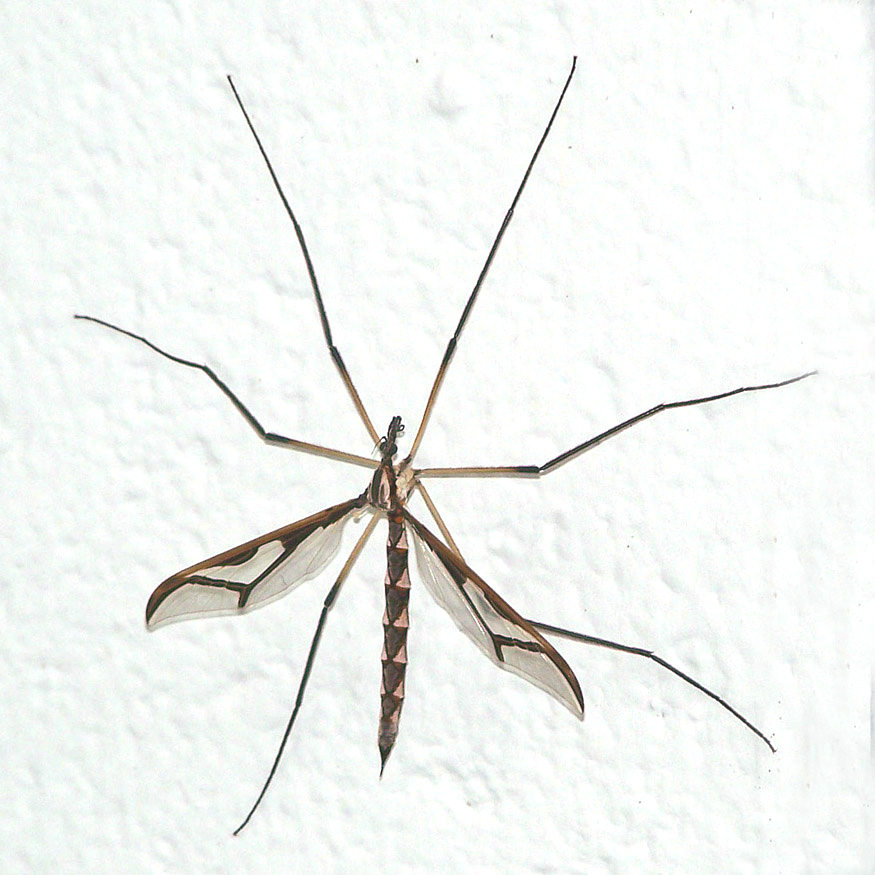 Cellar spiders are often referred to as Daddy Long Legs, although as kids, we called Crane flies – the ones that look like cellar spiders but have wings – Daddy Long Legs, and it seems it is a very common identity crossover. Cellar spiders hang upside down in loose, tangled webs that look more like a tangle of fishing line than a typical spider web and as I type this there is one doing just that on my windowsill, about 2 ft away from me.
I think it is the messy web that makes the cellar spiders easy to identify. Especially as Crane flies don’t spin webs. Compared to an orb-weaver spiders web – the traditionally symmetrical, wheel-like decorative web we associate with spiders – the cellar spider looks as though he made his as somewhere to crash after a few too many beers.
Cellar spiders also have a distinctive habit of vibrating their entire body in a fast circular motion when their web is disturbed. ‘Getting in a spin’ is a defence mechanism that supposedly makes them harder for predators (including Hoovers, allegedly) to grab.
Despite being annoyingly messy, the cellar spider PR team will remind us that they are also skilled predators that help control other household pests. They feed on mosquitoes, fruit flies, gnats, moths, and even other spiders, and I think I have probably enough of them to even overpower (and wrap) a small burglar. Cellar spiders can bite humans if pressed, (not literally) but their venom is very weak and causes little to no reaction. Unsurprisingly, cellar spiders are so-called after their preference for slightly damp environments, like cellars – and sheds – but increased humidity in the house will also see them moving into the home.
And there is often a seasonal shift indoors with activity peaking in September and October. Great.
Reducing humidity (using a dehumidifier) is supposed to deter them, as they find drier spaces are less attractive and habitable. It is also recommended to seal gaps and entry points – around windows, doors and foundation cracks – as they will literally just walk in through the same gaps as other small pests. Although I fear that cellar spiders riding Shetland ponies could probably get through the various gaps and under doors at my cottage.
Reduced clutter will reduce webs and also makes it easier to remove them regularly. This seems to be the best course of action – being persistent with a vacuum hose attachment or long-handled duster, which also discourages spiders from rebuilding in the same spots.
All I need now is rain and time indoors.
Leave a Reply