
Taken from Lynne’s weekly column ‘Green Scene’ for the Western Mail
25th January 2025

Bloomin’ Early
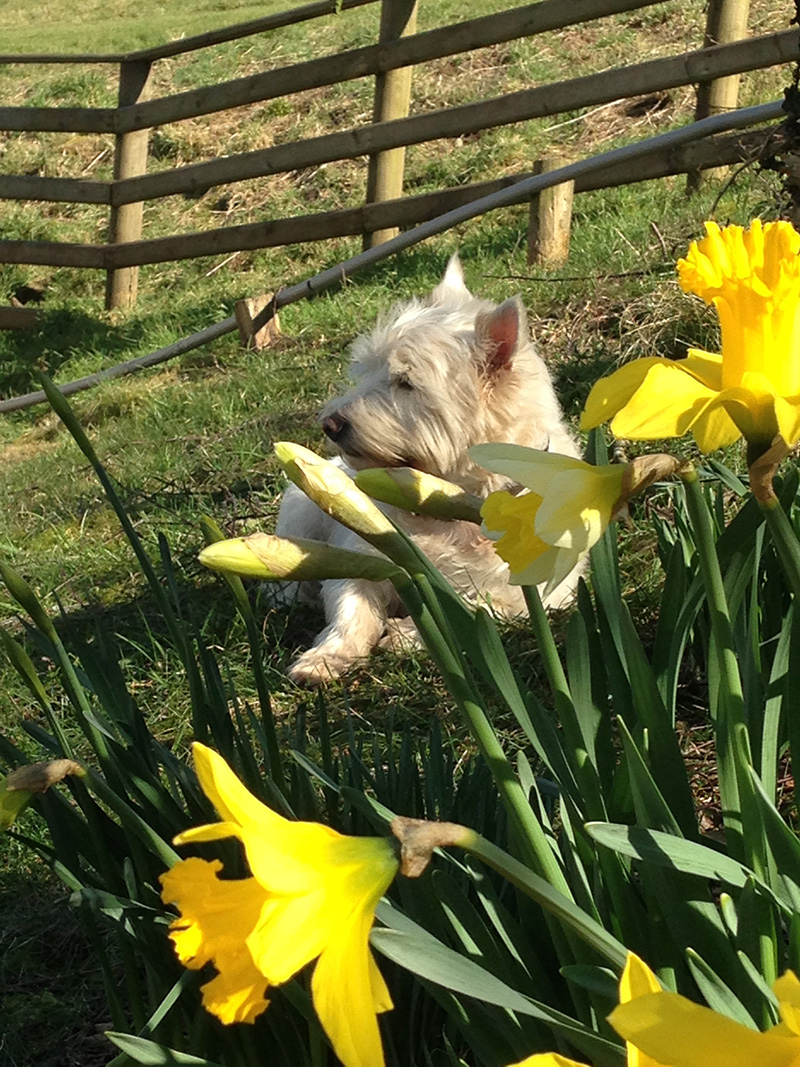
Last week I wrote about daffodils which are already in bloom on the top of a local mountain and was inundated with emails about climate change and various ‘plant reactions’ to it.
Some readers also reminded me about the daffodils next to the Fire Station in Crickhowell, which admittedly are always out before the turkey carcass is.
What I should have mentioned is that it’s not all about climate change, these particular daffodils are Narcissus ‘Rijnveld’s Early Sensation’, a classic yellow variety that is recognised as one of the earliest daffodils to flower. In many areas (sheltered or not) it is actually often in bloom for Christmas. The fact that it is a classic yellow-flowered variety often misleads us to think that it is the climate rather than the variety, which is the early-flowering-factor.
Not everyone appreciates early daffs but if you want that splash of early colour in your garden there are several (other) early flowering varieties to choose from. Daffodil ‘Spring Dawn’ is another exceptionally early variety. With paler outer petals and a yellow centre, they are a bit different to the traditional varieties so will add a bit of contrast. Narcissus ‘February Gold’ is another traditional-looking early-flowering variety and despite it’s name is often blooming in January.
At the other end of the spring flowering calendar is the new variety, ‘Winifred Van Graven’. It is a very strong, reliable variety, very similar to Pheasant’s Eye and will bloom as late as May. With a bit of planning it is possible to get a good show of daffodils from the beginning of the year until after Easter. Rather than plant in different groups, I would be tempted to mix the bulbs up in a bucket and plant them in the same area. That will give you an area of interest for a substantial amount of time – and that’s without including other spring flowering bulbs.
I hate seeing the loftier daffs flattened by heavy rain and storms, so another option may be the dwarf varieties – also excellent for containerising, balconies, or even windowsills.
The most popular dwarf daffodil is ‘Tête-à-tête’ which grows to just 15cm high but have a look at ‘Rip van Winkle’ too, which is a lovely flamboyant dwarf cultivar with cut petals giving the flowers a starry appearance. It provides fabulous cut flowers and is particularly effective grown in pots.
I always recommend starting a gardening diary at this time of year as I can guarantee you will have forgotten all about the beauty and versatility of these daffodils by planting time in the autumn. Make a note in the diary now to avoid disappointment.
A good tip for getting the most out of daffodils cut for the house is to wait for the ‘goose neck’ stage before picking them. This is when the flower-bud drops to a right angle, after the straight-up stage (pencil stage) and the papery jacket will have receded.
I’m not sure that these are technical terms that you will hear on Gardeners World, but I’m confident you will all know what I mean, and that’s what matters.
Making a Mountain Out of Mole Hills
 You may have noticed the recent increase in molehills – and, if you are unlucky, in your garden.
Whilst they are active all year-round searching for food, these busy little creatures are at their most active at this time of year when they dig new tunnels in search of a mate. They are solitary creatures that just ‘socialise’ at this time of year, and will need more food to do so, making them even more ‘apparent’ from the soil surface.
Whilst the bane of most gardeners lives, the good news is that moles are both an indicator and a creator of healthy soils as they need a plentiful supply of earthworms, their main food source, that only good soil can supply. Their burrowing also helps aerate the soil, making it easier for plants to spread their roots and establish themselves – unfortunately they don’t know when to stop, so this aeration often leads to the soil being undermined and collapsing, causing divots and ruts in the lawn – and damage to root systems.
Most mole digging is done because the mole detects vibrations from nearby insects, they tunnel towards the source, with most of the soil being compressed against the sides of the tunnel walls. Percentage-wise, only a small amount of soil is actually pushed up to the surface to form a molehill. Not a huge consolation if you have huge molehills, I appreciate.
They dig tunnels, not only to move around but to act as a trap for any invertebrates or worms that dig their way into the system. The solid tunnel ‘wall’ they create means that worms and grubs find it difficult to leave and they will get snapped up as the mole patrols his or her system.
Better the soil, bigger the molehill. Great for containers – or add to the veggie bed. I vividly recall Granddad going out into neighbouring farmer’s fields and ‘harvesting molehills’ to add to his own veggie beds.
Whilst I know they create havoc in a garden, I get so depressed by mole-catching and killing, and am probably the only gardener to rescue them when I can (see photo). Despite the ‘depressing’ title, I actually highly recommend reading ‘How to Catch a Mole: And Find Yourself in Nature’ by Marc Hamer, who describes his U-turn from mole-catcher to mole appreciator during his time working in the Welsh countryside and learning more about the fascinating, hardworking creatures. It’s a beautifully written book, as Marc tells his story and explores what moles, and a life in nature, can tell us about our own humanity and our search for contentment.
There are lots of ‘natural’ ways to deter moles, each with their own stories of success (and failure). They include putting various things into fresh runs to act as deterrents – choose from coffee grinds, mothballs, garlic, peppermint, tobacco or red pepper.
Moles don’t like daffodils, marigolds, and plants in the allium family because of their strong scents. So you can create a natural barrier in your garden by planting these species in borders and along boundaries.
My favourite way to deter a mole was told to me by an old, roughty-toughty farmer who had lots of respect for the moles, despite their bad press. He told me that he’d had continued success by writing a polite note to the moles, asking them to leave his land as they put his livestock at risk of ill health. He then pushed the note into a fresh run. He swore it worked. It may just have been that the moles smelled the scent of his hand – which to be fair would have been quite strong! Anyway, it’s a nice story.
And if you are still not convinced – another old farmer told me that you should never, ever, kill a mole on your land ….. as all the other moles will come along to his funeral.
Leave a Reply