
Taken from Lynne’s weekly column ‘Green Scene’ for the Western Mail
3rd October 2026
Compost is Key
Despite the grass having made an Herculean return, it’s still ‘disappointing’ to see just what isn’t recovering in beds and borders and even the lone trees that are standing out as being leafless, having fallen victim to the stupidly-dry summer.
Interestingly, one garden I look after has lost absolutely nothing. Despite being packed with well established shrubs, and herbaceous plants of varying levels of drought tolerance, everything has survived. I put it down to the fact that the dedicated owner, Isabel, insists that ‘nothing grown in the garden leaves the garden’, but is all recycled in some way.
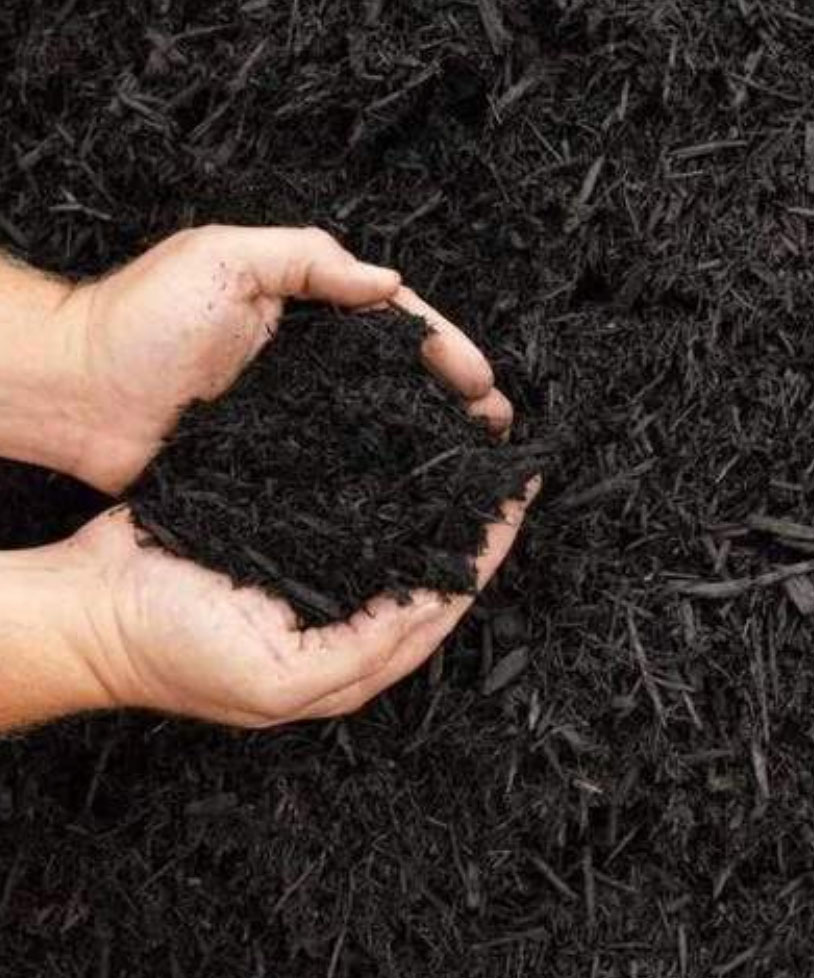
Be it by a bonfire with the ash put on the beds or – the real game-changer – her delicious home made compost which has been generously added to the beds for nearly 20 years.
I believe it is the way to safeguard against future ‘unprecedented droughts’.
 N-ice New Recipe
 Isabel is the wife of Gerald, of Green Tomato Jam fame. And this week, as their well composted beds are still producing beautifully ripe red tomatoes, Gerald sent another recipe through.
I appreciate it is hot on the tail of sharing his Green Tomato Jam recipe but it is just too good not to share. And again, it is his very own creation.
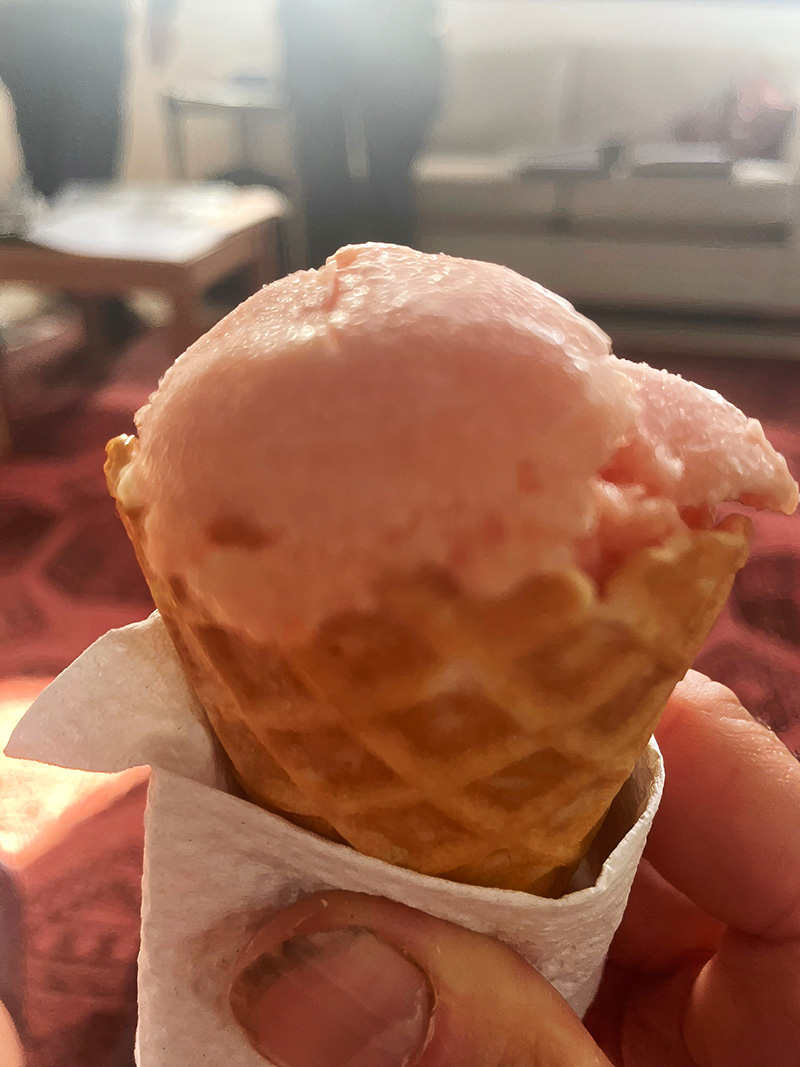
Red Tomato Ice Cream.
Ingredients:
- 500g red tomatoes
- 150g caster sugar (preferably stored in a lidded jar with a vanilla pod)*
- 150ml double cream
- Juice of half a lemon
- 2 drops vanilla extract (if sugar not already flavoured)*
Method:
- Skin the tomatoes and remove any woody haulms.
- Liquidise in a food processor to a smooth blend. Chill in a refrigerator.
- Add the chilled sugar and chilled cream. Blitz to mix, then add the lemon juice and the vanilla extract*
- Transfer to an ice cream maker and freeze. Or pour into a glass basin and put into the freezing compartment; stir every so often to break up and disperse any ice crystals until firm.
Easy peasy!
Of course I had to sample it and it is delicious. I absolutely recommend giving it to someone to try without telling them the flavour and seeing if they can guess. It’s great fun. Your taste buds recognise it as tomato but your head flatly refuses to believe it. I bet most people will guess ‘strawberry’ because of the colour. As I have mentioned before, the ‘consuming’ part of growing your own makes all the necessary hard work, tenacity and patience worthwhile. I’m confident that you won’t get the desired delicious, home-grown, tomatoey taste from supermarket tomatoes. Or the satisfaction of knowing you grew them, of course.
What the Flock
I read recently that the British countryside is now ‘in fashion’, with a recent report stating that the fashionistas have abandoned slick city tailoring and returned to roll-necks and woollen coats. Hotel interiors are now being influenced by warm, comfy, homely interiors – after the starkness of modern and minimalistic interiors, and the actual countryside is being used more and more as marketing photographic and video backdrops.
I’d like to think that the Welsh countryside is not only still in fashion, but never actually left. Let’s face it, we have it all, with our proper rugged mountains and coastlines providing unrivalled scenic backdrops – as well as taking centre stage.
And as for woollen coats – well, what can you teach the Welsh about wool? The British countryside may well be ‘wildly fashionable’ and on trend at the moment, but in Wales we know that long term consistency wins over short- term intensity. And where else would you hear, ‘Who’s (woollen) coat is that jacket?’
Stripy So and So’s
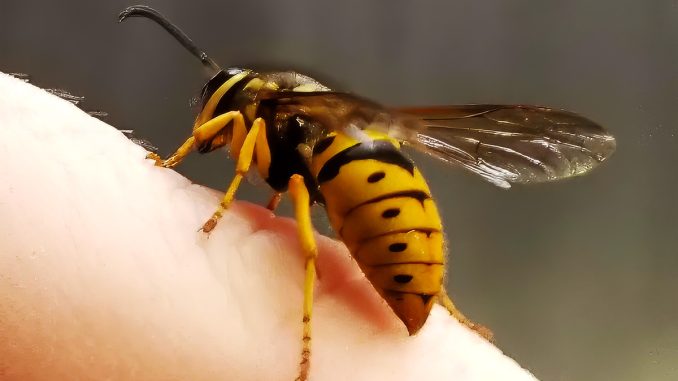
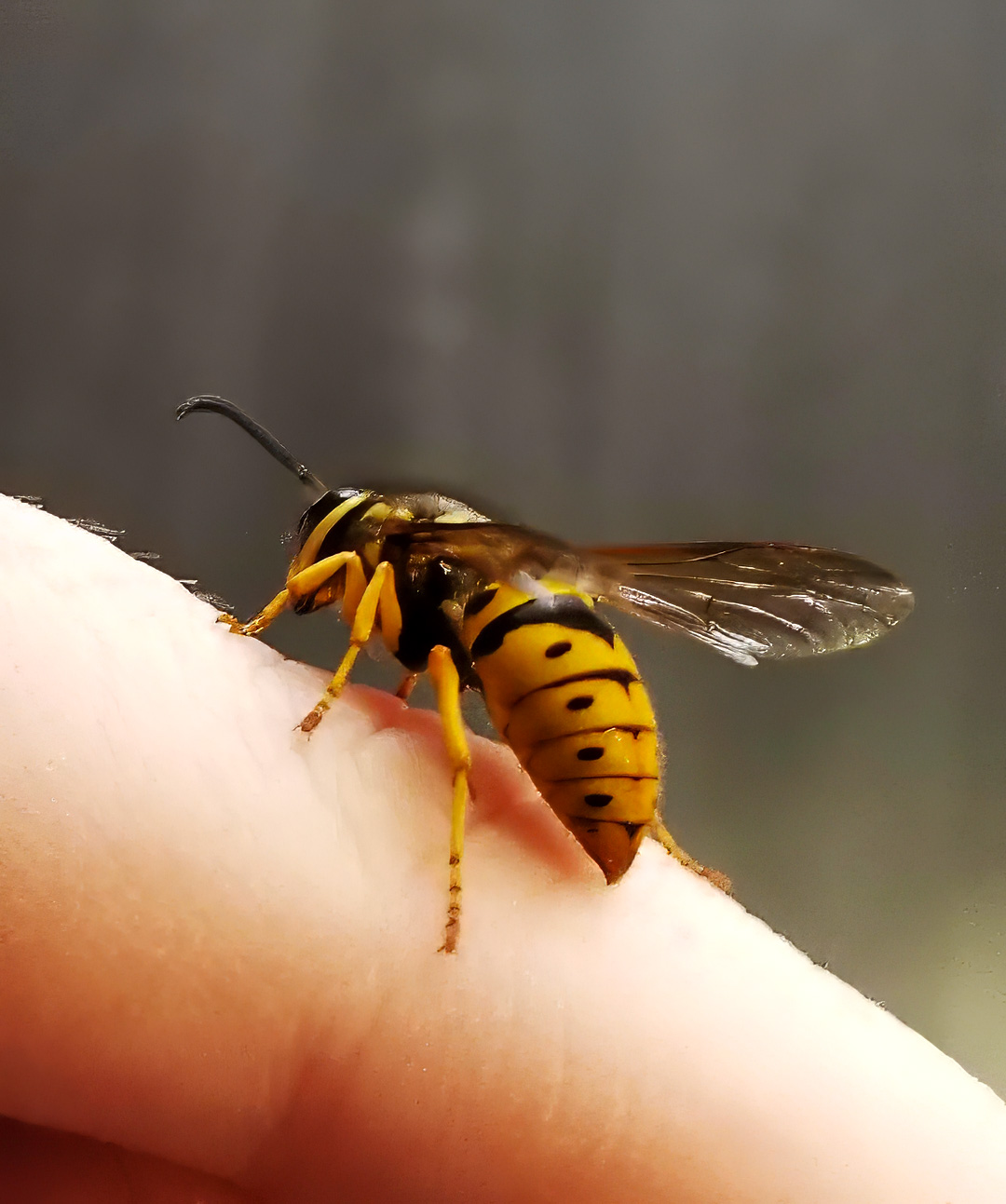 There has been a noticeable lack of wasps around during the past summer. Apparently the warmer-than-average spring resulted in the larvae drying out before it could hatch.
But boy, are the stripy little so and so’s making up for it now. Obviously later broods hatched and it seems as though they are pretty angry about their cycle being messed with. I have lost count of the solitary, stripy scoundrels that have recently been looking for a fight, both indoors and out. And of course, they are sozzled now too, as they drown their sorrows with the windfalls of apples, pears and soft fruit.
These wasps are male wasps. Basically they are now out of work, the weather is still nice and warm, they’re on the alcohol and they know they are going to die very soon (sooner than they think sometimes). It all adds up to a lot of aggression.
There are numerous suggestions as how to keep wasps out of the house, but I have yet to find anything that works. And in the garden, my advice is to just keep your wits about you, especially around fallen fruits. Also be attentive if cutting a hedge or strimming long grass as they tend to know you are reasonably incapacitated and it’s a good time for them to strike!
I spent some time at Damanhur in Italy about twenty years ago and ‘learned’ the art – and importance – of speaking to wasps and ‘doing a deal’. And no, I haven’t been on the fallen fruit myself. It really works. Basically you tell the wasps firmly that if they sting you – or anyone in the house – then you will retaliate by killing them, and that any other wasp is also fair game. If, however, they leave you alone, then you will also leave them and their friends and family in peace too. If both parties adhere to the rules, it has proven to work.
Over the years I have been working in various gardens and on various sites where the other contractors have been stung – sometimes repeatedly – but since returning from Damanhur, I have managed to maintain a healthy working relationship with the stripy ones. Long may it continue.
Common As-salt
 Flies in the house are also at an all time high at the moment, as they look for warmth with it getting cooler outside. I have tried talking to them but they are either deaf or just don’t do deals. A bit of research reveals that they could well be deaf as, ‘house flies rely on large compound eyes with a wide field of view, excellent motion detection, and sensory hairs and bristles that can detect air movement, to sense danger. A moving hand, in an attempted swat, creates both a visual threat and a small wave of air, giving the fly a warning before the swat lands.’
I have to admit I just can’t do the whole swatting thing, but it does seem as though things have moved on from a rolled up newspaper. Apparently, the ‘Bug-A-Salt 3.0’ – equipped with the Bug-Beam Laser Sight – is a pump-action, non-toxic device that uses ordinary table salt to eliminate flies and other household pests.
Using cheap table salt, one load holds enough salt for roughly 80 to 100 shots with the detachable Bug-Beam Laser offering a red dot for fast tactical targeting.
They are most accurate within 3 feet with the gun itself being spring-piston powered and so requires no batteries. The laser sight needs button cell batteries (usually included).
One of the boys in work has apparently become a ‘salt-sniper’ and insists you don’t even see the spent salt-shots. He also insists it’s very satis-flying.
Leave a Reply