
Taken from Lynne’s weekly column ‘Green Scene’ for the Western Mail
15th August 2026

Berry Abundant
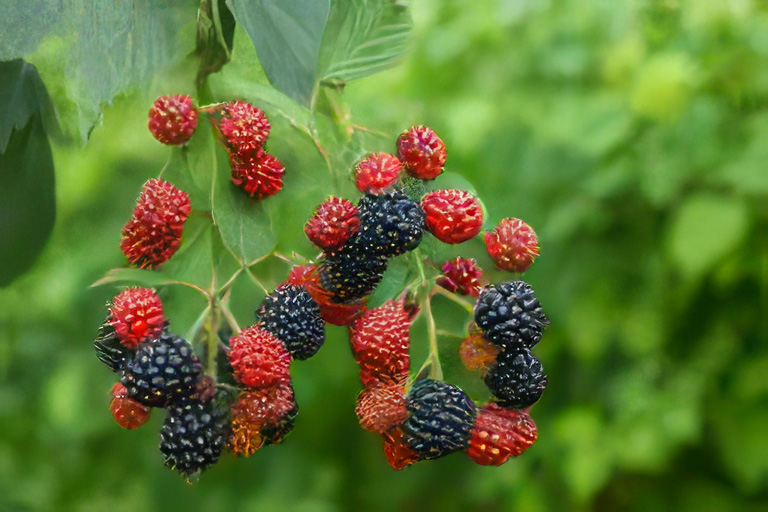
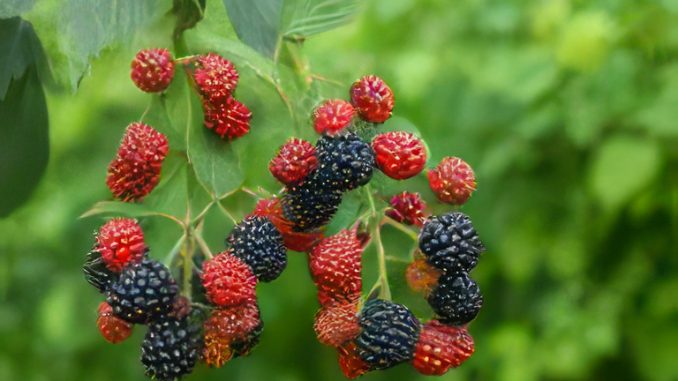
We are in the midst of blackberry season. And I’m quite surprised we have any blackberries at all, let alone that they are plump, juicy and prolific. Everything else – except bracken and brambles – is getting crispier and ‘wiltier’ every day.
Raspberries have been beaten by the heat, gooseberries have shrivelled, veg is at a premium (in most gardens) and even peaches, plums and damsons seem to have succumbed to aphids, and other heat or ‘critter’ damage.
But the ‘blackberries are booming’ and apparently were unusually early in some parts of the country. The earliest blackberries ripened in June this year, because the plants panic in the ‘unprecedented’ weather conditions and bring their fruiting forward to avoid any adverse effects of prolonged heat-waves.
Because of the lack of food for birds, a glut of blackberries now is obviously quite helpful, but the bad news is that the fruits will be devoured earlier than usual leaving a ‘famine’ later in the year. Unless you own a vineyard (grapes are thriving in the heat), I don’t think there are many benefits to this ‘stupidly hot weather’.
Not all brambles will be offering fruit as a sort of compensation for taking possession of various parts of the garden. Those straight brambles (or canes) which poke out of newly clipped hedges and seem to grow a mile a minute, are this year’s growth, or new growth, and blackberries only fruit in their second year.
There are also hundreds of varieties (not all bearing edible fruit) of the wild blackberry – which is something I have noticed while gardening for decades. Whilst all wild brambles have thorns, some are just super-evil and have the most savage hooked thorns that just ‘get you’ every time and keep you busy in the evenings squeezing thorns out of your hands.
Some brambles are even endangered. The ‘Trelleck bramble’ (Rubus trelleckensis) which is restricted to Beacon Hill in Monmouthshire, has become so rare it may be vulnerable to extinction.
Not surprisingly, it is ‘our’ fault that brambles grow so prolifically. ‘We’ have increased the nutrient load of soil and water courses (mainly through agriculture, sewage and transport), and as brambles are greedy feeders, they thrive in these conditions, enjoying the extra nutrients we supply.
Glove Love
My brother has found, by accident, that the ‘Cutter’ anti vibration, gel filled gloves are good ‘bramble beaters’. Not that you beat the brambles with them but they do seem to stop the thorns getting as far as the skin!
There are special gloves, which are supposed to be thorn-proof but I find them all too bulky to be of any use. The traditional leather thornproof gauntlets turn my hands into Womble hands – where I’m unable to bend my fingers. That’s not useful when gardening, and the Cutter gloves are much more flexible.
Super-weeds
 The other plants that that are obviously immune to the harsh arid conditions are the little yellow weeds in the lawn. They will be either Mouse ear hawkweed, which has lemon yellow flowers that have a red tinge on the outer edge and hairy leaves. Or it could be common cat’s ear, which tends to have a slightly shorter flowering stem with a basal rosette of wavy edged leaves, also covered with hairs but which are raised on pimples.
Both Mouse ear hawkweed and Common cat’s ears get their name from the shape and texture of their leaves, which resemble a mouse or cat’s fuzzy ears respectively. Both have leaves that are covered in fine hairs, giving them a slightly rough feel when you run your fingers across them. And both have deceptively deep taproots to access the moisture that shallow-rooted lawn grasses and other weeds can’t reach. It is astounding to think just how deep they do go as we haven’t had significant rain for three months.
They really are ‘survivors’, as the basal rosette of leaves also means that the mowers go straight over the top of them when you cut your grass. Whilst – in a normal mowing year – you will remove the flowers, the leaves or ‘pantry of the plant’ remain in situ allowing the plants – and root systems – to become firmly established.
Catalogue Woman
 Even in this age of technology, I still enjoy a good old fashioned catalogue. One you can hold and turn the pages. Bulb and plant catalogues are always a great read (and make good wrapping paper once finished with), but my brother has introduced me to a new contender – Sealy’s. The tool company’s catalogue is definitely worth a read, and I have folded over a few pages for ‘further consideration’. Another thing you can’t do on a screen.
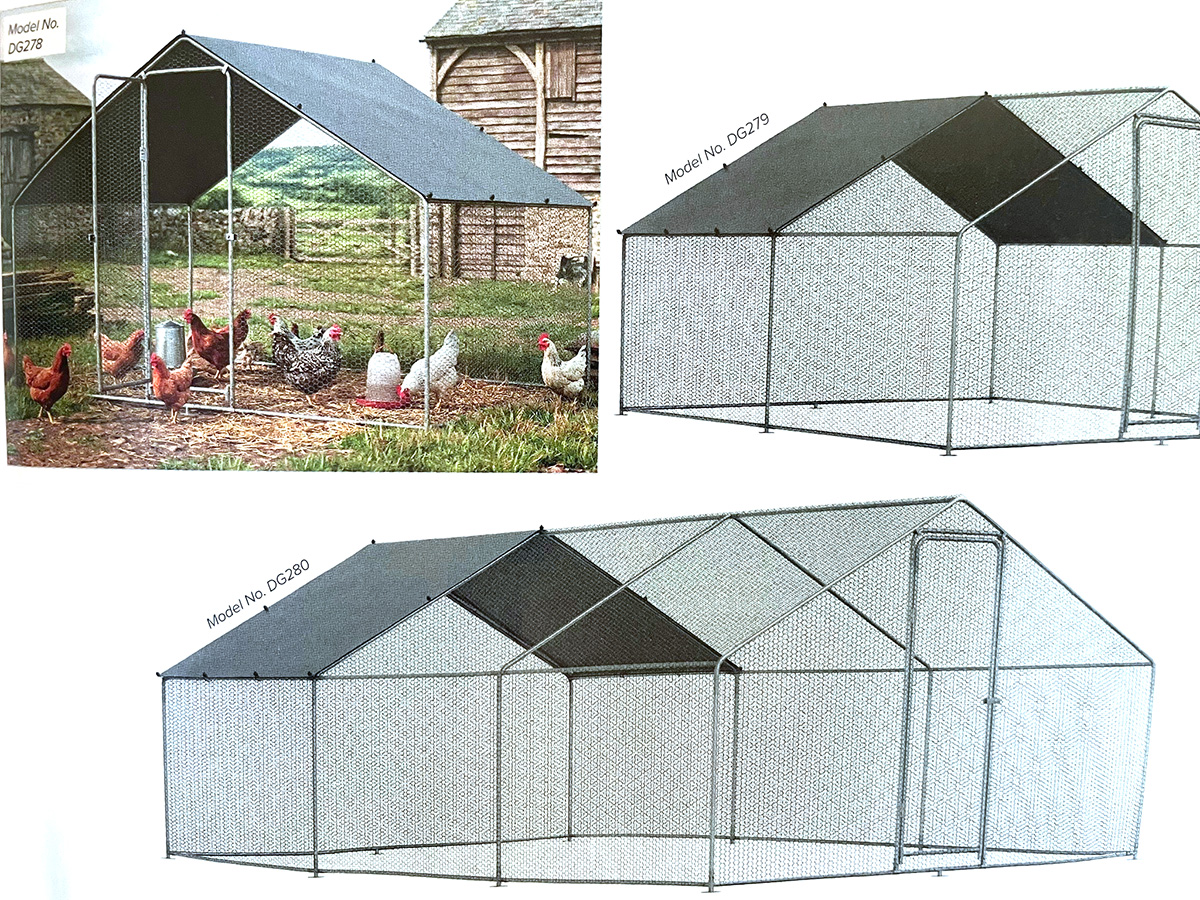
What initially caught my brother’s eye was the walk in galvanised steel chicken runs. Sadly, not long after I lost one of my hens to the fox, his two hens were also nabbed. We have been mulling over various hen pen options since. The chicken runs in the Sealy catalogue will obviously need a hen house but other than that they seem a pretty good option for flattish ground. They are robust, come in three sizes and are described as being ideal for chickens, ducks, dogs and rabbits. Although, not altogether, I suspect.
Alternatively you could visit www.sealey.co.uk and browse the extensive catalogue contents online. From fans (and air conditioning units) to floodlights and foldable solar panels, and just about everything ‘useful’ in between, you’ll find loads of things you didn’t even know you needed!
Eye of the Predator
 With regard to my own hens, they are now relocated back inside their pen at the top of the garden. Being free-range increased the chances of them becoming fox food, as I learned the hard way. I have extended the fence to about 8ft high – not an easy feat single-handedly. And I’m hoping that the tree canopy cover will act as a preventative ‘roof’.
The other thing that I ‘renewed’ were the Predator Eye PRO Solar Animal Repellers. Unlike motion-activated repellents, this device has two little red lights which flash continuously at night. They are supposed to resemble predator’s eyes (a bit Stephen King-esque), which will in turn deter unwanted fox-shaped visitors.
The only problem is that the light-sensitive design turns on automatically at dusk and turns off in daylight, so ‘protection’ is limited during these early mornings. I am up and about early though, so hopefully I will be the deterrent then – and I must add that the sunrises are a lovely reward for rising early.
Listed online as a ‘2 Pack, Red Flashing Light Deterrent for Cats, Dogs, Foxes, Birds, Skunks, Deer and Raccoons: Outdoor Pest Control for Garden, Farm, Fence and Coop’, the little units obviously work, as I haven’t seen a skunk or racoon anywhere in the vicinity.
Leave a Reply