
Taken from Lynne’s weekly column ‘Green Scene’ for the Western Mail
3rd August 2024

Grow Slow
 Gosh, August already. I know that it seems I feel the need to flag up the start of each new month but it is genuinely because I am staggered by the speed of this year. I have always felt that ‘August’ is deceptive by name as the ‘au’ suggests an autumn month. It is technically still a summer month, along with June and July, but this year the early mornings already definitely have an dewy, autumnal feel about them and the evenings are noticeably drawing in with the nights being cooler than summer nights should be – apart from few hot days and nights we’ve just had.
I’m not complaining though, I have noticed that nature is running out of steam in the garden. Her energy levels are definitely dropping as she prepares for the transition between extreme growth and the production of berries and ‘winter stocks’. It’s been a busy year so far with growth having a late start and then ‘busting out all over’ and even Monty Don admitting he doesn’t recall ever seeing such lush growth at Longmeadow.
And yet, it’s been a tough year for some veg. My runner beans are still sulking, leaves yellow and uninterested. There are some beans forming but it’s going to be a late – and light – harvest this year.
Ground Elder Enemies
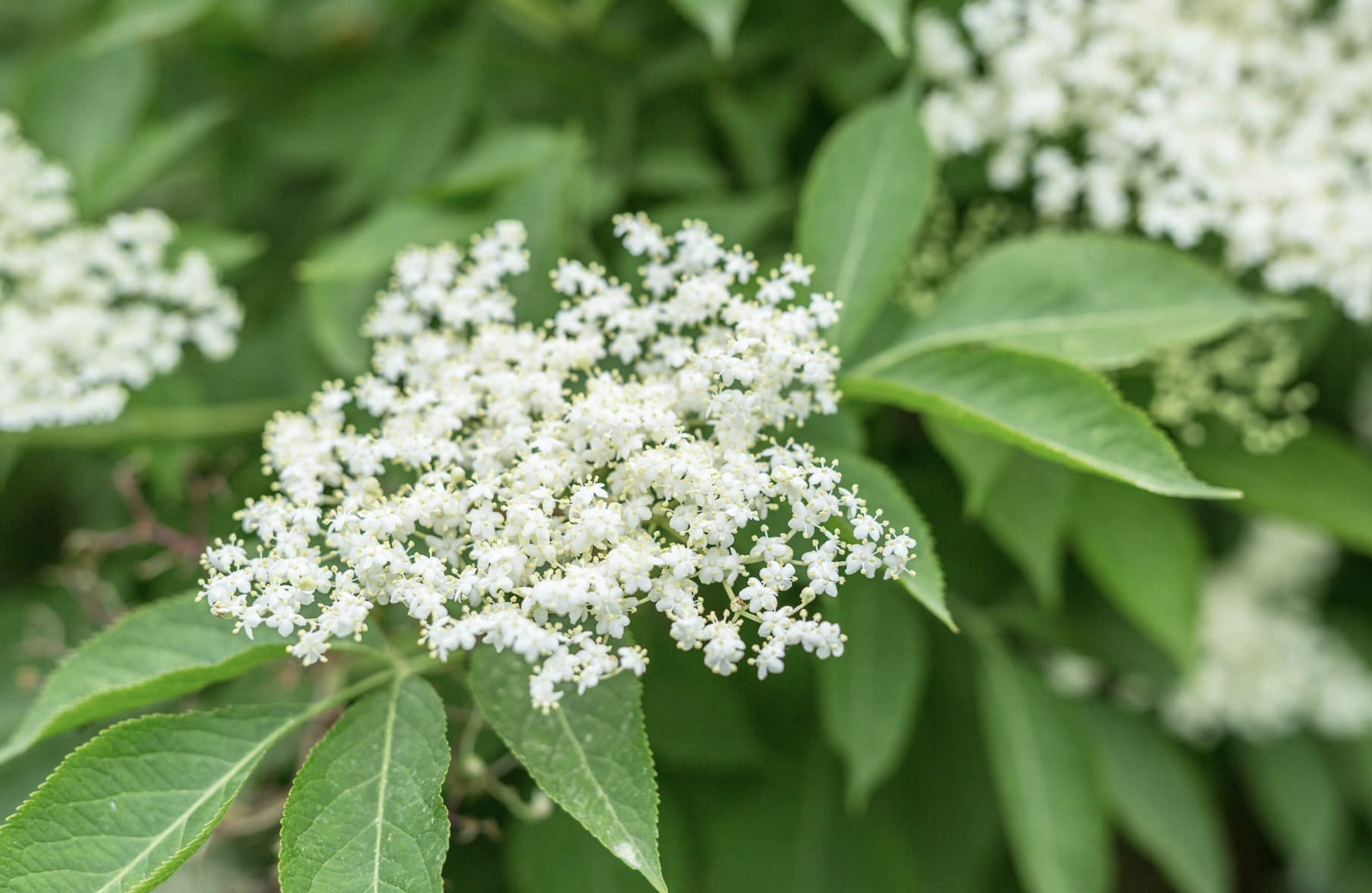 There are things that don’t seem to be phased by any type of weather and that’s the nettles, brambles and ground elder. I have gone through various ‘relationships’ with the latter at the cottage over the years. From being enthusiastic – and young – enough to try and eradicate it at first, to extolling the virtues of the pretty frothy flowers, encouraged by the fact that Chelsea Show Gardens were befriending it. For the last few years, however, I have been running a sort of soft-experiment and introducing plants that I think may actually ‘beat it’. The results are just starting to become apparent.
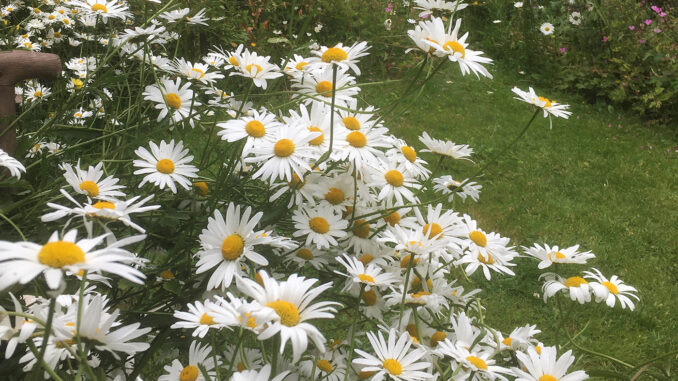
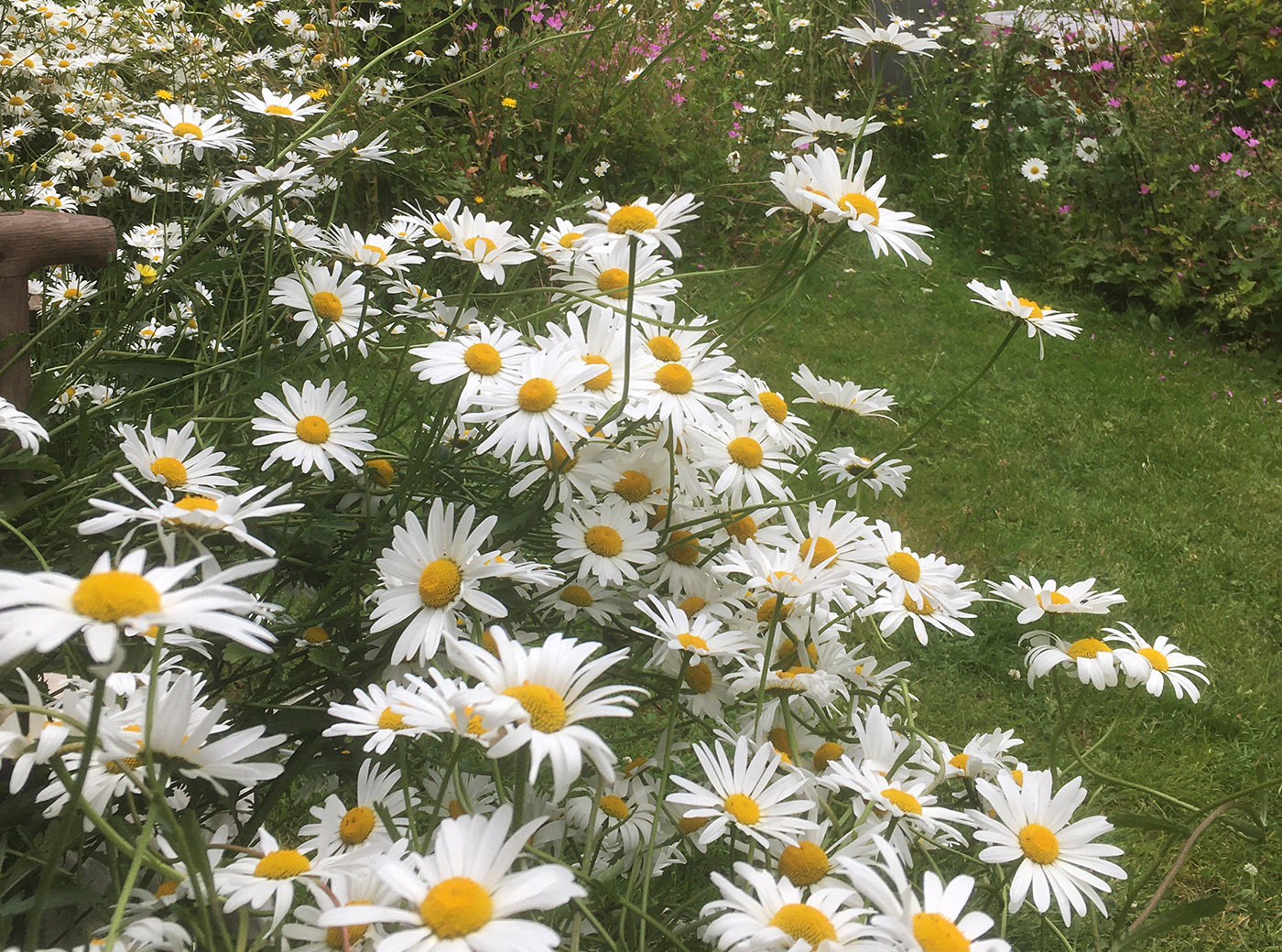 Not surprisingly, ox eyed daisies have ‘chased it’ out of one specific area and comfrey has also ‘beaten it’ in another bed – which is now a ‘comfrey bed’, although I have been able to grow bulbs and some quietly determined perennials through it. Other plants that have managed to curb the ground elder’s enthusiasm include Persicaria amplexicaulis or Red Bistort and the cheery yellow flowered Helianthus salicifolius. Helianthus is a huge family, the most familiar relative being the annual sunflower (Helianthus annuus). The perennial species tend to be smaller than the typical annual sunflower but still produce yellow – and sometimes orange/red – open-facing sunflowers, in profusion.
Both red bistort and perennial sunflower are very good doers and will therefore thrive in most conditions – and seem to be undeterred by any threat from ground elder. This means that they may need a firm hand and can be split up generously and replanted in different areas of the garden or given to friend or neighbours – who may also be battling with ground elder. Both also make great cut flowers.
Precious Nettle
 Whilst I am still cutting back those really annoying brambles that seem to grow a mile a minute, I am leaving the ones that are promising a crop of blackberries very soon. You might as well make use of them!
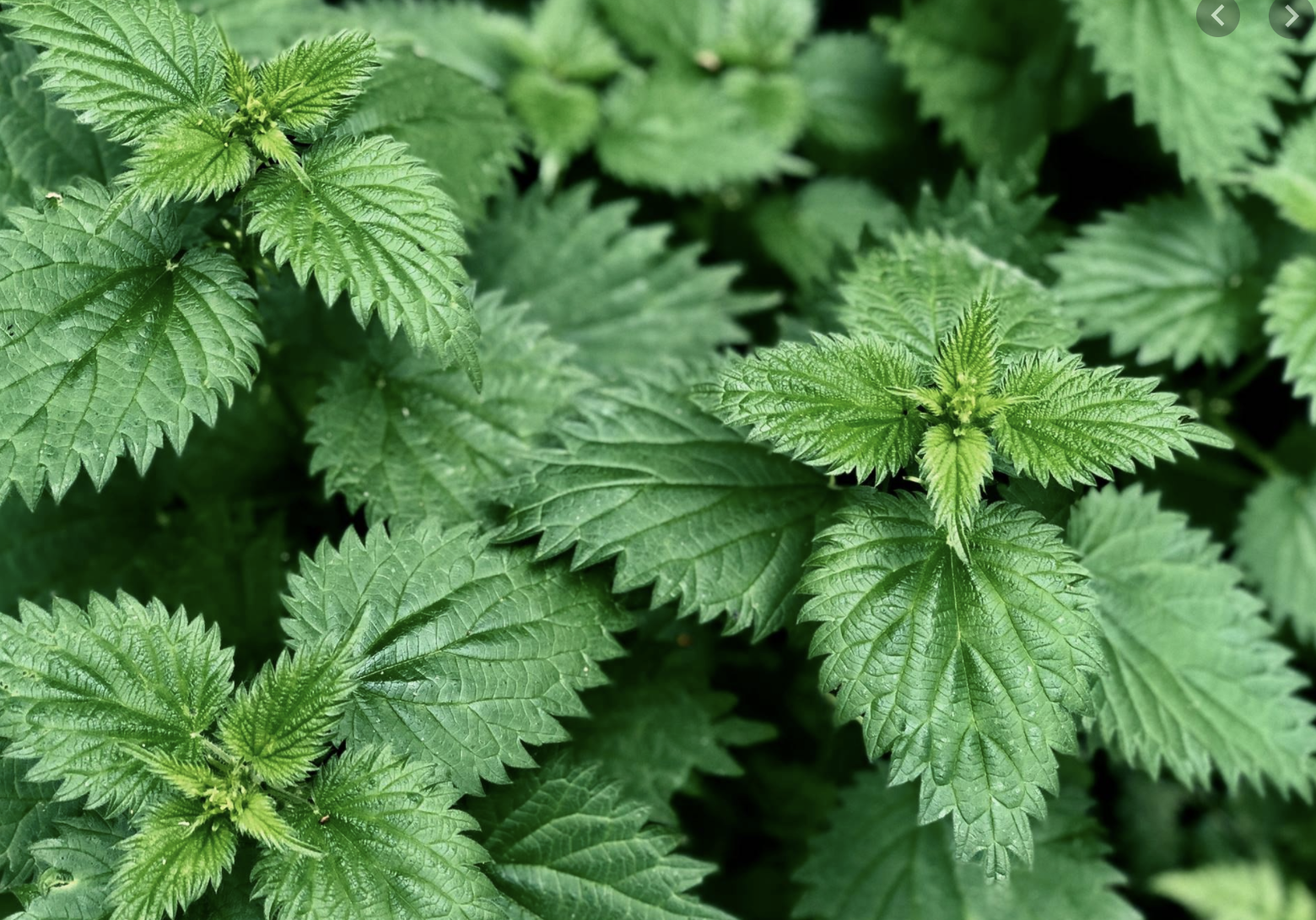
And believe it or not, the stinging nettle is an amazing superfood with unlimited uses in the kitchen, from soups and main dishes, and desserts and syrups, to teas and other beverages. Nettles have male and female flowers, but only the female flowers produce seeds, which are also packed with nutrients. They can be mixed raw into smoothies, yogurt and porridge, or used as a garnish to add a pleasant crunch.
When the seeds are ready to be picked, the threads they are on hang down, pointing to the ground. They should be plump, crisp and green, or purply green. If they are fluffy and/or not pointing to the earth they are still flowers. If they are brown they have gone too far over. Gather the threads of seeds off the main stems, wearing gloves, and leave them to dry in a flat basket for a couple of days or spread out on newspaper if you have the room.
Once dry, rub gently to release the actual seeds from the little thread and store them in a jar. You can add them to a pepper pot or a salt bowl to use as a condiment, sprinkle them on any meal, sweet or savoury, or add them to your teapot along with other herbs – like lemon balm or Moroccan mint.
If you do get stung collecting your nettle seeds, then simply look for a dock leaf and rub the sting with that. It is said that nettles and docks always grow together for that very purpose. Although a recent study revealed that lettuce appears to be just as effective at soothing nettle stings as dock leaves, I think it’s less likely you’ll find a lettuce next to your nettles. It is thought that the cooling and soothing effect of sap evaporating from a crushed lettuce leaf alleviates the burning felt from the sting in the same way as a dock leaf would. I wonder if that make it a ‘little gem’ or would any large, sappy leaf do?
Doggy Dispersal
Our fabulous canine friends are being enlisted to help spread wild flower seeds. Ten dogs in Lewes, Sussex have recently been trialling a specially designed pouch sewn onto a harness which has holes in for the seeds to drop out. They have been ‘walking and dispersing’ on a nature reserve, with the intention of restoring the acre plot of woodland. Previously having no ground vegetation at all, it is hoped that the 23 species of seeds including bluebells, common spotted orchids and hairy St John’s Wort will be ‘pawfectly’ distributed and establish themselves. Organiser Helen Meade explained, “When the dogs run around sniffing and exploring, they tend to get into nooks and crannies where humans don’t necessarily go.”
Interestingly nature is of course ahead of the game as several plant species have been designed to ‘hook’ onto dog’s (and humans) coats to enable their spread. Most dog owners will have encountered the tedious task of trying to get cleaver seeds or those awful ‘burdock bobbles’ out of their dog’s coat. I recall Yogi often coming out of the undergrowth covered in ‘sticky seeds’ and ensuring an entertaining evening of seed removal!
Leave a Reply