
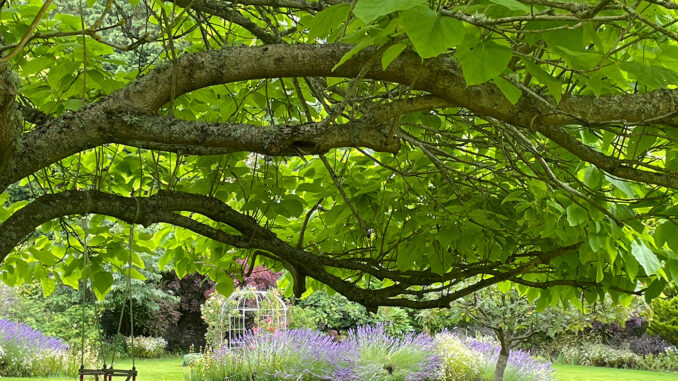
Taken from Lynne’s weekly column ‘Green Scene’ for the Western Mail
20th July 2024

F-ant-astic
Every stone I have moved in gardens this year seems to have had an ant’s nest under it. And a bit of research does actually reveal that their numbers are on the increase due to several factors, including environmental conditions and food availability.
It appears that the upheavals of climate change have favoured ants. Warming temperatures and extreme weather create drought-stricken landscapes, and buildings have been shaken by storms, which allows these adaptable insects to conquer and colonise. Not only do ants capitalise on disorder and chaos but they also benefit hugely from our food waste.
As well as holding the record for the ‘fastest movement’ in the animal kingdom, and being able to lift and carry 20 times their own body weight, recently bug boffins have found that some ants even amputate the injured limbs of their nest mates to prevent infection. The Florida carpenter ant is known to be viciously territorial, often getting into violent skirmishes with rival colonies and picking up combat wounds in the process. But rather than just licking the injuries clean as other species do, these clever critters bite the affected limb off – making them the only animal other than humans to conduct such amputations. And apparently it works with the procedures saving the patient from death 90% of the time.
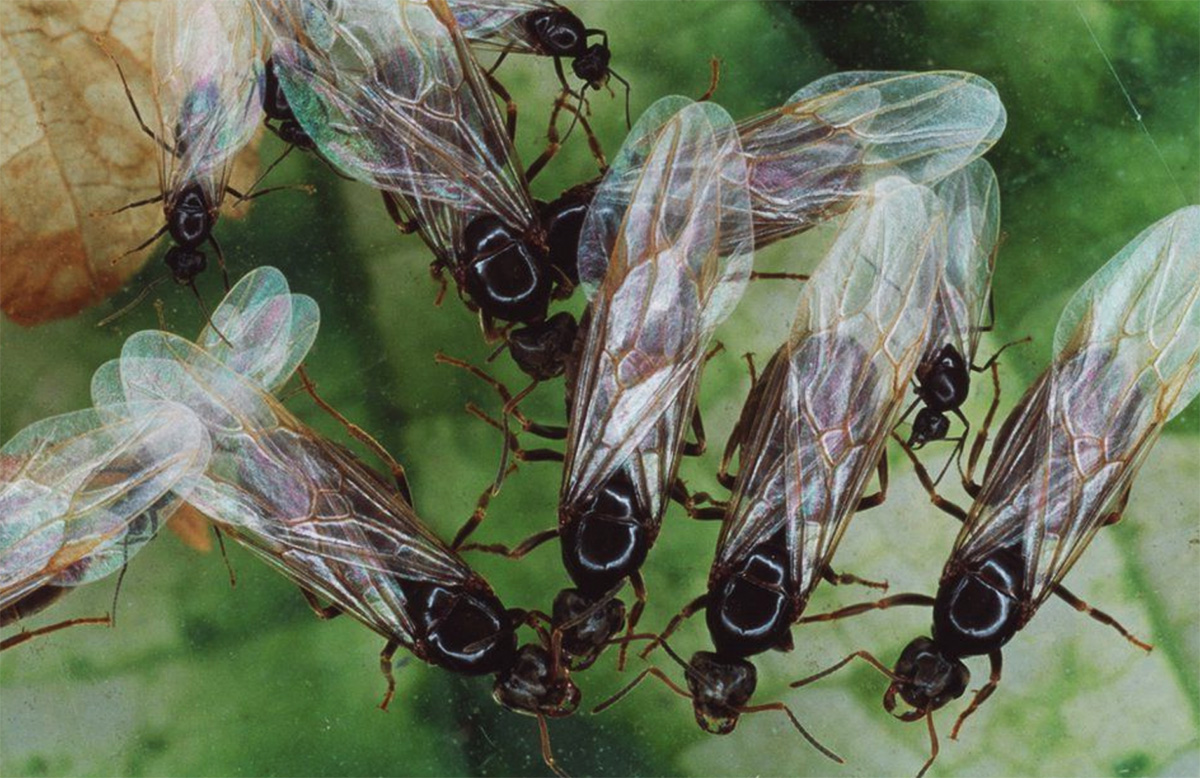 Last week saw the start of clouds of flying ants taking to the skies in an annual event that only begins when weather conditions are just right. Normally called ‘Flying Ant Day’, the amazing event is actually more like Flying Ant Fortnight – lasting much longer than a day and happening anytime between mid July and the beginning of August.
It is caused by the queen ants emerging and moving about to set up new homes; they are surrounded by males who are hoping to mate with the queen.
The temperature has to be just right for them to fly – above 25C but preferably nearer 30C and without too much wind. Last week’s temperatures and conditions were perfect which is why they were spotted for the first time this year – but the chances are there will be more ‘ant clouds’ to come. Like a lot of us, they will just be waiting for warmer conditions again.
I have seen a number of these swarms and they are incredible to see – just like a swarm of honey bees – as the sheer numbers are incredible.
The queen ant is over 10 times bigger than the smaller working ants which have been responsible for rearing her – and making her the queen that she is!
Even if you have witnessed these ‘ant clouds’ I bet what happens next will surprise you even more. Once the queen comes ‘back to earth’, she cuts off her own wings, digs a hole to hide in and won’t eat for at least a month. Instead she digests her own flight muscles until her new workers – all female – are ready to feed her.
Nature and the natural world never cease to amaze, enthral and impress me.
All the males, on the other hand, only live for a few months before they fly and try to mate, and then they die a few days after the flight. So, it’s more than likely all the ants you see on the ground – and under stones – will be female.
With just a couple of rare exceptions British ants fall into two categories – the stinging Myrmicine ants – or red ants and the non-stinging Formicine ants – black ants and wood ants which apart from being a different colour, have smoother and shorter bodies and much better temperaments.
Bean My Favourite
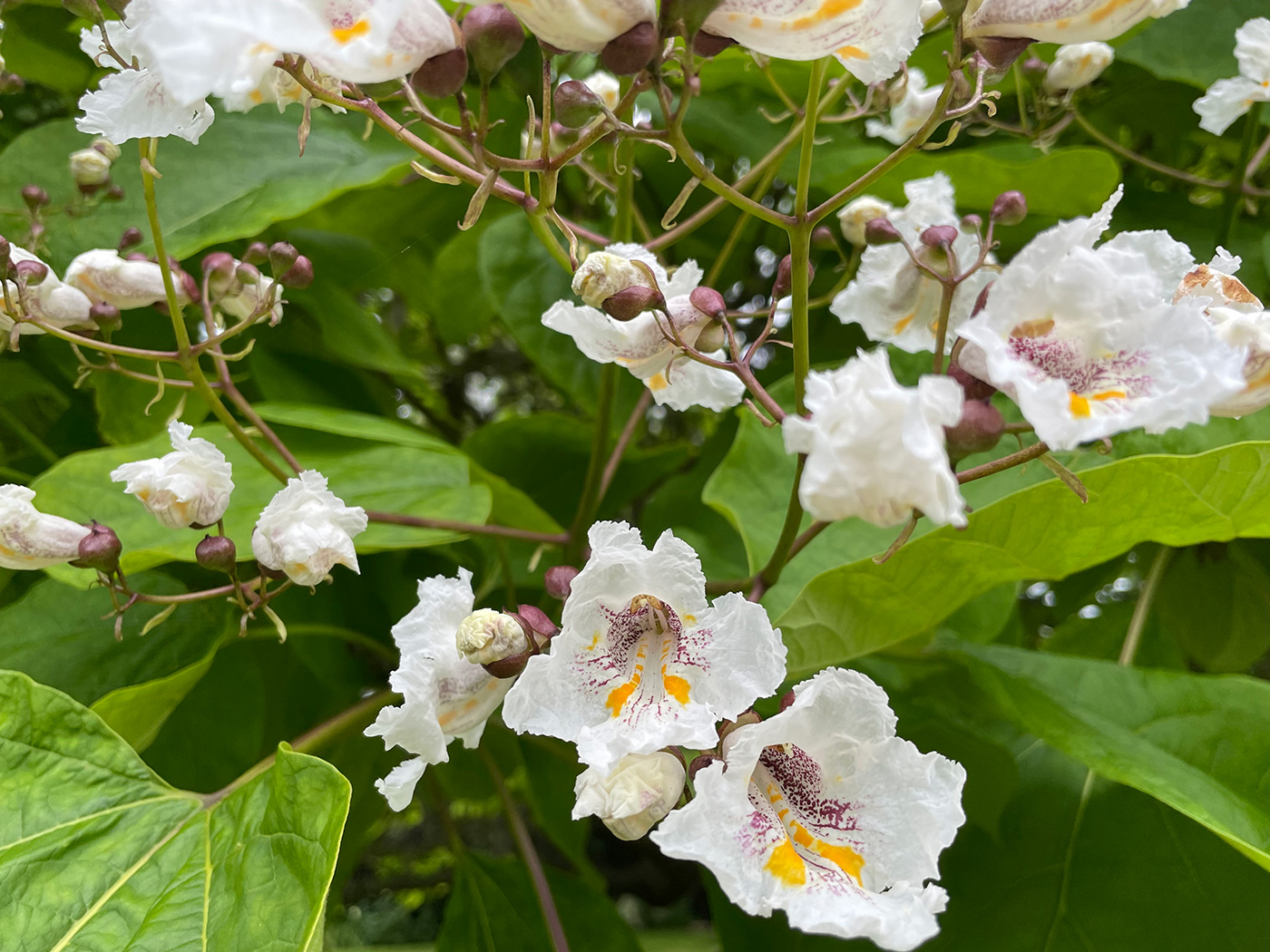 One of my favourite tree names when I was learning Latin plant names from Dad, was Catalpa bignonioides. It’s just a fabulous name, and for a fabulous tree – the Indian Bean Tree. I remember being very impressed by the long bean-like pods but don’t recall the orchid-like flowers – until last week in a client’s garden.
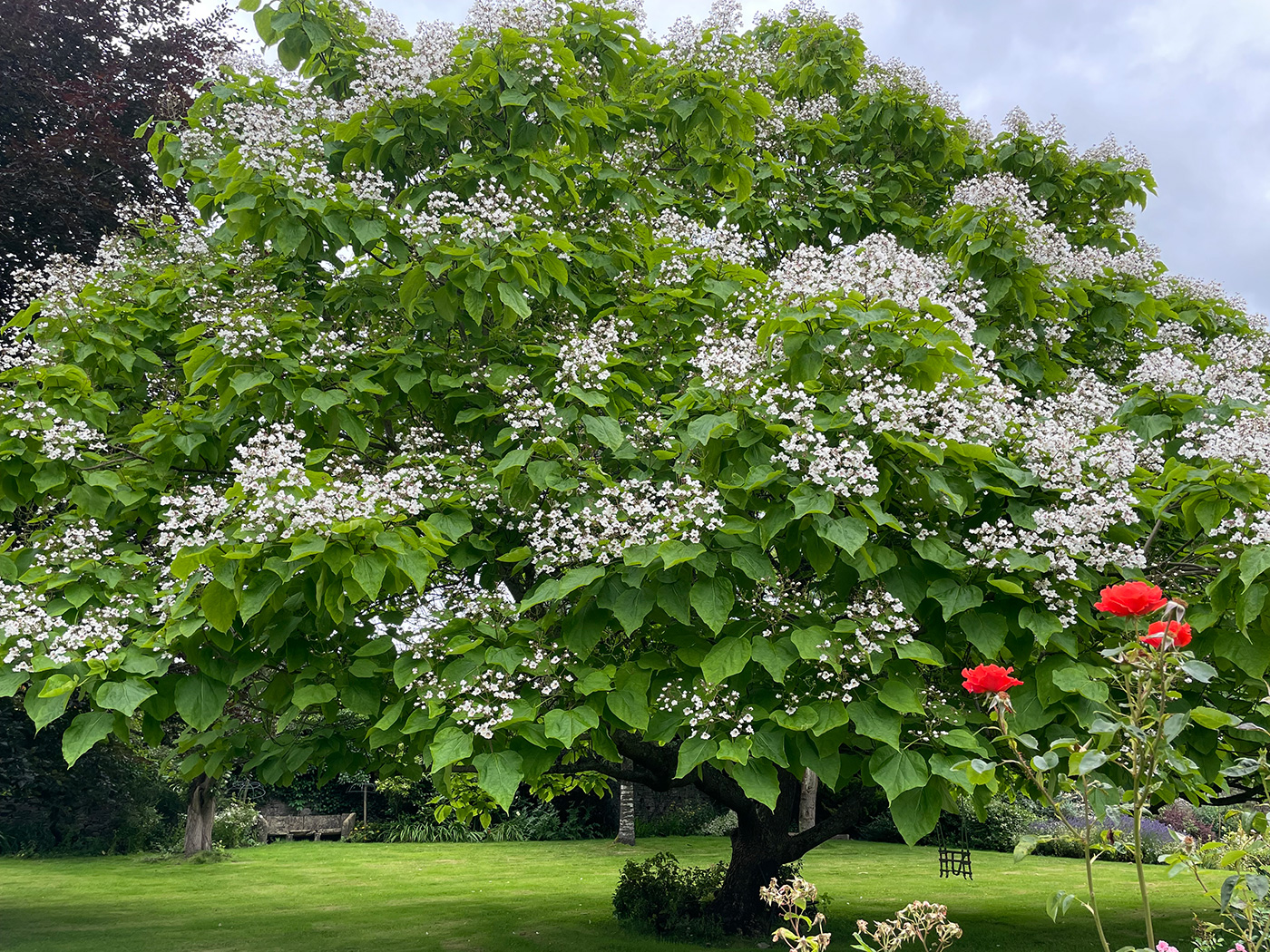
This fantastic example of a Catalpa bignonioides (I even like typing it because I say it in my head at the same time), is in full blossom and taking centre stage.
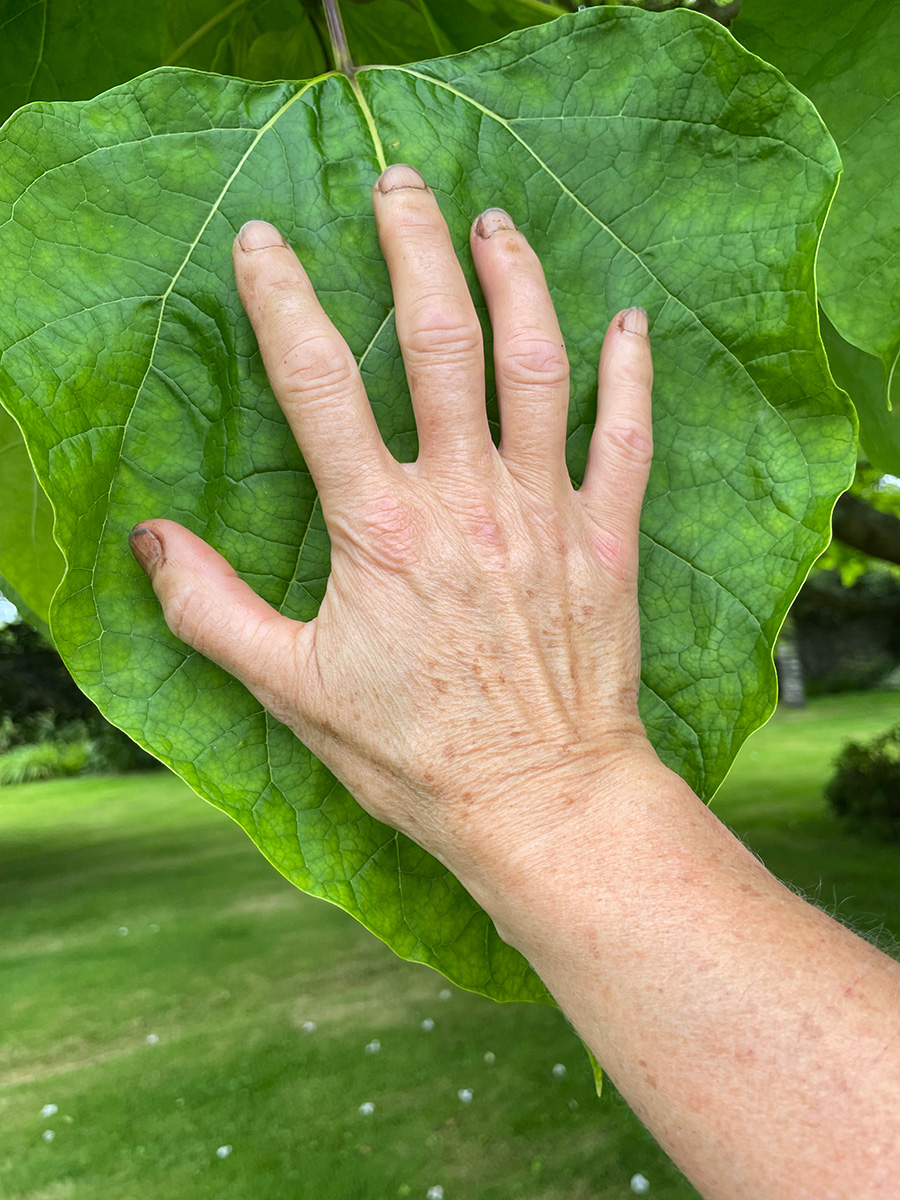 The leaves are enormous – bigger than my hand and the canopy is enviable on a hot sunny day. It is not for a small garden but if you have room for one – and a sheltered, sunny position, then do consider it. This beauty is very happy in a large walled garden.
In some countries, the Indian Bean Tree is actually considered an invasive species because of its ability to grow quickly and spread easily, often crowding out native vegetation. The tree’s wood is strong and durable, but also lightweight, making it a popular choice for making canoes, paddles, and other watercraft.
 The slim, cylindrical seed pods can grow up to 16 inches in length, and contain winged seeds which remain on the tree throughout the winter before splitting and releasing the seeds.
They are ‘late blossomers’ – often around 8 years old before they flower – but so worth waiting for.
Park Fun
Love Parks Week takes place this week, from the 26th July to the 4th of August, encouraging people to raise awareness and show their gratitude for some wonderful green spaces.
Whether it’s walking the dog, picnicking with friends, kicking a ball about or just sitting quietly reading a book, parks can provide a social space or a peaceful retreat, whatever your mood.
Love Parks Week is set up to celebrate and support the efforts of volunteers and workers up and down the country to maintain and protect our green spaces. As well as spectacular scenery, Wales hosts some of the most beautiful parks too, with twelve of Cardiff’s parks alone achieving the prestigious Green Flag Award in the past. Roath Park also hosts a wonderful Catalpa bignonioides – just saying.
Cardiff-based senior accredited psychotherapist and clinical director, Andy Garland is a great advocate of being outdoors. “Most people think they have to do something quite extraordinarily special to feel good,” he explains, “but just talking a walk in your garden or a park will lift your mood and it doesn’t cost anything! Statistics show that 80% of people in the UK live in urban areas and that less green space means reduced mental wellbeing; increase the green space and you improve mental health.”
Leave a Reply