

Taken from Lynne’s weekly column ‘Green Scene’ for the Western Mail
11th November 2023

That Old Chestnut
Despite temperamental (or maybe just ‘mental’) weather conditions and reduced daylight, I do still have a few ‘favourite things’ pertinent to this time of year. They include walking through dry crunchy fallen autumn leaves – although not yet managed this year as they are all wetter than an otter’s pocket. I also love solar lights in the garden as they definitely take the ‘sting’ out of dark evenings. I have positioned various types of solar lights so I can see some from almost every window in the cottage. They give me such a lift. And the other favourite thing(s) at this time of year are chestnuts – sweet chestnuts, not horse chestnuts. Horse chestnuts, or conkers, are inedible, whereas chestnuts are just a delicious compensation for not-so-good November days. Please don’t confuse the two.
‘Chestnutting’ is another wonderful, much-anticipated event attributed to Bob, my dad. He knew where all the best chestnut trees were within a 4 miles radius of home and more importantly knew all the people whose land they were on, so we had permission to go and fill our boots – or carrier bags. Going to collect chestnuts was a real ‘marker’ of the seasons and the lead up to ‘chestnutting’ was as important and exciting as the actual harvesting. Dog walks, and even some car trips, would be adapted to be able to check on different trees and a good crop was always hoped for. Once a few ‘good’ chestnuts were spotted on the ground under the tree it was a case of waiting for strong winds to bring the ‘bounty’ down – although there was one favourite tree with boughs low enough to allow the chestnuts to be picked straight off the tree in their spiky cases. Of course we also learned at a very young age to wear gloves when picking the chestnuts and how to ‘roll’ the brutally spiky case under your foot to ‘pop’ out the three nuts inside – it is usually only the middle nut that is worth picking up but if you’re lucky you can get a good ‘three-er’. At 57, I am still thrilled to get three chestnuts out of one case.
Finally, as kids, we had to hope for a parent-in-a-good-mood to take us to pick the chestnuts before the squirrels got them all. I vividly recall Dad coming home and quietly putting a handful of chestnuts on the table signifying that a chestnut picking trip was on the cards – a ‘haul’ would often be promised for a Sunday morning. Such excitement.
And of course the best chestnuts are the ones with the white bottoms as they peel so much easier – ‘like a boiled egg’, to quote my brother. The inner furry peel comes off of these so much easier too. I think lots of people will have been put off eating raw chestnuts by just peeling the outer tough shell and eating the nut without removing the inner downy coat. The furry, dry mouth that will result is enough to put anyone off – possibly a clever tactic of nature.
Apparently, and maybe for this very reason, most people roast chestnuts instead of eating them raw. I also have vivid memories of trying that at home for the first time – with Dad putting a handful of chestnuts directly in the embers of our open fire. In minutes they went off like a shotgun – whoever had told him about the virtues of a roasted chestnut had forgotten to tell him to pierce the ‘shell’ first.
There are lots of cooking methods and recipes for sweet chestnuts on the internet, including a recipe for Drunken Chestnuts where you only need chestnuts and red wine. You can also freeze chestnuts – with the shell on or off and cooked or raw … and of course they can be pickled, which leads me nicely to the fact that it is National Pickle Day is on the 14th November (Tuesday). As well as a great way to preserve food, pickled food adds great flavour, interest and texture to many meals and snacks.
In the same way that most foraging recipes seem to have evolved to include alcohol – drunken chestnuts and sloe gin for example – you can also ‘pimp up’ most veggies by dusting with a coating and frying. And the same goes for pickles. Hot Fried Pickles are actually a thing, as are sliced dill pickles tossed in seasoned flour and fried.
Ferm(ented) Favourites
Unsure of the technical difference between pickling and fermenting, a bit of research revealed that, ‘It depends on the kind of pickle! Today’s pickles are usually pickled, but they are pickled in a brine that has been fermented. Usually this brine is vinegar. However, when pickles first appeared on the scene, they were fermented. Dunked in a salty brine and left to ferment for a few days, these pickles are still produced in small batches by artisanal foodies and home cooks across the world. You are extremely unlikely to find fermented pickles in the grocery store, but if you do they are worth the purchase! Some people think that fermented pickles are even better than pickled pickles.’
So, the bottom line is that not all pickles are fermented, and not all fermented foods are considered pickled. It’s easy to use the names interchangeably because they are such similar processes, but each has unique features that mean the results do different things in terms of taste and in terms of potential health benefits. Clear as mud.
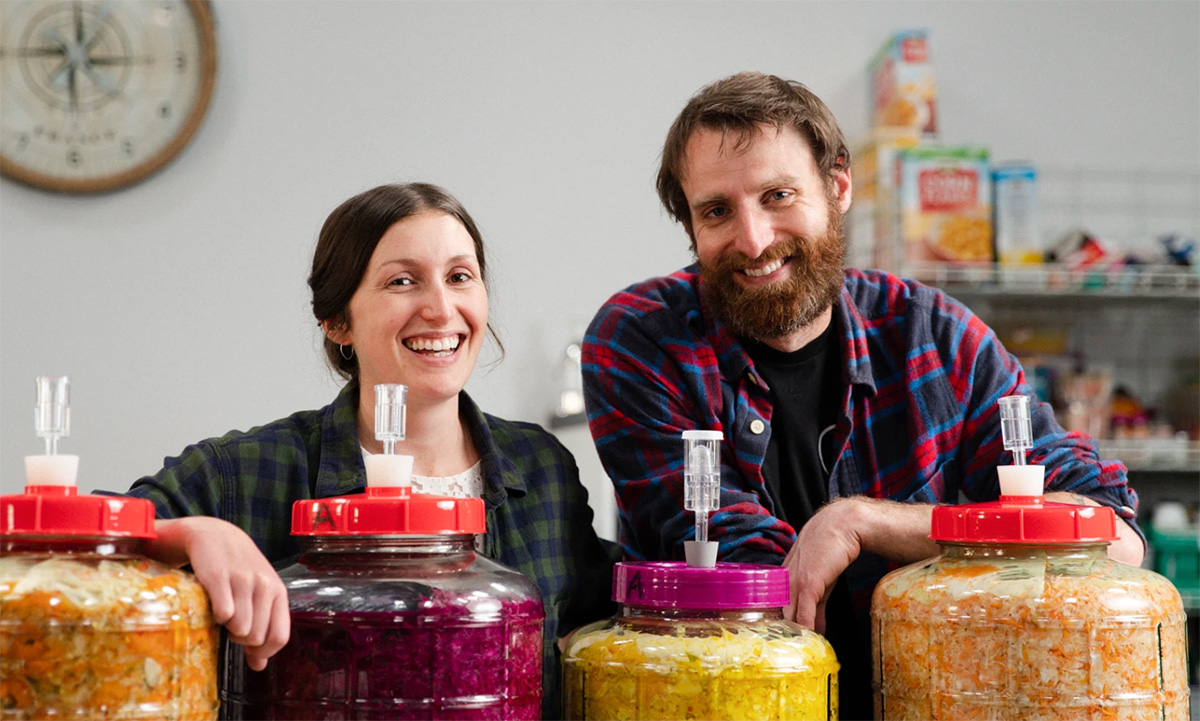 If you are interested in the wonderful world of fermentation, and want to learn how to make great kimchi, sauerkraut or kombucha at home, (I have had my own ‘pet’ SCOBY and have brewed kombucha for years, and highly recommend it as both an experience and ‘tonic’) then The Crafty Pickle Company have released their course dates for 2024.
Held in Monmouth, the courses include everything you need (ingredients, equipment, etc) and you’ll go home with delicious food and detailed instructions for recreating it at home.
The fabulous ‘fermentationists’ also offer non-diet nutritional advice and workshops based around gut health and just how fermented foods can help. I am a big fan of a ‘happy tummy’ and studies now show that our digestive system plays a far more important role in general health – and even happiness – than we realise.
Visit www.thecraftypickle.co.uk for more details, and vouchers that would make an excellent Christmas present.
I have learnt more about chestnuts from this than I ever knew.