
Taken from Lynne’s weekly column ‘Green Scene’ for the Western Mail
29th January 2022
 Dry January

Gosh, typing the date on the top of my copy for this week’s column, I realise we can touch February on the nose. Feels good to have got January under my belt and from a gardener’s point of view it’s been a gentle start to the new year. Not so good for gardens though, as January has had less than half the usual rainfall here in Wales. I have to admit to loving the fact that I haven’t had to dry my coats and waterproofs out in front of the fire for the last few weeks. It makes my work so much easier, but I am a bit nervous that February might ‘level the score.’
The lovely thing about catching up on all of those jobs that didn’t get done at the end of last year, like hedge cutting, and strimming and clearing rough old banks, is that the results of my hard work stays evident for so much longer now than it does in the growing season. I love it.
Mountain of a Molehill
 It’s not only gardeners that have been busy in this dry spell. So have the moles, as I’m sure most of you have noticed. And not only have they been busy tunnelling and chucking up the evidence for us to see and stress about, have you seen the size of some of those mole hills? One of the boys in work said he thought they must have spades underground with them. Spades? I think they have JCB’s, the amount of soil they are shifting.
The reason for these giant mole hills is that it has been dry. The earthworms are going deeper looking for moisture and the moles are following them for food. They eat around 75% of their own body weight every day so that’s a lot of hunting. Moles saliva contains toxins, which paralyse the earthworms and they then store what they don’t eat in specially made ‘larders’ underground. They don’t hibernate and work all year round to catch and store food. Scientists have found ‘mole larders’ with nearly 500 earthworms stored in them.
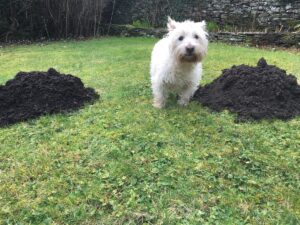
Contrary to popular myths, moles don’t eat plant roots but they are dreaded by gardeners as the tunnels will mean the lawn or grassed area will eventually sink resulting in an uneven area.
Moles can dig up to 18 feet in one hour and around 65 feet in a single day. At the moment they are also preparing for the mating season, where they have to move about a bit more than usual looking for a mate. The more they move about, the more tunnels they build and the more molehills will be seen as they chuck their spoil above ground.
They are able to stay underground as they have twice as much blood as other mammals their size and have more oxygen in their blood. They often live on river banks and are excellent swimmers. A male mole is called a boar and a female a sow with the young called pups or sometimes cubs. I love the fact that a group of moles is called a ‘labour.’

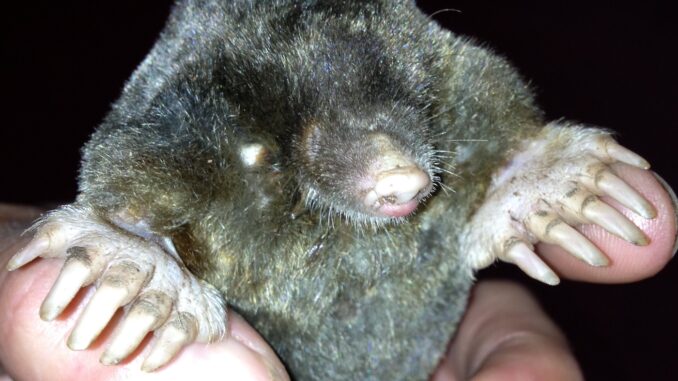
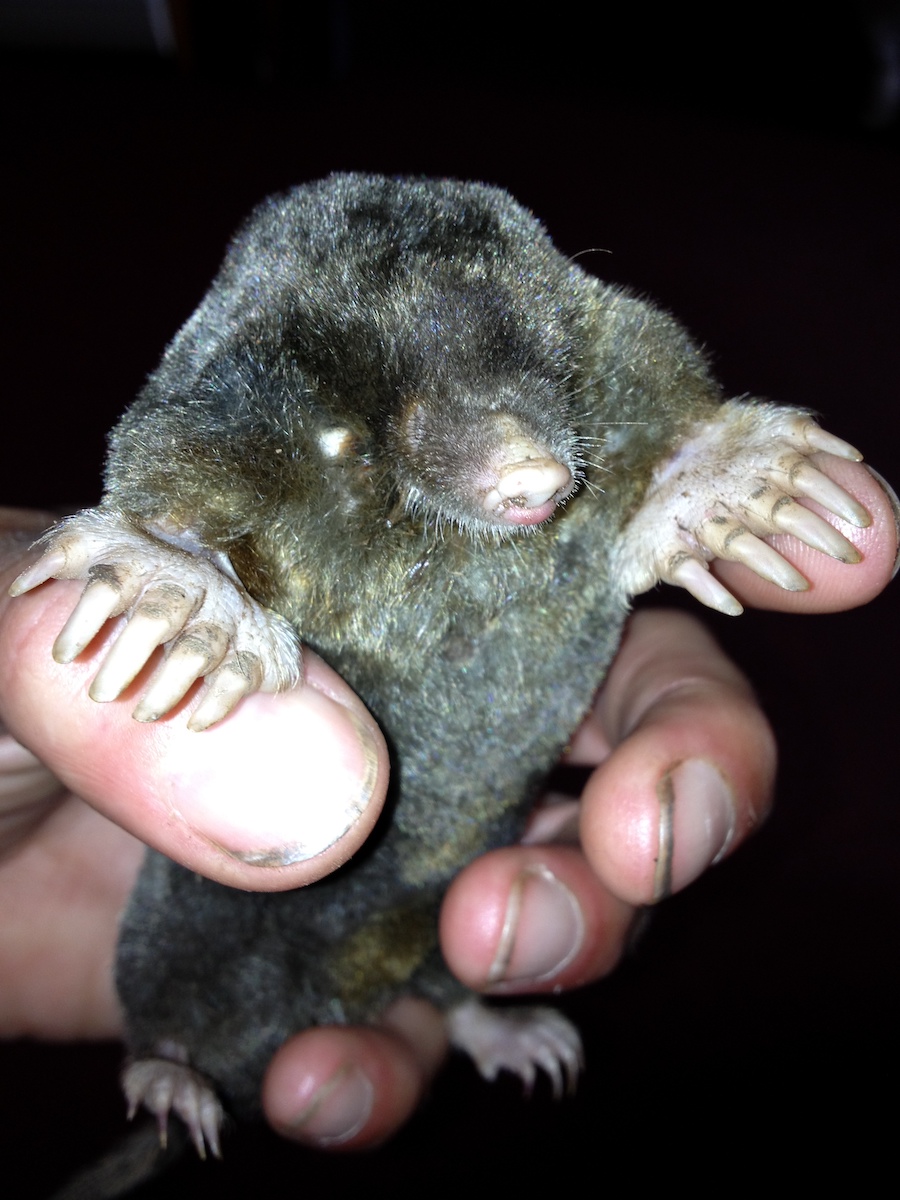
They are capable of giving a nasty bite if caught and handled – so be warned. I found this little fella crossing my lane at dusk. Goodness knows what he was up to, it’s very seldom they are seen above ground. He wasn’t injured at all and thankfully didn’t injure me either. I’m not telling you where I released him. Moles will live on average for 3-4 years – unless they get on the wrong side of a gardener.
Despite the fact there are an estimated 41,400,000 moles spread across Britain, there are no moles in Ireland or Northern Ireland. The reason dates back to the ice age – the colder weather caused the moles to move up north from where they were in Europe. Moles successfully managed to get into Britain, but sea levels rose too high for them to make the move over to Ireland, leaving the island without this fascinating, but often frustrating, mammal.
Washable Ruggables
Every now and then I come across a really clever product that I wish I had thought of. This time it is the washable rug system from Ruggable.
Don’t tell anyone, but as Yogi gets a little older she sometimes has to get up in the middle of the night (sound familiar?) and if I don’t hear her in time to let her out then sometimes I come down to a little accident by the back door in the morning. It doesn’t bother either of us but it has been helpful to discover Ruggable’s washable rugs and to put one by the back door.
Ruggable’s Rug System is absolute genius. It comes in two pieces with the lightweight, removable Rug Cover fitting perfectly inside the washing machine, (even the largest ones), while the clingy, nonslip Rug Pad underneath keeps the Cover securely in place when in use. You can buy as many different Covers as you like and use the same nonslip Pad – it’s great for a ‘change’ and means one cover can be in the wash whilst you use another one.
It’s just as well, as I guarantee you’ll want more than one. The designs are just amazing – far better than for ‘conventional’ rugs. Prepare to be spoilt for choice(s) but the good news is that as each rug comes in 9 different sizes with a runner and a round option you can justify having more than one. The cushioned pad system is much more cushioned (as the name suggests) than the classic, so much nicer to walk on.
And of course they’re not just ideal for pet problems – have you ever spilled a glass of wine or anything else that would normally spoil a rug the carpet or the carpet underneath? The non-slip Pad also prevents liquid seeping through. I think I need to ‘ruggable out’ my whole cottage.
Recently the same system has been used to create a doormat that is also washable.
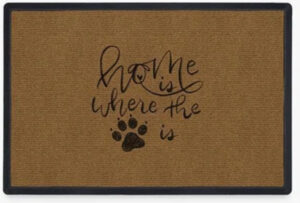
The Doormat cover features heavy-duty bristles that trap dirt and mud, as well as fade-resistant ink that can stand up to UV light, rain, snow, and your washing machine. They are available in a huge variety of colours and styles, including seasonal designs and monogram styles that can be personalized.
The Rubber Mat features a heavy-duty rubber material with a unique water drainage ability and an anti-slip, textured grip to help keep your Doormat secure, dry, and mildew-free, and clever technology keeps the two pieces together, allowing you to detach and reattach the Cover to the Mat without losing its grip.
They are all just paw-fect for outdoorsy people and their pets – especially at this time of year. You can find more information and all the designs at www.ruggable.co.uk
We may have had a dry January but trust me, it’s going to start raining soon – and that means one thing … mud!
Very interesting and good humoured. Keep them coming!
I just found this site and I absolutely love it!! We have just this week acquired a guest in our garden that my children have named Albert and my daughter plans to research him and talk about him for a homework project. This article will be a fantastic start for her to learn from especially the pictures showing us what they look like because she wants to draw one!