
Taken from Lynne’s weekly column ‘Green Scene’ for the Western Mail
5th February 2022
 Wonder Wall
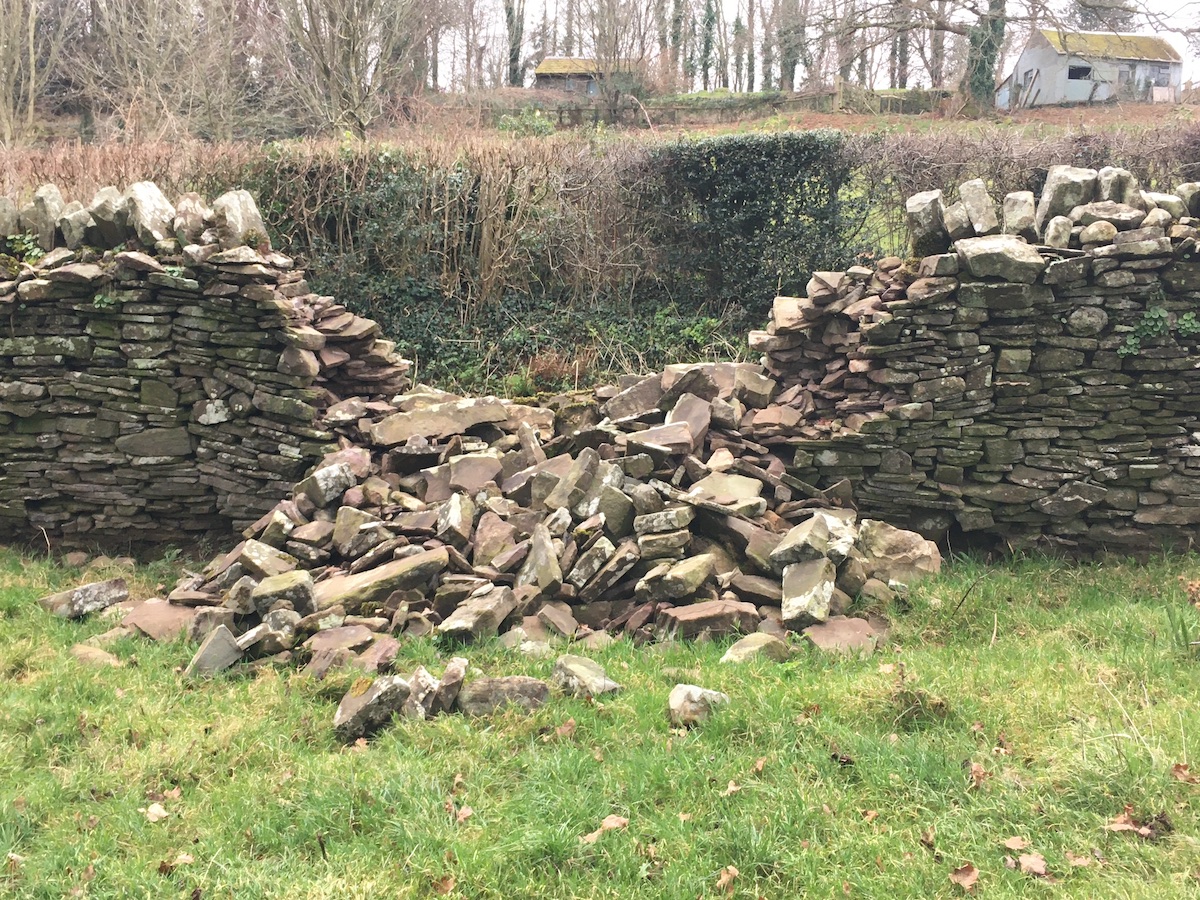
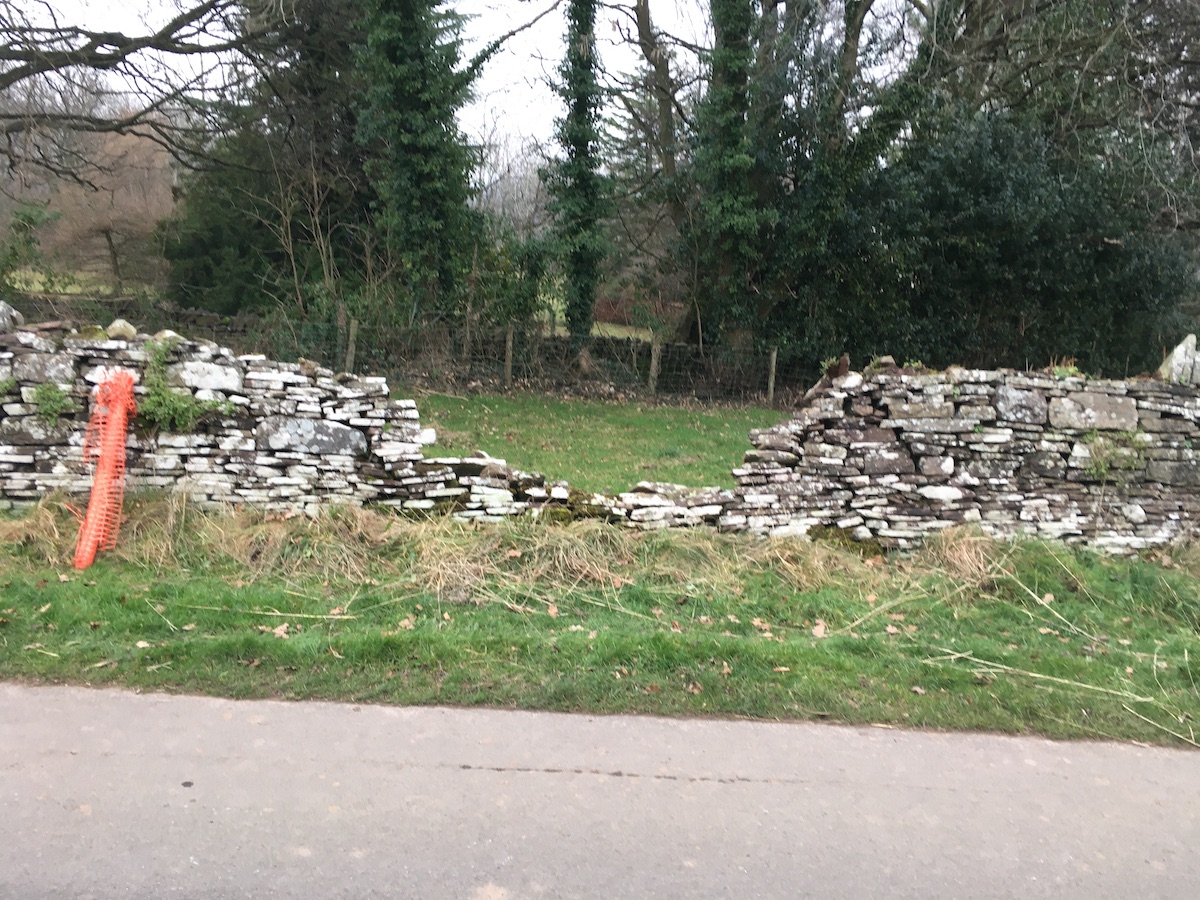
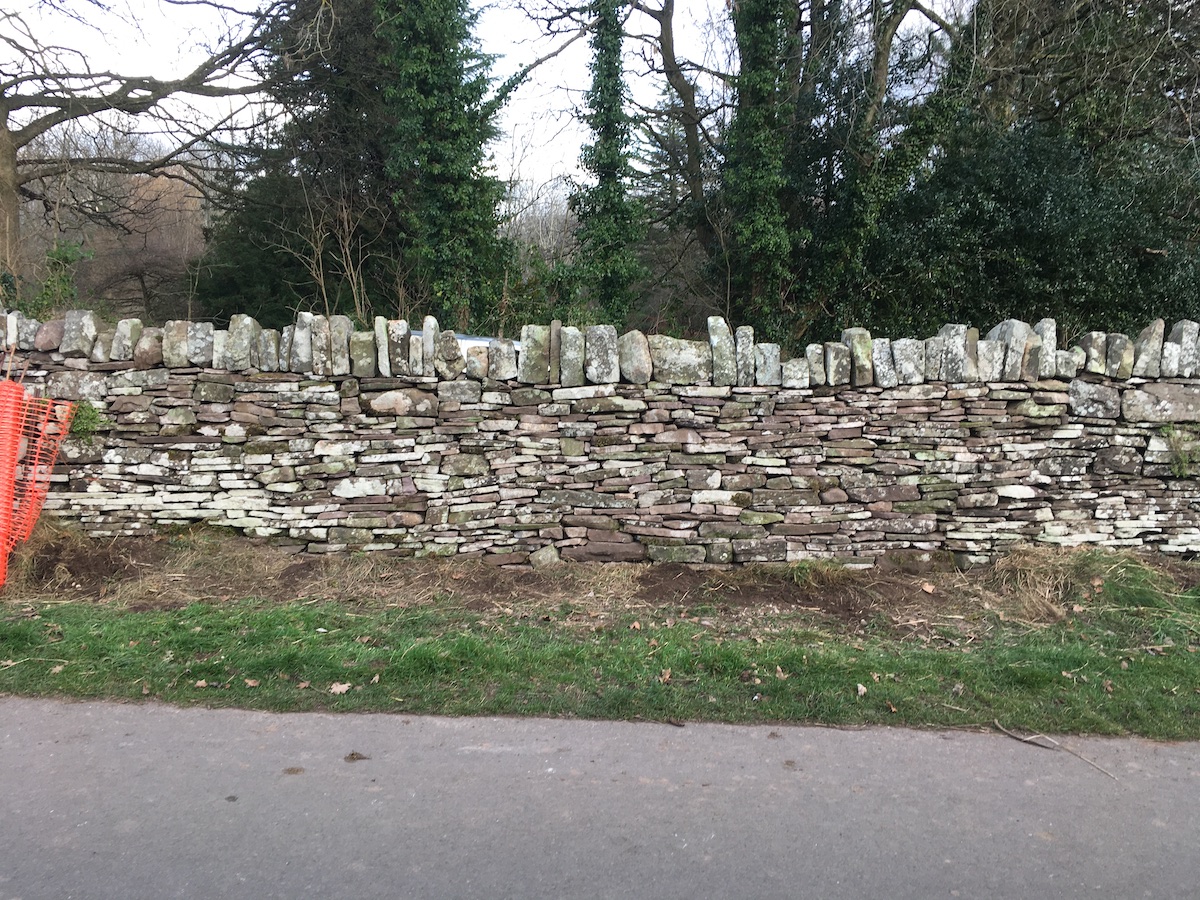
I had a busy weekend last weekend, repairing a large section of dry stone wall that had collapsed in my piggy field. It is a long stretch of wall, probably well over 100 years old, and which is next to a road. Over the years the elements and cars pulling onto the adjacent grass verge has taken its toll and sections are collapsing. I’ve repaired three separate sections over the last five years but this was definitely the largest piece. And because it’s a section that collapsed into the field it meant that another few feet either side of the collapse has to be stripped out and rebuilt to be safe. That’s the hardest part for me – clearing out the section and ‘making good’ before starting to rebuild.
 The preparation is a real skill and discipline when done properly. Stone has to be put into different piles – the ‘cock and hen’ stones from the top of the wall have to be kept to one side to avoid them being built back into the wall. Then the fallen stone has to be cleared away from the base of the wall to allow a good, safe working area and to avoid ‘trip hazards’ (or ankle breakers as I call them). Then all the small stone has to be put into a separate pile to go back into the centre of the wall, as it’s a double faced stretch. This small, odd shaped stone used for the centre is called ‘hearting’ and it is what makes a wall really strong when put back in properly. There is as much of an art to getting the hearting right as building the two faces that are seen.
The collapsed section has to be cleared out completely and the foundation stones re-laid at the base. As the wall has been leaning for a few years before giving in to gravity, the sections either side have to be ‘tied in to’ a little creatively as it goes back up. I just love it all.
Then there are the string lines – I’m not very good with those and often get carried away with my walling, forgetting to raise the string line to work to. Working to a line is an art in itself.
 Dry stone walling is just like medicine for me, I can’t tell you how good it makes me feel. No matter how mad it sounds, and how many other things I do, it seems that dry stone walling is my absolute, complete and utter passion. I love the fact that a good dry stone wall depends on good foundations and a good heart. Even though neither are seen, they are crucial for a safe, strong wall.
And if that’s not a metaphor for life, I don’t know what is.
Chilli Times
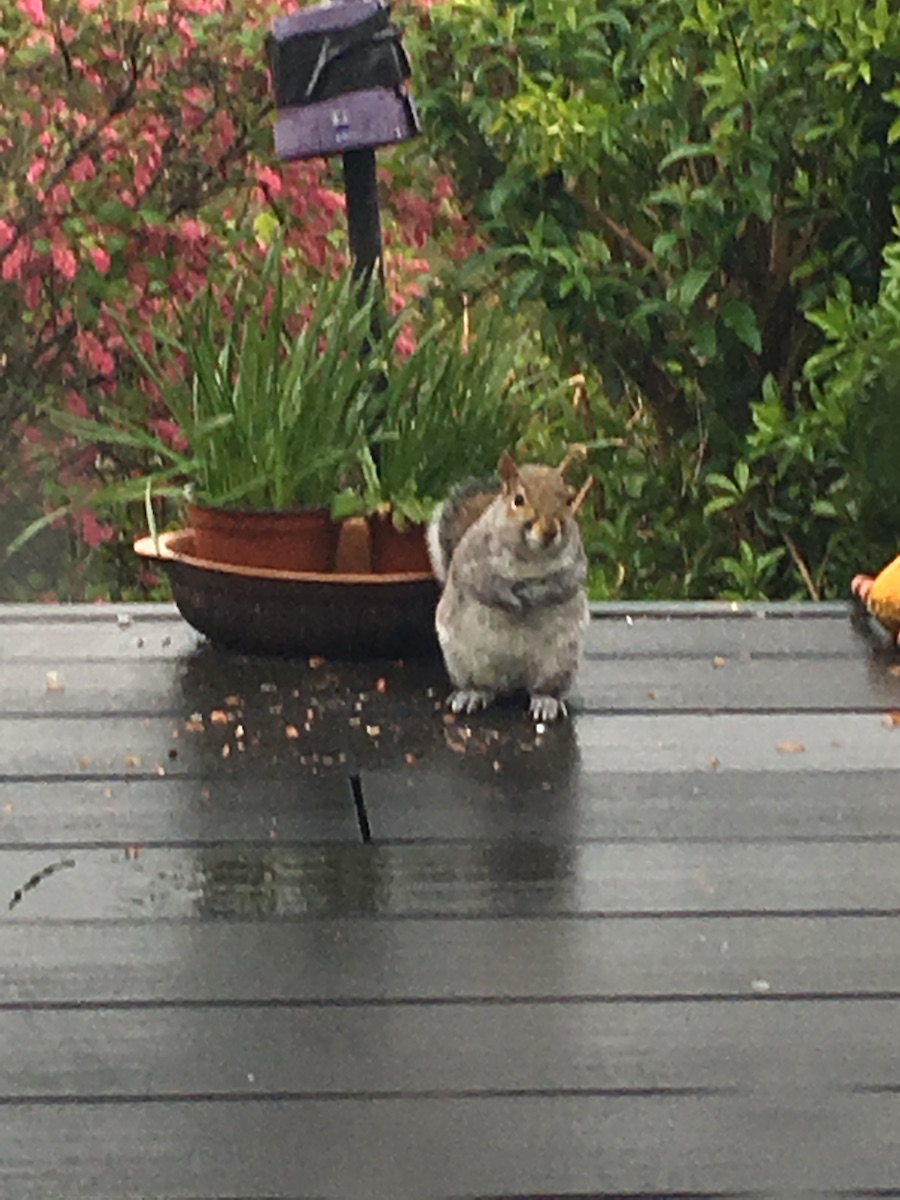 A few readers have asked how my battle with Cyril the Squirrel is going. My brother calls it a ‘battle of wits’ and is concerned that I am unarmed and therefore at a disadvantage.
Huw Jones from Llanishen, shared his secret for a squirrel repellent – and said I could share it with you. He uses Flutter Butter feeders and fills them with bird-friendly peanut butter, which he layers with chilli paste. The squirrels don’t like the chilli but it doesn’t affect the birds.
He is currently experimenting with fat-balls marinated in Sriracha. Watch this space – we may see Huw on Dragon’s Den in the future.
Please don’t use the peanut butter you put on your toast, for the birds – it is full of salt and sugar, which isn’t good for them. You can purchase peanut butter that is made especially for birds.
Another reader generously feeds her squirrels separately from the birds and swears it keeps them away from the bird feeders. You can buy special squirrel feeding stations, squirrel food and even peanut butter for squirrels. More info from www.arkwildlife.co.uk
I also found a rather clever way to make your own little bird feeders – an ideal for a project for little wild fingers. You will need a sharp pencil (or similar), an ice cream cone, a pipe cleaner, creamy peanut butter for birds, some breakfast cereal – like Cheerios – and some birdseed.
Use the pencil (or similar) to poke a hole in the pointed end of the ice cream cone. Twist a knot in the end of the pipe cleaner and put it into the ice cream cone and out the hole (the knot will hold the pipe cleaner in place). Spread the bird-friendly peanut butter on the outside of the cone and press the cereal all over the peanut butter. Sprinkle the birdseed over the cone, pressing it into the peanut butter with your fingers. And in theory, if you mix chilli with the peanut butter and/or birdseed, then it should keep the squirrels away.
Feed The Ladybirds
Ark Wildlife sells all sorts of food for a variety of wildlife and I was impressed to see ladybird food included on their website – as well as butterfly, hedgehog and even tadpole food.
Ladybirds are the gardener’s best friends, as during the summer months they feed on aphids, plant lice and greenflies. Although ladybirds only live for about a year, in that time its thought that a single ladybird can eat around 4,000 pests – starting its feast while still only a larva.
They also require a source of pollen for food and they have a preference for scented geraniums and marigolds. They also enjoy nasturtiums, lavender, dill, parsley, and thyme.
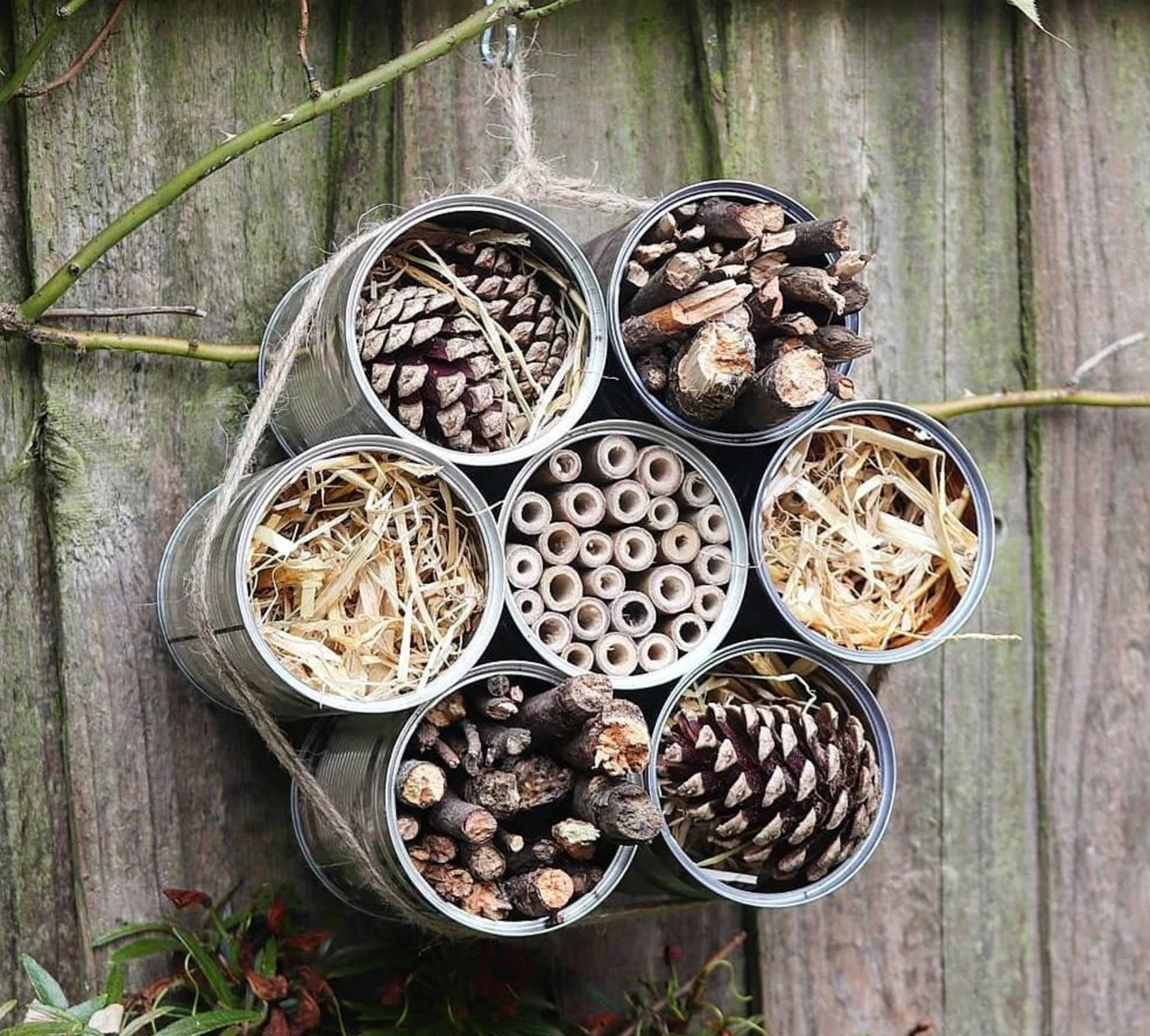 Putting a ladybird house, or suitable Bug Hotel in a flower or herb bed will provide a source of shelter during the summer months – nice and close to their food supply – and suitable quarters for hibernation during the winter. It seems their hibernation habits vary with species type. Sheltered areas such as garden sheds, under tree bark and in dense vegetation are prime targets and they can often be found huddled together in large groups in sites that they will return to year after year. Some will even cwtch into window frames of older houses like here at the cottage, where the small gaps provide drafts for me but security for them.
There are 46 species of ladybird in the UK and of those 46, three have been discovered in the last few years. Probably the best known of these is the now infamous harlequin ladybird – wreaking havoc in the ladybird world. The commonest ladybirds in the UK are the familiar seven-spot ladybird, which has seven black spots on its two red wing cases and the smaller two-spot ladybird. The red and black attire of the ladybird is to warn predators not to eat them. Apparently ladybirds taste horrible so they are left alone by other predators.
It is usually March before adult ladybirds become active and leave their overwintering sites to find food. But as the weather has been unseasonly warm, I have already seen ladybirds out and about under the illusion that spring has sprung. They will obviously benefit from food being available for them.
Ark Wildlife’s ‘Ladybird Food Attractant’ is designed to attract ladybirds to your garden and provide them with excellent nutrition. They also offer a Ladybird/Beneficial Insect Tower with Pole or Ladybird Lovers Pack (perfect for Valentine’s Day?) which will provide a natural and sheltered habitat for ladybirds. Simply mix a teaspoon of the ladybird food with water to form a paste and put it at the entrance hole of the insect tower.
And I’m sure I’ve told you before, but possibly the coolest thing about ladybirds is that a group of them is called a ‘Loveliness’.
Happy Birthday
Happy Birthday to my brother for today. He wanted a couple of books for his birthday – ‘Tuning and Modifying the Rover V8 Engine’ and ‘How to Tune Rover V8 Engines for Road and Track’. I just hope he’s not expecting the V8 engine for Christmas.
He had a real Hero moment last week. On his way to work there was a tree down blocking the whole road. As Ian had his chainsaws with him for work, he just coolly got them and his chainsaw lid out of the truck and cut up the tree so the traffic could get through. I can’t tell you how proud I was. Not all heroes wear capes.
Leave a Reply