
Taken from Lynne’s weekly column ‘Green Scene’ for the Western Mail
22nd January 2022
 Micro Greens Macro Taste
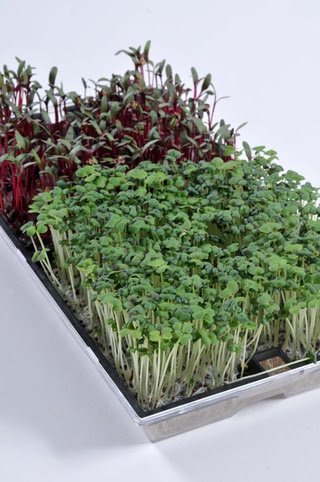
I miss being able to grow my own salad leaves during the winter – I have tried various methods involving a variety of heat methods, containers and level of prayers – but none of them have worked consistently. So instead, I sprout seeds and grow microgreens on the windowsills.
That doesn’t always yield great results either as the heating here at the cottage is ‘basic’ and it can get pretty cold. Sprouting seeds and microgreens, like me, are not keen on the cold. I have found that putting little homemade cloches made from empty 2 litre water bottles help but it is still a bit of a lottery as to what is brave enough to grow or not.
Microgreens have increased in popularity over the last few years as posh restaurants sprinkle them over dishes, like veggie confetti, for colour, flavour and added conversation. But the fact is that they are incredibly good for you.
Microgreens are basically baby plants, harvested when just in the seedling stage between 1 and 4 weeks and typically before they reach 5 cm high. They are packed with flavour and taste delicious.
A study looked at nutrient levels of 25 different microgreens and compared them to nutritional values of full-sized leafy vegetables and herbs.
Not surprisingly, nutrient levels in different microgreens varied, but on the whole they typically had higher levels per gram of vitamin C, vitamin E and carotenoids (plant compounds with astonishing health benefits) than mature crops.
But whilst microgreens are clearly more concentrated sources of vitamins and minerals the jury is out as to whether or not we can eat enough of them to make a difference. And can we afford to?
For example, micro red cabbage contains an impressive 103mg of vitamin C per 100g compared to full sized red cabbage at 69mg for the same amount. Yet the cost difference means you could buy half a regular cabbage for the price of a small pot of micro version. – unless, of course, you grow your own.
So whilst it is easy to see why they are used more like stardust than sugar, they are still a good way to introduce kids to veggies and growing their own food – and adding variety to your own meals.
If you have a well heated house and/or a sunny conservatory, they will do well. But I was brought up learning about death and failure as well as success, and think it’s no bad thing if the odd crop does fail for the young green fingers. This is Gardener’s ‘Real’ World, after all.
This year Johnsons Seeds has extended their microgreen seed range by introducing eight new varieties. There are some crackers to chose from. All are ready to harvest within a month and range from £2.20 to £3.65 per packet.
- Basil Lemon has an incredible basil flavour with a fresh lemon twist.
- Basil Red is rich in colour and flavour, delicious in Mediterranean dishes.
- Chervil has a tangy and bright anise flavour, perfect for soups and salads.
- Chicory has mild, non-bitter leaves and is a great addition to salads and sandwiches.
- Mizuna Red is mildly spicy and a favourite for noodles and soups.
- Mustard Oriental produces great looking, full-flavoured spicy leaves.
- Pak Choi has tender leaves and adds interest to salads and stir-fries.
- Spinach Komatsuna is a favourite in Eastern cooking, with oriental leaves and a tangy spinach flavour.
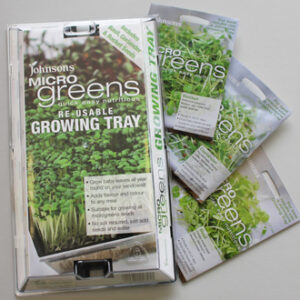
Their range also includes the Microgreens Growing Kit (£4.99) – a high quality reusable growing tray which includes three packets of seeds, and the Microgreens Kitchen Seed Sprouter (£11.99) – a convenient and economical way to produce fresh seed sprouts such as alfalfa and mung beans, as well as microgreens.
Bloomin’ Early
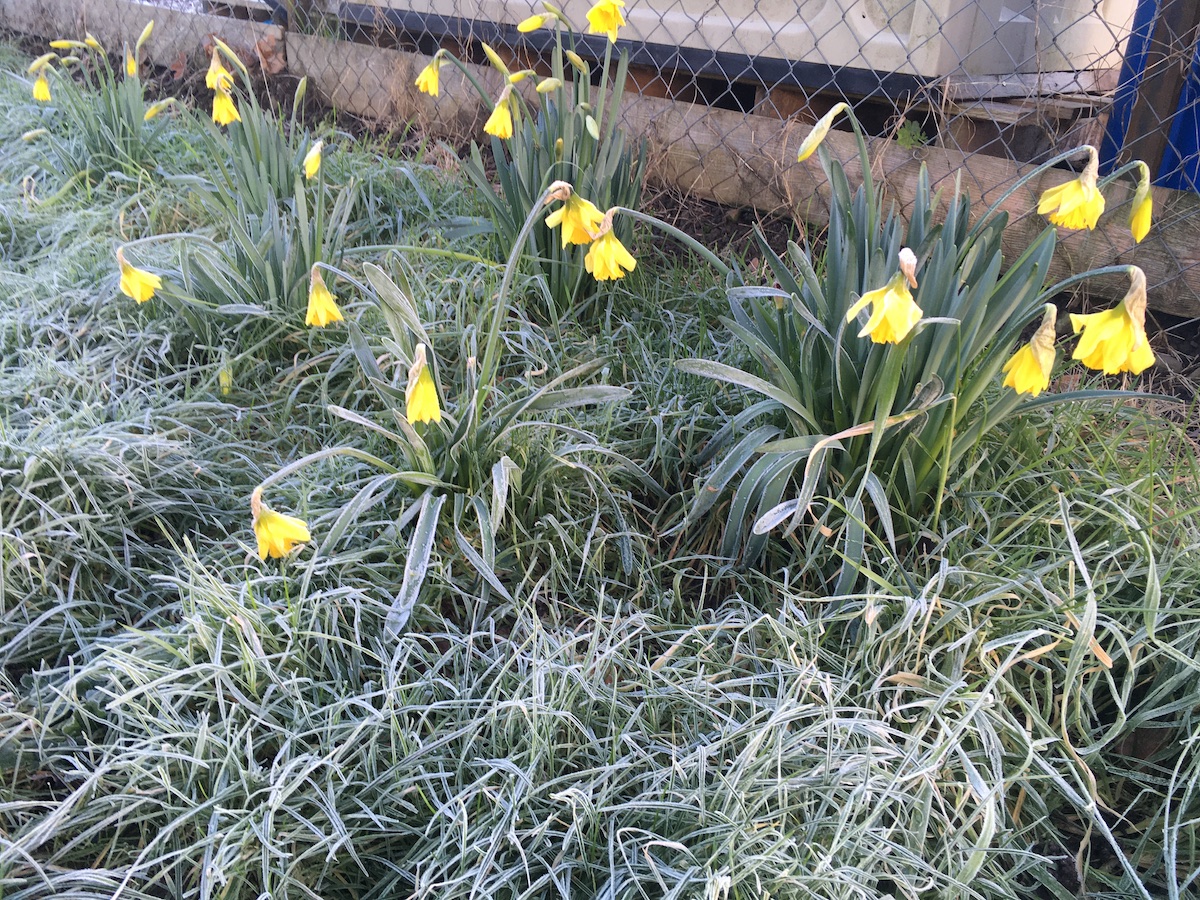 Whilst I have been monitoring the reluctant emergence of snowdrops this year, I am yet again in awe of the daffodils that have been blooming for the last few weeks around the Fire Station and allotment in Crickhowell.
Every year they are way ahead of their counterparts, often blooming in the frost, and even snow, and every year I wonder why – or how?
Any ideas?
Dark Side of Nature
And so to the next instalment of the recent wildlife sagas in my own garden. You may remember that I had to ‘squirrel proof’ my bird feeders and when putting them out in the open to deter the fat furry thief I ended up rescuing a sparrow from the clutches of a sparrow hawk who utilised the open runway to strike.
Putting the feeders back in a more sheltered spot to deter the sparrow hawk, I had then sprayed the stands with Jeyes Fluid to deter the squirrel. The very last line of my last column was, ‘ …. but just for a little while, I might actually be ‘ahead of the game’.
How arrogant and wrong I was.
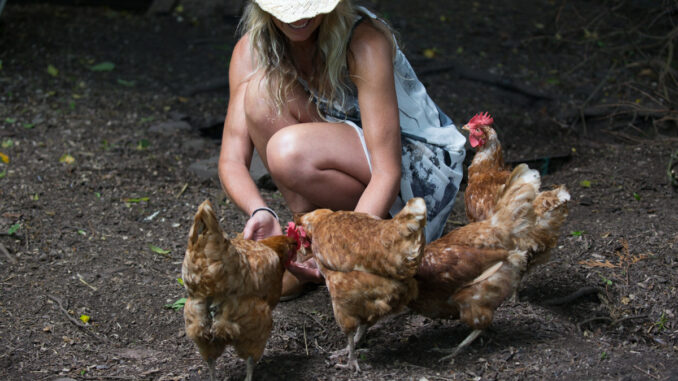
Unable to ‘pick off’ little song birds from my feeders the sparrow hawk killed one of my chickens.
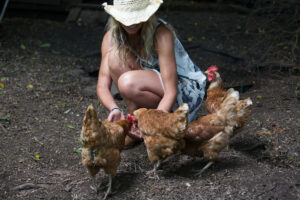
I heard a commotion in the pen and ran up to see the ‘sparrow hawk’ fly off and the attacked hen on the ground amid a cloud of her own feathers. I picked her up, cwtched her and she died in my arms. I really am not emotionally equipped for this side of nature. During the 10 minutes I sat on the ground cradling her, the bird of prey came back four times for his ‘meal’. It was just horrible. I understand he was hungry but my chickens are my family. I feel I let this hen down badly.
I put my other three (terrified) girls in their coop and had to set about upping my game in this ‘war’. The chicken run is just to big and awkward to cover completely so I have had to build them a new enclosed run as a temporary (ish) measure to keep them safe.
A little bit of local research turned up that it wasn’t a sparrow hawk at all but a Goshawk – which is like a sparrow hawk on steroids – a beautiful bird but a mighty murderer too. He has been wreaking havoc locally, helping himself to neighbours bantams and terrorising other hens. Wider research showed there have been recent reports of a Goshawk bringing down and killing a roe deer in the Forest of Dean. After witnessing his repeated visits for his victim, and seeing the feather-wrapped sheer strength and steely determination, I can believe it.
They are, of course, a protected bird. And a beautiful bird. And they need to eat. But my word, this side of nature hurts my heart.
Leave a Reply