
Taken from Lynne’s weekly column ‘Green Scene’ for the Western Mail
14th May 2022

Water Good Idea
We only had a third of the traditional rainfall in April, and May has been dry so far too – apart from a few showers on Wednesday. Whilst it’s great to work in dry weather, it’s obviously not so good for gardens – or wildlife.
Most people underestimate the amount of water plants need. Often if something is ‘struggling’, it will simply be a lack of water – especially when newly planted. It is essential to keep vulnerable plants well watered and that will include veggies too. I see a lot of people full of enthusiasm at the beginning of the season but they soon start to wane and watering is the first thing to be abandoned. It’s the mindset that is important, if you see it as a chore you will soon find reasons not to do it but it can actually be quite relaxing and meditative – and just like meditation, best done first thing in the morning and last thing in the evening.
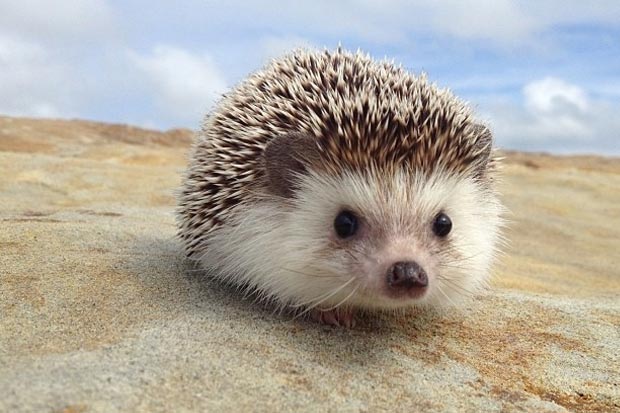
As well as taking care of your plants, please put out water for wildlife. Hedgehogs are going into rescue centres now suffering from dehydration and it is so easily avoided by simply making sure they have access to fresh drinking water. Hard working birds will also appreciate a reliable supply of drinking water, and also water to bath in – a bird bath is such a good present for anyone with a garden or even a balcony. The entertainment value is as rewarding for us as the bath is for them.
Bees also need a regular supply of shallow drinking water. They can’t drink from deep water as the surface tension won’t hold them and they need little shallow or boggy drinking holes. A big saucer or plant pot drip tray is ideal with a few stones and leaves included for them to stand on to drink. Butterflies will use the same ‘watering hole’ and you will be rewarded by lots of grateful visitors. Some people put marbles in a bowl of water, which I suppose is a bit more artistic – but as long as it works, you choose your own type of ‘Bee and butterfly Bar’.
Hydro for Health
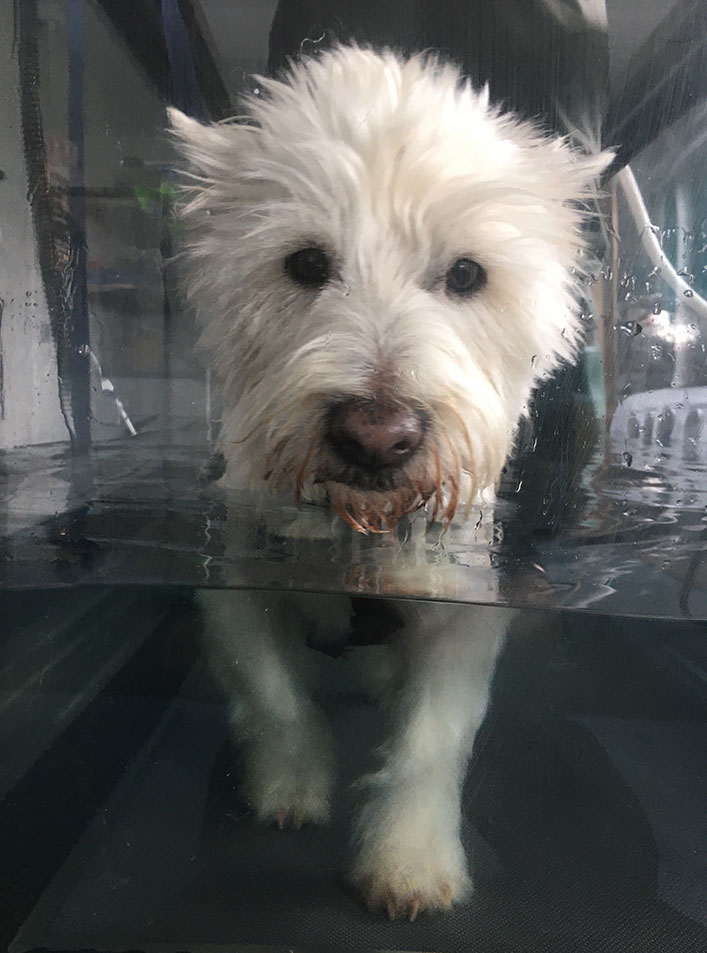 And on the subject of water, I can’t resist including a photo and update of Yogi at hydrotherapy. Look at her concentrating! Now that her cruciate ligaments have completely healed, she is still having regular hydro sessions as a preventative (and pleasure) option as opposed to waiting for it to be a curative solution.
As recommended in the brilliant book Forever Dog (written by Rodney Habib and Dr Karen Shaw Becker), hydrotherapy is just a great way to maintain your dog’s optimum health and mobility. The underwater treadmills are a preferred option (to pools) and provide fabulous – and safe – cardio exercise for older, arthritic and out-of-shape dogs. Of course you don’t have to wait until your dog needs the ‘therapy’ side of hydrotherapy. Yogi absolutely loves her sessions and I love to see her happy. Because she’s worth it.
More information from www.fourseasonskennels.co.uk or call Sue on 07789 071 738.
Tree Candles
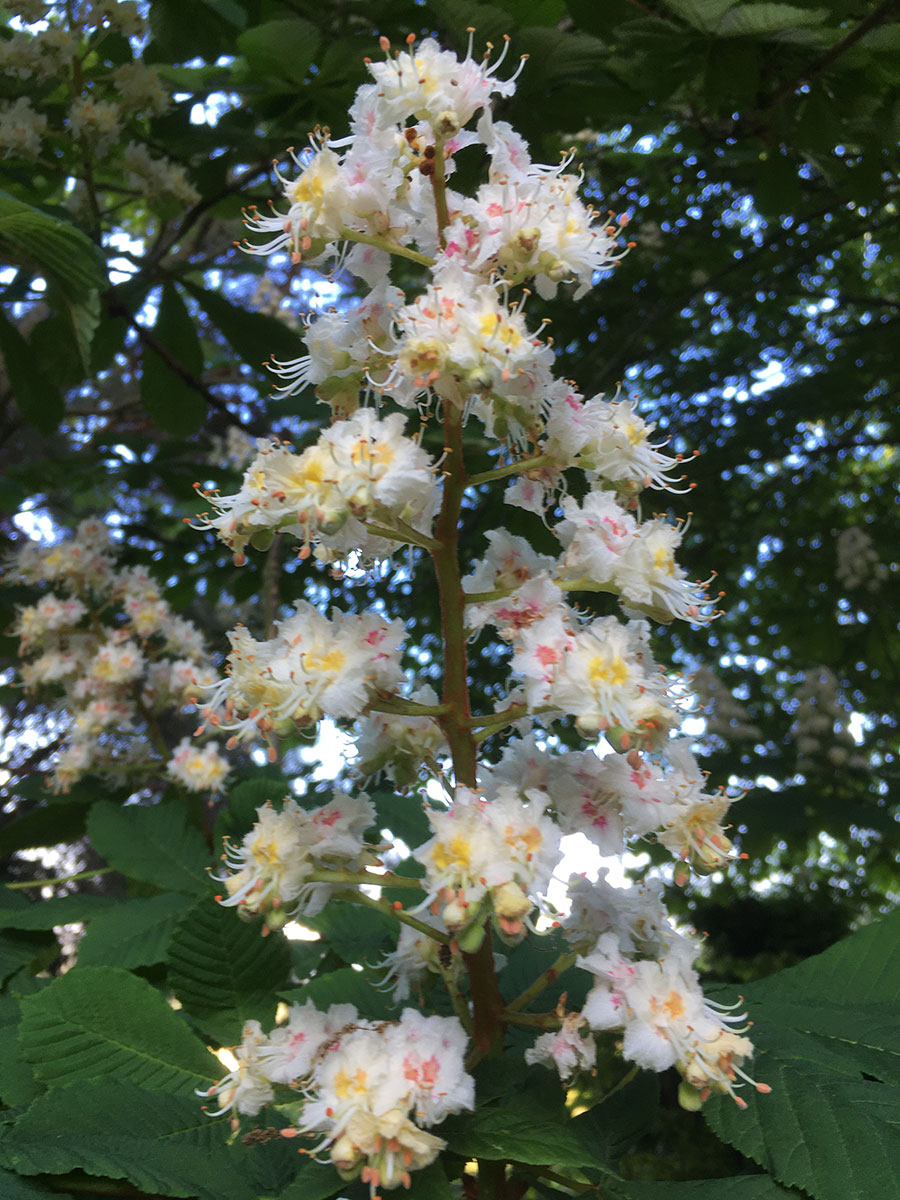 Every day something in nature catches my eye and earns my utmost respect. Currently it is the magnificent ‘candles’ of the horse chestnut trees. They are just phenomenal and are the flower spikes of the tree.
The arrangement of floral parts differs between the flowers within each candle, with only a few flowers able to produce fruit (conkers) and the rest used to attract pollinators.
The flower spikes can be as much as a foot in length and consist of both male and female flowers. The flowers are initially mostly white, streaked with yellow nectar guidelines for pollinators. These guidelines turn to a deep crimson once the flower has been pollinated. This is even more impressive when you learn that bees can’t see the colour red, so once pollinated the flower is ‘switched off’ as far as the bees are concerned. How amazing is that?
The pollen from the trees, which can be seen in the pollen baskets on the honeybees legs, is a distinctive brick red or crimson colour – so you will know where they have been foraging.
The Aesculus Hippocastanum is known as the horse chestnut because when the leaves fall, the stalks leave a scar on the twig which resembles the shape of a horseshoe complete with nail holes. Apparently the conkers also used to be ground up and fed to horses as a remedy for coughs, although I wouldn’t suggest doing that myself.
Black and White Blackbirds
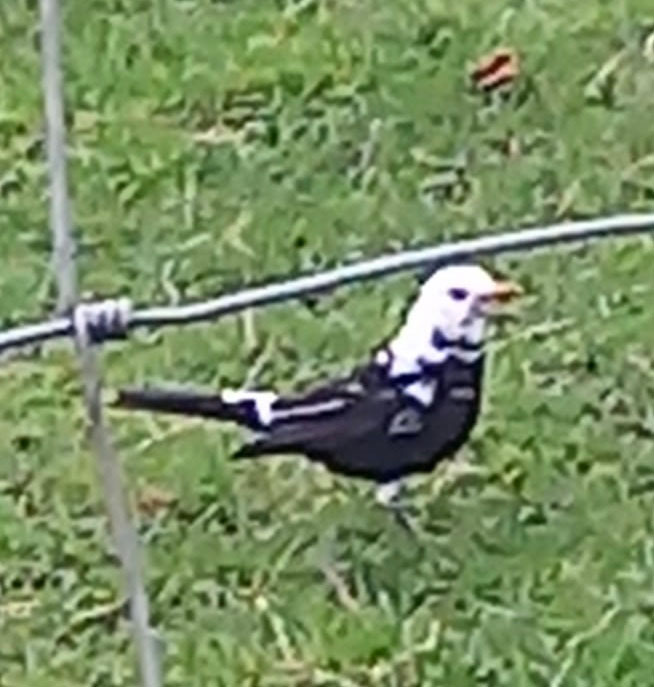 I have counted 8 bird’s nests in my garden and sheds this year – it’s one of the advantages of having a quiet garden. I always watch carefully at construction time and can see where the busy birds are going with beaks full of sheep’s wool, twigs and dead grass, and then I know to give that area a wide berth. Unfortunately, a little wren chose to nest just inside my wood shed this year so I haven’t been able to get any firewood in for the last couple of weeks. She looks lovely and warm in her cosy little nest while Yogi and I freeze indoors in the evening.
Blackbirds are such hard workers and can be seen going back and forth in my garden with beaks full of bugs and worms now, obviously trying to keep hungry mouths fed. I have one male blackbird with a flash of white on his wing. He looks a bit like a magpie but isn’t. I mentioned it to a fellow bird lover and they told me about the black and white blackbird they had seen on their rounds recently. I asked good friend Iolo Williams what was happening with these birds and he said they are leucistic blackbirds. They have abnormal white or pale plumage due to a lack of melanin pigment, (called partial albino by the RSPB), and it is actually quite common in blackbirds and carrion crows. As it is caused by a genetic mutation, it’s not unusual to find several affected birds in the same area, as they are probably related.
Despite one Avian report claiming that only about 1 bird in 30,000 has leucistic or albinistic plumage, since talking to Iolo about them I have also noticed an almost completely white blackbird not so far away from the cottage. Nature keeps teaching …
Another gem again this week! Thank you. We have a blackbird that visits us each spring and summer and he has a white flash on his breast feathers.
I didn’t realise until just recently that the blackbirds which visit us in the spring and summer are not the same ones that adorn our gardens in the winter. Please correct me if I’m wrong.