
Taken from Lynne’s weekly column ‘Green Scene’ for the Western Mail
7th May 2022

Beautiful Bluebells
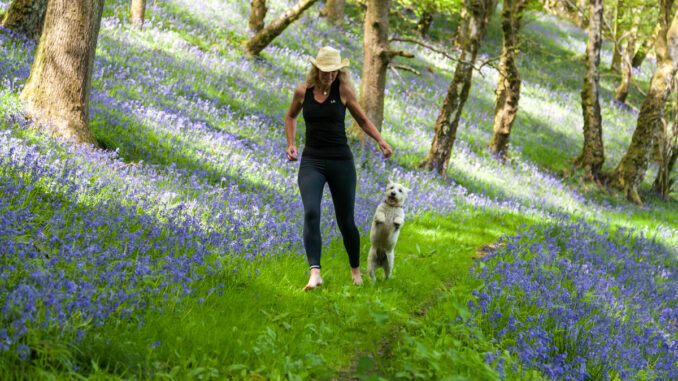
 It’s a great year for bluebells. They love dry conditions and this year have reacted to the drier-than-usual April (we only had a third of our usual rainfall) with blooming marvellous displays.
They are traditionally at their best over the first May Bank Holiday but as the tree canopies are later coming into leaf this year, it may well delay their peak-flowering for a week or so. They are a canny lot and wait for a certain amount of canopy coverage so they have both light and shade.
I would think the beautiful blue carpets will last longer this year too, due to the cold nights. Bluebells are often found in Beech Woods and they have sharp leaf tips to allow them to push through the tough beech leaf carpet on the woodland floor – look carefully and you might even see a beech leaf speared by a bluebell’s leaf.
Their presence in ancient woodland sites also indicates that the original bluebells in that woodland could well be over 400 years old. They take a long time to spread by seed, as little as under a metre in a year – so when you see the really impressive huge blue drifts you can imagine how long they have taken to spread. Bluebells are often seen amongst bracken too, they are stunning on Skomer Island for example, as bracken provides a false canopy.
As tempting as it might be, it is illegal to take plants from the wild and if you do want to have bluebells in your own garden it’s important that you buy the native species from a specialist nursery. Many of the garden centres sell the Spanish Bluebell, which is incredibly invasive and is threatening our native species. The Spanish flower is much bigger than the native one and is also available in white and even pink whereas the native is only blue. The anthers of the native bluebells are white and it is fragrant, unlike the Spanish imposter. And if you already have the Spanish bluebells taking over in your garden, please don’t dump them in the countryside, as that’s how they get introduced to the wild and then take over.
The UK hosts nearly 75% of the world’s native bluebell population and a large proportion of those are found in Wales, so we need to look after them – they are an extremely important part of our National Heritage.
If you want to see the beautiful blue carpets yourself try Castell Coch or Caerphilly Mountain and there is also the renowned Bluebell Woods (Coed Cefn) near Crickhowell.
For more Blue-tiful Bluebell walks in Wales pop into www.ramblers.org.uk
Dog’s First (Aid)
 A couple of years ago I attended a Dog First Aid Training Course and I left thinking it should absolutely be mandatory for every dog owner. Contented Pets are hosting another course from 10 -2.30pm on 28th May at Llanfoist Village Hall, near Abergavenny, and whether you are a doggy professional or simply a dog ‘paw-rent’ I really urge you to go.
You will learn to familiarise yourself with your dog’s vital signs – all of which differ from dog to dog. For example, some dogs simply breathe quicker or deeper than others or maybe your dog’s gums are naturally pale or red – all things that you should know, and therefore will be able to recognise when it is abnormal. It’s information that is invaluable for the vet who may be seeing your dog for the first time, in an emergency.
Do you know how to check your dog’s pulse? How to give CPR? And that the dog should face away from you while you do so? Is your vet’s number in your phone? Would you know to ring the vet ahead of your arrival, with as much information as possible, to prepare them? Adder bites are on the increase, for example, and giving your vet time to prepare for your arrival could easily save your ‘best friend’s’ life.
I know I learned a tremendous amount and wondered how I had been so lucky to have got away without knowing it in all of my years as a dog parent. What I don’t know is how any dog owner could possibly justify ‘not’ attending one of these courses once you know about them.
Contact angela@contentedpets.co.uk for more information or call 07846 653275.
Who’s Poo?
 A friend messaged me last week to see if I could identify a night-time visitor by the ‘messages’ they left on the patio. I could. It was a fox. I think it’s fascinating to be able to identify animal poo – or scat as it’s called – to see who has been visiting your garden. I often tell a surprised client that they have a visiting hedgehog, as there will be the telltale signs on the patio or lawn. But possibly the most exciting faeces-find is an owl pellet, which we were encouraged to dissect as kids, to see all the little mouse and voles bones inside.
If your scat knowledge isn’t what it should be there is a very entertaining site you can visit to brush up on your scat skills – do be warned about the sound effects, although I am sure they will delight the youngsters.
www.rspb.org.uk/fun-and-learning/for-families/big-wild-sleepout/whose-poo/
No Mow May-be Leave Paths
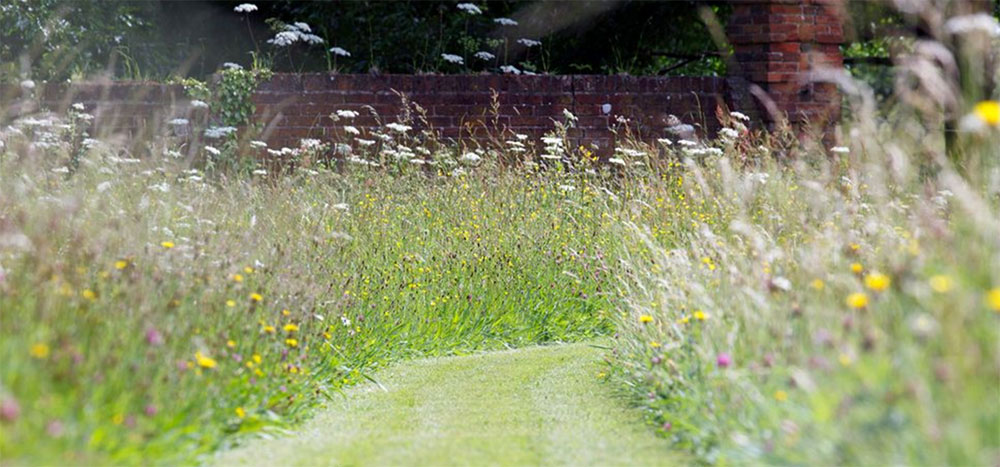 Plantlife’s ‘No Mow May’ campaign launched at the end of last month and is selling itself on the fact that you don’t have to actually do anything to support it – just lock up your lawnmower. We are encouraged to let the wild flowers in our lawns flourish and bloom, providing a feast of nectar for our hungry pollinators. British conservation charity Plantlife started No Mow May in 2019 but is being trademarked for the first time this year, making it higher profile.
An acre meadow can be home to 3 million flowers producing enough nectar to support nearly a quarter of a million bees every day. On a single day in summer, a single acre of wildflower meadow can contain 3 million flowers and produce 1 kg of nectar sugar for pollinators. Of course most of us won’t have an acre of meadow to ‘not mow and let go’, but lots of smaller lawns soon add up to that acreage.
At the risk of sounding a bit of a party pooper (or pollinator pooper) I would urge you to have a bit of a plan before you simply abandon your mower. I would encourage you to keep some mown paths through your lawn, no matter how small, to avoid it going totally wild and proving to be difficult to reclaim.
Or be prepared to buy a strimmer or scythe later in the year.
I love the idea of letting the pollinators benefit from the wildflowers, but I always think it has to be weighed up with practicalities too – I am sure you will still want to use your lawn, so maybe just mow a few paths and a seating area. Dandelions and lots of other lower growing wildflowers will still flourish with the blades just lifted a little higher.
A wild garden isn’t a neglected garden – or an excuse to ignore your outdoor space – it’s about making it work for our wonderful wildlife but ensuring that we can still enjoy it too.
Visit www.plantlife.org.uk/uk/discover-wild-plants-nature/no-mow-may for more information and to find out how to join in their ‘Every Flower Counts’ survey at the end of the month.
Leave a Reply