
Taken from Lynne’s weekly column ‘Green Scene’ for the Western Mail
21st October 2023

The Entire Cosmos
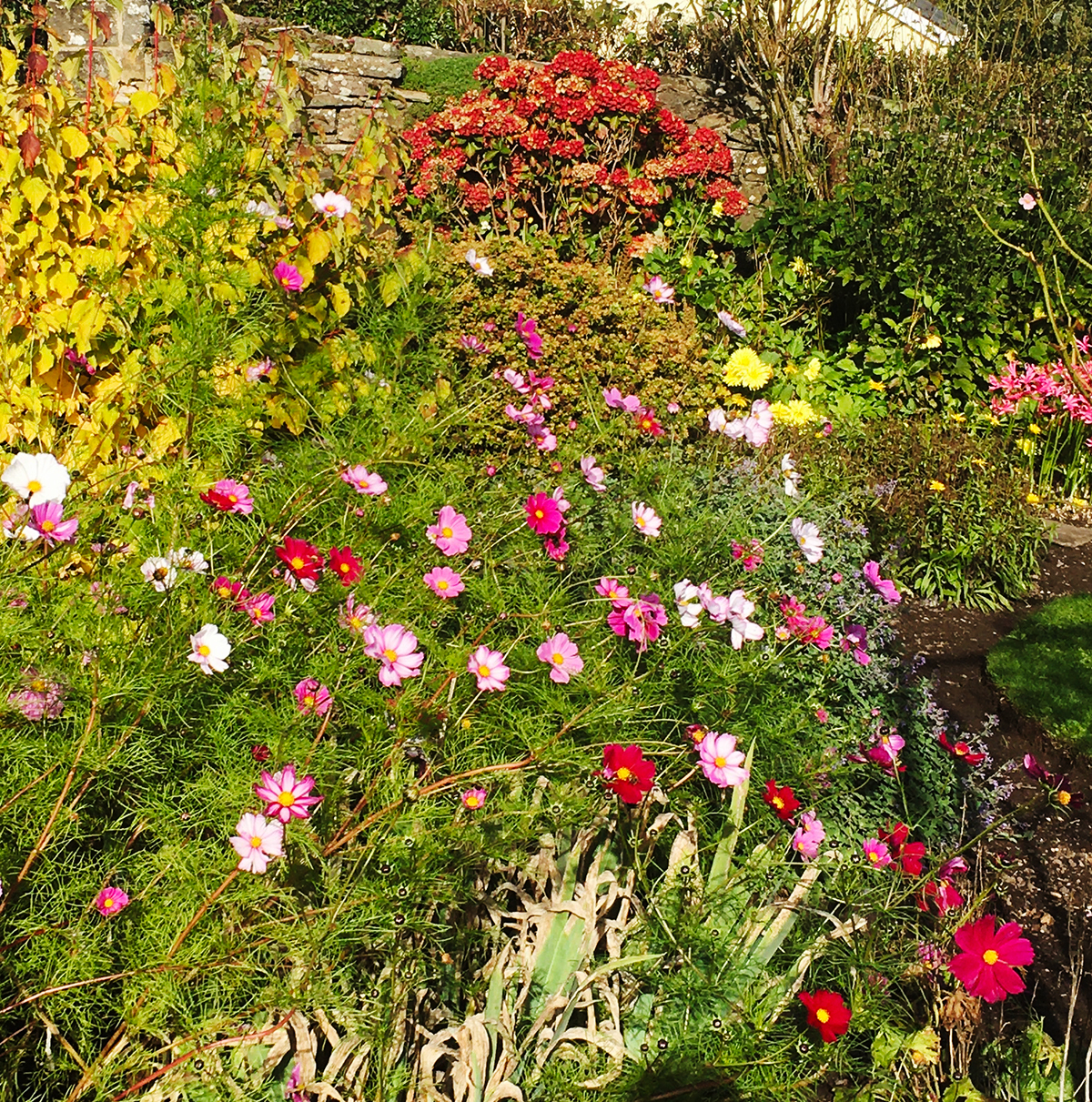
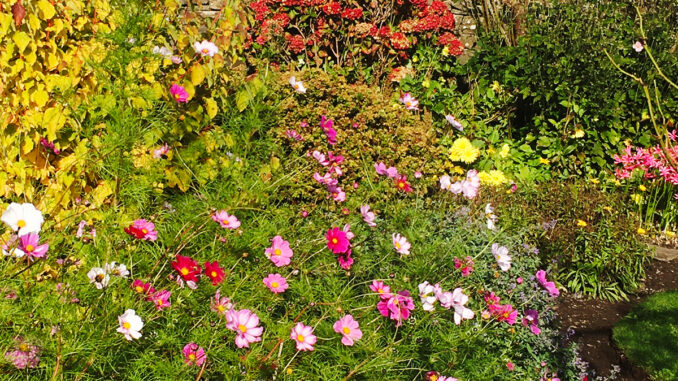
This fabulous show of Cosmos (see photo) has to be the best value for money – all from a £1.99 packet of seed sown directly into the border in May.
They make excellent ‘fillers’ in beds and borders and are also ideal for tubs and containers. And they are fabulous as cut flowers for indoors too.
This variety is ‘Sensation Mixed’, I also grew ‘Lemon Sherbet’ this year, which were more compact and not quite as prolific but still make a lovely sunny splash of colour in the border.
My favourite is ‘Purity’ with it’s stunning white flowers that will uplift any area (but they had sold out). Put a couple of packets of Cosmos seeds on your list for next year or pop them in a birthday or Christmas card as a lovely little gift.
New-bees
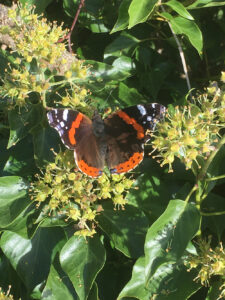
From late summer through to late autumn, Ivy produces small globes of nectar, and pollen-rich flowers that are often mistaken for the berries. They are definitely not the ‘flashiest’ flowers but are loved by hundreds of insects that visit on warm autumnal days through to late November.
On the recent sunny days have had you are bound to have noticed that any large patches of ivy on a wall or in a hedgerow are literally humming. ‘The ivy’s alive’ (said in a Brian Blessed voice). Look closer and you will see that it is like the ‘January sales’ for bees, a few wasps and other pollinators at the ‘all you can eat buffet’. I used to think that it was mostly honey-bees indulging in the last real feed of the year but most of the diners will be the aptly named ivy bees.
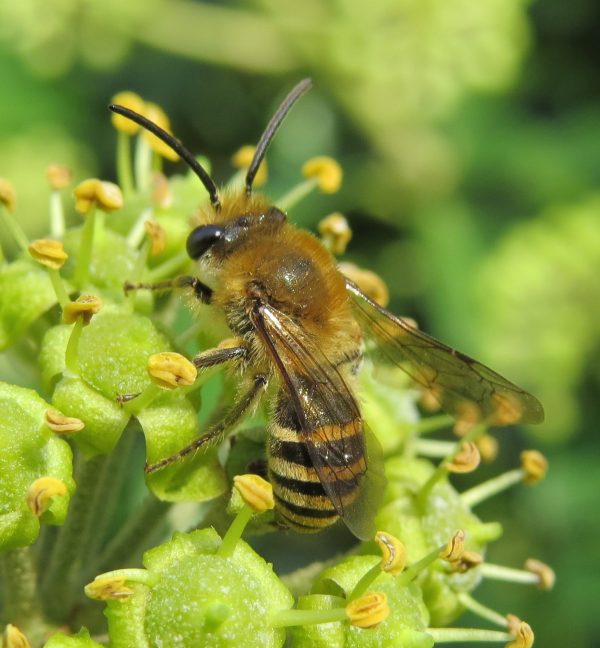 The ivy bee was first recorded in the UK in 2001, so is a relative ‘new-bee’ (couldn’t resist) which has also settled throughout Wales and Scotland. As its name suggests it’s main food is the ivy pollen and it emerges in time to feed between September and November.
Probably due to the sheer numbers of the ivy bees on the ivy at home, I have had several in the cottage over the last week and they seem to have more ‘dangly’ legs than our honeybees – I’m not sure that this is a reliable identification method but definitely something I have noticed.
An Apple (A) Day
 Today (21st) is National Apple Day. First established in the UK in 1990 by Common Ground, a charitable organisation. This day not only pays tribute to the vast array of apple cultivars grown throughout the UK – there are more than 2,500 different types of apples currently growing on trees across the UK – but also highlights the importance of orchards and the need to preserve these vital ecosystems. Sadly, I was told recently that several growers in Wales are grubbing out orchards as they are proving too expensive to maintain. It’s heartbreaking really, as the orchard also has such a special place in the hearts of people of a certain age who remember ‘scrumping’ – the art of ‘liberating’ a few apples from someone else’s orchard.
The word ‘scrumpy’ – referring to cider – comes from scrumping. Traditionally, it is used to describe a ‘rough’, harsh cider made from unselected or windfall apples. These windfalls have usually fallen early and tend to be more acidic, hence the ‘rough’ cider.
Some say that scrumpy is a derivation of the word ‘scrumptious’, meaning ‘delicious’ but that’s nowhere near as good a story, and personally I think scrumpy is more ‘effective’ than delicious.
Whilst I was once quite an accomplished scrumper, I can no longer condone the practise, due to the way in which the world had changed. Although it seems that ‘urban scrumpers’ are on the increase. These fruit foragers help themselves to apples in parks and from council-owned land to use for homemade cider and gins, arguing that otherwise the fruit would simply go to waste.
Whilst it is not illegal to pick fruit from common land, or council-owned land where they are not growing fruit for the purposes of food, it is illegal to profit commercially from what you make with the harvested fruit. If you’re harvesting from trees and hedges on private land – even from an overhanging tree or bush located in your next door neighbour’s garden – it is good manners to ask permission beforehand.
A-peel-ling Gin
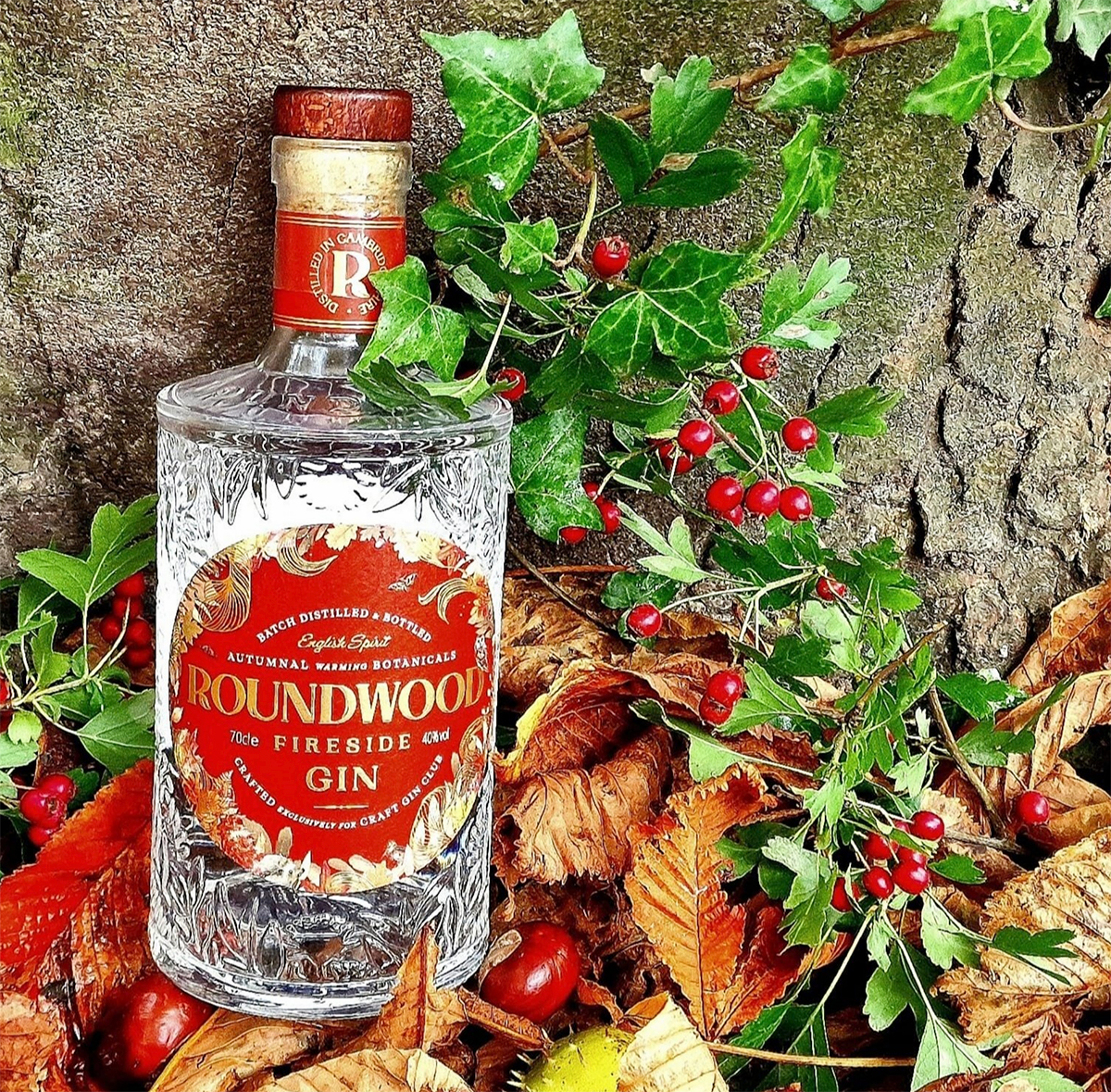 Apple Gin is encouragingly simple to make and you can also add blackberries, ginger or pear for variations.
You’ll need 2 coarsely chopped Bramley apples, enough gin to cover the apples in a Mason jar plus an extra 300 ml, 2 tbsp honey, 1/4 tsp dried lavender (you should just be able to pick some from the garden, on a dry day).
Then just pack the chopped apples into a 1-L glass Mason jar. Add enough gin to cover and cover with lid. Let stand at room temperature for 1 week. Stir in around another 300 ml of gin, honey and dried lavender. Serve strained over ice or top up with cider for extra apple-ness.
The Craft Gin Club encourage you to make your own ‘ginfusions’ or homemade flavoured gin, by ‘taking a sterilised (dry) jar or bottle and simply adding your chosen fruit(s), herbs and/or spices to your gin and leaving the mixture to infuse. It’s as easy as that! To turn it into a gin liqueur, simply add sugar’.
Find out more at www.craftginclub.co.uk where they also generously share 7 of their favourite recipes for ‘ginfusions’ and liqueurs to try at home.
And you can celebrate all things apple at ‘Festafal’ at the National Botanic Garden of Wales this weekend – 21st & 22nd October.
Celebrating Welsh orchards and their apple collections, Festafal will embrace the apple, its uses, the products derived from it and its wider associations in Welsh culture. There will be demonstrations, live music, local/ Welsh food & drink producers including cheese, honey, chutneys, cured meats, cider & spirits, all with an apple inspired twist.
Lisa Fearn, a regular cook on S4C’s daytime Prynhawn Da programme and on Radio Wales and Radio Cymru, will be cooking up a feast of delicious apple inspired treats.
Lisa also has two cookery books available – Blas/Taste, celebrating family and food and Dathlu/ Celebrate both published by Gomer Press.
Leave a Reply