
Taken from Lynne’s weekly column ‘Green Scene’ for the Western Mail
10th October 2020

Bulb-tastic
It’s the time of year where I turn my shed upside down looking for my bulb planter. It’s a fabulous proper old one that my father used to use and which I swear I put safe after using it every year. Every October I curse my lack of organisation – and memory.
Anyway, I have found it and already planted 400 mixed daffodil bulbs on a bank so steep a goat would have found it difficult to navigate.
Monty recommends planting daffodil bulbs now, but says tulips are best planted in November. To be honest, if you are already armed with a bulb planter (or trowel) and motivation, I think it’s better to plant them now than to forget or lose interest. Once the weather worsens, all too often bags of bulbs are allowed to just dry up in their bags in sheds and garages. At best that is neglect and at worst, bulbslaughter – bulbicide, maybe? And on that note have you ever wondered why there is only one letter differentiating slaughter from laughter. Strange thing, language.
Anyway, back to bulbs. You will also have a better choice of variety in garden centres this month, as the bulbs will soon be shunted off the shelves to make way for angels, baubles and tinsel.
I think ‘gardening gusto’ is often on the wane at this time of year for many, but do make an effort to plant bulbs for spring colour. You’ll be so glad that you did when they are bloomin’ lovely in the spring – and so cross that you didn’t when you see other people’s uplifting displays.
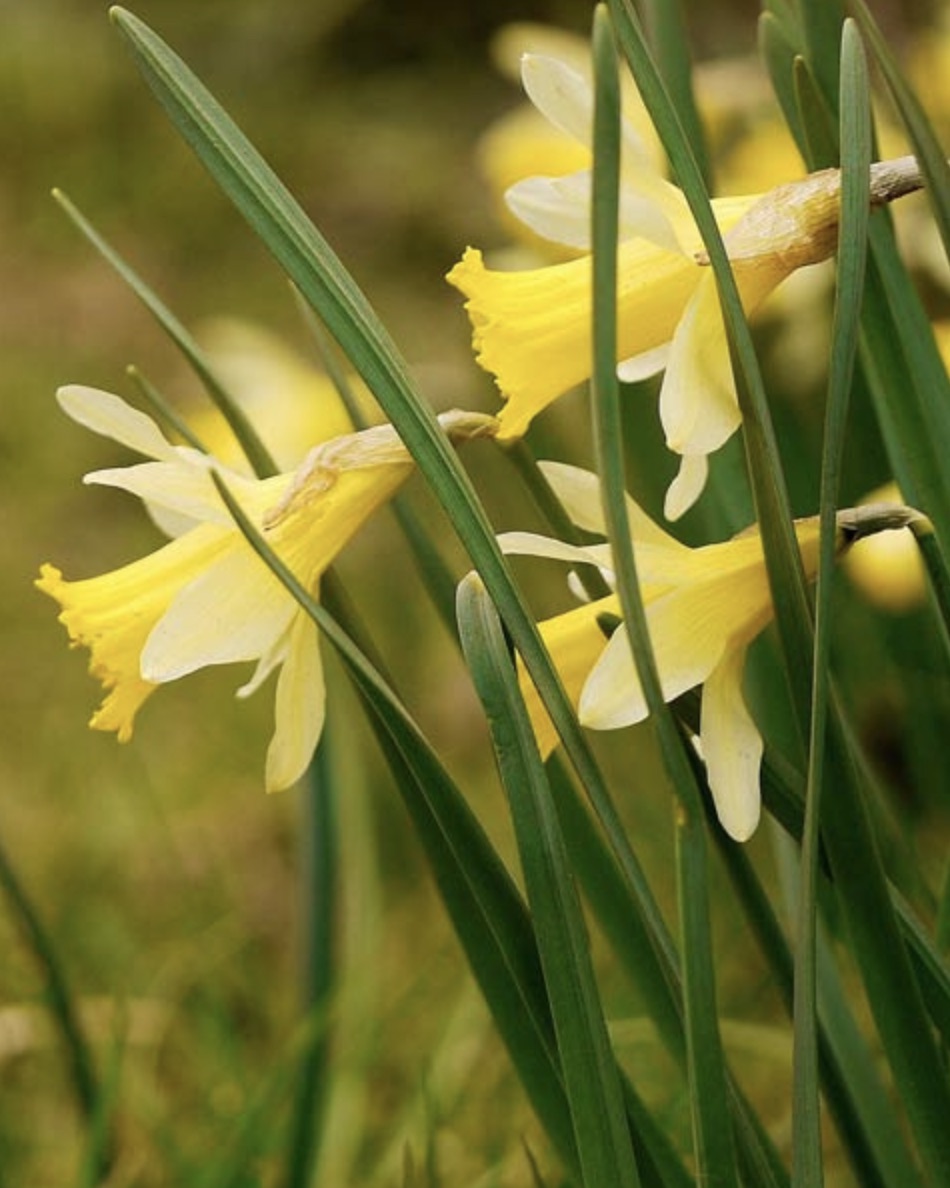
Spring flowering bulbs provide that much-welcomed splash of colour as we come out of winter, and can be utilised in most places – from woodland to wooden planters. For woodland choose the often-underestimated little wild British native daffodil (Narcissus pseudonarcissus), which will spread by self-sowing in grass and beneath trees and shrubs. It’s the longest lasting, easiest and most successful daff to grow for naturalising.
Miniature daffodils, like the dwarf Narcissus ‘Tête á Tête’ only reach 15cm (6″) in height and are perfect for containerising, fronts of borders, under trees and even for hanging baskets – add them to winter-flowering baskets now.
And there are so many new(ish) varieties of daffodils to choose from now, like the eye-catching and rare pink coloured daffodil with fluffy double flowers, Narcissus Replete. The rather extraordinary looking Narcissus ‘Apricot Whirl’, is a split corona daffodil (offering a two-coloured flower) resulting in large flowers that top the upright stems. The flowers are made up of a creamy peach outer ring, and a flattened cup with ruffled peach coloured segments.
The ‘Petticoat Daffodils’ don’t look like daffodils at all, but as the name suggests, the blooms resemble little petticoats. The hardy bulbous perennial, which grows 10-15cm tall with large tubular, cone-like trumpets will add interest to your garden or containers. It is available in several colours including yellow and white.
And of course don’t forget the ‘Old Faithfuls’ that continue to do their job wonderfully – the large, blousy, trumpet favourites and the heavenly scented narcissi.
Terrific Tulips
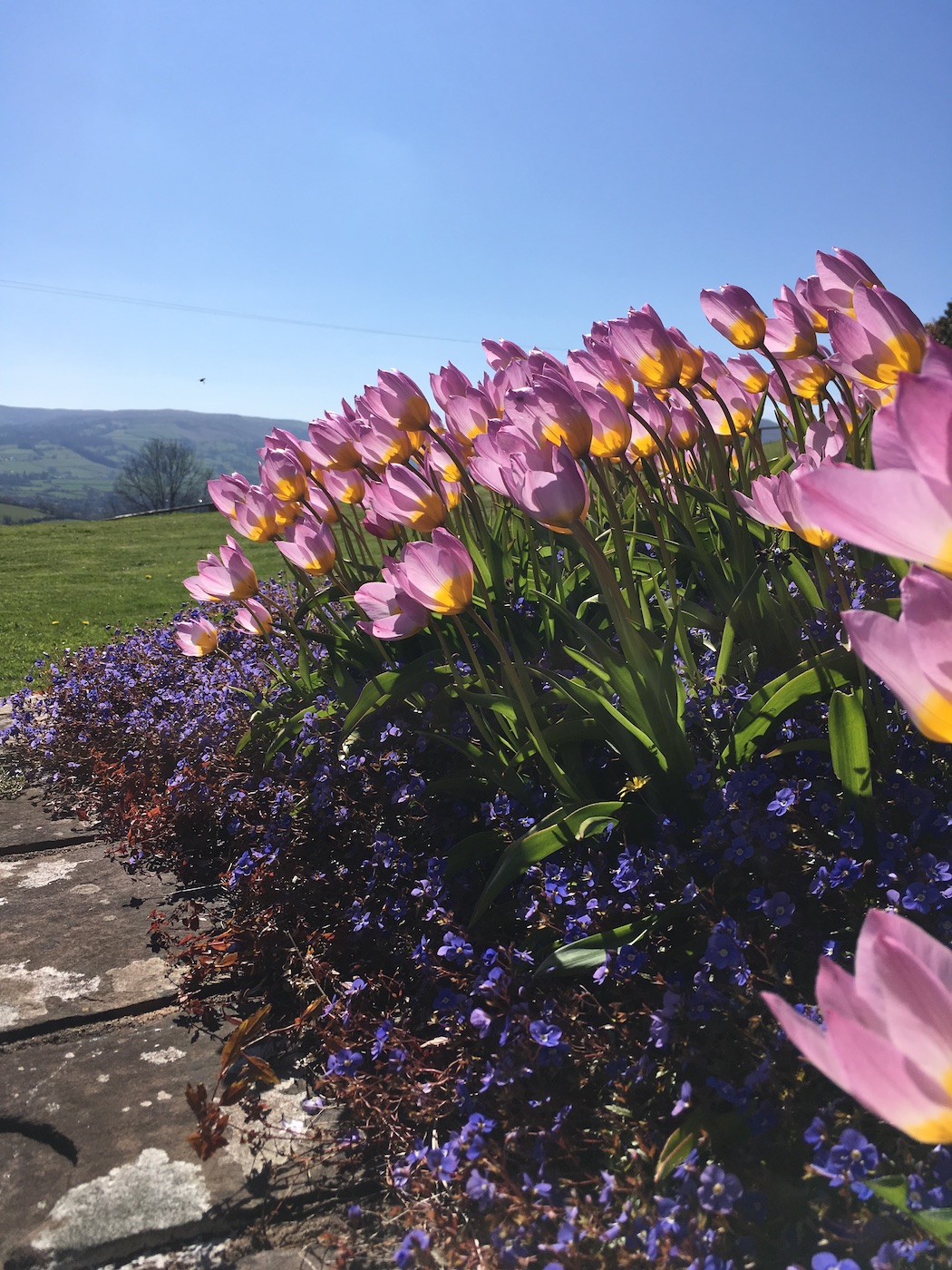 Tulip varieties are also ‘branching out’ with stunning frilly flowers from Tulip ‘Amazing Parrot’, ‘Apricot Parrot’ and the slightly-oddly named, Tulip ‘Gorilla’. The pretty ‘Angelique’ and ‘Antraciet’ have flowers that look more like a peony than a tulip. Tulip ‘Artist’ is a wonderful oddly coloured bloom and Ice Wonder and Green Star are just stunning, especially when mixed.
If you really want to go ‘ooh, ahh’ over some new varieties, just pop into Sarah Raven’s website. Tulips have definitely come a long way in the last few years. And like daffs, they make terrific cut flowers, which will give you even more chance to show off your amazing new blooms.
I am a big fan of planting spring flowering bulbs en mass in large pots, as I think it’s easier to appreciate them and you can place them as focal points on steps, by the front door or even as spot colour in beds and borders. Layer the bulbs between compost layers to get the pots ram-jam full of colour and remember that you can create great planting combinations in the pots too by choosing different varieties, colours and heights.
Let There Be Light
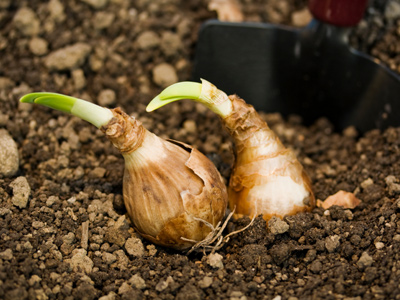 I am always reminded of a friend’s tale at this time of year. He had been planting bulbs in his garden when his 5 year old son came out and asked him what he was doing.
“Planting bulbs,” he replied, “so we’ll have lots of colour later on.”
Later that evening his young son was sitting, in the dark, next to the freshly planted bulb site watching the ground intently. When asked what he was doing, he answered, “Waiting for the bulbs to light up.”
Other Bulbs Are Available
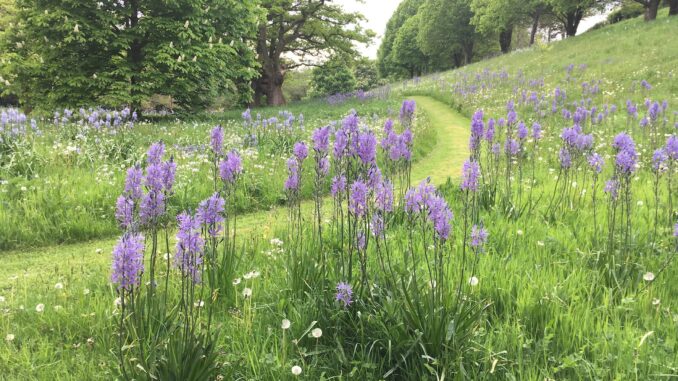
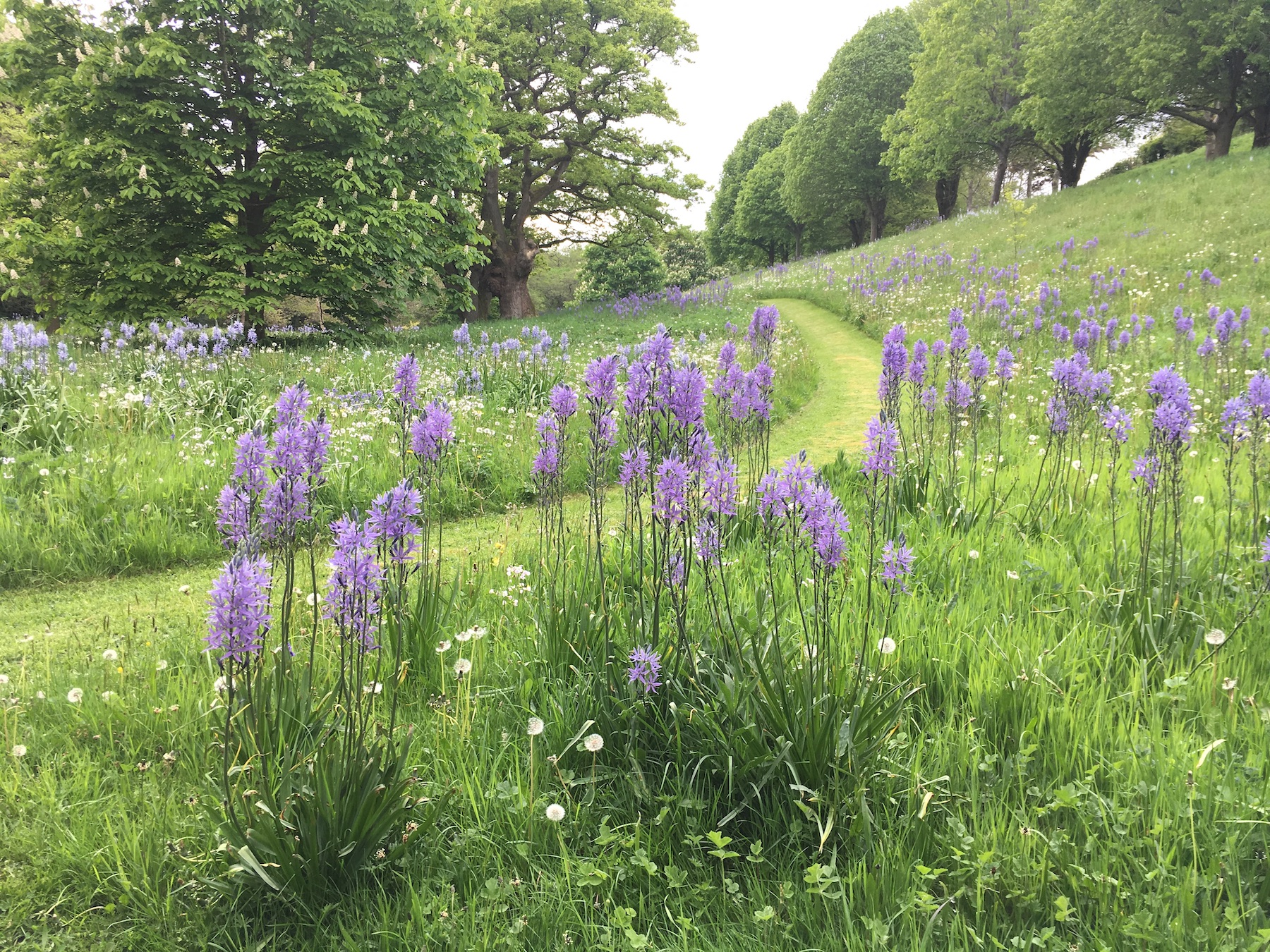 There are lots of other autumn bulbs (which flower in spring) to choose from. Among my favourites are Camassias. The Camassia leichtlinii subsp. suksdorfii Caerulea Group are often overlooked, which is a shame as they are far easier to grow than to pronounce. The stunning, upright stems host racemes of star-shaped violet-blue, light blue or creamy-white flowers in late spring and early summer reaching a mature height of over 3ft (a metre).
They are great for adding structure to a border, striking in pots, but also brilliant for naturalising. Plant the bulbs in large swathes and prepare to be impressed from next April onwards. Oh, and they also make fab’luss cut flowers too. I like value for money!
Similarly, Eremurus, or the Foxtail Lily is a great architectural plant. I do love the taller, more dramatic flowers, plus they have more chance of being seen and appreciated above the ever-winning carpets of ground elder at my cottage. Alliums naturally fall into my ‘fave group’, as do the taller irises.
However don’t forget the more delicate but equally impressive-in their-place crocuses, fritillaries, and ranunculus.
B’lumen Dear
 Despite the immense amount of information online now, I always insist on still having bulb catalogues delivered. They are uplifting just to read and to look at the pictures. Plus they make great wrapping paper when I’ve finished ordering from them.
Whether you order from catalogues or online, always do your maths before clicking or posting, as you will be amazed how many bulbs you ‘will have to have’, and how quickly they add up. Bulbs can be b’lumen expensive.
Leave a Reply