
Taken from Lynne’s weekly column ‘Green Scene’ for the Western Mail
14th October 2023

Jammin’
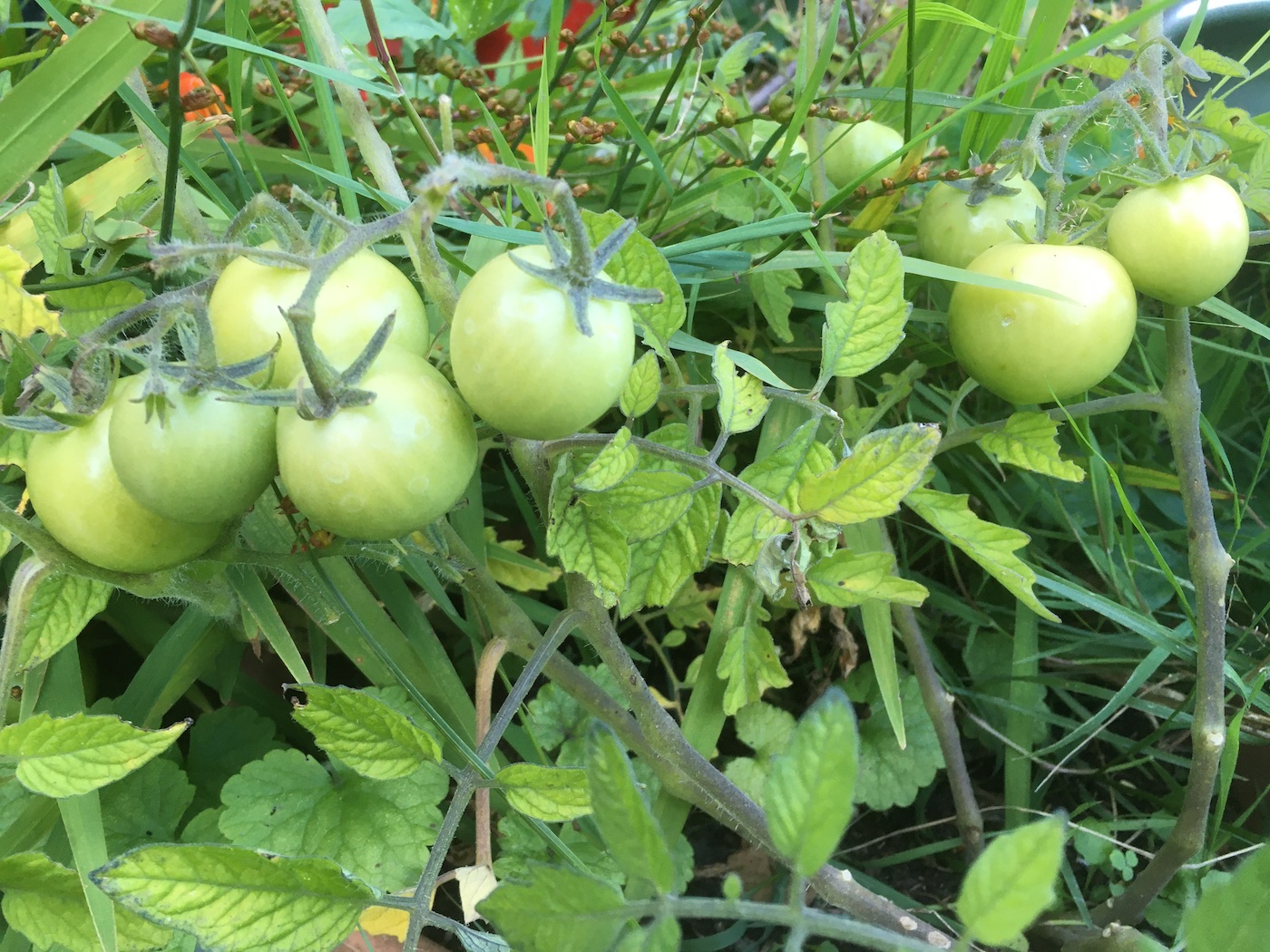
Last weekend’s warm weather ripened a few more of my tomatoes but ironically I’ve been hoping they stay green this year. And the reason is that I have been given the most wonderful recipe for Green Tomato Jam – not chutney but jam – and it is absolutely delicious. So much so that I will be hoping for green tomatoes rather than red ones next year.
It will be known as Gerald’s Green Tomato Jam (GGTJ), as Gerald was kind enough to gift me a jar of said jam and then generously share the recipe with me, giving me permission to share it with you.
He admits it is ‘culled’ from several recipes and explained,
‘Recalling a breakfast experience in southern France in the 80s, when we (with his wife Isabel) mistook GTJ for fig jam and were gently corrected by the lady of the house. We surfed the net for a recipe. As a newcomer to “jam making”, I was surprised at the variations, so I took bits from here and there and came up with what I passed to you.’
And here is the recipe as he emailed it … enjoy!
Ingredients:
- 1kg green tomatoes, cored and sliced (2-3mm) with seeds
- Zest and juice of 1 lemon
- 600g jam sugar or ordinary granulated sugar (I usually use ordinary)
- 20 g candied peel
- Crystalised ginger
Method:
Put tomatoes, lemon zest and juice, and sugar in a large pan. Cover and leave overnight at room temperature. You’ll find it produces a lot of liquid.
Bring to a “rolling” boil, stirring frequently. Takes about 45-60 minutes until it goes transparent green and bubbles “crack”. Recommended boiling times often vary from batch to batch (I guess it’s biological variation in the fruit). I find it often takes over an hour, sometimes an hour and a half, even if you want slightly runny jam, French style. And if it’s good enough for the French …
When ready, add candied peel and/or crystalised ginger cut into cubes for subtle gingeryness!
Jar up. I always put lids on while jam still hot – gives vacuum seal and no mould, however long you keep them (not long, we find!). Many jam recipes advise letting it cool before lidding, but never say why. Doing so, we’ve often found mould on surface of jam after storage.
!!EASY PEASY!!
I have deliberately included Gerald’s lovely ‘vote of confidence’ at the end. Too many people make jam-making sound scary. Do give this a go, even if you have to ask friends, neighbours or your friendly Farmer’s Market for green tomatoes. It is so worth it.
Autumnal Art
The National Trust is predicting a good autumn leaf show this year. It is the first year for a while that the trees and shrubs are properly hydrated and haven’t had a stressful summer! We have already had a good show of berries, and although it’s considered, in weather folklore, to be a sign of a hard winter, the ‘horticultural’ reason is that we didn’t have late spring frosts to scupper spring blossom (and therefore berries) and plenty of summer rain.
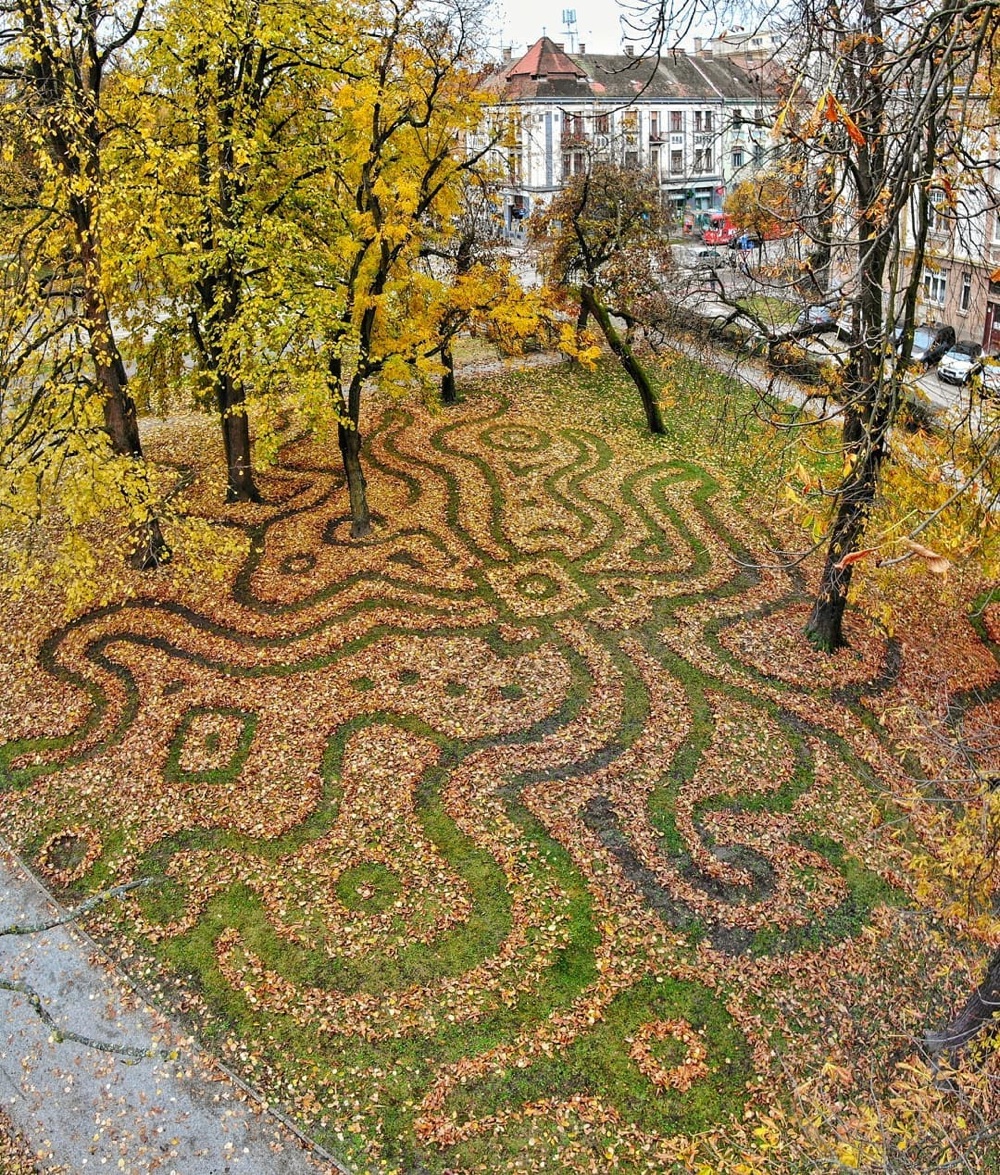 In work we are all waiting for the ‘big dumping’ of autumn leaves and the inevitable work they bring, but we have the colourful displays to look forward to first. Before the leaves do start to fall, have a look at land artist Nikola Faller’s fabulous work with autumn leaves, which he rakes into beautiful – albeit brief – works of art.
Living in the city of Osijek in the north of Croatia, Nikola works with the seasons to produce his amazing artwork. In the spring he mows meadow grass into works of art, in winter he makes sculptures of snow, and in summer he draws in the sand on the Drava river.
Each piece is organically short-lived due to the nature of his ‘materials’ but that doesn’t stop him putting in the time and effort. He explains that he first thinks of the shape he wants to make and then just starts raking (or mowing) and says the rake is just like using a pencil. He also creates flammable sculptures out of hay and which are also short-lived! You can see some of his wonderful work on Instagram @Slama Land Art.
‘Land Art’ or ‘Art in Nature’ is the creation of artwork in harmony with nature and is described as, ‘following the rhythm of the seasons, materials specific for that period or season are used to create art in nature, which is therefore generally easily accessible and economical. The works are made under open skies in contact with the earth and the elements and are influenced by a wide variety of weather conditions.’
Andy Goldsworthy is a British land artist, sculptor and photographer known for ephemeral works created outdoors from natural materials found on-site. Growing up in Yorkshire, Andy worked as a farm labourer during school holidays, which he credits for nurturing a love of, and interest in, nature, the cycles of the seasons, and the outdoors.
He poetically describes his art as, ‘a collaboration between the artist and the environment, blurring the lines between human creativity and the inherent beauty of the natural world.’ You can see his stunning artwork at www.andygoldsworthystudio.com
I don’t know about you but I already feel inspired to be a bit artistic when the leaves do start to fall.
Dead Man’s Fingers
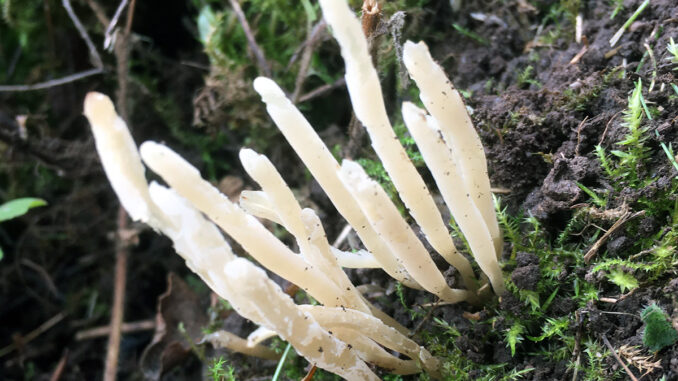
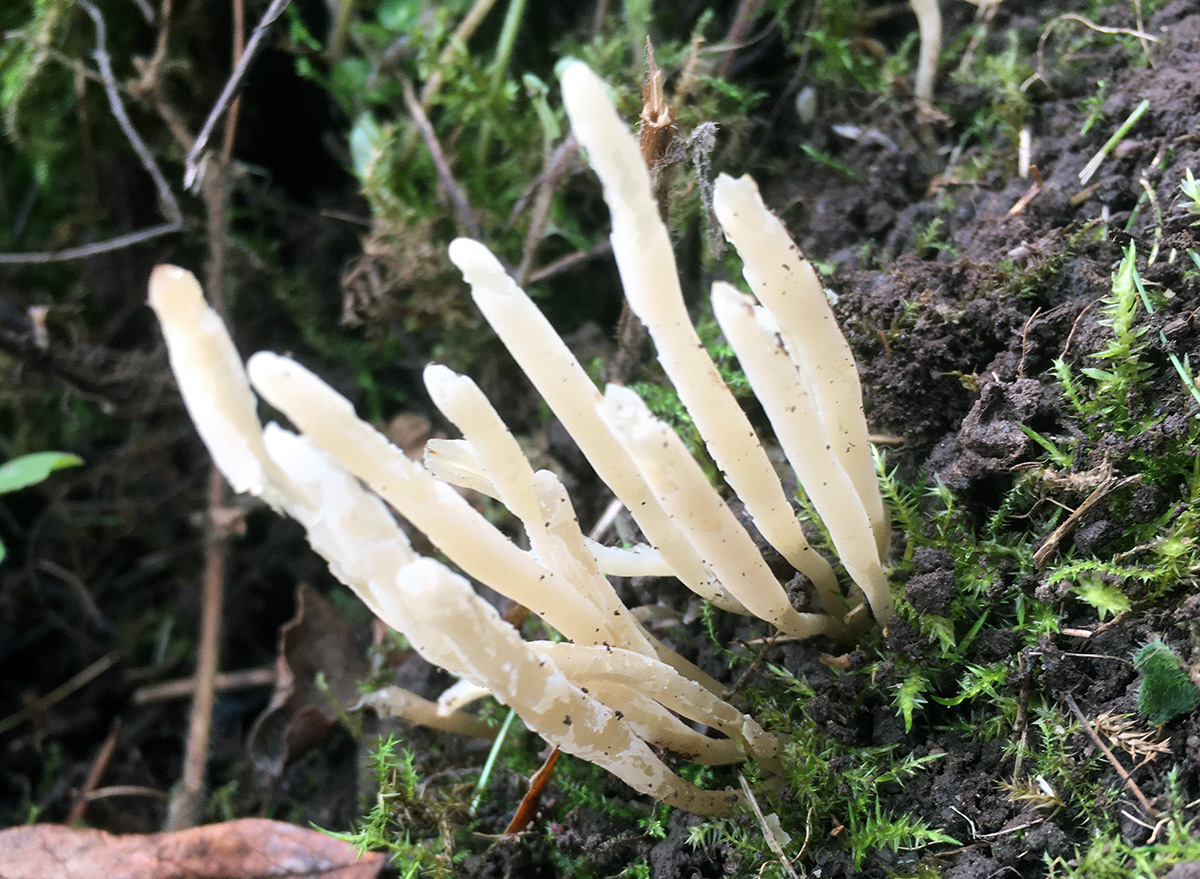 I found this absolutely fabulous fungi in a border last week – it has always fascinated me as, when we were kids, Dad told us it was ‘Dead Man’s Fingers’. Its proper name is Xylaria hypoxylon and it’s a member of a large genus or family. Technically, I think it is actually its’ ‘cousin’, Xylaria polymorpha that is more commonly known as Dead Man’s Fingers – if you Google them, you’ll see why – but I have never let that stop me seeing these skinny little mushrooms as the ‘death digits’. Which reminds me – despite being considered one of nature’s ‘medicinal marvels’ it is not an edible fungi.
As if I wasn’t a big enough fan already, I have just read that it is also a bioluminescent fungus, and in a very dark place it can be seen to emit light as phosphorus accumulated within the mycelium reacts with oxygen and other chemicals in the fungus. The amount of light is very weak and rarely seen, but for me, it has only added to its fascination – and now also makes them ‘light fingers’.
Another great article catching the autumn season. Keep them coming