
Taken from Lynne’s weekly column ‘Green Scene’ for the Western Mail
3rd April 2021

Stay Safe
Traditionally, Easter weekend is when gardening starts for most people, mainly as it would normally be the first holiday of the year. It may well be the opposite this year, with people more likely to be wanting to get out and about than stay in their own gardens. Obviously restrictions have been eased a little but please be sensible, avoid crowds and don’t be a Covidiot.
And ‘staying safe’ also applies if you are staying at home to tackle the gardening chores. Traditionally, A&E departments see their busiest times over Easter as a result of gardening and DIY related accidents.
This weekend may well see the first grass cut of the year for many, so change the petrol in your mower and raise the blades for the first cut. Raising the blades will put less stress on the machine and the person walking behind it. And petrol will go stale in the mower (and other machinery) during the winter, so is best changed for fresh. Your machinery will thank you for it.
If using an electric machine, check all the cables before you start as mice find them oddly tasty, and always use a circuit breaker.
If you find you have to replace a mower, hedgecutter, strimmer or the like, remember that battery operated machinery is apparently the way forward and is worth considering. Also, consider if it might be worth getting someone to come in and mow or cut that hedge for you. It often works out more cost effective than having to buy, maintain and use a machine yourself.
 And please be ‘wildlife aware’. There will be a lot going on in your garden at this time of year, from birds nesting to hedgehogs coming out of hibernation. Sadly it can be a particularly dangerous time for sleepy hedgehogs as people start strimming and using ride on mowers. I rescued a hedgehog that had been caught under a ride on mower last year, and a local vet told me they have already had to put one large, otherwise healthy hog to sleep as a result of a strimmer accident – and it was only March.
It sounds a little harsh, but I remember being told, “Accidents do happen but there are only ever three reasons for them: I didn’t think. I didn’t see. I didn’t know.”
So do have a Happy Easter, but try to make sure it’s a safe one too, for you and our wildlife friends. Oh, and keep tender plants safe too. Don’t be tempted to plant them out yet as winter is due to barge back in and shout, ‘And another thing ….’
Toad Safety
 Toads and slow worms also run the same risks of being strimmed accidentally, so please be mindful of them too. Slow worms will bask in the spring sunshine on grassy banks and toads will like longer grass as it’s damp and cool.
Toads also face another human-inflicted threat at this time of year – cars. Toads are travelling from their ‘winter homes’ to breeding ponds, particularly on warm, damp evenings and due to the cold start to the month, some are a little later making their journey than usual.
 Every year the creatures of habit return to the same pond via the same route, despite often having to cross busy main roads, or even country lanes. Unfortunately toads don’t know their Green Cross Code (or should that be Green Cross Toad.)
On many ‘main toad’ routes wonderful volunteer Toad Patrollers work hard to reduce the risk by helping our common toads safely cross the roads along their migration routes. You can find out more at www.froglife.org including how to volunteer or how to donate to their ‘Tuppence a Toad’ appeal to help fund similar projects.
Oh My Darling Celandine
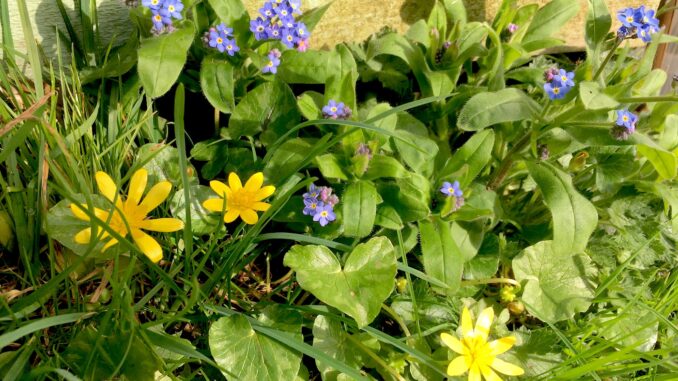
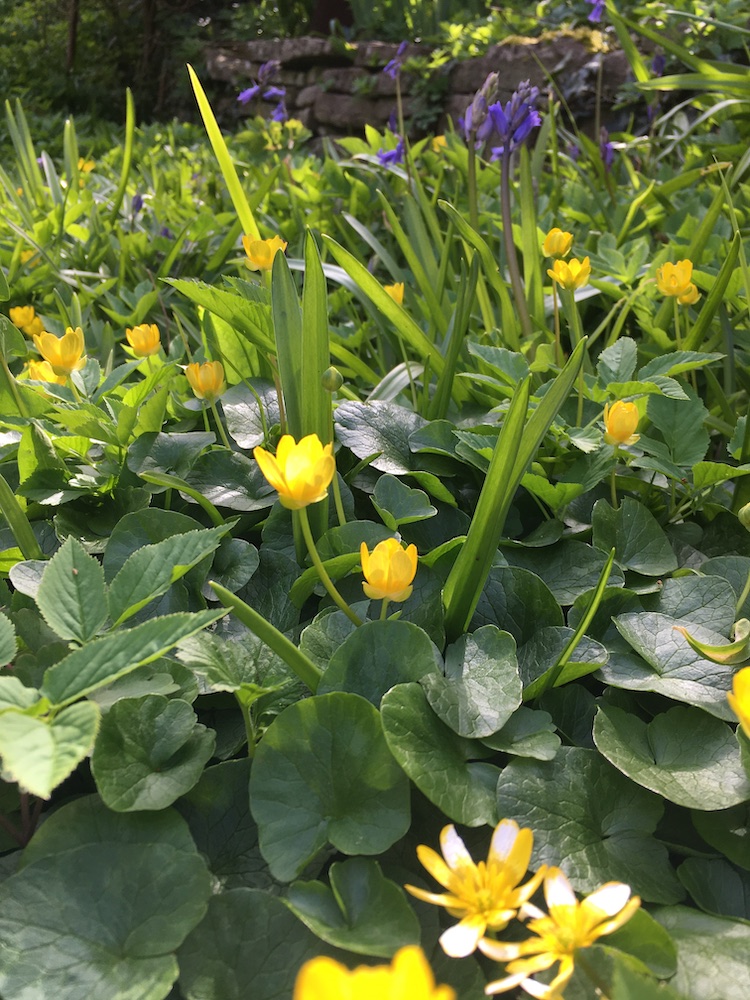 March always strikes me as a yellow month in the garden and hedgerows, with the uplifting daffs, fabulous forsythia, pretty primroses and sunny celandines spreading their cheeriness. Oh I know there’s a lot of pink about too, with the early almond and cherry blossom, the pink-tinged magnolias and the camellias, but I still think yellow is the colour of March.
I remember working for a Housing Association as a gardener/caretaker when I was 17 years old and calling my dad after work one day in tears – yes, at 17 – because I had spent all day clearing a small patch of celandines from a flowerbed that was just carpeted with them. I couldn’t see how on Earth I was going to clear the whole bed of what my boss considered to be a weed. And at that age, I probably thought it would result in getting sacked.
“Tell him they are important spring-flowering, ground cover and should be left there for colour, interest and the bees,” said my brilliant dad. I have never forgotten that clever and simple solution – and have used it often since.
Ironically, in the last couple of years and since the importance of our wildlife has become more appreciated, you can actually buy pots of celandines in garden centres. Despite Dad’s advice and one of my clients actually wanting them to decorate the front of her borders, I can’t quite bring myself to buy them.
Obviously I have left established celandines in situ in a garden ever since – if the clients want them removed, they can do it. I’m not going to. And it’s made gardening at my own cottage much easier too. As a result of working with nature, rather than against it, large swathes of my garden are now covered in a lovely yellow carpet with various other plants growing through the cheerful celandines. They are also a great reminder of my dad’s wise words. Bluebells and forget-me-nots provide a lovely contrast growing through them and have just merged naturally since I have let them.
And if giving celandines carte blanche doesn’t sound rebellious enough, I also leave a lot of dandelions in the borders now too. Dandelion flowers provide an excellent early source of food for bees and other insects, and as long as you remove some of the heads before they go to seed you won’t be inundated with them. The same applies to the lawn and grassed areas. Lifting the blades will reduce the strain on you and your mower but it will also allow some of the dandelion flower-heads to provide a much appreciated bee-buffet. Just before the flowers go to seed, you can lower the blades and remove them when you mow.
Leave a Reply