
Taken from Lynne’s weekly column ‘Green Scene’ for the Western Mail
17th May 2025

Sitting Up in Beds
I am at the age where I want a peaceful, drama-free life and that often means aiming for compromise rather than conflict. I work for some lovely clients and with some lovely subcontractors but every now and then somebody has a bad day and seems to want to pass it on!
Being as ‘vague’ as possible, garden furniture (toys and other paraphernalia) left out on a lawn can cause a professional mowing person to ‘lose their rag’. It is tricky. I know myself that often the last thing you want to do is to move things to be able to mow but obviously clients want to use their lawns too.
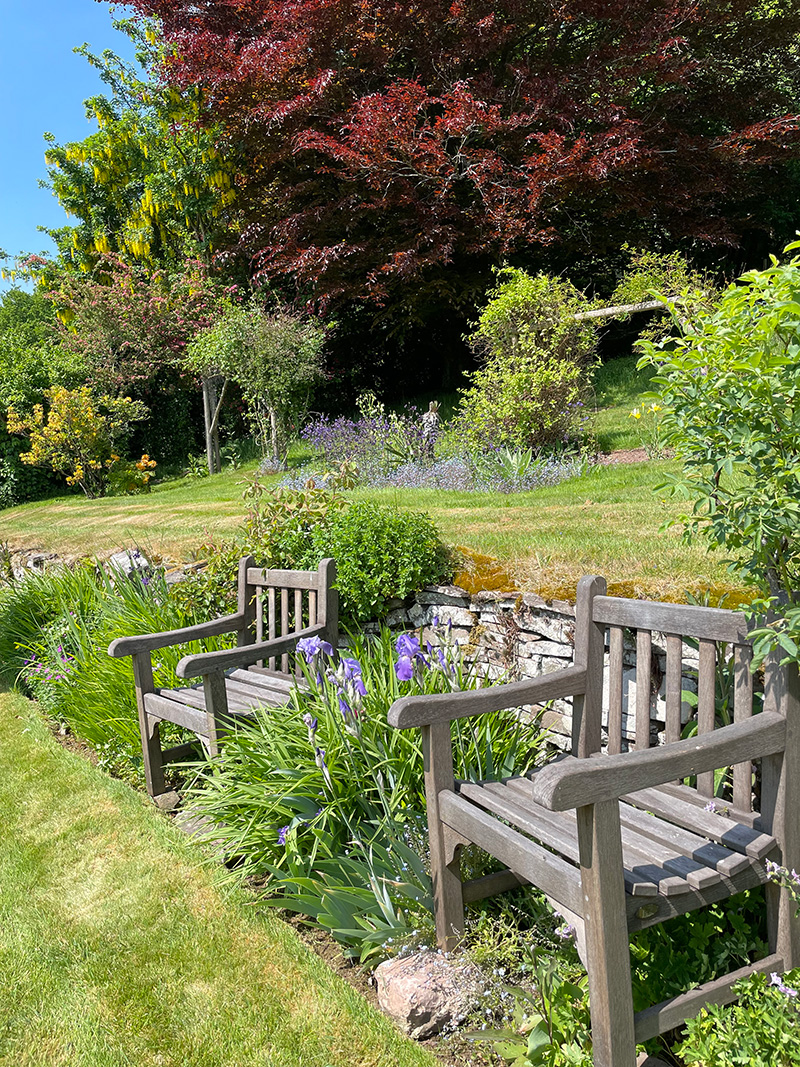
Being provoked for a while by someone who would move two heavy wooden garden chairs into the flowerbed to mow and then not put them back on the lawn led to me rethinking the situation. The client refused to move the chairs to a patio as the view was better from the lawn and the ‘mowing person’ casually refused to put them back!
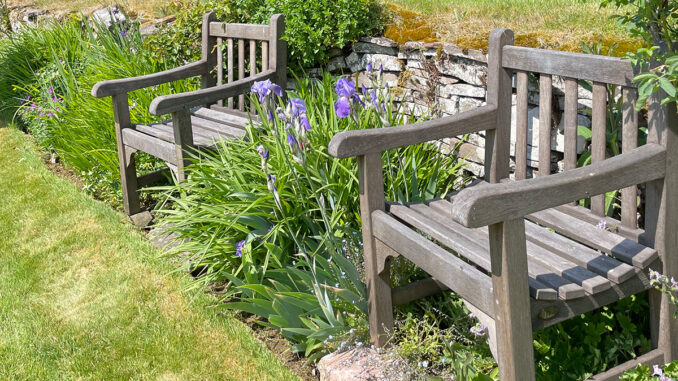
As you can see in the photo, I have moved the chairs into the flowerbed myself as a permanent site. And very nice they look too. Plus my client can still enjoy the view and the Lawn Ranger can mow without obstructions. I have put garden chairs in flowerbeds before, often putting a few paving stones as an informal path to them. It makes sense as you are amongst the flowers and scent and it’s just lovely. It’s not suitable for ‘entertaining’ but as a ‘single sitter’ it’s a great place to enjoy a cup of coffee or a good book.
A Beginner’s Guide to Dying
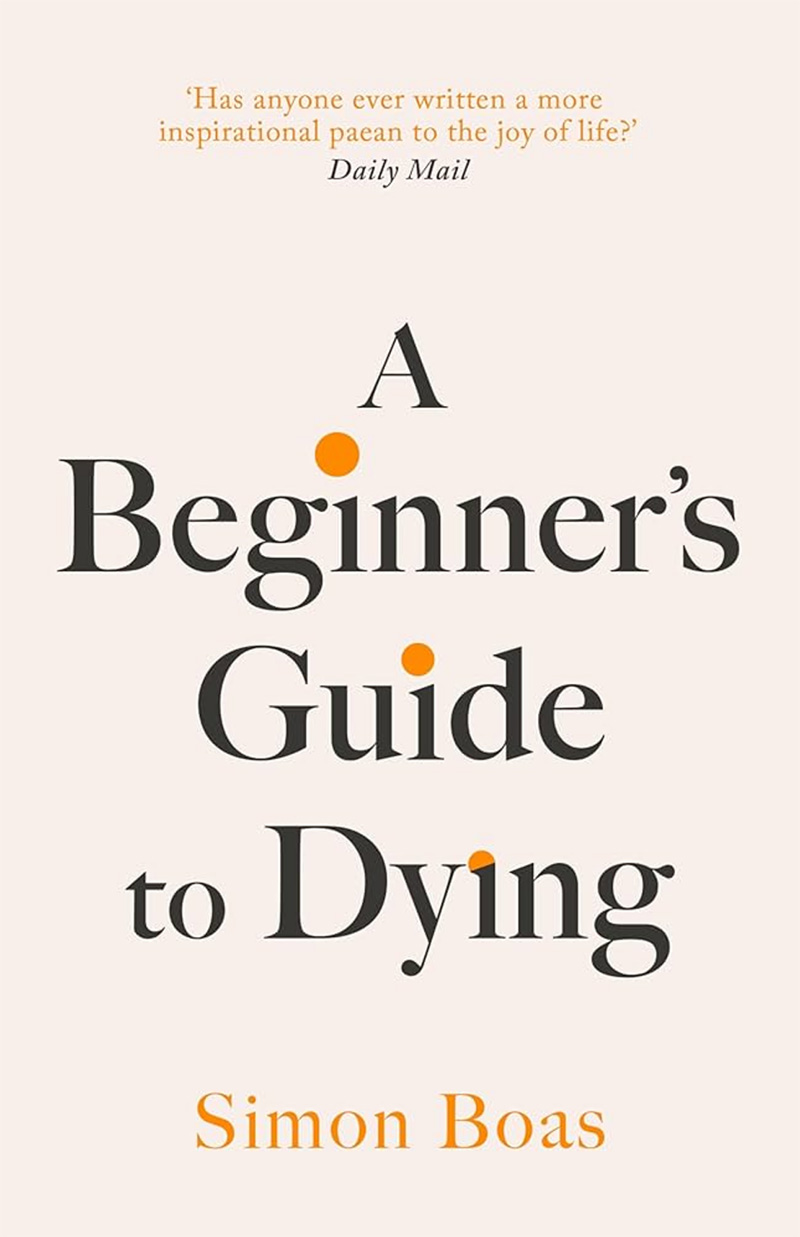 And that leads me effortlessly into recommending a beautiful little book I have just read (thank you to Diana for ‘the borrow’).
A Beginner’s Guide to Dying is written by Simon Boas and is possibly the most unexpectedly humorous, heart warming and heart wrenching, beautiful book you will ever read. It was written and compiled after one of Simon’s columns for the Jersey Gazette went viral. That particular column is included – and elaborated upon – and you’ll see why it touched so many people. It’s a short book and there’s a reason for that, which I won’t spoil.
Not only will this little book give you a new perspective on dying but also on living. And, as well as Simon’s personal thoughts and experiences, it has a very touching, and enlightening section about how to treat someone who is dying.
Simply, it is a ‘must-read’ for anyone who is going to die.
Water, Water Nowhere
You will have undoubtedly noticed that we need rain. Gardener or not-a-gardener, it’s not difficult to notice that everything in the garden is very, very dry. Especially pots. I am not a huge fan of pots and container gardening purely because of the added commitment of watering and the extra work encountered when the weather is super-dry. Once compost dries out any further watering tends to run off the top or straight through the compost and therefore doesn’t benefit the plants. And watching a stream of water trickle away from underneath the pot and plants you are trying to look after is just frustrating.
Since compost has been peat-free it is even harder to keep compost moist, as it simply doesn’t have the water retaining ability. I have shredded some of Yogi’s puppy pads and added that to my pots at home in an attempt to retain moisture and it seems to be working so far. Nappies do the same thing. You can get gel granules that will retain, or store, water in the compost but the trouble with that is that the plant roots penetrate the gel and then if it is allowed to dry out it can damage the ‘trapped’ roots and affect the plant’s health and growth.
Similarly I have had trouble establishing seeds for the past few years and I think that is because the compost just dries out too quickly which means the seeds struggle to become established. Together with the fact that a study showed that a large percentage of garden seeds are non-viable when you buy them, it can be a bit daunting.
Interestingly, I always remember the highly regarded gardener Geoff Hamilton telling me that most seeds failed to germinate because they were planted too deeply. He said most people sow seeds like they are planting potatoes. I’ve never forgotten it.
Thyme to Reconsider
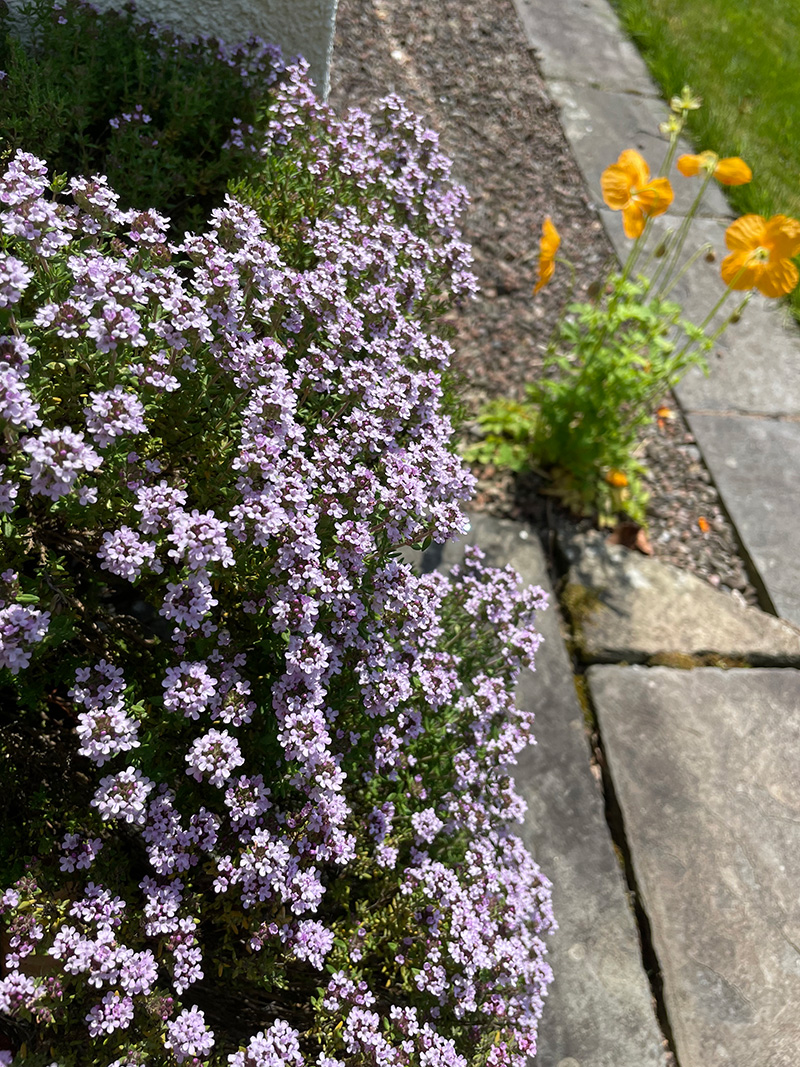 But back to containerised gardening and I think it is time to reconsider what we plant in tubs and pots, and to use plants that will tolerate – and even enjoy – dry conditions. This beautiful thyme (in photo) is absolutely thriving in the driest compost (as I can only water there once a week), as is the rosemary in the pot in the opposite corner of the patio. The Welsh poppy in the photo is also helpfully promoting the ‘gravel garden’ concept.
When I first started writing for a local newspaper 40 years ago, I recall writing a lot about ‘desert gardening’ as it was predicted that would be the direction in which gardening would go. But it didn’t … then.
There are lots of plants – mostly Mediterranean – to chose from that enjoy drier conditions, and gravel gardens will cope well with a lack of rain.
Meadowscaping is a current and trendy description for a wild flower meadow, promoting biodiversity and allegedly reducing maintenance. I say allegedly because I don’t actually think it does reduce maintenance overall, and if done properly, as at some stage you will have to strim or flail the area and rake up and remove the grass to avoid ‘feeding’ the ground. Similarly it is considered to be ‘cost effective’ which I also dispute.
What is indisputable though is the fact that it does provide habitats for pollinators and other wildlife. It is also an effective method of dealing with dry conditions.
Creating a wildflower meadow involves more than just letting your grass grow wild. The former is creative and takes effort; the latter is just an excuse to avoid effort. Even on a small scale, meadowscaping needs proper management and it is often a better option to just dedicate areas at the boundaries of your garden to wildlife and keep some of the more central spaces for you to enjoy too. Do consider all aspects before just letting your mower collect dust and calling your neglected lawn a wildflower meadow. I do think that a nicely mown lawn is still a very important part of a garden, especially if you can create other areas to benefit wildlife. To paraphrase her, even Mae West famously said, “I want to be a lawn.”
Leave a Reply