
Taken from Lynne’s weekly column ‘Green Scene’ for the Western Mail
24th May 2025

Nature Takes the Lead
So it’s happened. Nature has overtaken me and is showing me a clean pair of heels in all my gardens. For the next month or so all I can try to do is ‘keep up’ and keep things ‘tidy’ as growth is at it’s strongest. Depending on the size of your garden, or workload, it can be daunting but take heart in the fact that nature will run out of steam before us gardeners do. Late summer and autumn will be spent playing catch up, but catch up we will.
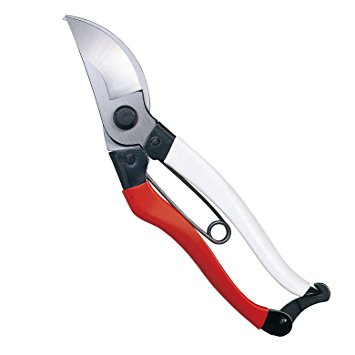 I always have a pair of secateurs in my pocket at this time of year, for those rogue brambles and ‘weeds’ that stick their head above the perennials, like nettles, docks and bracken.
It is always best to hand pull them if possible but age and wisdom has taught me that it is quicker and easier just to behead them for now.
Every garden will have it’s challenging weed(s), mine is ground elder, which I have learned to just enjoy, but if yours is bindweed then put in a cane close to the roots and let the bindweed climb the canes rather than the plants. It is easier to pull up that way too.
More Glitter, Less Critters
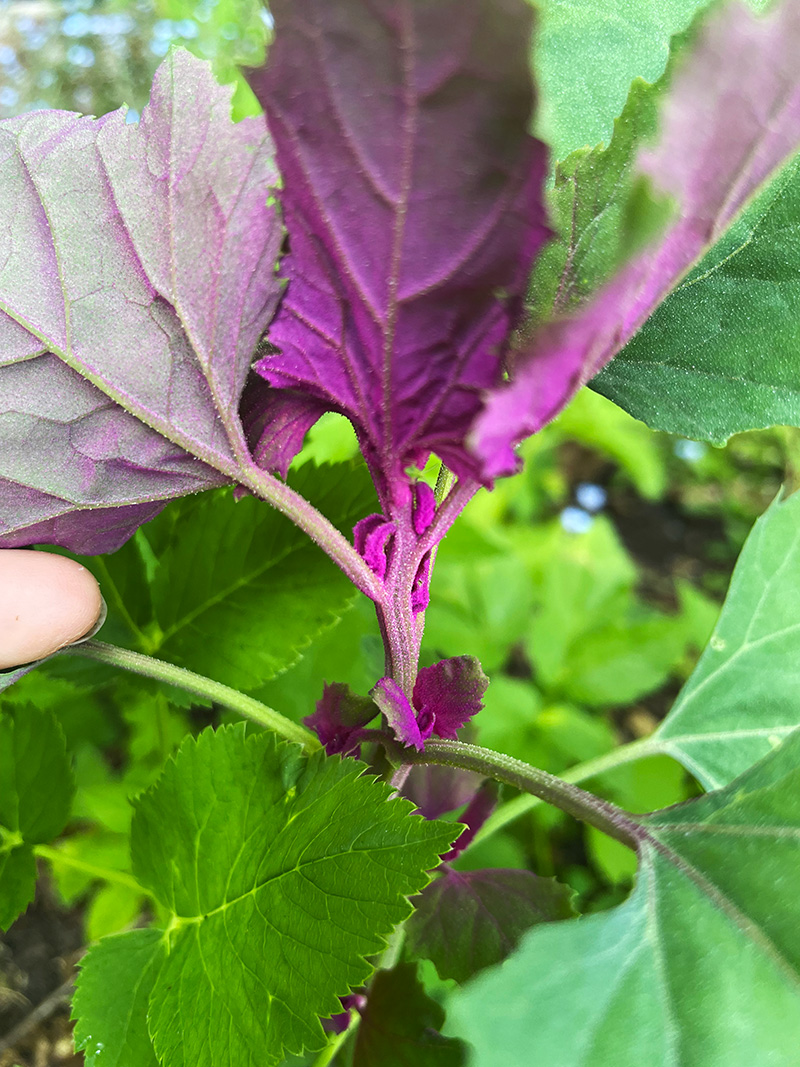 One of the many things that still keeps me smiling in the garden is finding something ‘lovely’ that has self seeded – in the past it has been cosmos, rocket or mustard leaves but this year it is my absolute favourite – Glitter Spinach. I am still mesmerised by the pink underside of the leaves and the ‘glitter’ that actually comes off on your fingers. And it tastes good too.
One of my very active and garden-savvy clients had a problem with voles undermining her raspberries last year and planted chives around them to act as a deterrent – and it seems to have worked. I think any strong smelling herby perennials would work – just be careful not to let them take over too.
Whilst talking to this same client a few weeks ago, we were both concerned about the lack of insects in the gardens in previous years but especially this year. Isabel had even noticed there were more insects in London than here in rural Wales.
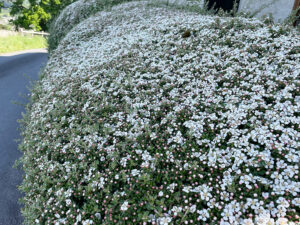
And I have noticed that whilst working in beds and borders I am no longer accompanied by the buzz of bees, hover flies or even wasps. I mentioned to her that the big test would be my brother’s cotoneaster coming into bloom, as it is usually literally ‘moving’ with pollinators. Two weeks later I have been shocked and saddened to see the cotoneaster completely devoid of insects. Not one. It’s eerily bereft of all pollinators. And I’m not sure why.
Logically, it has to be pesticides and although my brother doesn’t use them, he is amid farmland that may do. I really don’t know, but I have made a conscious effort to spot insects in this last week and the lack of them has been grim.
Chelsea Flower Show
But in the somewhat surreal world of Chelsea Flower Show last week bees were definitely as popular with the cameramen as celebrities were, with no lack of either wafting around the fantastic floral fashion show.
I thoroughly enjoyed watching it all this year, especially with the charm and chaos of the Dog Garden adding a bit of normality among the manicured gardens.

Having been lucky enough to attend on VIP Day for the last 10 years, interviewing celebrities and designers alike for the BBC, it is nice now to have it all delivered through the TV as I dedicate my time to new projects. It’s important to remember that we may delay things but life doesn’t.
This years Show was described as ‘exploring how gardens can work towards a better future as well as providing a sanctuary’, so nothing new there, but there was a new-ish and strong nod toward the very real issue of water management. Gardening is changing due to the climate; we have longer drier spells, strong winds and periods of sudden, heavy rain. All of which are testing for the gardeners and growers.
One of the things I noted and will definitely be trying to include in future garden designs is the dip tank in The Garden of the Future. I have numerous rain catching drums, dustbins and water butts around my own garden and always ‘dip’ a watering can into them for ease and speed, rather than use the tap. The Killick & Co Futureproof Garden also included a pergola, cleverly constructed with cantilevered troughs suspended in a stone arch, to capture rainwater and direct it to a water feature, which overflows during heavy rainfall. The permeable paths and paving are also such a simple alternative to traditional pointed patios, to help avoid flooding by excessive run off. Allowing appropriate plants to grow through paving and patios may not appeal to the neat-freaks but I think we have to change our minds as well as our methods.
Fascinated by the mycelium building material created from the root system of fungi, and grown and shaped into various forms like bricks, panels, and insulation, I will definitely be researching it. It provides a renewable, lightweight, and fire-resistant option to traditional materials and whilst not suitable for load bearing properties, it may be a great option for garden buildings and features. I’m sure it could be ‘carved’ – another project on the list!
The Hospitalfield Arts Garden had established plants in sand to show how mineral materials can also be used as a growing medium to encourage more diverse plants. It reminded me of the wonderful Beth Chattoe, and her ethos of ‘right plant, right place.’
I loved the Seawilding garden as I have always fancied a saltwater pool for dipping myself.
Of course there were the usual sanctuary gardens and numerous tenuous links to briefs which I don’t understand, but the star of this year’s Chelsea Flower Show was undoubtedly the Dog Garden. Just Paw-fect.
I’m sure the Chelsea cough was as prevalent as the Champagne tents again this year, especially in the hot, dry weather. Caused by the pollen from the majestic resident London Plane trees on site, the tickly cough always proved a nightmare for interviewers and interviewees alike. I always used to take a couple of packets of cough sweets, which secured me many an otherwise unobtainable interview!
Leave a Reply