

Taken from Lynne’s weekly column ‘Green Scene’ for the Western Mail
29th April 2023

Shrub Fatalities
We have had a somewhat subdued spring so far. It has meant that the spring blooms have definitely lasted longer – I still have narcissi in bud as the bluebells provide a beautiful backdrop for them and Jack Frost kindly spared the blossoms of Magnolias and Camellias allowing them all the admiration they deserve.
The down side is that it’s becoming obvious that some shrubs are not leafing up and coming out of their winter dormancy with expected energy and vigour. There are a depressing amount of losses and brown skeletons in the borders. It’s a bit debatable, but I’m sure the drought of last summer will have ‘weakened’ some shrubs and made them particularly vulnerable to the hard frosts that we had during the winter.
 It can all be a bit confusing as, according to the Met Office, last winter was actually milder ‘on average’ than most but the frost we did have was substantial, with the first two weeks of December 2022 being the coldest start to meteorological winter in over 10 years. March was the coldest March since 2010 and, let’s face it, we haven’t needed sunscreen this month. A wet and mild autumn last year wouldn’t have helped either, as it would have encouraged plants to produce new soft growth, which was then particularly vulnerable to the December frosts. And the frosts were prolonged – most plants will tolerate a night or two of hard frost but not a week or so.
It’s such a shame to see dead shrubs of any age or size, but it seems the more mature ones have copped it the worst, and of course, the cost of replacing them is considerable now. I am a great believer in ‘giving them a chance’ (as my clients will tell you) and always recommend checking for new shoots at the very base of the shrub or doing the ‘thumbnail test’ to see if there is life under the bark. Simply scrape a little bit of bark off with your thumbnail – if its green underneath there’s life; if it’s brown there’s a trip to the garden centre.
Winters Protection
As well as the lack of water in the summer and harder frosts in winter, we are having far more damaging winds and more often. These winds not only cause plant breakages but will also contribute to the stresses of our leafy friends as it increases the rate of transpiration from already arid soil. Evergreens are particularly susceptible as they continue to lose moisture through their leaves all year round.
This year gardeners are already reporting unusually high losses of evergreens like Pittisporum, Lavenders Thyme, Hebes, Rosemary, Cistus and Cordylines. This is particularly unhelpful as they would be the very Mediterranean-type plants that I would normally recommend to cope with the drought conditions that we are promised more of. But it appears if you use these types of plants to cope with dry conditions in the summer, then you run the risk of losing them from short sharp frosts in the winter.
To be honest, as gardeners, we have probably become a bit complacent as our plants seem to have adapted to ‘average’ seasons, but I think going forward gardener’s will need to become guardians and may well have to offer more protection for vulnerable shrubs in the winter.
I also think that it is the extremes in weather that is doing the damage. The stress is caused by the huge fluctuations in the weather and soil conditions, from water-logged soil to drought conditions, high winds and scorching sunshine – and that can be in one week.
It certainly means that gardener’s are going to have to have a rethink when it comes to practical aspects and planting.
Chat With Beth Chatto
 Beth Chatto OBE was a huge inspiration to me. I was fortunate to interview her 10 years ago when she was 88 years young. She was generous with her time and advice and told me, “I still go out into the garden every day although I don’t do much these days. If I sit in the chair I go to sleep which is such a bore.”
An award-winning plants woman, author and lecturer, she took an overgrown wasteland of brambles, parched gravel and boggy ditches in 1960 – well before gardening was trendy – and totally transformed it into the now famous Beth Chatto Garden in Essex with her husband Andrew. It was Andrew who undertook extensive research about where the plants came from and their preferred habitats. She always spoke very highly of him and his work. Using Andrew’s research into how plants adapted by nature to thrive in different conditions, her inspirational motto was ‘right plant, right place.’ She was passionate about putting the plants first, so they thrived. I remember her telling me, “I have simply put the plants in the appropriate places and not just the nearest available space. I have always said that we as people wouldn’t want to be thrust into the nearest job.”
You can read more of our interview at www.lynneallbutt.co.uk/the-simply-brilliant-beth-chatto-obe and find out more about the fabulous Beth Chatto Gardens at www.bethchatto.co.uk
Resilient Gardening
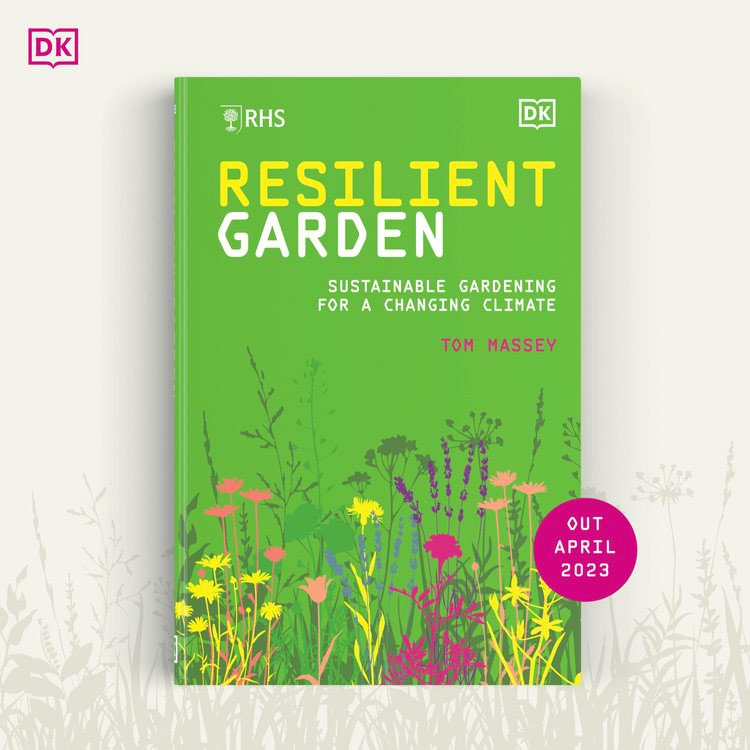 Garden Designer and presenter of BBC Two’s Your Garden Made Perfect, Tom Massey has collaborated with RHS to produce a fabulous and fitting book, Resilient Gardening. It’s a very timely ‘gardener’s companion’, with good advice and easy-to-understand explanations of ‘how plants work’, what they need and how we can make their lives easier – a timely transition from expecting them to enhance our own lives.
The Resilient (Show) Garden will also be featured at the RHS Flower Festival at Hampton Court in July. Designed by Tom, it will showcase a host of plants and products that contribute to the conservation and reuse of rainwater. With water shortages a growing concern in Britain there will be plenty of ideas to ‘reimagine rainwater’ as a resource for positive use rather than simply being wasted. More details at www.tommassey.co.uk/rhs-resilient-garden
Leave a Reply