
Taken from Lynne’s weekly column ‘Green Scene’ for the Western Mail
15th November 2025

Little Things
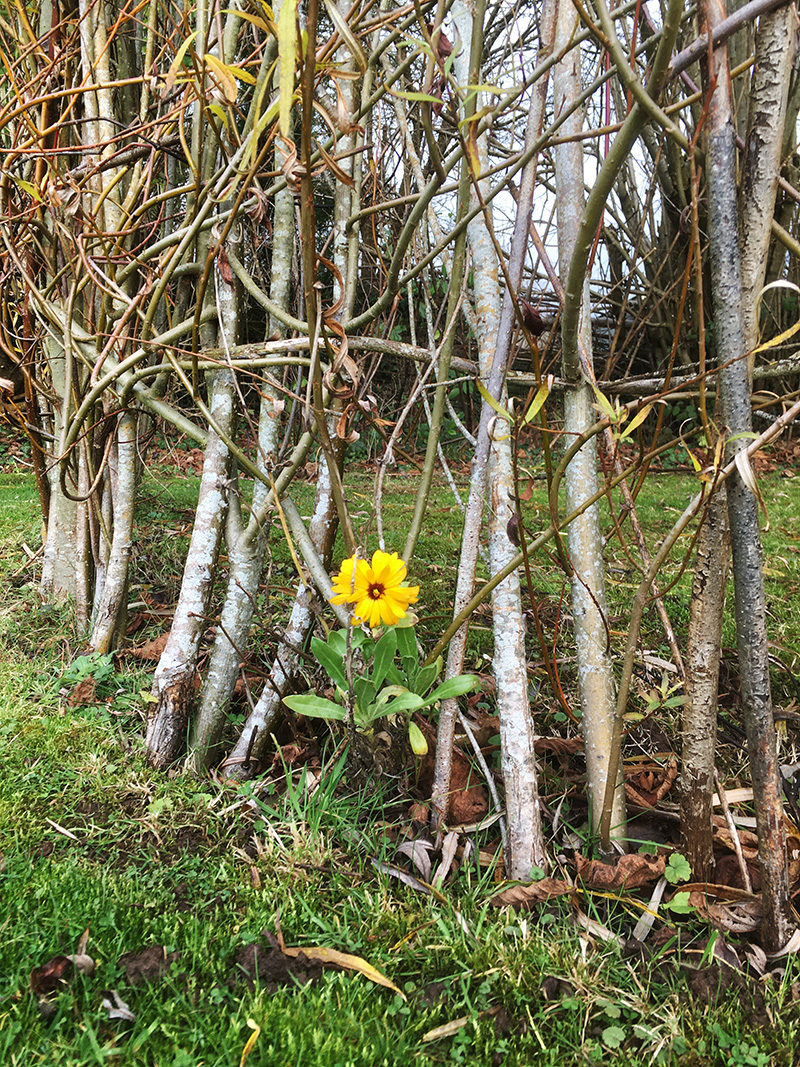
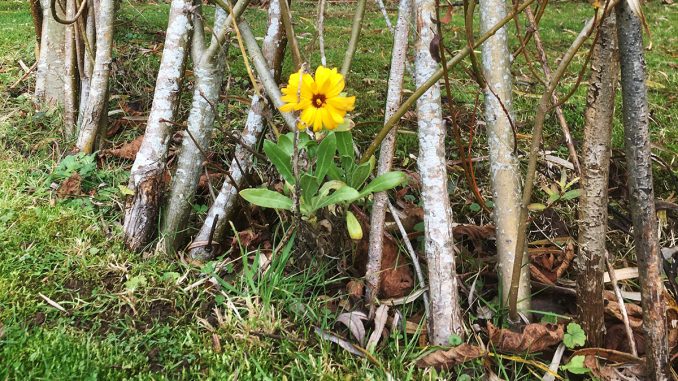
Some things (still) make me smile. It is usually something Yogi does, a quip from my brother, an (in)appropriate meme sent by a friend, or something I see in nature – like this enthusiastic little corn marigold, blooming it’s little leaves off in November. Despite the recent heavy rain, gusty winds, and the fact that the willow wigwam that is hosting it has lost all it’s leaves and stands naked, this hardy little plant even seems to be raising its leaves in joy. Nature really is just brilliant, even if contrary. Last week I wrote about its darker side, with the prevalence of damaging honey fungus this autumn, and just days later I see this stunning solo marigold in all its glory.
It reminded me of the quote by Hans Christian Anderson. ‘Just living is not enough… one must have sunshine, freedom, and a little flower.’
And whilst on the subject of ‘little things making a big difference’, one of my favourite poems is by A Harris, it goes like this:
My day was pretty rotten,
So I took a little walk.
I’d had enough of people,
Of their problems and their talk.
So I went up to the woods
And my mood turned around real quick,
Because after just a bit of time
I found an awesome stick.
Slippery When Wet
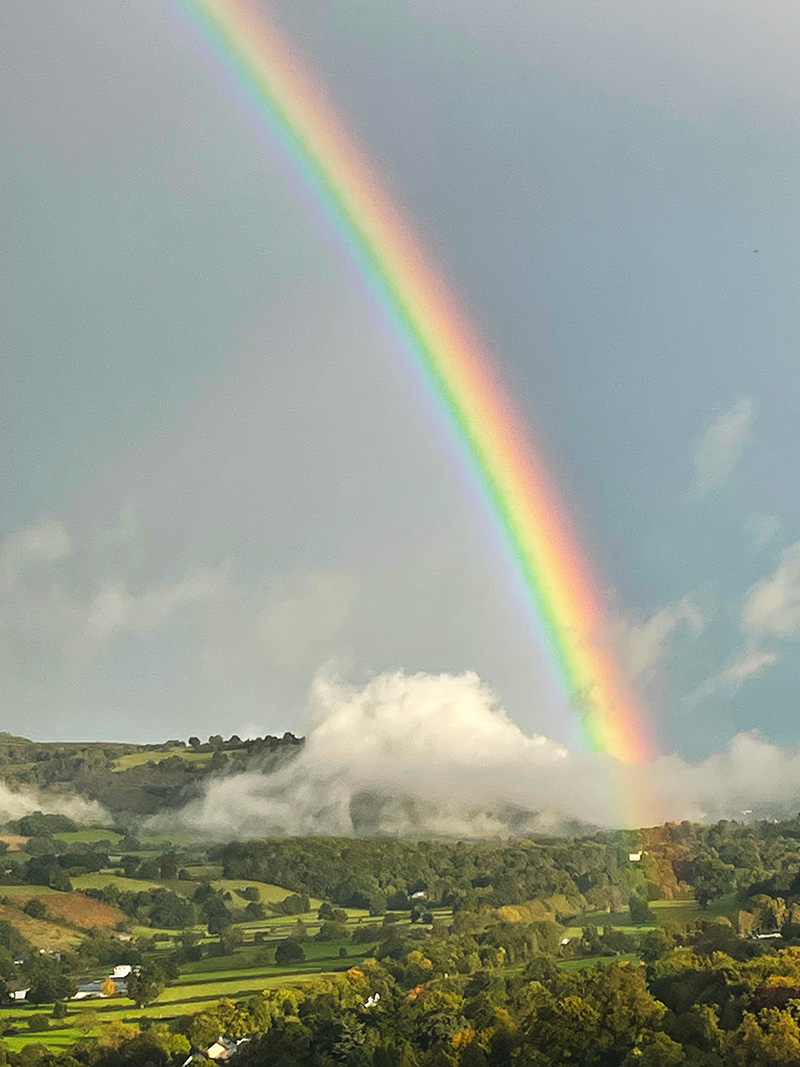 One positive thing about all the heavy rain showers we have had lately, is that we occasionally get a fabulous rainbow as a result of them. Whilst on the mountain for a sniffari with the Yogist, I noticed that a rainbow had ‘ended’ in the back of my truck. I did check but couldn’t find a pot of gold.
One negative aspect of the wet weather is definitely slippery paving slabs. It’s how I fractured my ankle and it has made me even more wary of the perils of slippery patios, steps and decks.
In the past I have used Patio Magic as an effective solution for both removing and preventing the growth of moss, algae, and lichen on paved areas. Whilst described as a patio cleaner, by cleaning away the algae, the treated areas are left far less slippery.
I apply it with a knapsack sprayer and it is completely safe for plants and animals, containing plant-based ingredients and no harsh chemicals. The biodegradable formulas are obviously much gentler on the environment.
I say ‘in the past’ as this year, despite the hot weather, I haven’t treated any paved areas for any of my clients. It has been a ‘school-girl’ error. I think it was partly because the weather was so dry, so I forgot how treacherous the slabs could be when wet, and partly when I did remember we have had a lot of breezy days when you don’t want to be spraying anything, no matter how environmentally friendly it is.
Suffice to say I am now awaiting a dry, still few days to get ‘everyone’s’ patio treated as soon as possible.
I was talking to another landscaper recently who is now laying a lot of porcelain tiles as patios and for areas around pool and hot tub areas. My first thought was ‘Boy, they must be slippery when wet’ but he said they are treated with a no slip formula that makes them safe to walk on when wet or with wet feet.
Although I haven’t used it, Stone Grip Non-Slip Floor Treatment claims to be suitable for ceramic tiles, porcelain, concrete, and other stone surfaces and is basically a fast-acting anti-slip solution that increases your slippery floor’s traction in minutes. It can be used indoors and out – and interestingly is used a lot on floor tiles indoors where there are dogs in the house. ‘Trendy’ slippery indoor floors are apparently responsible for a lot of dog injuries, posing a hazard as paws are not designed to grip such smooth, often shiny surfaces. Injuries caused by flooring that isn’t dog-friendly can range from minor soft tissue strains and tears to serious chronic joint conditions, which can lead to arthritis later in life.
Have to S(Hare)
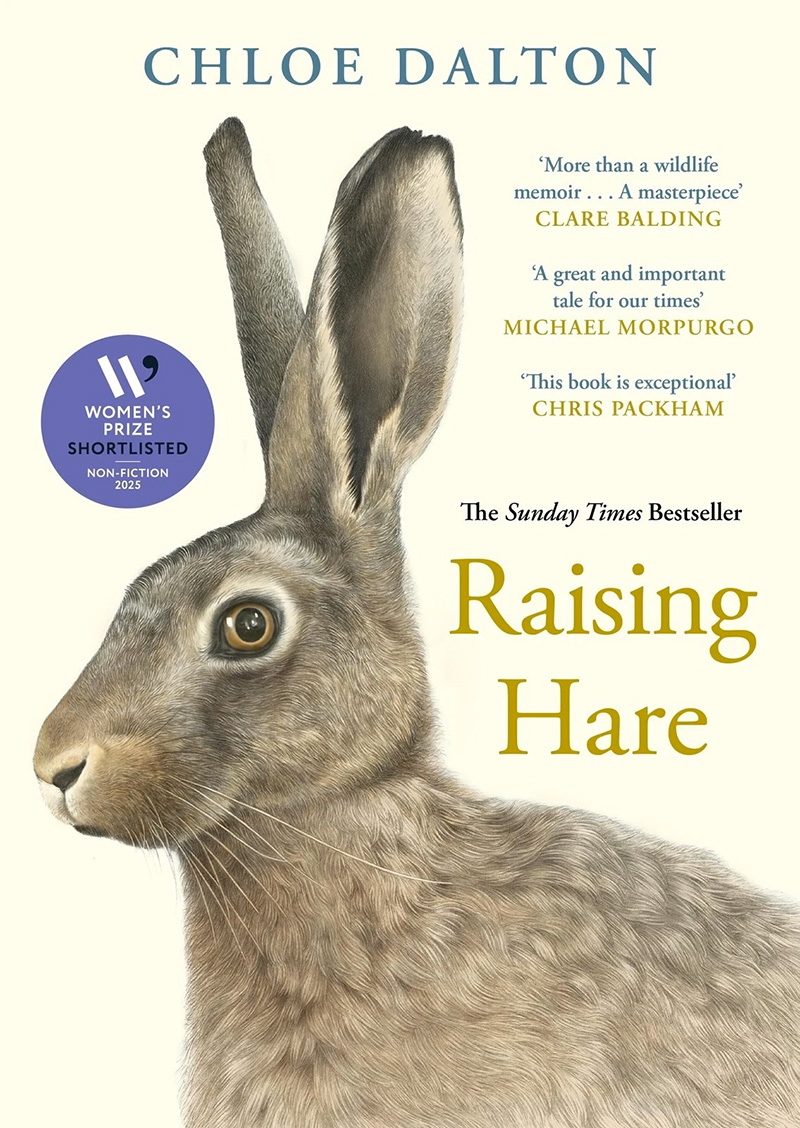 I am currently reading ‘Raising Hare’ by Chloe Dalton. It’s beautiful, but don’t take my word for it – it has some of the best reviews from ‘relevant’ people, including Chris Packham and Matt Haig, and has won, or been shortlisted for, lots of major ‘book awards’, including Book of the Year by our local Hay Festival.
I won’t give any spoilers, it is just a beautifully written book about one of nature’s most majestic creatures, but also about hope, trust, and all those heart-warming emotions.
Hares live in a variety of habitats, including grasslands, open fields, arable farmland, heathland, and upland areas, often near sheltered areas like hedgerows or the edge of woodlands. I was surprised to learn that they are seemingly rather blasé about their own safety as they build nests on the surface, called ‘forms’ – not in underground burrows like rabbits – relying only on camouflage to hide. Renowned for their incredible turn of speed, ( reaching up to 45 miles an hour) they are also born with fur and with eyes open – unlike rabbits – so running away is an early ‘go to option’. Similar in several ways to rabbits, hares are much bigger reaching up to 48-70cm in length and 3-5kg in weight. Their black-tipped ears are twice the length of their head, whereas the rabbit’s brown ears are relatively short, and the hare’s fur is warmer in colour than the greyish-brown tones of a rabbit.
It’s thought that brown hares were introduced to Britain by the Romans and were seen in great numbers – until 1880, when a change in the law allowed farmers to shoot them as ‘game’. There are two species of hare in the UK – brown and mountain – but only the brown hare is known in Wales.
Sadly, hare numbers have declined by 80% in the last 100 years or so – mainly due to a change in farming methods – and are now quite a rare sight.
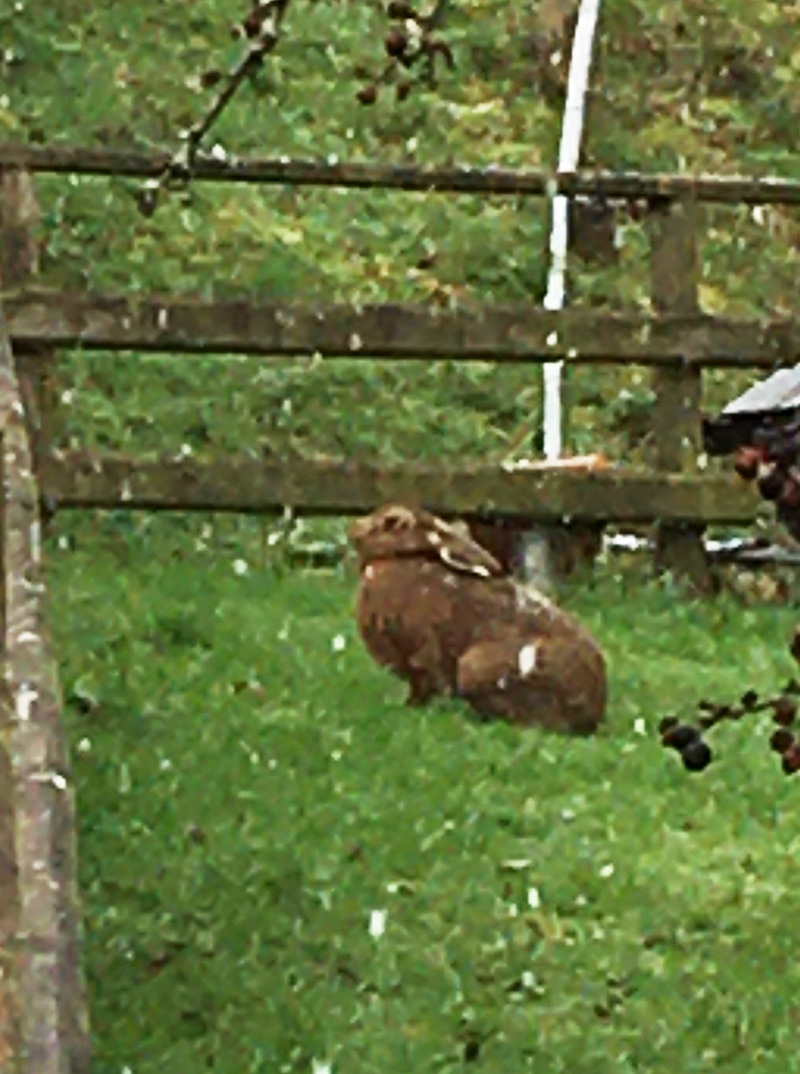 I am lucky enough to see several hares every year, although I will keep the locations to myself. I am always completely mesmerised by them as they zig-zag across a field at speed, and see it as such a privilege to be relatively close to them. They are usually far too quick to be photographed but the one I did manage to photograph was obviously caught very much unaware in a snow shower. He crouched to the ground for just long enough for me to take a rushed photo and then seemed to reach 45 miles an hour in just a few seconds.
A similarly uplifting book that will have you embracing the wonder of nature is A Swan in My Bed by Pamela B. Murry-Rham and which is available from Amazon. This true story shares Pamela becoming the adopted mother to a two day old cygnet. Like Raising Hare, it will affirm your faith in (some) humans and life in general. And, as such, both will make great Christmas presents.
I hope you and Yogi are keeping well. I always look forward to your updates.
The hare reminds me of one night, driving a police car along a long narrow road, when I saw a brown hare sat in the middle of the road. It started off away from me, but didn’t appear to be in a hurry. I stayed back so as to not frighten it. I waited for it to dart off into a field entrance, but no. This went on for over half a mile before it moved over to the verge and stopped. I got alongside and quietly opened my door. It stayed there while I quietly talked to it (as you do) and the calmly sat there eating grass!
Absolutely love the poem which is absolutely just you
Do you know that Pamela is Gina’s lovely mum x