

Taken from Lynne’s weekly column ‘Green Scene’ for the Western Mail
25th April 2026

Reading the Tree Leaves

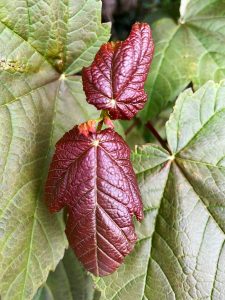
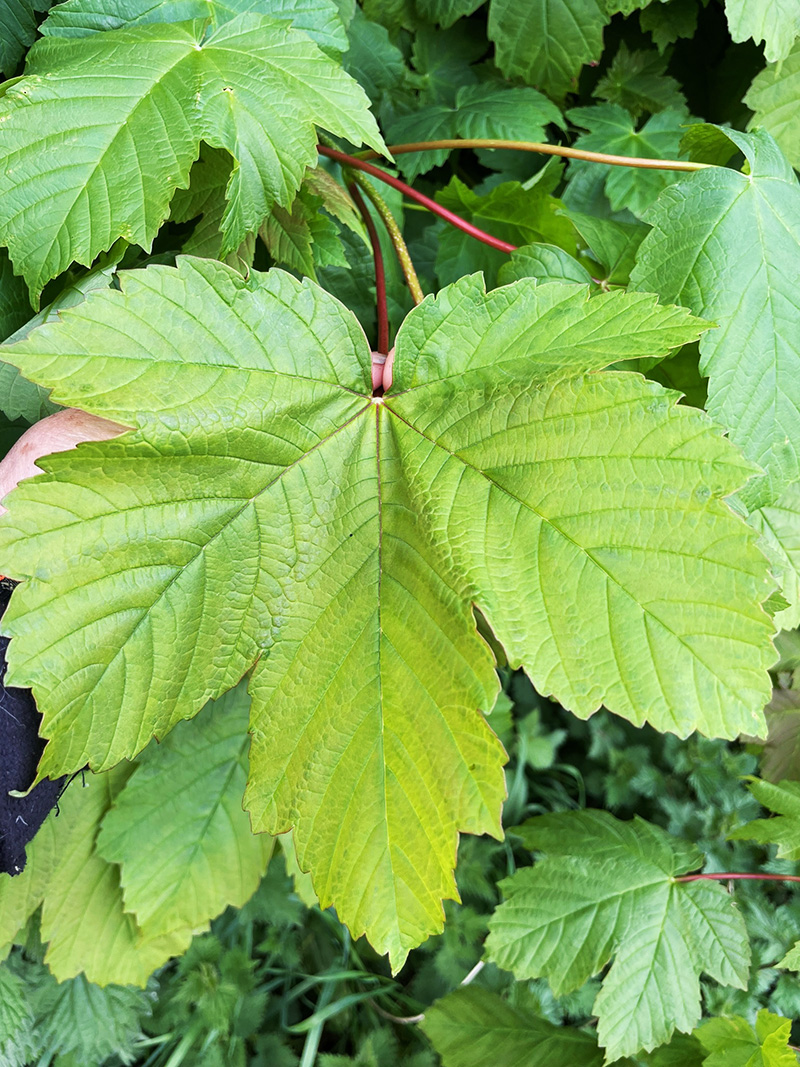
I have shared my love of (all) the spring flowers and how each one is my favourite as they come into bloom, but this week I have been mostly ‘loving leaves’. Tree leaves especially.
Take the sycamore for example, at this time of year you can see all the stages of the brand new leaves. The ‘baby’ leaves, just beyond buds and looking enthusiastic and a little naive almost; then there are the ‘teenage’ leaves – on the sycamore they are a rich crimson colour, still slightly unfurled and look like a teenager all done up ready to go out, but still a bit shy.
And then there are the fully formed, expansive ‘adult’ leaves – all on the same tree (branch even) – which are all set to work hard for the summer and their short but effective and important lives. It’s just brilliant. Look at most deciduous trees now and you will see the same ‘leaf progression.
The hazel trees still have tight, timid buds, as well as super-bright green leaves which are still slightly folded and also now host the fully developed adult leaves as well. Beech hedges go a stage further as some of them still have the dead leaves from last year. The new, young beech leaves actually push the old, deceased ones off their axils to take their place. But maybe that’s taking personification a step too far.
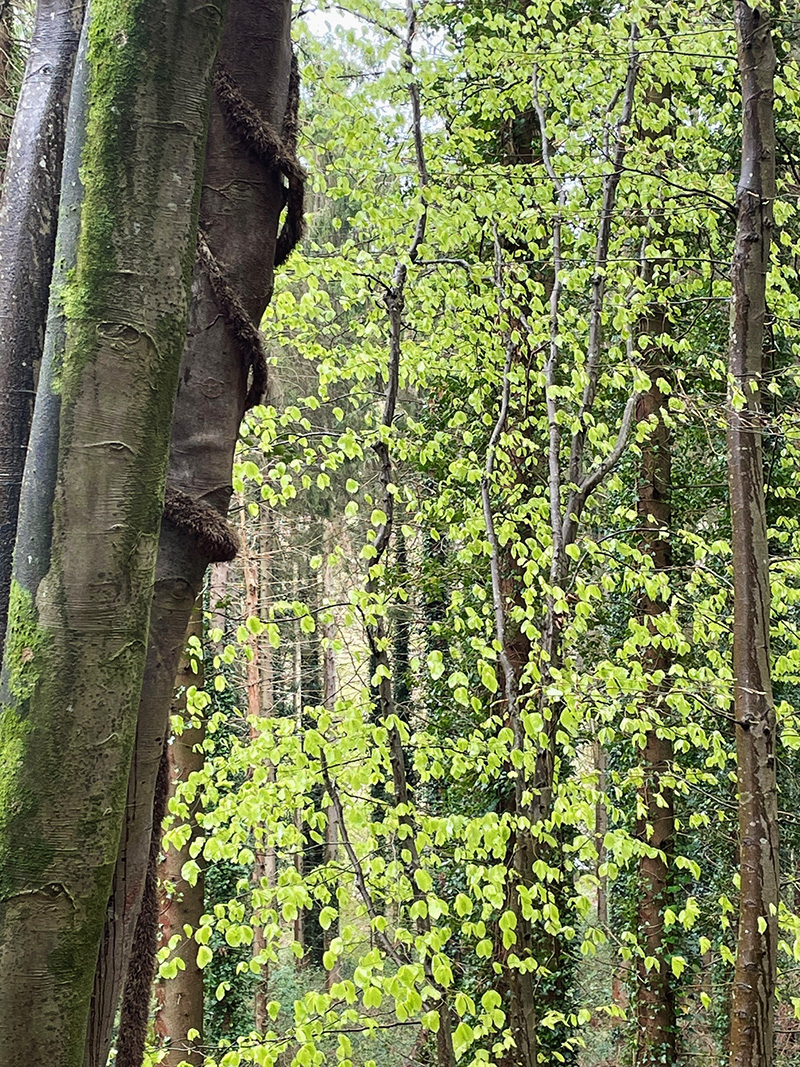
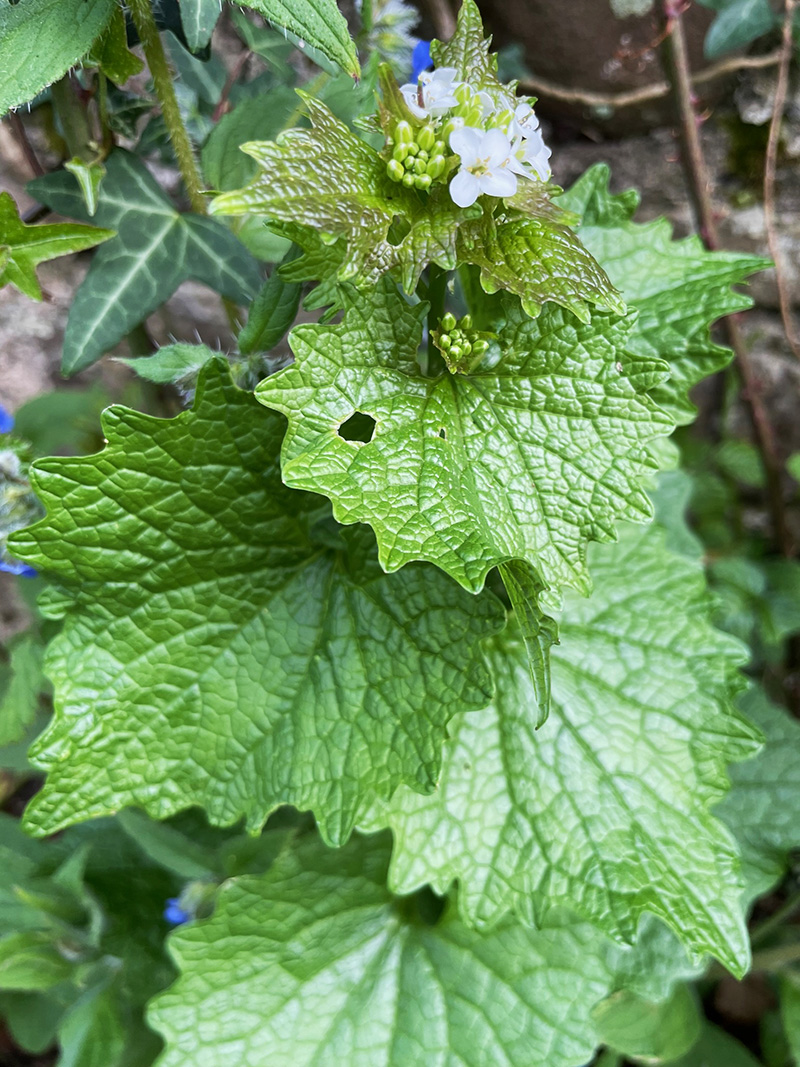
Staying with the theme though, I have also been mesmerised by a dock leaf the size of Yogi, the fresh spicy leaves of the jack in the Hedge, and one of my favourites (!) at this time of year – the new, vivid, lime-green leaves of the beech trees on the contrasting dark barked boughs.
They always remind me of those lime and chocolate sweets that we had as kids. A bit of research reveals that they are called ‘Chocolate Limes’, and are described as, ‘A traditional lime-flavoured boiled sweet with a crisp outer shell and a smooth, rich chocolate centre.’
What they omit to tell you is that the boiled bit always cut your tongue right at the end, just as you got to the chocolate centre. And Jehu’s in Crickhowell still sell them.
Know Your (Wild) Onions
Back to the Jack in the Hedge, the spicy leaves are lovely in a salad or sandwich but please make sure you know what you are picking. The leaves of Honesty look very similar – although the flowers differ – and you will often find Dog’s Mercury in the same hedge as ‘Jack’, but it’s poisonous.
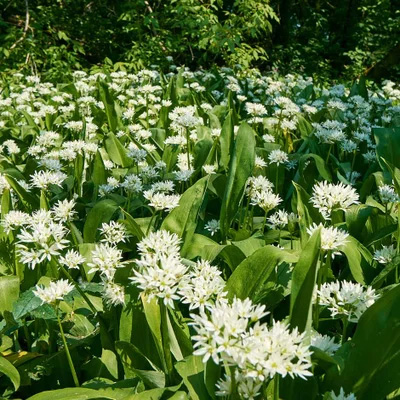
Wild Garlic is in all its glory at the moment, locally, too. Also known as Ramsons and Wood Garlic it is definitely another ‘favourite’ of mine. The leaves will add flavour to lots of dishes from quiches and omelettes, to stir fries and salads and I often come home with a pocketful of leaves from my walks now – as I pick sparely from a woodland after asking the farmer’s permission to do so. Please be aware that the Wildlife and Countryside Act of 1981 states that ‘It is legal in the UK to pick wild garlic leaves and flowers for personal use, provided you do not trespass on private property and harvest sustainably. However, it is illegal to uproot the bulbs or dig up the entire plant without the landowner’s permission.’
You can buy Wild Garlic (Allium ursinum) though, it is a wild relative to chives and certainly has a place in appropriate gardens, preferring a woodland setting – damp and shaded. As well as the tasty leaves, the white flower heads that look a bit like pompoms, are pretty too and will ‘lift’ a subdued shady area now. The leaves are used in the same way as a herb and are best eaten young (around now). The flowers are also edible and are a great addition to salads.
It is traditionally used as a ‘Spring tonic’ because of its blood purifying properties and it is also reputed to help reduce cholesterol. It is also thought that the smell will repel cats, although it’s worth remembering that it can spread quite quickly, so be prepared to be ‘strict’ with it if necessary.
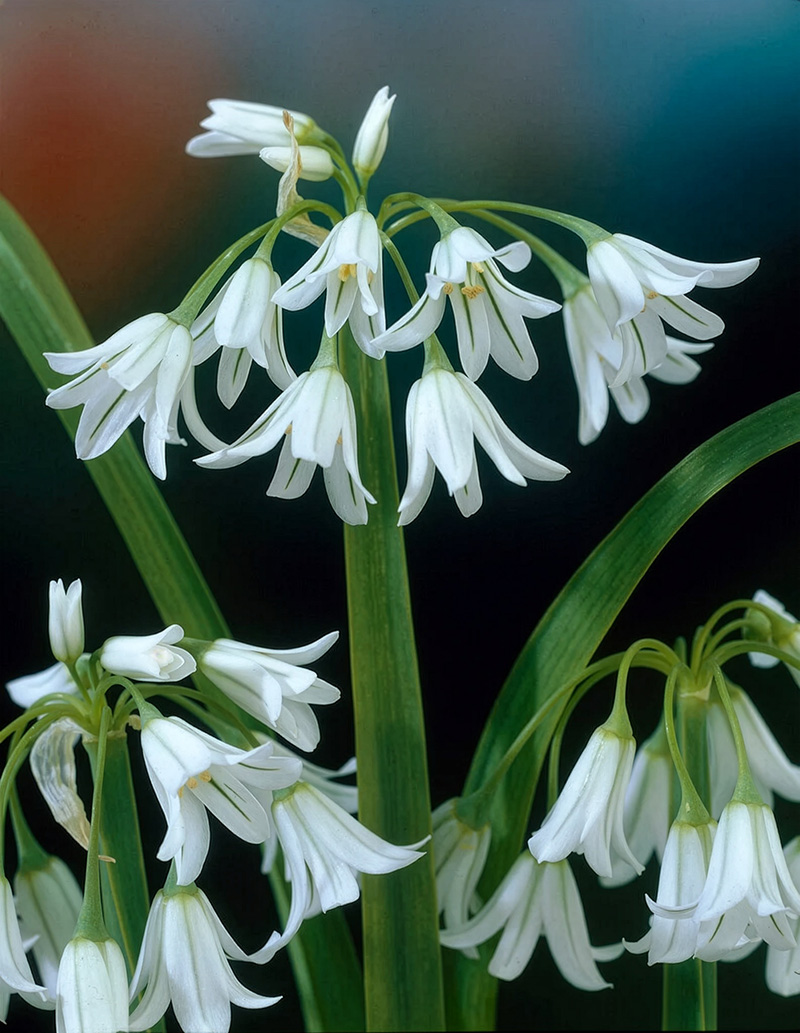
Interestingly, I have often seen people confuse wild garlic with the Three Cornered Leek, sometimes called wild onion, or Snowbell (the Latin name being Allium triquetrum).
In contrast to the wild garlic guidelines, it is actually an offence under Schedule 9 of the Wildlife and Countryside Act in England and Wales to plant or otherwise cause to grow this species in the wild, as its so invasive.
Although they smell the same, have a similar taste, and both have white flowers, it is easy to tell the two apart as the Three Cornered Leek’s stems are, as the name suggests, distinctively triangular, whereas the wild garlic’s aren’t. The leaves are also very different as the wild garlic has hollow, round, grass-like leaves, while the wild onion has flat, solid leaves.
Bell-shaped flowers of the wild onion are pretty, with white petals each with a single green vein, and are produced from April to June. Even though it is cultivated intentionally, it can still become a nuisance very quickly as it spreads enthusiastically by both bulbils and seeds, quickly earning its ‘invasive’ title.
Soft Start
I read about the current trend for – and advantages of – swapping New Year Resolutions for a ‘Spring Soft-Start’ this week.
As most good intentions and resolutions set at the beginning of the year are inevitably on the wane, or have ‘already waned’, you can redeem yourself with a new, soft start in the spring.
Apparently it can help to avoid the burn out associated with pushing yourself too hard to achieve at the beginning of the year, and is described as a ‘smarter move’ to make small, sustainable shifts (in the spring) and let them slowly build. Sounds like the sort of thing nature already does, to me.
A Moment in Time
After another week of winter, spring, summer and autumn weather, as well as the traditional April Showers, we are already in the last week of April, and the year seems to be speeding by.
It always reminds me of a friend saying, “When I was a child, Christmases seemed to be about three years apart; now, as an adult, they seem to come around twice a year.”
And I was also talking to someone last week who said, ‘If you think of each passing day as ‘one day less’ instead of ‘one more day’, you will use them more wisely’.
That resonated.
Leave a Reply