

Taken from Lynne’s weekly column ‘Green Scene’ for the Western Mail
18th June 2022

Plant Growth
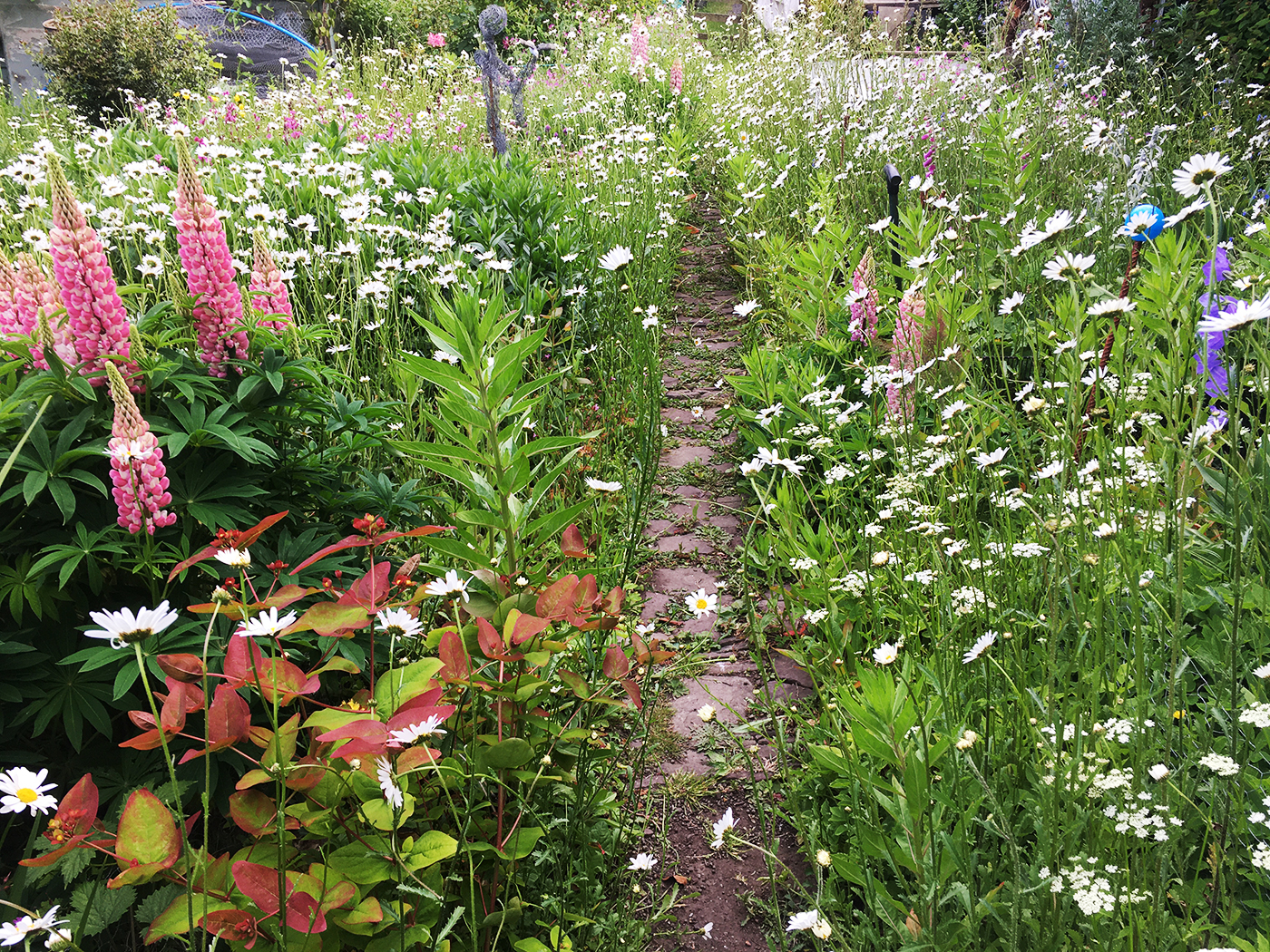
It’s that time of year when the gardens seem to be getting away from me. Growth is at it’s strongest and whilst The Move sang “I Can Hear The Grass Grow”, I think I can hear everything in the garden growing. As always at my cottage, the ground elder is doing particularly well but so are the ox-eyed daisies. A lot of people consider them to be weeds and I finished with one client because they wanted them all pulled out of their garden.
A crucial part of gardening – for me anyway – is working with nature and making the most of what she gives you. The part of my garden that is now a sea of ox-eyed daisies, herbaceous plants and frothy ground elder flowers, used to be a tidy, prolific veggie patch. Looking back I’m not sure how I had time to keep it that way but I definitely don’t now.
I still have three veggie beds within the wildflowers which I try to keep ‘weed-free’ and veggie-full but even that is hard. I went out to pick kale the other evening to find the rabbits had beaten me to it. It is frustrating but there’s no point in getting bent out of shape about it. I love watching the rabbits in the garden too. Ideally I would just fence off a part of the garden and keep it rabbit proof – but I haven’t had time to do that yet either.
 So whilst everything is in full growth, instead of feeling overwhelmed, just try to keep the grass mown – or even paths through it. Mown grass always makes it all look better. Keep paths clear – as well as making a garden look more cared for, it’ll mean you don’t get wet when you walk along them. And try to keep climbers tied in or staked. I also just pull out taller weeds like nettles and bracken from beds and borders, and remove brambles from places they shouldn’t be. Another good ‘trick’ (I think they are called ‘hacks’ today), is to keep the grass edges along beds, borders and paths clipped with long handles edging shears. A neat edge to a mown lawn will look as though you are a knowledgeable gardener rather than a knackered one.
Learn to love what you can’t change. I have even learned to embrace the ground elder and know I can use the autumn and winter months to pull the garden back into check. Rome wasn’t built in a day – ‘but I wasn’t on that job’, as my dad used to say.
Personal Growth
 And still on the subject of growth – but personal growth this time – I am going back to Usk College part time through the summer to qualify to teach Pilates. It’s going to be hard juggling everything but worth it. You all know how much I rate the Health and Fitness section of the College and it’s good to keep learning and pushing my own boundaries. I am also going back in the autumn to do the Sports Massage Therapy course. Both courses are YMCA Level 3.
The Sports Massage course, and several others, including the Gym Instructor, Exercise Referral and Personal Training courses next term are actually fully funded by the Government and therefore are free to do. Yes, you read that right – they cost nothing. It’s an amazing opportunity and we are lucky to have that in Wales.
There is an open evening on the 28th June from 5-7pm at the Usk Campus and I highly recommend popping in to have a chat and meeting the fab’luss tutors. In the meantime have a look at their website www.coleggwent.ac.uk/campuses/usk and click on ‘Learning’ to find out what courses are available.
Growth Should Only Cease at Death
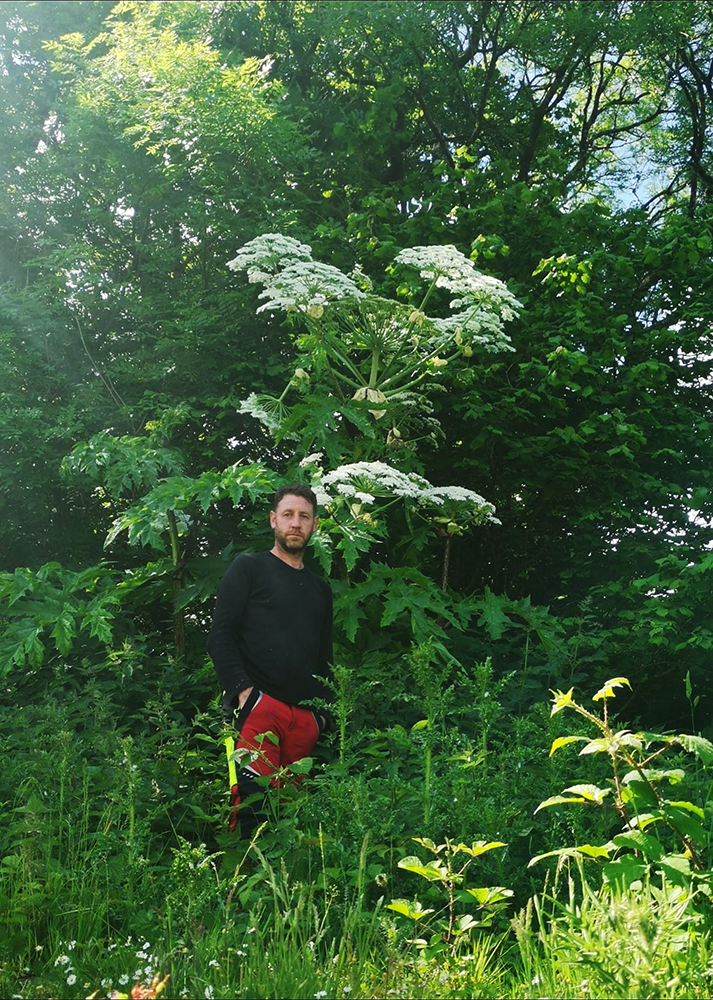 At this time of year I often get sent photos of a certain plant with the question, ‘Is this Giant Hogweed?’ Inevitably, it will be a photo of Common Hogweed. As a general rule of thumb, I always say, “If you have to ask if it’s Giant Hogweed, it won’t be.” And that’s because once you’ve seen the giant variety, you’ll be in no doubt. It is huge. An arborist recently took this photo of some giant hogweed he came across in work – as you can see, it is just gigantic. In it’s defence, it is quite a pretty plant – but also pretty evil. Its sap can cause serious skin burns and often the sun will keep affecting the skin adversely for a long time afterwards. Just give it a wide berth and make sure dogs do too.
In fact it’s a tricky time of year with regard to a lot of pretty white, wild flowers at this time of year. Hemlock, Dropwort and Common Hogweed all grow along the banks of the River Usk, for example, and all are to be avoided. Even the Common Hogweed, which is very common, can cause blistering and skin issues but the other two are deadly.
Hemlock is highly poisonous, eating even a small amount of any part of this plant can kill people and livestock, and it’s equally evil cousin, Hemlock Water-dropwort, is the most poisonous plant in the UK. Apparently the toxic alcohols in the plant act by constricting the muscles, causing death by asphixia and the really grim part (if death by plant isn’t grim enough), is that it also causes the facial muscles to contract into a sinister smile and that has become known as a ‘death grin’, or ‘sardonic grin’. Nature has some sort of sense of humour. Oh, and did I mention that the root is said to taste pleasantly like parsnip before poisoning the consumer.
It would be a really good idea to familiarise yourself with these plants – not in the flesh but via Google or a good book. They have all got pretty white flowers and all look like plants that are often foraged – Meadowsweet, for example. Please be cautious and careful.
Rebirth and Return of the Light
 The longest day will already be with us next Tuesday. At the summer solstice, the 21st June, the sun travels the longest path through the sky, which means that day has the most daylight, or is the ‘longest day’.
Traditionally the summer solstice symbolizes ascension and the rebirth or return of the light, and associated rituals are designed to help release old, dark energy. It is thought to be a good time to consider the grand scope of your life and spiritual path and note what is both in and out of alignment.
Mind you – every day is a good day to do that.
Loved it. Keep them coming please Lynne!