
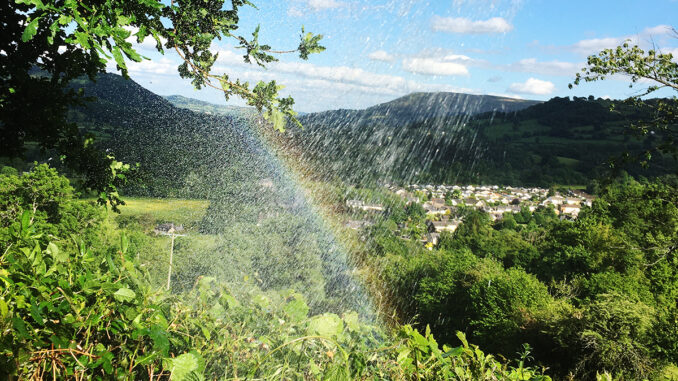
Taken from Lynne’s weekly column ‘Green Scene’ for the Western Mail
25th June 2022

Olive View

I pruned my first olive trees last week. Well, not mine but for a client. I am always surprised that olive trees grow so well in Wales. Several clients have them, in different situations and locations (two on mountain tops) but all thrive.
They are wind resistant and drought hardy, which is helpful in our ‘indecisive’ Welsh climate, and are frost resistant to -15C without the need to fleece. They actually need around three months a year of cold weather to flower and fruit although most are grown here for their architectural qualities rather than their fruit. Having written that – you can see that the ones I pruned have flowered and were fruiting prolifically.
Olive trees are slow growing and relatively compact evergreens which will reach a height of anywhere between 8 and 40 feet, depending on the variety and situation.
They are incredibly adaptable and can cope well with intense sunlight, frost, drought and even fire. Being native to the Mediterranean, conditions can, and do, go from one extreme to the other. The oldest tree in Spain is 3,500 years old – proof that they don’t tend to ‘live fast and die young’.
 Two clients have their olive trees in the ground but one has two trees in containers. They need to have good drainage, which is probably easier to provide in a container. When you plant your olive tree, make sure the pot is quite big as your tree will grow a lot, albeit slowly, and the last thing you want is to re-pot an olive tree you can’t move. The trunk will also expand a lot over the years, especially when in the ground.
You can dig up your tree and re-locate it if necessary, however it is best to get it right first time if possible.
Technically olive trees don’t need pruning, although they are happy to be ‘tidied up’ and pruned to shape if necessary. I only pruned them last week as they were getting too tall and blocking a great view. It’s going to be interesting to see how they react, bearing in mind that pruning usually stimulates growth.
Growing your own olives in Wales can happen, as the photo proves. You do have to wait between 2 and 5 years and they need 2 or 3 months in cold conditions to trigger the anthesis process (opening of the flower bud). They will also need as much sun as possible to start fruiting.
And although they are self-pollinating, they are wind pollinated, which makes it all a bit trickier. If you do get lucky, remember, the actual olives need to be ‘cured’ first to be fit for human consumption.
It’s Good to Talk
 I had a lovely evening with Gavenny Gardening Club on Monday – thank you to Malcolm Brinkworth for inviting me. It’s always good to have an interactive evening based on a big Q&A session. That way people get to ask whatever they like, rather than listen to me talk about something they’re not interested in. We did indeed cover a wide and eclectic range of topics from mental health and bees to artificial grass and wildlife rescue and rehabilitation.
A very unexpected highlight for me was when a 95 year old woman (who is still gardening every day) came up to me and told me that she used to lodge with my father’s grandmother in Whitchurch. She regaled the most fantastic stories of my dad visiting as a 9-10 year old. I absolutely love these totally unexpected chance encounters – they are just priceless. Thank you Evelyn.
Of course, we also talked about the weather – it is absolutely key for all gardeners. And the fact that it seems to be getting more erratic (almost 20 degrees difference between two consecutive days last weekend) is definitely making gardening more challenging. Most of my first sown salad crops bolted before I even got a decent picking although the second sowing seems a little more ‘relaxed’ and successful. Half of my runner beans are in flower – which would normally be a good thing but they’re only about a foot tall. And the rabbits have taken my kale down to the ground. Good to know it must have been tasty. Shame I didn’t get to try it.
As a client moaned to me last week, “I really can buy veggies cheaper than I can grow them”. Something we can all relate to I’m sure – but still we persevere. You really can’t beat the taste and pride of home grown crops, no matter how small that crop may be.
The importance of succession sowing is often forgotten about. Everyone is very enthusiastic about getting the first lot of seeds in the soil (ironically, often too early) but then their enthusiasm seems to wane a bit. Making later sowings not only ensures a continuation of the crop but often provides another opportunity for a successful one.
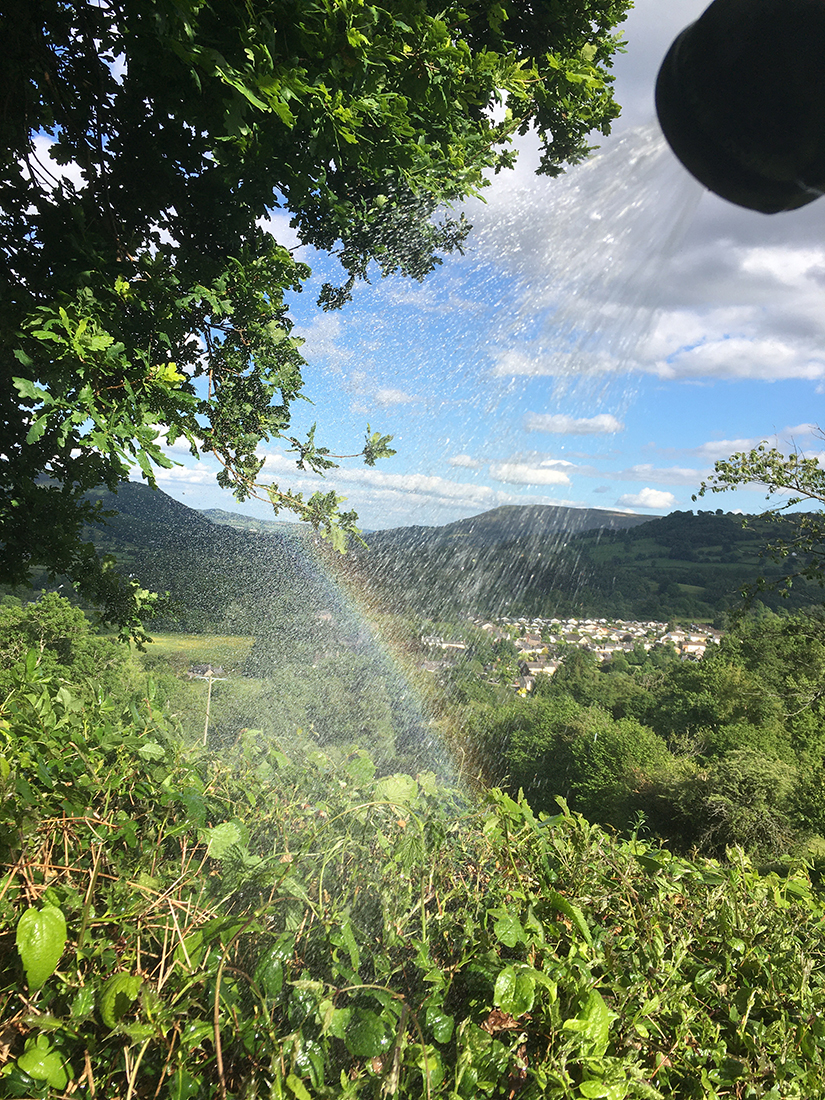
One thing I try to encourage everyone who is ‘growing their own’ to do is to set up a good irrigation system. I think it is essential these days as we get more extreme – and often drier – weather. I don’t recall my dad or granddad spending a lot of time watering, although they must have during some summers, especially 1976 (if they were allowed).
When you are creating or overhauling your veg patch or raised beds, invest in and include a good watering system, and put it on a timer if possible. Or at least get yourself a good kink-free hose and sprayer attachment and make it as easy and pleasurable as you can to use. If you get it right, watering can be a nice meditative part of the summer days. And apart from hungry wildlife, it will be the main difference between disappointment and surplus.
Same goes if you have lots of pots and hanging baskets. An irrigation system should be factored in to the cost and creation of the displays. Ultimately it will be cost effective as the displays will be far more prolific and last a lot longer. As soon as compost is allowed to dry out it will not absorb water to the same degree – and you are on the highway to a dry way. Interestingly, a lot of gardeners have also reported that the peat–free compost is not as absorbent as their ‘usual’ compost either. Nor as nutritious.
There is a great saying that, “Change is inevitable, but growth is optional.” It wasn’t written about compost, but is nonetheless seems to be relevant.
Excellent as ever!
I didn’t know about compost drying out and not absorbing water to the same extent. Neither did I know that olives can thrive in our climate.
There, even poor or non-gardeners like me, can learn!