

Taken from Lynne’s weekly column ‘Green Scene’ for the Western Mail
8th October 2022

Blessed
 Yogi had an email this week, inviting her to the annual Blessing of Pets at St Michael’s Church on Sunday 9th October at 3 pm.
The Church is situated in the historic village of Llanvihangel Crucorney , NP7 8DH, near Abergavenny, just off the A465 Hereford Road. There is an easy access path to the Church, parking alongside and there will be refreshments for both two and four legged friends. It is also just a short walk from one of the oldest – and most haunted – pubs in Wales, The Skirrid Inn.
To celebrate St Francis of Assisi, whose benevolent attitude towards animals and nature was the reason he became known as the Patron Saint of Animals, the new Vicar Rev. David Roberts – also a great dog lover – will be holding a special service to bless all those much loved pets, past and present. It will be the Rev. Roberts first Pet Blessing Service at St Michael’s – and the first Pet Blessing for 2 years due to COVID – but it will actually be Yogi’s third, bringing a whole new meaning to ‘well and truly blessed’.
It is a wonderful service and each pet is personally blessed (see photo) – as well as being ‘blessed’ with a small treat too, which possibly has something to do with Yogi’s willingness to attend.
The couple of Pet Blessings that we’ve been to included rabbits, cats, dogs, a chinchilla and several reptiles.
And of course, Sebastian the Shetland, and much loved Ambassador for the former Society for the Welfare of Horses and Ponies will be there again – even though he is officially retired.
Yogi was thrilled at her invitation – albeit a bit confused at the last line, “We welcome ALL pets – and even the naughty ones.”
For more information, please call Sian on 07889 58181.
And Stressed
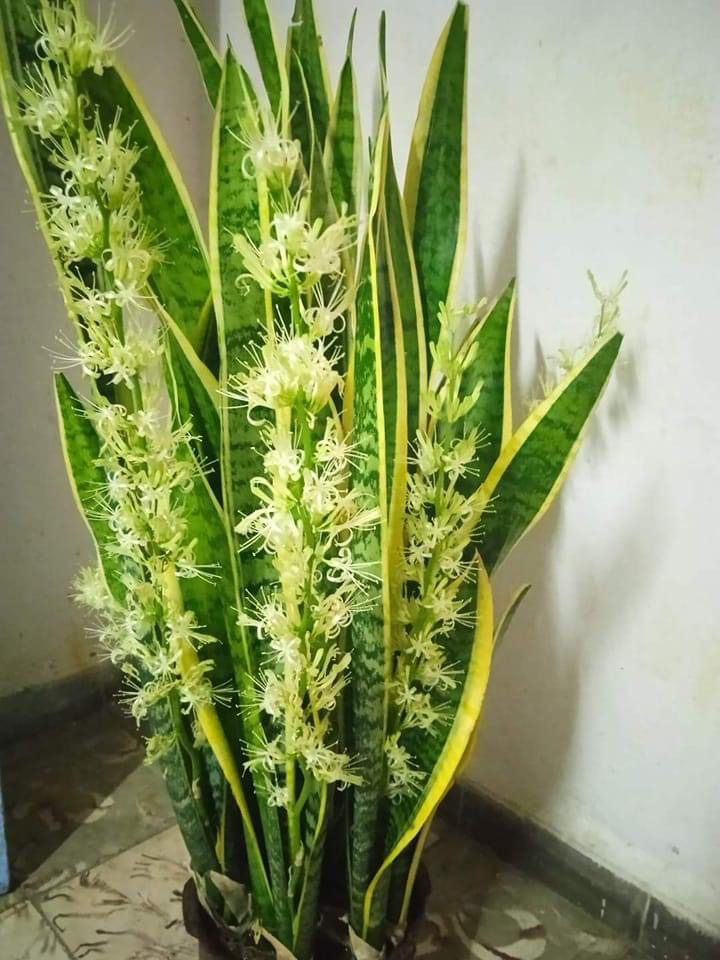 Thank you to the lovely reader who sent me a photo of their Mother-in Laws Tongue (Sansevieria) in full bloom. The name, Mother-in-law’s Tongue, refers to the pointed tips of the leaves, which is said to symbolise the sharp tongue of the Mother-in-law. It is also known as the Snake Plant, due to the shape and sharp margins of its leaves resembling snakes. You may also hear it being referred to as Viper’s Bowstring Hemp because it plant fibres are used to make bowstrings.
Despite owning several – they are a popular choice as a houseplant as they are undemanding and yet quite striking – I have never seen one flower, and apparently it is quite rare. Far from being insignificant as many ‘rare’ blooms can be, these are beautiful and a little like lily flowers – and like lilies, have the added bonus of a fantastic sweet scent.
Mild and continued stress will cause them to ‘bloom beautifully’ – another lesson we can learn from nature!
Fleabag
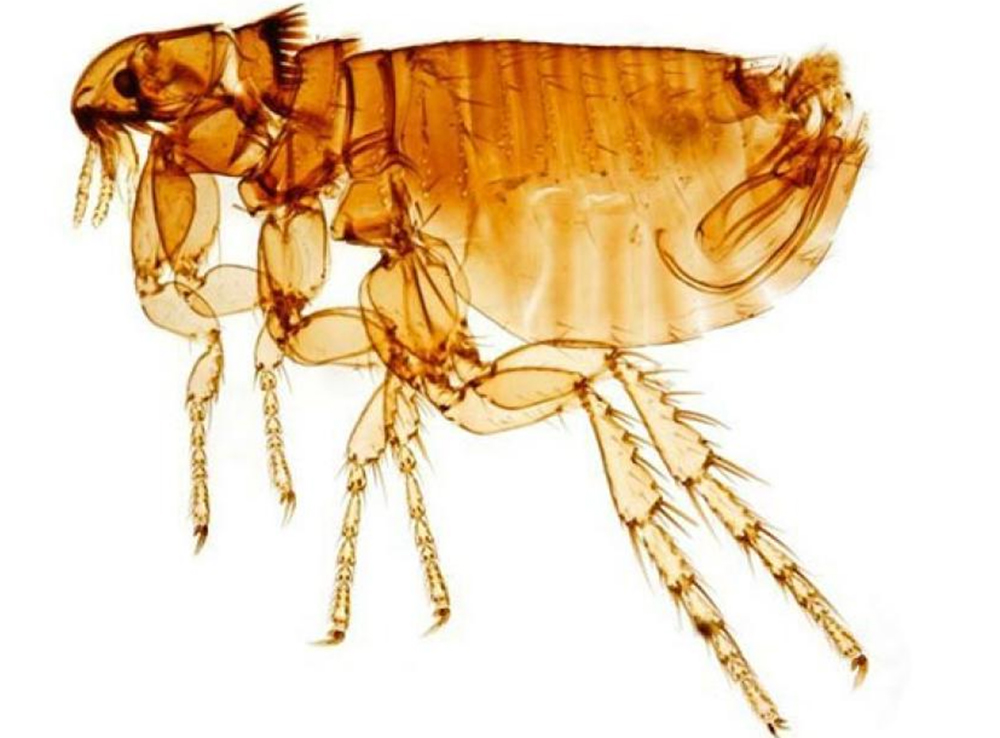 In March of this year the Animal Health Institute website warned ‘Flea & More Tick Outbreaks Expected in 2022’. Not surprisingly it is largely being attributed to climate change and the fact that the hot dry summer weather was not only enjoyed by sun-worshippers but also by fleas and ticks.
The reason for writing about this topic, is that a couple of people have mentioned that their dogs have been ‘covered in fleas’ recently. All have been walked in the same woodland locally, although as the Animal health Institute predicted – and local vets have corroborated – flea and tick problems are on the increase in general.
Fleas found on dogs often originate from rodents, birds, foxes, hedgehogs, rabbits and even squirrels. Because of their natural ‘seeking’ tendencies dogs may pick up the fleas from another animal or from the long grass that a carrier has been through. Therefore dogs are considered to be ‘bridging hosts’ for fleas of different wild animals, domestic animals and even humans.
Research shows that 15 different species of fleas can be found on domestic dogs. The data show that the most prevalent flea species found globally in domestic dogs is actually the cat flea.
The dog flea also occurs globally, but in lower rates than the cat flea. Several other species of fleas, originally feeding on birds (hen fleas), rodents (rat fleas) or insectivores (hedgehog fleas) are often found on domestic dogs which indicates that they will jump to dogs due to their habits.
Cat fleas are almost always the fleas that invade our homes and ‘feed’ on our pets and despite their name, are just as likely to feed on a dog as a cat. It’s not much consolation but dog fleas infest homes much less often than cat fleas.
Cat and dog fleas are built for hiding in fur. Their laterally flattened bodies help them navigate between pieces of fur or hair and backward-facing spines on their bodies help them cling to fur when the host is on the move.
The good news is they don’t live on non-furry hosts such as humans, as our relatively hairless bodies don’t make great hiding places for fleas, and it’s much harder for them to hang onto bare skin. The not-so-good news is that they can and do bite people. As they multiply, these bloodthirsty fleas get hungry and may bite you instead of your pet. Flea bites typically occur on the ankles and lower legs – and itch.
One other thing that my research turned up is that fleas are much more likely to be found in long grass than regularly mown grass. If that’s not an incentive for cutting your grass regularly, I don’t know what is.
The Big Flea and Tick Projects were launched in 2018 and 2015 respectively, with studies being held by Bristol University. Alarmingly 1 in 3 dogs were found to be hosting fleas and ticks and even more worrying was that 47% of owners were not aware that they too are at risk of infection from tick-borne diseases.
It really is worth doing some of your own research and most importantly keep checking your pets regularly. Contact your vet for the best advice for flea and tick prevention and remember that they are also ‘natural’ control methods, which may work in the early stages. As always, be mindful when using any treatments on your four-legged friends.
Leave a Reply