
Taken from Lynne’s weekly column ‘Green Scene’ for the Western Mail
10th June 2023

Thunderstruck
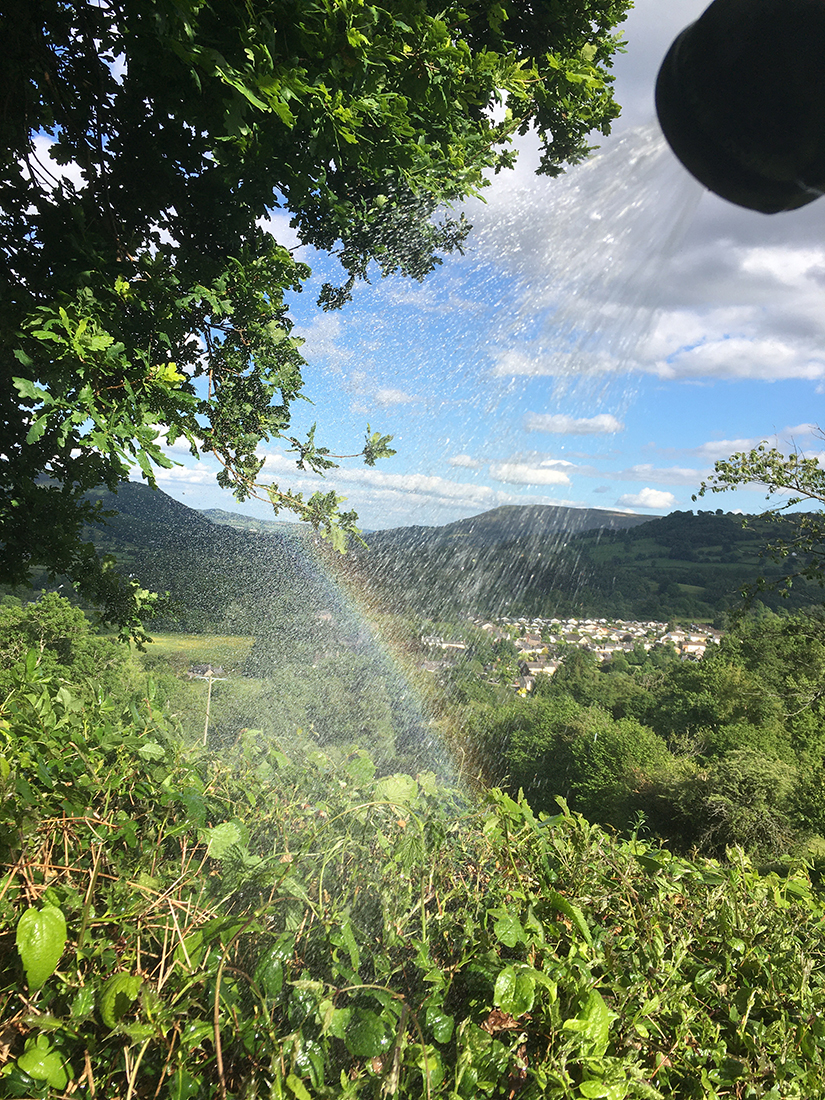
If you haven’t staked your tall herbaceous plants yet, there’s still time – trust me, this hot spell will end sometime with thunder and heavy rain which will flatten everything that’s not supported – gardener’s too, I fear! I always remember a builder I was working with last year coming to work so upset because his broad beans had been flattened by heavy, thundery rain. “It looks like a helicopter has landed in the middle of them’ he wailed.
It is such a busy time of year for gardeners. I’m sure, with the help of this dry spell, growth will slow down a bit soon, but at the moment everything is growing like Jack’s beanstalk. I spent last weekend trying to push water up hill – literally – trying to get water from the outside tap by the cottage up to the top of the veggie patch and then through a leaky hose system. It’s not the easiest project I’ve tackled and is another reminder that I must sort out a decent irrigation system over the winter ready for next year. These dry spells are a nightmare for gardeners and are definitely getting more frequent – if it goes on for much longer, I will be turning watering into ‘whine’.
Local garden centres are reporting a very busy few weeks as people are buying young veg plants after germination of their own seeds has failed. I have had to buy ‘filling in’ runner beans for a client as we only had a 30% success rate from a packet of seeds.
It’s still the best way to gamble though – with a trowel and a packet of seeds!
Please ensure you have water out in the garden for wildlife. The bees (and butterflies) need shallow water, as they can’t drink from deep water. Putting stones in a plant drip tray and then filling with water will enable them to stand on the stones to drink – or you can do the same with marbles for a more decorative feature. Birds will need clean water – to drink and bath in – and of course hedgehogs will need water too. If you have got a pond, make sure there is a way for hedgehogs to get out if they ‘over-reach’ whilst drinking from the edge.
Glucose Revolution Revelation
 Next week (12th – 16th) is Healthy Eating Week, organised by the British Nutrition Foundation. Aiming to connect people, food and science and provide impartial, evidence-based information to people so they can adopt healthy, sustainable diets – for life, not just the week – it’s a great time to review your eating habits.
Because my job is so physically demanding, I am always reading and researching the best ways to stay as healthy, fit and strong as possible. Nutrition is top of the list. The last book I read was absolutely fascinating and really should be mainstream information. As the title suggests, ‘Glucose Revolution’ (by French biochemist Jessie Inchauspe) will make you realise how important it is to understand the role of glucose in your body – and not just if you are diabetic.
Glucose spikes are common for most people and can result in a whole host of familiar debilitating symptoms including brain fog, insomnia, mood swings (‘hangry’ sound familiar?) and other more serious issues like arthritis and dementia. The good news is that there are several ways to reduce these ‘spikes’ and level out your glucose absorption – ‘hacks’ they’re called today, but when I was a kid that was something you did on a horse.
Fascinating Fasciation
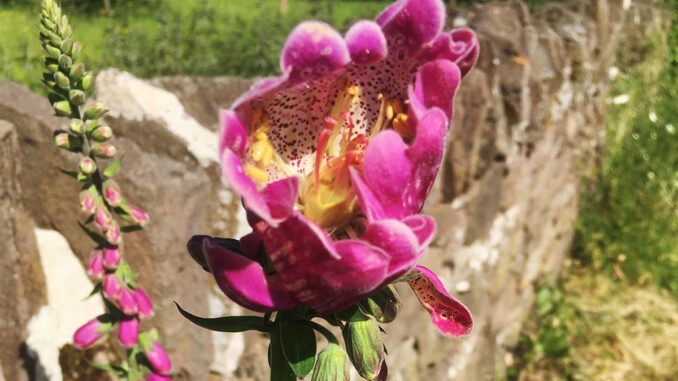
 On a recent walk, Yogi and I spotted this rather unusual foxglove. Nothing to do with AI but something called fasciation. Spell check hates that word and is adamant that I mean ‘fascination’ – a little ironic as it is indeed fascinating. Fasciation occurs due to irregular and abnormal activity in the growing tip of the plant and can look a bit ‘alien-esque’.
Plants commonly affected include delphiniums, euphorbias, forsythia, foxgloves, lilies, primulas and Veronicastrum. Fasciation is unpredictable and is usually limited to a single stem – none of the neighbouring foxgloves were affected. It seldom recurs the following year, although some plants, such as Forsythia – where fasciation often flattens stems – can suffer repeat occurrences, indicating a genetic tendency to this problem.
Dr Paula Ruddall offers a rather more in-depth explanation, which is fascinating, at www.kew.org/read-and-watch/weird-and-wonderful-foxgloves. Also referring to foxgloves, she describes most of the flowers appearing normal, but a huge bowl-shaped terminal flower that opens before the other flowers, despite being located above them – just as in my photo. Dr Ruddall refers to it as, ‘terminal peloria, a well-known floral genetic mutation that occurs spontaneously – but infrequently – in nature.’
As you know, I love nature, but I love seeing something considered ‘infrequent’ even more!
Ticked Off
 Although I much prefer sharing and writing about the nicer things I see and experience, I am also determined not to swerve the ‘darker’ side of nature, and working amongst it.
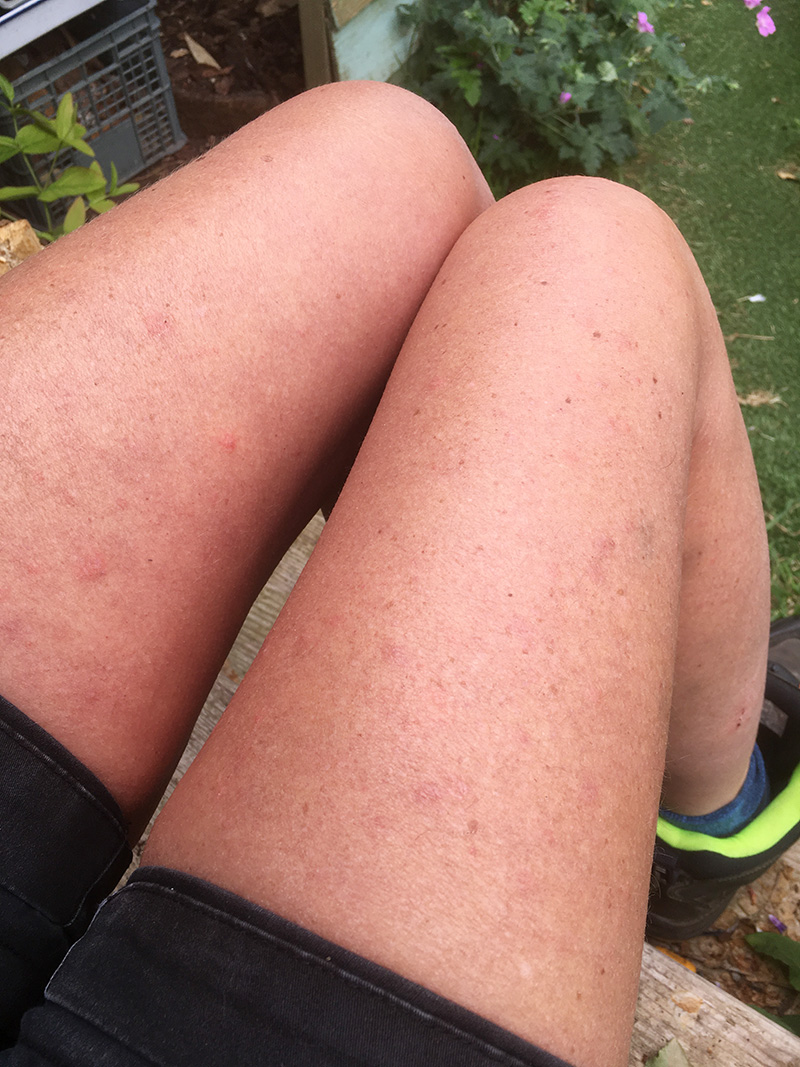
Despite never having been affected by it before, in the last two weeks I have been ‘bitten’ by hogweed. Not the giant hogweed – which would probably put me in A&E – but just walking along an overgrown bridle path, where I pushed through the ‘common hogweed’ whilst wearing shorts. As I say, something I have always done with no adverse effects – I wonder if the recent hot weather has made it more ‘vicious’ – but this time I have come out in quite a noticeable rash. It doesn’t itch or hurt but neither does it look like it’s going away any time soon. Good job my modelling days are over!
And – even worse – in the last week I have picked up two ticks. It makes me shudder even writing that. I absolutely hate them and despite having had to remove them from Yogi now and then, have never ever had any on myself before. Thankfully both were noticed in their infancy and were easy to remove but you have to be really careful if they have ‘settled in’. Always use a proper tick-removing tool to ensure that you remove all of the tick – from dogs and humans. Don’t try to remove the tick with your fingers or tweezers as that can result in it regurgitating its stomach contents, which can be infectious, into your system. Ugh.
Most often found in woodland and moorland, ticks are apparently becoming more common in gardens too. The really creepy thing is that they will fix themselves to you without you feeling it as it has anaesthesia in its saliva to numb your skin so you don’t know it is starting to bite. Double Ugh. Apart from being disgusting, the main issue is that ticks carry infections, and while Lyme disease is more common in the UK, there has also recently been confirmation of cases of tick-borne encephalitis (TBE) in England. TBEV is a viral infection that spreads through tick bites and can present with various symptoms.
It is really worth reading up on www.lymediseaseaction.org.uk/about-ticks/tick-removal/ – and getting yourself a ‘tick tool’ from your local vet.
Leave a Reply