
Taken from Lynne’s weekly column ‘Green Scene’ for the Western Mail
7th February 2026

Not Really Working
Right, ‘Buckle up’ Readers. I am not a happy bunny. Here we go.
In September 2023, a media headline read, “Experts call for urgent action to save Welsh nature as new report reveals devastating decline in species.”
The article went on to explain that, ‘Ten years after its first publication, reports show nature continues to decline across Wales. The new State of Nature Wales 2023 reveals the devastating scale of nature loss across the country and the risk of extinction for many species.’
That was ten years ago, mind. 2013.
The 2023 report went on to reveal that 18% (one in six) of our species is at risk of extinction from Wales, including plants and animals such as the Fen Orchid, Water Vole and Sand Lizard.
It told us that the abundance of land and freshwater species had, on average, fallen by 20% across Wales since 1994. Eleven bird species had been declared extinct in Wales. Moths, which are important pollinators, are far less abundant than 50 years ago, having declined by an average of 43% since 1970.
And summed up with, ‘Of almost 3,900 species assessed, more than 2% are already extinct in Wales.’
If that’s not bad enough, possibly one of the most depressing, embarrassing and down right disgusting ‘revelations’ of all was, ‘Continued pressures on wildlife mean that Wales is now one of the most nature depleted countries on Earth.’
This was followed by one of the most underwhelming conclusions, ‘Wales has committed to ambitious targets to turn around the loss of nature. While there is some progress, the response is still far from what is needed to deal with the scale and pace of the crisis.’
So to recap: That was from the new State of Nature 2023 report, and which referred to the ‘issues’ and devastation that was known and reported in 2013. Thirteen years ago.
And then – just five days ago – a ‘landmark new study by Natural Resources Wales (NRW)’ has revealed that nearly 3,000 terrestrial and freshwater species in Wales are at serious risk of disappearing — many survive only in five or fewer locations.’
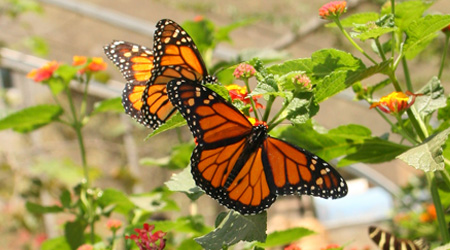
The “Species in Peril” report— yes, another report — identifies a wide array of endangered life, from essential insects like the High Brown Fritillary butterfly and Snowdon Leaf Beetle, to fungi, lichens, fish, mammals, birds and amphibians. Basically all aspects of wildlife. Every single one.
So why haven’t these ‘low cost, targeted conservation practises’ been in practise since 2013?
And if the butterflies and lichens don’t really poke your conscience, then we are also talking about species like the absolutely-awesome Atlantic Salmon and the just-beautiful Curlew which have also suffered critical declines in Wales.
 And if that still doesn’t touch you, then maybe this will. ‘Parts of Wales also have some of the worst air quality in Britain – causing up to 1,400 premature deaths a year’, according to Natural Resources Wales.
The Chair for the NRW said, “Evidence of environmental damage is no longer abstract, technical or distant, but now visible on our doorsteps.”
I suggest it was ‘visible on our doorsteps’ in 2013 – visible enough to be logged in a report.
He added, “Let us be clear, incremental change will not save us. We cannot regulate our way out of this. We cannot recycle our way out of this.”
Said as though we had no warning and ‘Poof’, this disaster just happened overnight, with the wave of a rather wicked wand.
And yet, the same report claims that ‘many of the species in peril can be better protected through modest and cost-effective steps.’
Then stop producing these damn reports and start taking these ‘modest and cost effective steps’ and actually do something productive.
I cannot even begin to explain how proud I am to be Welsh, and despite having lived in the Caribbean and other ‘exotic’ places, I’m so grateful that Hiraeth pulled me back to Wales after a few years of wandering.’ Amongst many other accolades, Wales holds a unique responsibility for 56 species that are found nowhere else in the UK. Species which obviously also know how special Wales is.
The NRW is, and has been, challenged often by campaigners over whether it is tough enough on tackling pollution – I would say the results are self evident.
NRW is required by law to publish a report on the state of Wales’ natural resources every five years. Its latest runs to over 800 pages, looking in detail at areas like air and water quality, soil health, the resilience of ecosystems and people’s access to green space. Wales continues to fail all four of the assessment’s key aims, which are geared around ensuring the environment is managed sustainably for both people and wildlife. All four! Not one, not even two but all four.
Salmon are expected to disappear completely from some Welsh rivers by 2030. And just 40% of water bodies in Wales are classed as being in good condition. Forty percent. Less than half.
The report continues, “We need more street trees, rain gardens and other green infrastructure to keep the places where we live habitable.” I don’t like to be a Negative Nelly but I’d say – whilst biting my tongue hard – that we need a bit more than that now.
All That Glitters
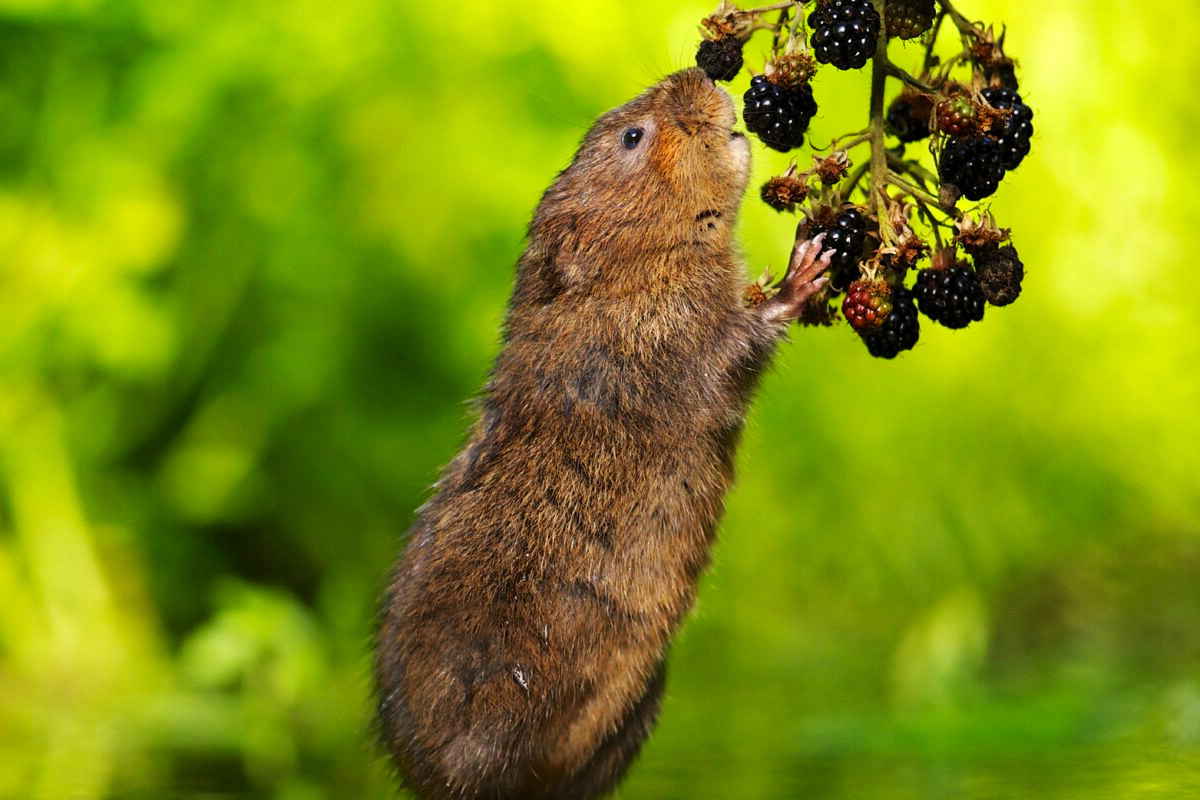 A couple of years ago, endangered water voles were being offered food covered in edible glitter in the hope that conservationists will be able to track their movement in the wild, by following the ‘results of eating glitter’.
The chief executive of Nature Conservation Cymru, and his team, had consulted with vets to ensure it would not be harmful to the semi-aquatic creatures, and the edible and biodegradable glitter – the type used to decorate cakes – would come out in their poo safely, allowing the small mammals to be tracked.
Not only that, but different colours of glitter could be used to allow experts to track different families of water voles and how far they travelled. Give that man a job with NRW.
Water voles are shy little mammals that scientists call ‘ecosystem engineers’. That means they actively shape their environment by digging burrows and disturbing soil, which creates the perfect conditions for wildflowers and grasses to thrive. In turn, that attracts all kinds of pollinators like bees, butterflies, and moths. The ripple effects of their underground handiwork help boost biodiversity in a big way.
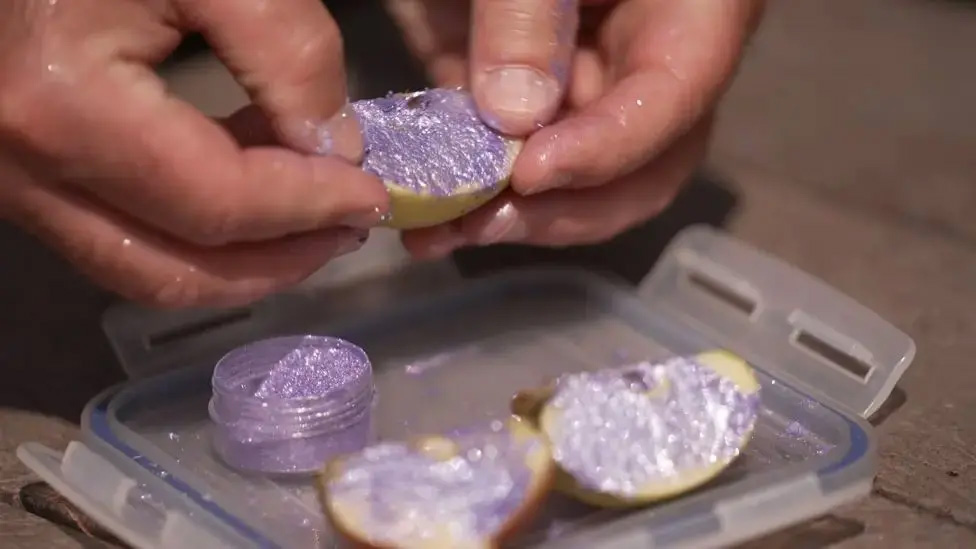 Sadly, water voles, once common in Wales, are one of the UK’s fastest-declining mammals with a staggering 90 percent decline in their numbers. Conservationists urgently needed to understand where these animals are, how they move, and what they needed to survive. So they took action and possibly one of the most ‘modest and cost effective steps’, of all. By spreading a bit of the sparkly stuff.
Perhaps someone should sprinkle glitter over Natural Resources Wales.
Eggstra Special Hens
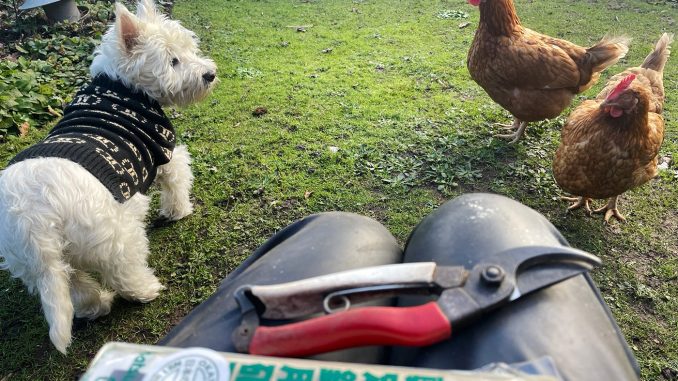
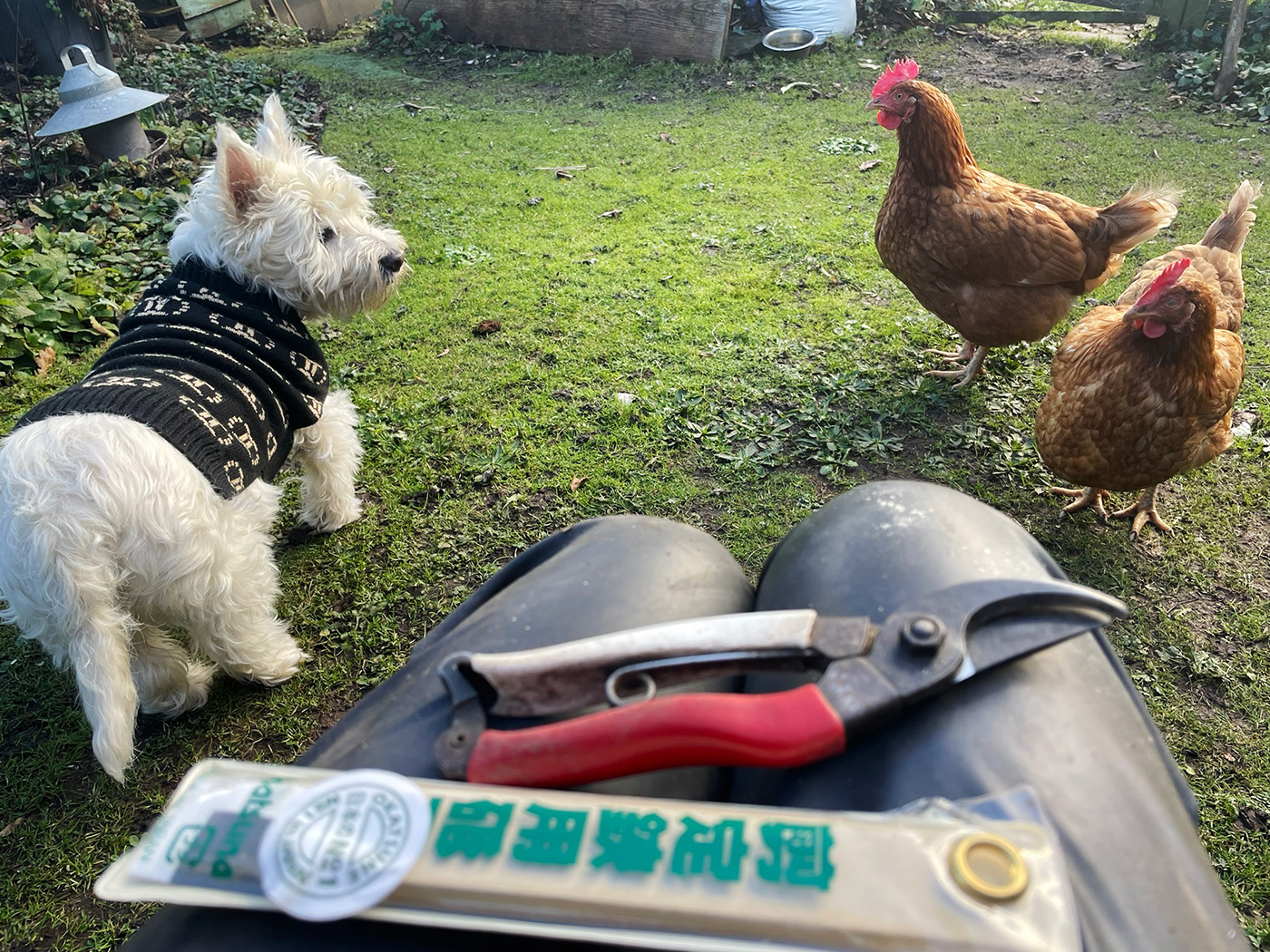 I picked up two more brown Hyline hens from www.plaspoultry.co.uk last weekend.
They are the most ‘laid back’ hens ever. Once I had settled them in, I sat outside sharpening my secateurs and they came straight over to see what I was doing.
Tom and Angharad raise the happiest hens I’ve ever met. And they also sell some of the most fantastic hen and duck hand warmers, head wear, socks and mugs.
I was in school with Tom’s dad, Phil, and I couldn’t help thinking that all that time ago, whilst sitting with him in a maths lesson (both of us probably staring out the window longing to be outdoors), I couldn’t begin to know that over 45 years later I would be buying hens from his son.
Funny, h-entertaining old life, isn’t it.
Completely agree with your comments. There is too much money being spent on investigations and reports with little or nothing being done to resolve the problem. The money needs to be redirected to where it will do the best for wildlife.
We still have some water voles in Cheddar, about ten miles from me.
Chin up, you’re doing a wonderful job with you gardening experience and dry stone walling, to name but two of your abilities. Best wishes C.