
Taken from Lynne’s weekly column ‘Green Scene’ for the Western Mail
18th October 2025

Minor Injury – Major Advice

Last week I spent a couple of hours in the Minor Injuries Unit in Abergavenny, with what I had thought was a sprained ankle. I slipped and fell on wet flagstoned steps in work a few weeks ago and as I could put my weight on my ankle, I assumed it was OK. A few weeks later it was still annoyingly painful and a friend who is a personal trainer insisted I went to get it checked out.
It turns out I have a ‘flake fracture’ and have been working as usual, and actually did my dry stone walling exam with it being very grumpy. Not ideal.
Anyway, the staff at Neville Hall were absolutely brilliant but did say rather sternly, “You really should have come to us straight away.” I explained that I really don’t want to bother people and just ‘hoped and thought it was ok’ – you all know how it is. Their kind but firm (and sensible) response was, ‘We are a Minor Injuries Unit, the clue is in the title. You do your job and let us do ours.’
Be-Leaf in Compost
 It’s a busy time in the garden too, whether hobbling or not hobbling.
The grass is growing as if it was May, no doubt making up for lost time this summer – a lot of herbaceous plants are over earlier than usual and the leaves are busy doing their ‘falling’ thing. Trying to keep on top of leaf clearing, especially now they’re dry, will be a lot easier than waiting until they have all come down. There is a lot of ‘erring on the side of not being overly tidy’ in the garden for the winter to allow natural habitats for wildlife, but I think you have to weigh that up with safety and practical issues too.
Wet leaves on paths and steps will be slippery – and you don’t want to fall – trust me! And leaves left in thick blankets on lawns will compromise the health of the grass. On the other hand, leaves on flowerbeds can act as a helpful mulch and are ideally placed to provide the habitats which wildlife need. Do try to get a compost heap going if you are clearing lots of leaves – it will be great stuff to go back onto flowerbeds in no time at all.
One of my clients is the queen of composting and always inspires me to do the same. It is the original recycling model and so beneficial to the garden – as her own glorious beds and borders testify.
Not Such a Daff-t Idea
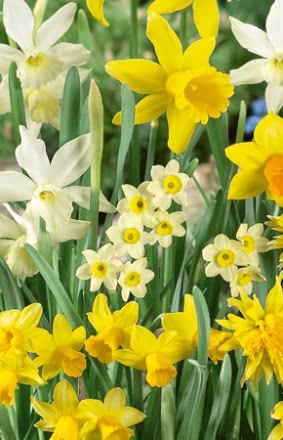 I always remind people that daffodil bulbs can be planted now, as it’s so easy to overlook this important window in the gardening calendar. Summer has gone, and with it so has a lot of enthusiasm for gardening for a lot of people. And planting bulbs is not instantly gratifying either, which is another hurdle for many, but in a few months I guarantee you will be so glad that you made the effort to plant these humble little packets of spring colour. There is a huge range of varieties to choose from – all heights and lots of different colours, bloom sizes and combinations so do take the time to do a bit of research as to which would be the best for you.
Remember that scented narcissi are more easily enjoyed when planted in containers close to the house, and there are varieties like Rijnveld’s Early Sensation, which can flower at the end of December and Poeticus and Jonquilla types, such as ‘Pheasant’s Eye’ (Narcissus poeticus recurvus) and ‘Cheerfulness,’ which can bloom as late as May. Including these varieties in your planting plan will give you the longest blooming period.
Robin Good
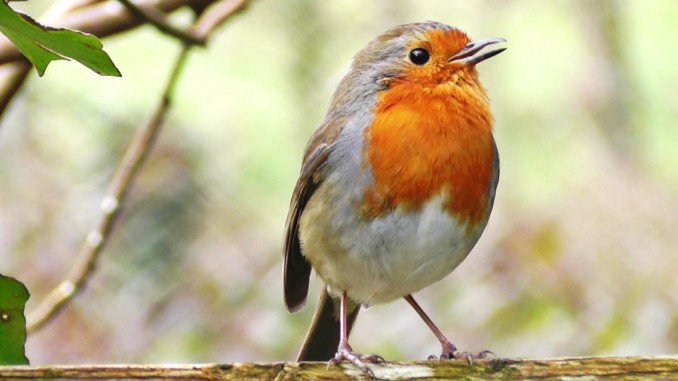
 As the mornings are getting lighter later, whilst watching the sun rise I am now accompanied by my little resident robin. He is a real character – if I haven’t fed him before the sun peeks over the top of the mountain, he is straight through the open patio door and demanding his breakfast loudly from the back of my kitchen armchair. Robins are very territorial and he is no exception – the funny thing is that as I watch the feeding station whilst having my early morning coffee, he makes a big song and dance about chasing away the sparrows – and whilst he is doing so a trio of blue tits come in and help themselves to the vacant breakfast bar. My feisty robin then returns ‘totally outraged’ and chases them off whilst – you’ve guessed it – the sparrows come and feed. All the time he is ‘defending his breakfast’, he is leaving it unattended for the ‘clever feathers’.
My feisty robin loves his dried mealworms, and soon I will also put out suet balls for my feathered diners as their high-fat, high-energy content will help them through the colder months. I keep a windfall apple and pear on top of the stone wall for the birds too. It’s a great way to use the windfalls, which are a great source of fibre and vitamins A, E and C and will help healthy digestion, healthy feathers and eyes, and immunity.
My little robin also enjoys a bath. As well as keeping a shallow dish topped up with water (rainwater out of the water butt) for him and the other birds to drink, I’ve also got a birdbath for them. It’s placed where I can watch them splash about, so they have to forgo their privacy but they are just too entertaining to give them privacy.
Robins, and their feathered friends will be glad of some evergreen cover through the winter. They will make use of any dense shrubs in the summer for nesting but in the winter, having some ivy, and evergreen shrubs or hedges will offer them safety from unpleasant weather and predators.
Despite the ‘brave behaviour’ of my little robin, excessive garden noise or constant movement around feeding areas is a big deterrent for them. And they don’t like extremely uniform gardens without trees, shrubs, leaves and a bit of debris. As the true gardener’s friend, they actually embrace a bit of chaos, or the ‘loose look’, so please leave a few piles of leaves and natural debris untouched to make them feel at home.
Tree-mendous Choice
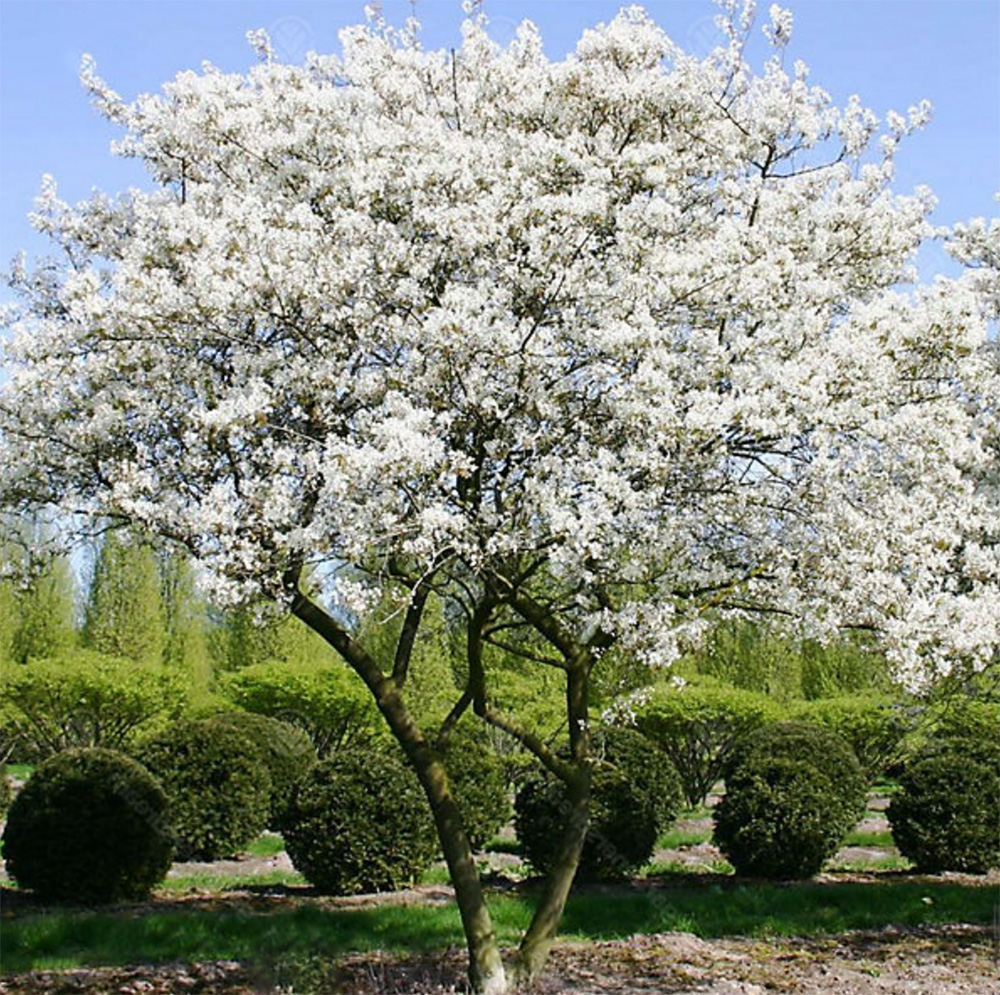 A top choice of tree for attracting robins and other songbirds into the garden is an Amelanchier lamarckii. It’s also a great choice for humans as it really does keep on giving through the seasons.
This ornamental tree features beautiful white star-shaped flowers in early spring, before the coppery young leaves emerge, they host sweet, edible berries in summer, and has brilliant, vibrant autumn colours to end its annual attributes.
Also known as a serviceberry tree, juneberry, shadbush, and snowy mespilu, as well as being a great addition to a garden for the birds, the small tree is a gardener’s dream. They flower in mid-spring, attracting pollinators and, in turn, birds.
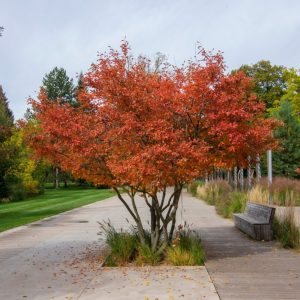
Their fruit ripens from late spring through summer, providing robins (and other garden birds) with a steady supply of soft, energy-rich berries, which are perfect for feeding their young. They are also edible for humans and can be eaten raw or cooked – if you can get to them before the birds do.
It can also be grown as a multi-stemmed tree and is a hardy, hardworking little tree that is attractive in all four seasons. I – and the birds – highly recommend it.
Hope you feel much better soon
Much love
Ruth xxxx❤️❤️❤️