
Taken from Lynne’s weekly column ‘Green Scene’ for the Western Mail
11th October 2025

Chicken Licken
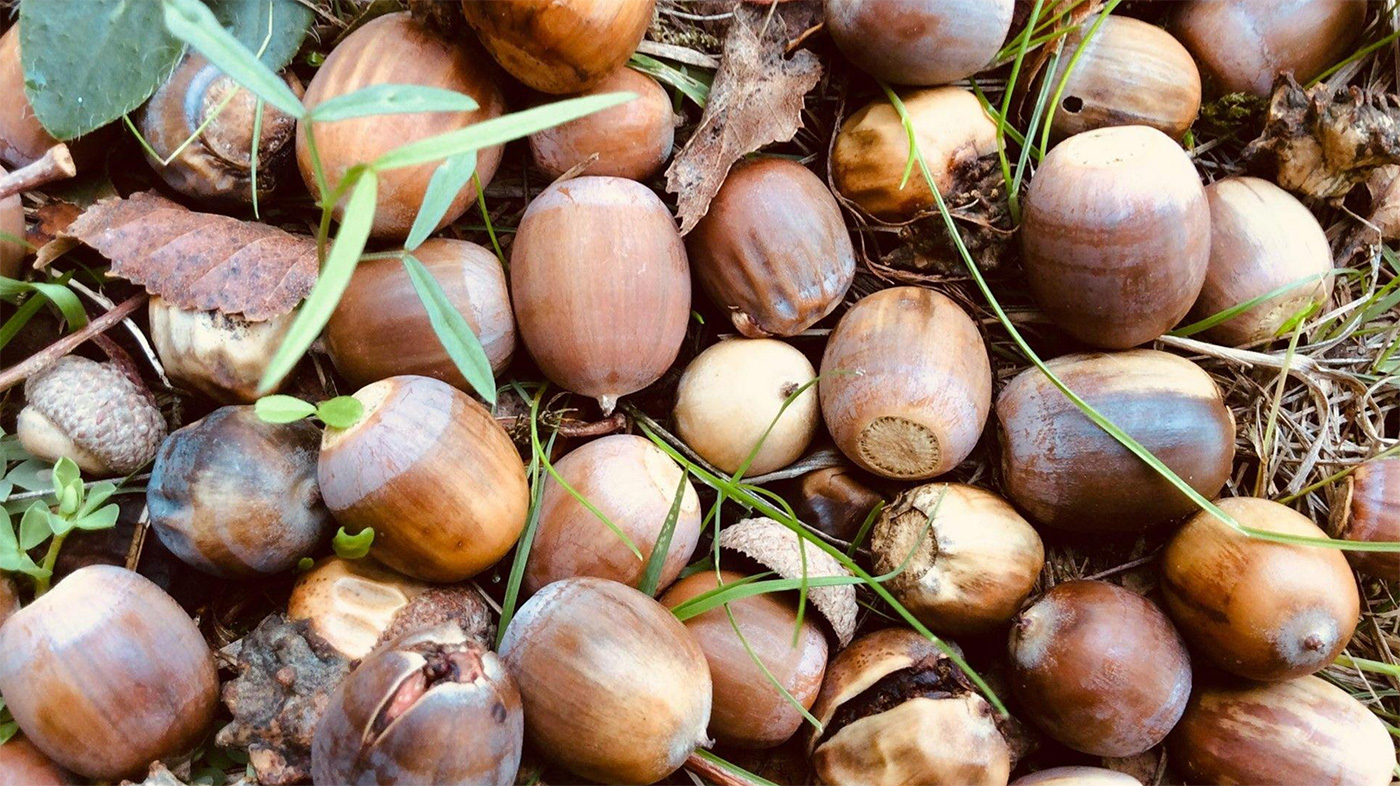
Whilst dry stone walling last week I was in my element, working alongside a rural bridleway in the dappled shade of a large oak tree. Sounds idyllic – and it was, apart from the falling acorns. Whilst most landed around me, far too many hit me on the head. And they hurt, but amongst the head rubbing I recalled the Chicken Licken story, which I learned in primary school.
If you don’t know it (or remember it), an acorn falls on the head of Chicken Licken, who mistakenly believes the sky is falling down. He sets off to warn the King, gathering friends like Henny Penny, Ducky Lucky, Goosey Loosey, and Turkey Lurkey along the way. They encounter the cunning Foxy Loxy, who offers to show them a shortcut. The animals follow him into a cave, which turns out to be his den. Luckily, Chicken Licken escapes and lives to tell the tale.
The moral of the story is described as, ‘A warning against the dangers of paranoia, mass hysteria, and believing everything you hear without verification.’
And it was written way before social media existed!
Mast Year
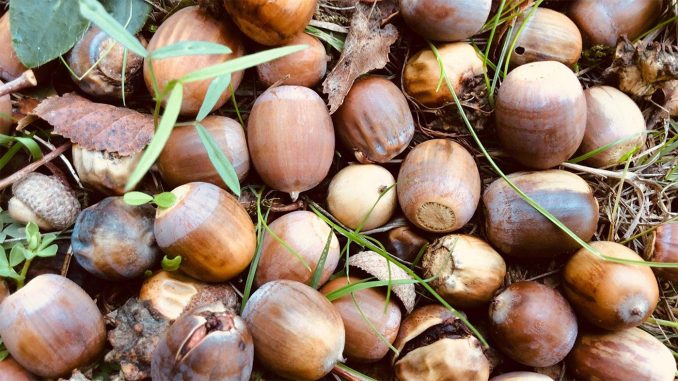
It seems that 2025 is a ‘mast year’ for acorns, and many other nuts and seeds. Mast years are basically ‘bumper crops’ and are nature’s natural way of ensuring the survival of its beloved trees and the small mammals, which feed on the nuts. In a mast year, the trees produce more food than the animals can possibly eat and so the leftover nuts are able to develop into saplings, ensuring new trees.
There are lots of crafty things to make with acorns, including wreaths and garlands and even little acorn people and animals. They are actually edible too, but ONLY after removing their bitter, toxic tannins through a process called leaching. Once treated, they can be ground into flour or even roasted, like a nut.
But please note – if not treated, they are poisonous, and to dogs and horses.
Ladybird, Ladybird Fly Away
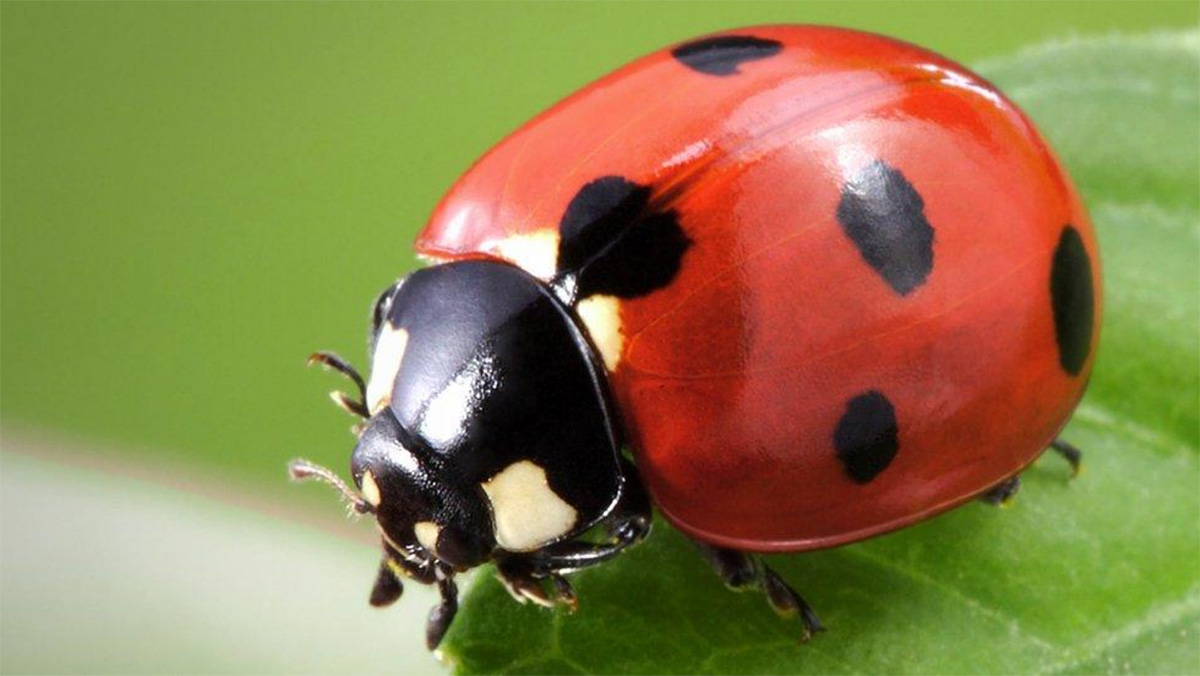 Did you see all the ladybirds last Monday? It was a gorgeous day here in Crickhowell, with beautiful blue skies and balmy temperatures for October. I loved it – and so did the ladybirds. They were covering the front of the house where I was working and then when I got back to the cottage they were ‘en mass’ there too, exploring all the window and door frames. Most people refer to the ladybird activity as a swarm but it is actually called an ‘aggregation’ – not dissimilar to ‘aggrevation’, which is certainly what they caused for many bug-fearing people.
Ladybirds are ‘cluster-hibernators’, meaning they like to spend the winter cwtched up with lots of other ladybirds, rather than alone. And their version of hibernation is called ‘diapause’ – it’s a great description and reminds me of a ‘pause on life’ for the winter months. Not a bad idea, I hasten to add.
As ladybirds need warmth and sunshine to generate enough energy to fly, they were making the most of the good weather last week to look for a good place to hibernate, or diapause. Historically, they would have gathered in clusters in caves and hollow trees but have evolved to prefer loose fitting window and door frames. Ladybirds are also ectothermic, which means they can’t regulate their own body temperature and therefore are dependent on their environment for survival. This means they need to find spots where they can stay insulated and avoid freezing through the harsh winter months and it seems that the Harlequin varieties have also become quite ‘at home’ in houses, enjoying the heated luxury for the winter. They’ll have a shock in my cottage – there’s no central heating or luxury for them here. I expect I’ll see them leaving with the same enthusiasm that they arrived, at some stage.
Interestingly, the native UK ladybirds still prefer to hibernate outside under leaf litter or under the loose bark of trees, whereas the ‘new bugs on the block’, the Harlequins, are the ones more likely to look for more plush indoor accommodation.
These ‘aggregations’ are harmless, but all ladybirds are able to secrete a blood-like substance from their legs, which has an unpleasant smell and can stain surfaces, especially windowsills and frames. Apparently they can be deterred by blocking small openings and using citrus scents on entry points like windowsills and doors – but I think you may have just missed the opportunity to do that.
The good news is that in many cultures, ladybirds are seen as bringers of luck, protection, and happiness. So maybe I should encourage mine to stay after all.
Oh, and there is a poem called Ladybird, Ladybird Fly Away Home, but it’s not the most uplifting prose. Research tells me it is based on the burning of hop fields years ago, and refers to ladybirds losing their habitat, but I’ll let you look it up if you want to.
Bendigedig
 I often wish I had spent more time as a child, learning Welsh from my Nan. It’s such a beautiful language and I would be proud to be able to speak – and understand – more than I can, so ‘Learning Welsh’ is still on my list of things to do.
On Wednesday 15th, Shwmae Su’mae Day sees the 12th annual national celebration of the Welsh language. The theme of this year’s campaign led by Mentrau Iaith Cymru is ‘having fun while speaking Welsh’. Whilst my grasp on the lyrical language is loose to say the least, I do have a few favourite phrases, and even words, and having fun with those definitely fuels my passion to learn more.
‘Bendigedig’ is a favourite, as is ‘dan draed. The latter used to be said to me often by my Nan, with a wave of her hand – meaning ‘ out from under my feet’. Bendigedig means brilliant or fantastic and is just a ‘fantastic’ word to say. One of my brother’s favourite Welsh-ism is ‘Dim problem’ and is there anyone in Wales who hasn’t ever said ‘hoffi coffi’?
For this year’s celebrations, you are invited to create a video showing how you have fun in Welsh. Maybe you dance, play football, sing, enjoy gardening or dry stone walling. You can post your video on social media platforms on or around the 15th October, remembering to tag Mentrau laith Cymru and to include the hashtag, #shwmaesumae2
You can get more information from diwrnodshwmae@gmail.com – pob lwc a mwynhewch.
Your comment about learning Welsh tugged a string for me.
As a young teenager, I lived in St. David’s for just over two years, as my dad was stationed at RNAS Brawdy. I was excused Welsh lessons as I wouldn’t be in Wales that long.
I wish I had taken those lessons now.
In Rhayader, I found a book with English / Welsh translations. This has opened up a completely new chapter for me. For instance, I stayed in an isolated cottage in Cardiganshire. It was just under the Prescelli Hills, alongside a stream coming from the hills. It was called Glanyrafon Uchaf. This translates as ‘the cottage beside the river under the stone (hill)!’ I now realise so many place names in Welsh, tell their own stories.
Enjoy!