
Taken from Lynne’s weekly column ‘Green Scene’ for the Western Mail
25th October 2025

Time Flies But You Are The Pilot

Here’s a reminder that Monday will be arriving an hour earlier than usual next week, as the clocks go back tomorrow (26th), giving us an extra hour in bed. I don’t think it will affect my wing-dog Yogi, who, in her dotage, seems to sleep until she is hungry and eat until she is sleepy. Bless her.
And on the brink of turning the clocks back, a friend who has had a hard time this year remains defiant, announcing ‘I refuse to turn my clock back – the last thing I need is an extra hour of 2025.’ Adding, ‘If only I could turn the weighing scales back instead.’
We have been altering our clocks twice a year for over a century. It was first proposed by William Willett in the early 1900s but not implemented until 1916 during World War I. The aim was to make daylight hours the most ‘useable’ and useful that they could be, and to conserve coal and energy. While the specific dates and durations have varied over the years, the core principle of clocks ‘springing forward’ in the spring and ‘falling back’ in the autumn (Fall) has remained a tradition.
The effectiveness of it has caused a debate for years, with no one I know thinking it is a good idea, or necessary.
I love the Native American quote, “Only a white man could cut a foot off the end of a blanket and sew it on the top of the blanket and think it makes the blanket longer.”
Arguments in favour of changing the clocks often highlight the benefits of increased evening daylight for leisure activities, energy savings, and improved road safety. However, there are also valid concerns raised about the disruption to our natural sleep patterns, the inconvenience of the change, and whether the energy-saving benefits are still significant in our modern, tech-driven world. And whilst most clocks change themselves these days thanks to tech, I don’t mind sharing that at least the clock in my truck will finally be right again, after 7 months of being an hour slow.
If the UK did stop altering its clocks, apparently it would essentially adopt permanent British Summer Time full time, leading to darker winter mornings but longer, brighter winter evenings. Maybe it’ll happen one day, but in the meantime enjoy your extra hour in bed – I will. I’m at the stage where the thought of falling asleep is far more appealing than falling in love.
House Plantus Technicalis
 I have already been asked for ideas for ‘keen gardeners’ for Christmas gifts and although I don’t think Christmas should start before December does, I have succumbed.
I remain a huge fan of Cleve Backster, who claimed that his experiments showed evidence that plants could not only respond to physical and chemical stimuli, but that they are capable of picking up the emotions and thoughts of entities around them. This ‘plant perception’ became known as the Backster Effect. I was all set to fly to the States to interview the CIA’s polygraph expert in 2013 but sadly he died the week before I was due to fly out. I would dearly have loved to meet him and his book, ‘Primary Perception: Biocommunication with Plants, Living Foods, and Human Cells’ is still one of the most informative books I have ever read.
But things move on and now Plant With Willow is a new, modern, smart plant-care system that lets your plants ‘talk’ to you to let you know what they need. The ‘smart sensor’ senses the plants moisture, light, temperature, humidity, and nutritional needs, and then sends simple alerts straight to your phone to relay the information.
House plants are apparently enjoying a ‘come back’ with their popularity increasing amongst the younger generations – after a while of being out of fashion and being considered demanding and dirty!
The Willow Starter Pack includes one sensor and one Hub – apparently ‘everything you need to begin and to make plant care effortless, intelligent, and also perfect for gifting at Christmas.’ As I’m now out of my depth, I quote: ‘The Hub connects to the app and can support up to 40 Sensors, meaning your Willow network can grow right alongside your plant collection and take the guesswork out of house plant care.’
It seems you will no longer have to get your finger-pad dirty by pressing it into the soil surface to see if your plant needs watering, and I suppose may negate ‘plant neglect’.
Bulbs Shining Brightly
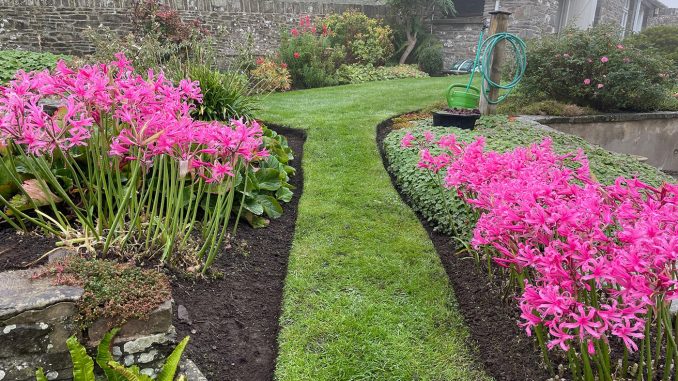
 I absolutely love Nerines. I am so impressed with them – not just their beautiful spherical architectural blooms but their ‘stage presence’ and can-do attitude, boasting their brilliance at this time of year. I remember first seeing them in a garden when I was about 13 or 14 and my dad telling me what they were. I was hooked from then. And I was intrigued and delighted to see them growing almost like weeds in South Africa, where they originate from. They are just so hard working and unashamedly take centre stage in any bed and border now, shining brightly at a time where most other plants have ‘burned out’.
The most common variety is the bright Barbie-pink nerine, N. bowenii, which are also the hardiest and easiest to grow. The common names include Guernsey lily and Cornish lily and there are great cultivars to choose from including, ‘Isabel’ with rose-pink flowers, ‘Zeal Giant’ with large deep-pink flowers, ‘Patricia’, with light pink blooms and ‘Alba’ which is white flowered.
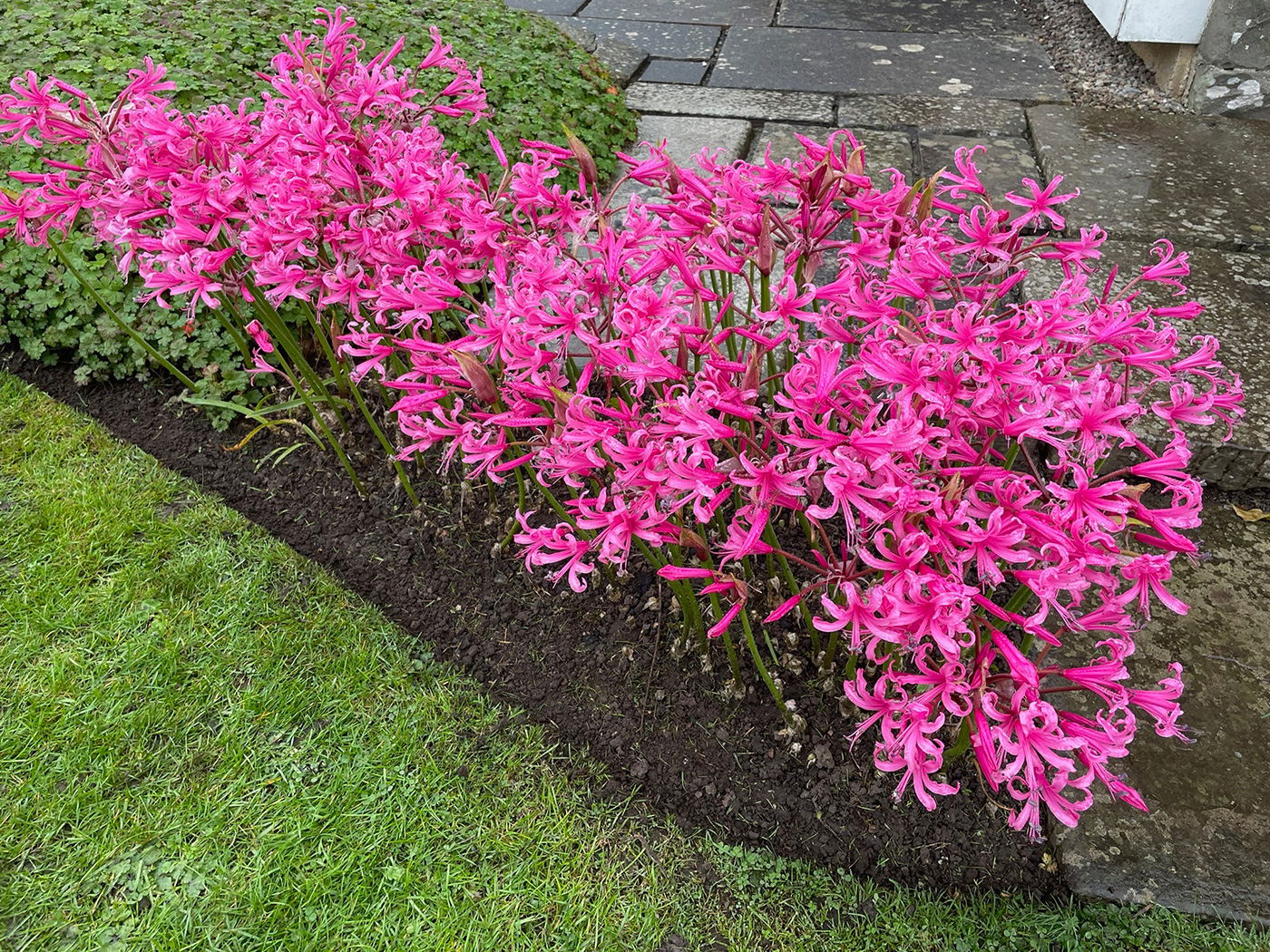 They also make great, long lasting cut flowers, are really effective when grown in containers, and are also nicely scented.
You might be able to buy them in bloom now from your garden centre, otherwise the best time to plant them is in the spring. The biggest mistake made when planting is planting them too deep. Nerine bulbs need to be planted just below the soil surface, with their neck sticking out of he soil, and about 7-10cm apart. If you plant them too deeply they may well not flower, so take care to ensure the bulbs sit just below the surface – unlike other bulbs.
Such a Star
 I have to share the heart-warming comment made by a friend’s grandson last week as we walked Yogi.
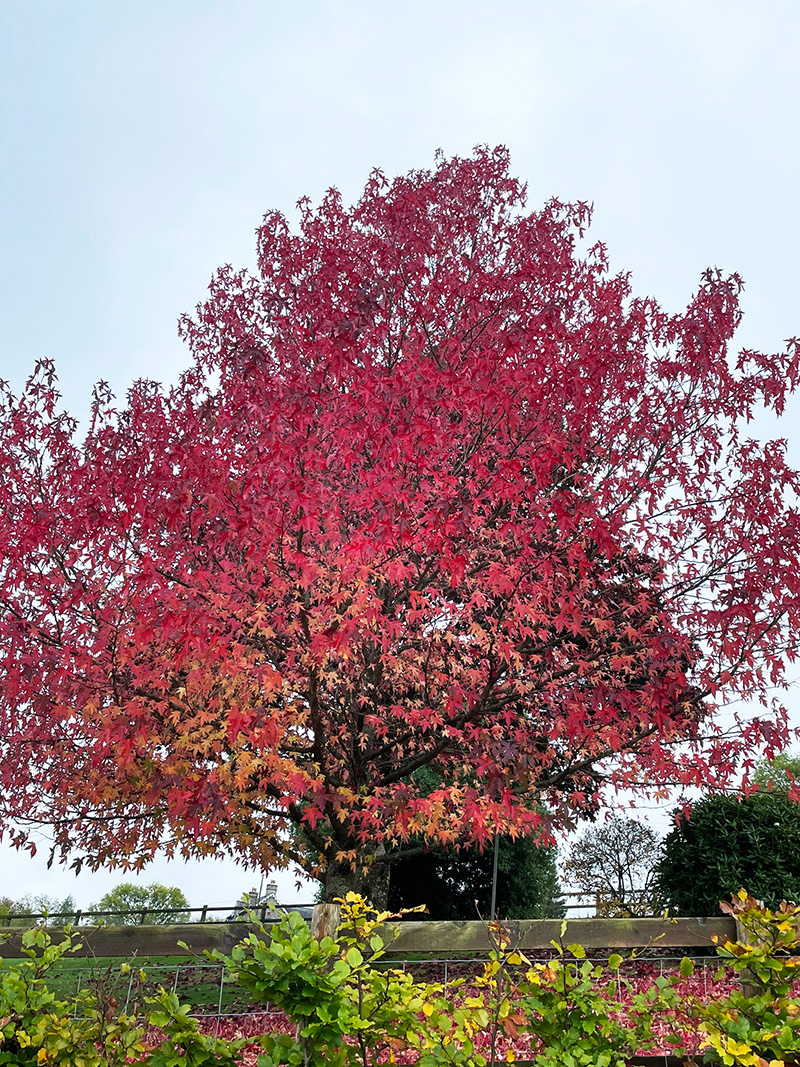
Walking past my brother’s garden, the little fella gasped and pointed to the beautiful Japanese Acer in all its scarlet autumnal glory against a blue autumnal sky.
 I was immediately impressed with his awareness and taste in nature, when he continued excitedly, ‘Look! Look! It’s a star tree.’
And proceeded to pick up the ‘stars’ from under the tree.
And of course, from now on, these gorgeous ornamental trees will be known as ‘Star Trees.’
Leave a Reply