
Taken from Lynne’s weekly column ‘Green Scene’ for the Western Mail
3rd August 2019
 Microgreens Macro Future
 I had a lovely time at the Royal Welsh Show last week and despite the heat, I decided to have a walk around after my talk. I’m glad I did, as I met and had a great chat with Dr Gareth Jones, the founder of Digital Farm, based in Pencoed. Digital Farm were promoting their impressive rack system on which they grow Microgreens hydroponically. Microgreens are young vegetable greens that are approximately 1–3 inches tall. They have an aromatic flavour and concentrated nutrient content.
Gareth explained that he thinks this is the future of farming and is keen to promote the numerous benefits. Obviously there is a lot of technical wizardry and exciting ecological connotations involved and surrounding it all, but I was absolutely just blown away by the taste of the Microgreens. I am fairly good with my own nutrition and am a great advocate for eating healthily. I eat a lot of sprouting seeds and am aware of the goodness that these little seeds hold.
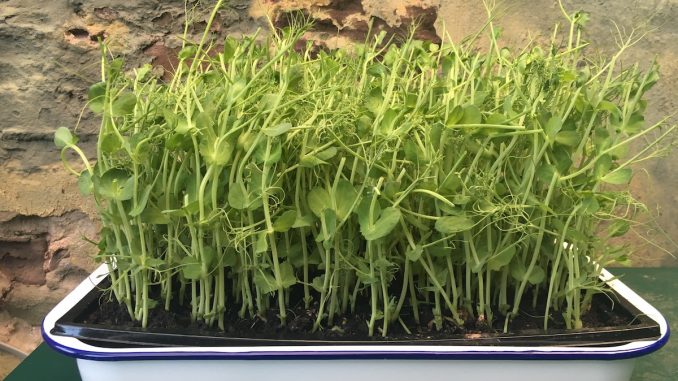
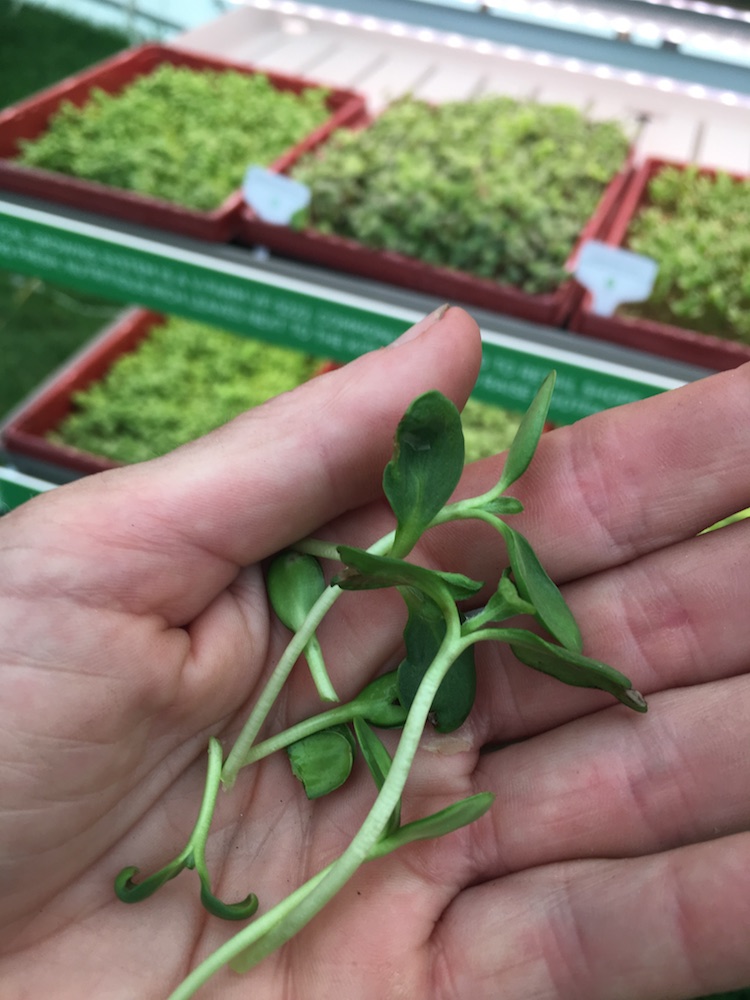
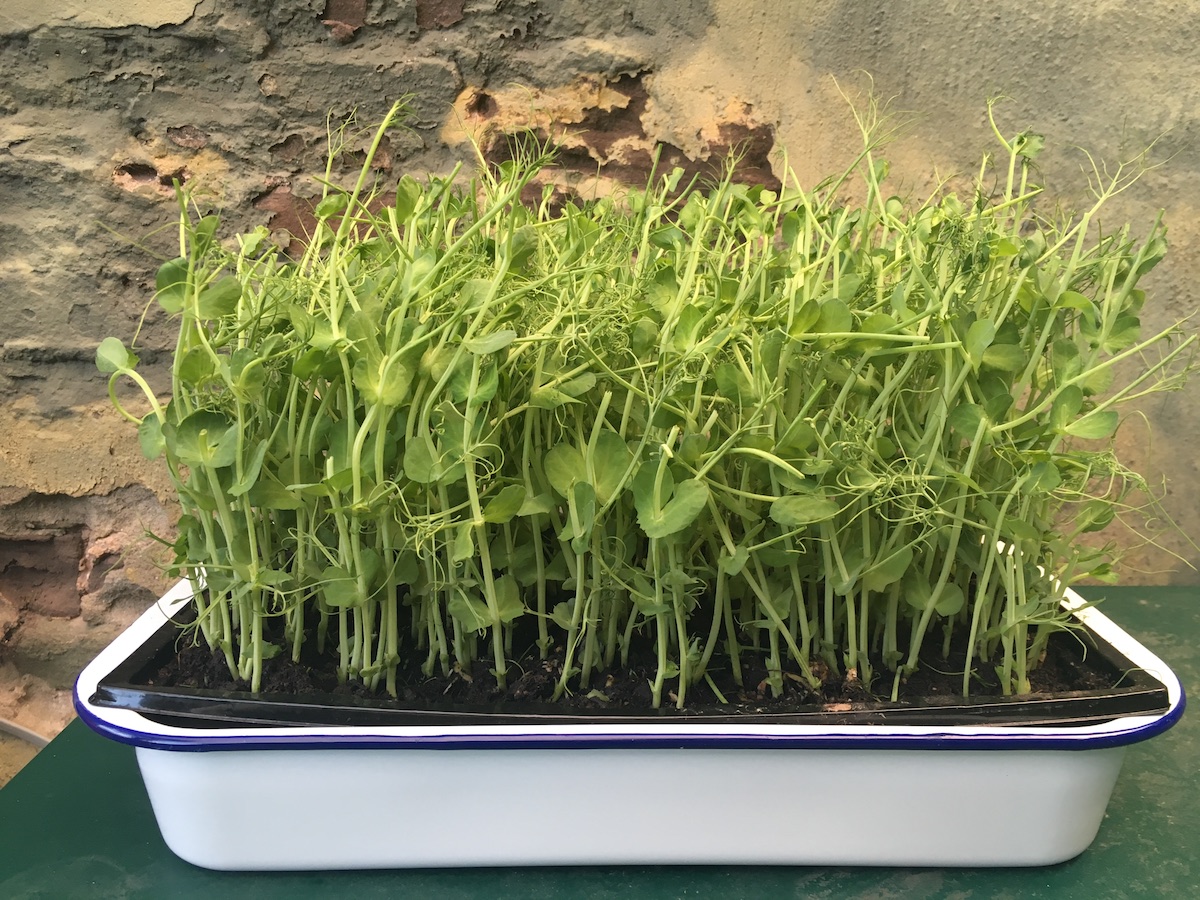 We have all grown mustard and cress on our windowsill, so imagine mustard and cress on steroids (in a good way). These little seedlings pack such a tasty punch and are incredibly good for you. I tried red cabbage (surprisingly spicy), lemon balm (unsurprisingly lemony), basil (just delicious) and the most surprising of all, sunflower Microgreens; oh my word, they were delicious and so substantial! Included in salads, smoothies and soups, these super little seedlings would help provide so much of the nutrients that we need and are so easy and exciting to grow. I grow my own pea shoots in an enamel tray on the windowsill (see pic) but would love to be able to grow a whole gamut of Microgreens.
The medicinal possibilities are also endless. It reminds me so much one of my other passions, Zoopharmacognosy, or how animals self medicate in the wild, with plants. Microgreens definitely ought to be as readily available and accessible as pizza and ice cream, and hopefully will be in the near future.
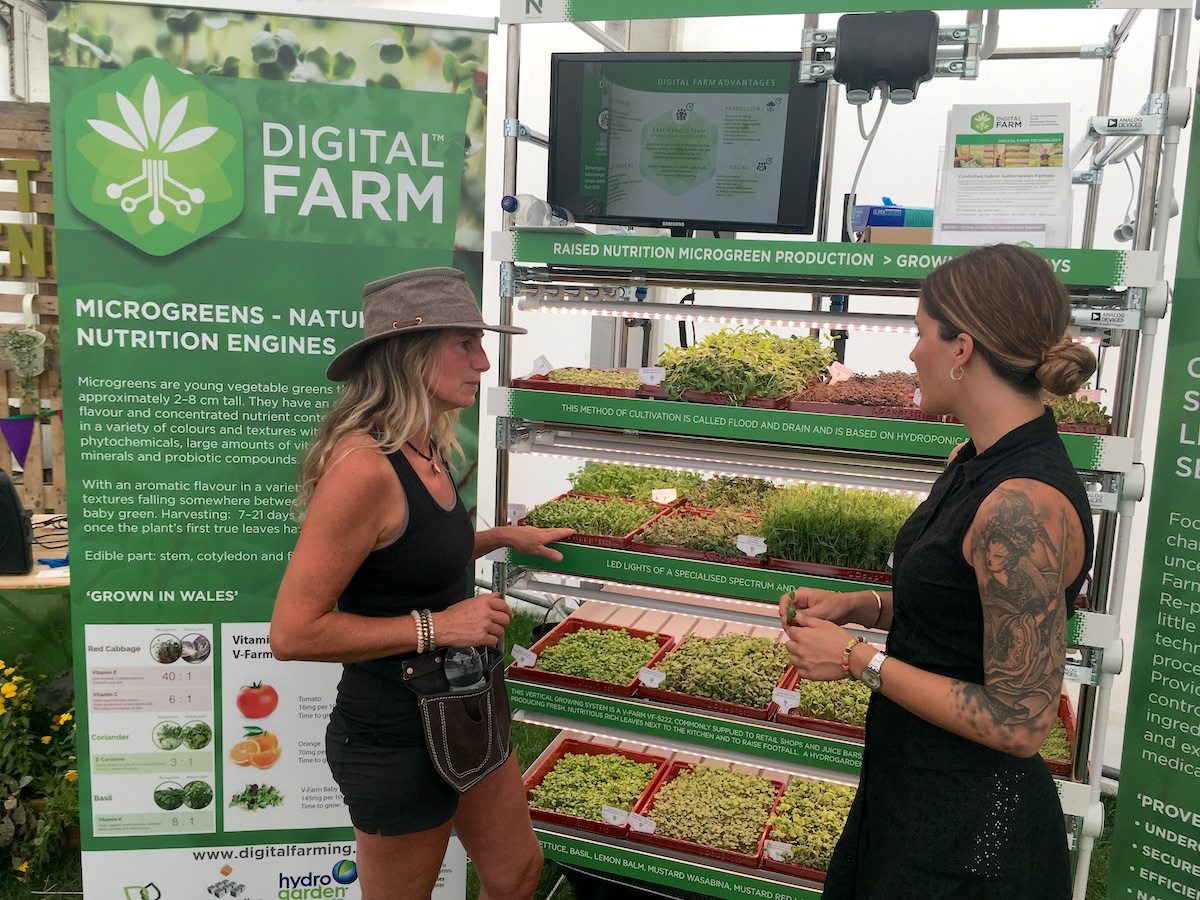 Gareth told me about his plans to raise awareness of the nutritious value of the Microgreens by visiting schools to show how tasty greens can be, to try to alleviate the ‘rabbit food’ tag that they unfairly have, and also to demonstrate how easy it is to grow food in this energy efficient way. Old outbuildings and warehouses could be repurposed to grow Microgreens and the methodology is as simple as it is ingenious. It is the future of food.
IKEA attracted lot of attention by demonstrated something similar at Chelsea Flower Show this year, and I predict it is far more than a trend. Personally I think every home should have one of these growing trays and am looking forward to visiting the ‘plant’ (pun intended) in Pencoed soon. They have an open day in September when you can visit. In the meantime visit www.digitalfarming.io or call 01656 864618 for more details.
I am literally just executing an introduction with these few paragraphs, but I find the whole concept so exciting and predict a macro future for Microgreens.
Grab the Nettle
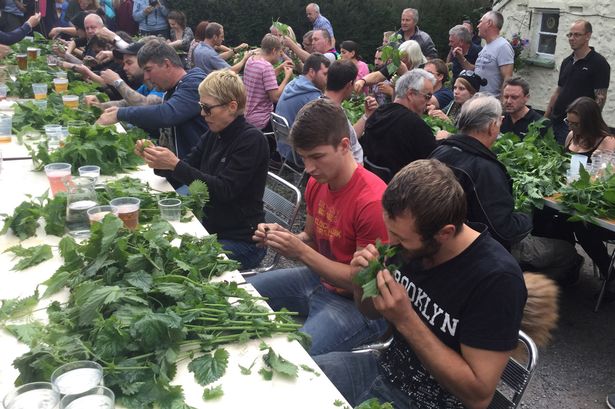 My brother and I always refer to nettles as being ‘hot’ at this time of year, with reference to their potent sting. The sting of an old, dying nettle seems to be a lot worse than that of a young, naive nettle, as though they are having one last swansong. So I winced when I read about the Nettle Eating Competition held last weekend in Dorset.
Competitors chewed their way through the nettles leaves from a 2-foot length of nettle stalk. The winner was the contestant who stripped and ate the leaves from the greatest number of stalks – simple but not easy given that the leaves sting and cause tongues to swell and blacken – though some competitors tell you it’s absolutely painless. Obviously Nettle Beer was available to quench their thirst.
The Sting
 And another thing that is ‘hot’ at this time of year is a wasp sting. They seem to have been particularly angry recently, which is apparently down to the weather pressure. Both my brother and one other lad in work have recently started reacting badly to stings, with each sting making them feel more and more ill.
And that is actually the case! It was originally thought that you could build up immunity to wasp stings the more you encountered them, but in fact the opposite is true as the toxins build up in your system and can result in an allergic reaction. In the worst case scenario, being stung badly, or frequently, could result in your throat closing which would be fatal. Around 40 people in the UK die every year from an allergic reaction to a wasp (or bee) sting.
It has shocked us all and made us think about it a lot more seriously. If being stung is a relative likelihood for you, do go to your doctor and explain, he could prescribe an epipen or similar.
It is so easy when using machinery, like a strimmer or hedge cutter, not to realise you have hit a wasp’s nest until you are stung, which is one of the many reasons I prefer scything and shears. And of course, since my visit to Damanhur in Italy, I have a pact with all wasps – I won’t kill them (any of them) unless I (or my dog) am stung – and then they all die! That pact was made five years ago and I haven’t been stung in that time. Despite being ridiculed slightly whenever I tell that story, I am always the one who hasn’t actually been stung, whereas the majority of the naysayers have.
How does it work? Really well for me, thank you but please don’t be blasé; Dylan Thomas said, “And books which told me everything about the wasp, except why.” But I bet the books didn’t warn him that a sting could prove fatal.
Leave a Reply