
Taken from Lynne’s weekly column ‘Green Scene’ for the Western Mail
5th September 2020

Light Up Your Life
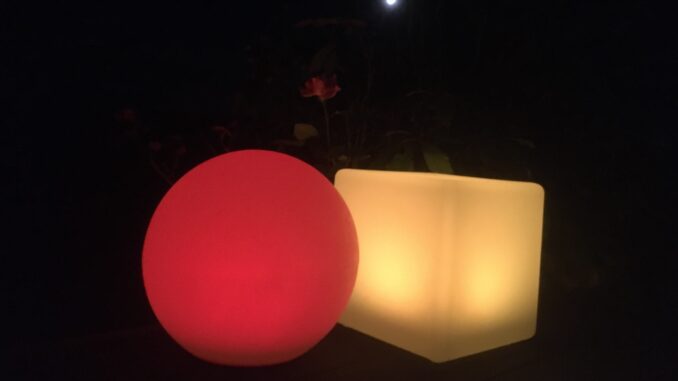
Something I would never be without in my garden are my solar lights. They have improved so much since in the last few years and the latest lamps lighting up my life are the most stunning ShapeLights. They can be used indoors and out, be mains powered, USB charged or solar powered. They are incredibly versatile, making them such good value for money. As the nights draw in, I appreciate the outdoor lighting even more than in the light summer nights, but now I have also got the option of bringing the ShapeLights into the living room, where they look great too.
On average the UK gets around 7 hours of sun a day, but not surprisingly, this drops to just 1 or 2 hours in the winter months. This means that a typical solar light will usually work for less than an hour a night in winter, even though it might deliver 8 hours a night in summer.
The Solar Centre has a long tradition of making high quality solar lights that work for much longer in the cold, dark months – and the rain. Particularly useful for Wales! The products below have all been designed to work reliably year round and can work for up to 6 hours a night in winter, which is usually more than enough to take you from dusk to bedtime.
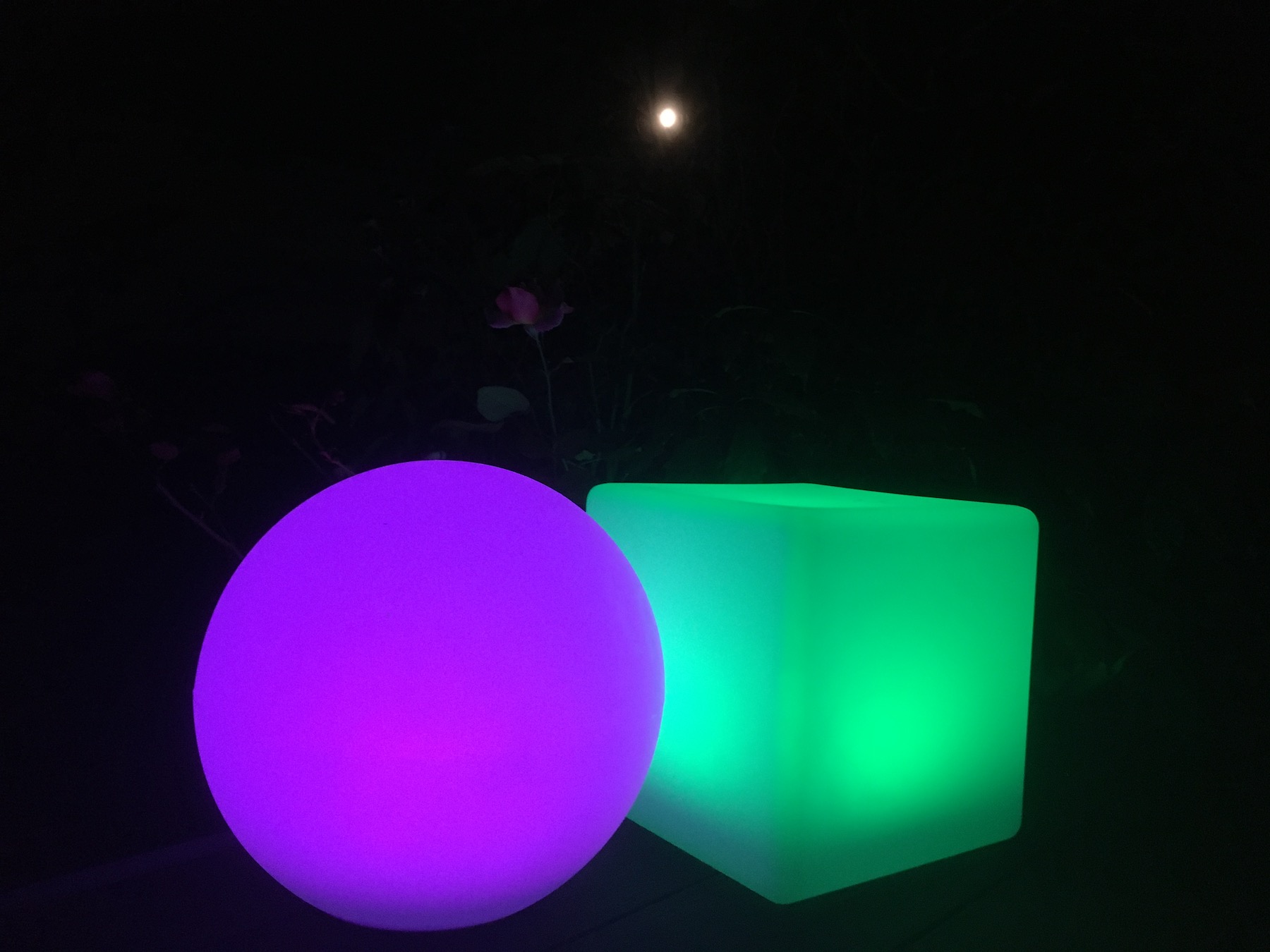
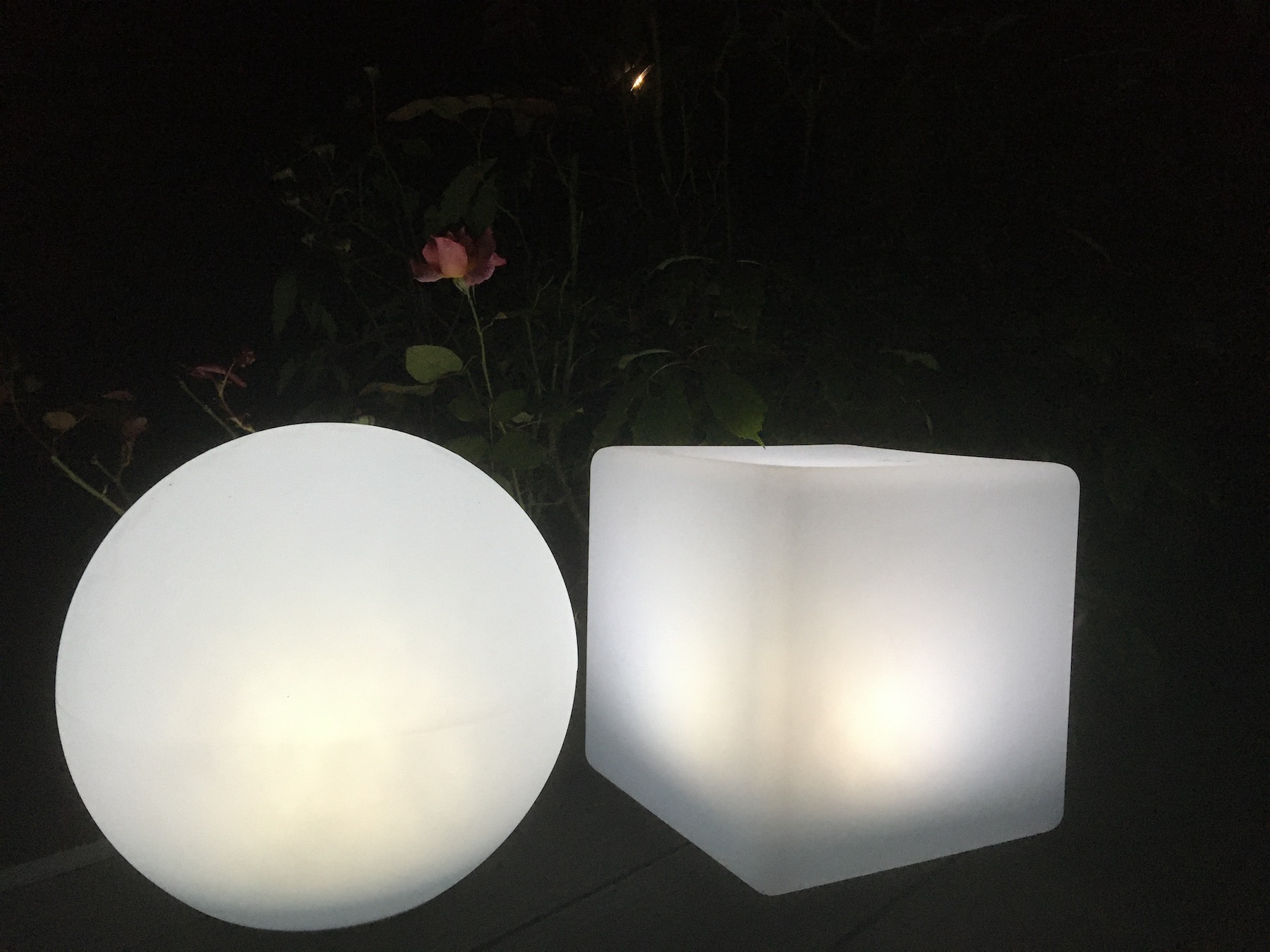 As well as all of the above attributes, and being available in several different shapes, my new ShapeLights are also ‘mood lights’, meaning they can cycle through red, green, blue, green, purple, pink and light blue as well as a warm white and a bright white light. They can also be kept on your favourite colour if you prefer.
When outdoors, the sun charges a hidden solar panel through the shape shell, and they don’t even need bright, direct sunshine to charge. On dark winter days, they can be charged with a USB cable (included) and then used outdoors, or simply plugged into the mains and used indoors – or outside. They are incredibly versatile and very soothing to watch cycle through the colours.
They come with a stake mount supplied for lawns, flowerbeds and planters, but I just sit mine on the deck. I love the fact that they are so easy to prepare and charge initially and everything you need is supplied – so there’s no searching for a compatible cable. The company are so confident in their products that they come with a full 1 year guarantee as standard and you get two weeks to return them if you are disappointed. You won’t be!
The photos show just a few of the colours and I’m glad I bought two, as the contrast is great. Other lights available include flickering flame effect, wall lights, post lights step lights and they even have a sale on at the moment.
Formed in 2005, The Solar Centre has become one of the UK’s leading new eco brands and they have retained that much-missed option of being able to get help and advice from a real person, on the end of a phone. Find out more and see the whole range at www.thesolarcentre.co.uk
Mushrooming Interest
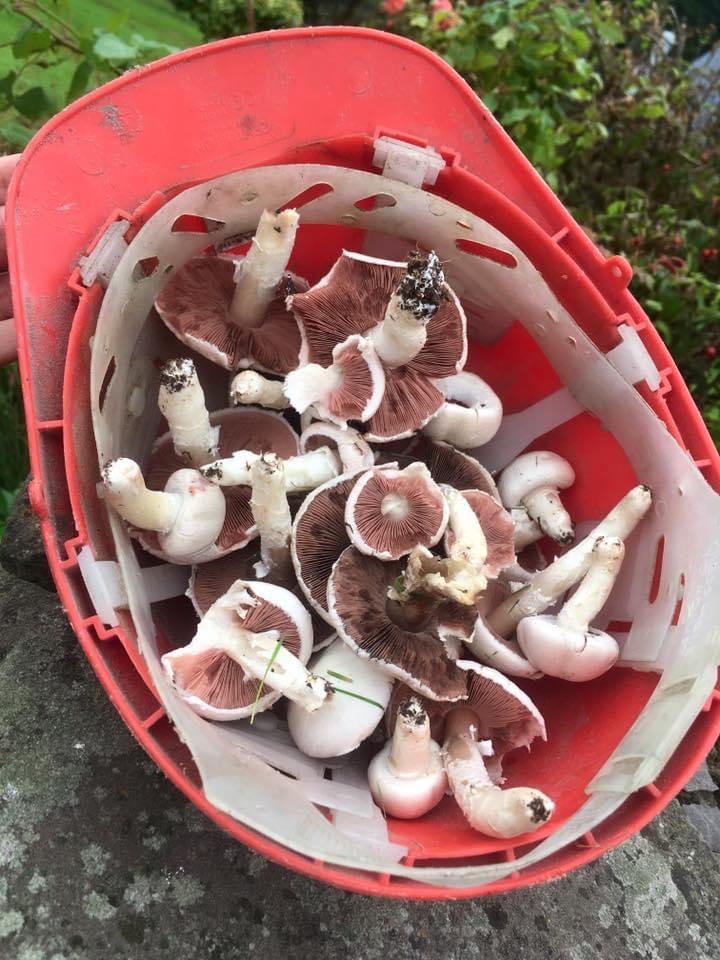 I have had a lot of queries about fungi foraging, or mushroom hunting, recently and it certainly is turning out to be a good year for wild mushrooms, with the recent wet weather encouraging the fungi to flourish. Very little energy is required by a mushroom to develop, as basically the cells just enlarge with water. A mushroom has pretty much the same amount of cells when it is young as when it’s mature, and rather then increasing cells to grow, the cells just enlarge. A mushroom can increase in size as fast as water can be pumped into its cells, which is why rain is a great asset to a mushroom hunter at this time of year. Just overnight a mushroom can grow from a pin-head to a large pickable mushroom.
And that’s why ‘mushrooming’ is used to describe something growing quickly.
My own ‘mushrooming’ knowledge is thanks to mid-Wales-based fungi forager, and author of ‘Fungi Forays’, Daniel Butler.
Daniel is keen to encourage us all to be braver when it comes to picking and eating wild mushrooms on the basis that last year five people were killed in bucket related accidents and 91 people died falling out of bed but no one died from eating a poisonous mushroom.
I have been much more careful around buckets since learning that fact, and it is this refreshing and reassuring approach that will endear you to the fungi forager. He explains, “The best beginner’s mushroom meets three criteria:
Firstly, choose something that is very distinctive in appearance like Chicken of the Woods (the yellow dinner-plate fungi which grows on Oak trees).
Secondly, make sure there are no possible dangerous look-a-likes (this is where Fungi Forays comes in very handy) and thirdly, if you do finally pluck up courage to eat what you have harvested, make sure you get the maximum ‘taste reward’. The Porcini or cep is a good one to start with. These are one of the few mushrooms that taste better dried than fresh, so are good to pick now and store.
Beginners are often intimidated by too many varieties so it is better to slowly build up a repertoire of what you know and what you like. They all taste different and you probably won’t like most of them. The Puffballs are foolproof, you can’t get them wrong but I don’t think they are worth the taste.”
Having been foraging for fungi for over 18 years, Daniel promotes Wales as a mushroom Mecca as so much of the land is untouched and unimproved. It also has a much better mushroom climate than Europe, being damp and mild. A little surprisingly, the most common mushroom in Wales is the porcini or cep with coniferous forests yielding good hauls every autumn. I think the fact that they are often well camouflaged, and therefore overlooked would mislead you to believe the field mushroom is the most common. It’s probably just the most visible. Having become a bit of a cep super-sleuth I can assure you there are well worth hunting for and once you have found a good spot for them, they will almost certainly come back in the same place next year.
Daniel has also collated a series of essays as a Kindle book ‘A Mushroom is a Misunderstood Rose’. Dispelling many fears and myths, it is also packed with fascinating fungi facts. Apparently, on a cellular level, mushrooms are closer to humans than plants. I can think of a few humans they resemble closer than others!
You can find out more, may be just in time to get on one of his foraging days and sign up for his fabulous newsletter at www.fungiforays.co.uk
Spore Reaction
My father, Bob, used to love fresh field mushrooms, but they always used to make him really ill. It never but him off, and he never stopped being ill after eating them.
Research shows that whilst most field mushrooms are edible and closely related to the mushrooms you buy in the shops, there is one called a Yellow Stainer, which bruises yellow. It’s edible for 50% of people but 50% will have an allergic reaction and will spend a couple of hours on the toilet. Mushrooms are also intense in protein and some people just find them hard to digest.
Daniel encourages us all to persevere, adding cheerfully, “Generally poisonous mushrooms taste disgusting and you’ll throw up before you ingest enough of it to kill you.”
Although there are exceptions, I hasten to add.
I never fail to learn something new when I read your articles Lynne. Thank you for this excellent information.
The only time I’ve ever harvested and eaten wild mushrooms, I’ve been with someone who knew lots more than I did. Great advice about sticking to what you know when foraging.
I’m also buying some of your recommended solar lights, they are lovely.