

Taken from Lynne’s weekly column ‘Green Scene’ for the Western Mail
9th September 2023

Good In-vest-ments

Yogi, my Westie and Wing-dog, has had a ’cooling vest’ for a while now. From Ruffwear, it’s described as, ‘Wetting the vest activates our Swamp Cooler™ Tech for that refreshing, just-stepped-out-of-a-lake feeling, also known as evaporative cooling. Just give it a soak, put it on your dog, and go. When it dries, re-soak it to recharge it.’
When I bought it for her a few years ago I joked that I could do with one for work. Guess what – now I can have one – not from Ruffwear, but ‘cooling vests’ for people are now ‘a thing’.
The older I get, the harder it is to work in hot weather. I used to love it but now find it really tiring and am tripping over my feet by break time. Whilst the balmy warm evenings that follow hot days make me happy, working in the heat makes me wilt, so I think I will be in-vest-ing in a ‘cooling vest’.
A bit of research has revealed that there are several types.
Evaporative Cooling Vests work on the same principle as Yogi’s vest and use the simple principle of evaporative cooling. Basically a highly absorbent fabric rapidly absorbs cold water when soaked in it. After soaking and wringing out, the cool water slowly evaporates from the fabric over the course of around 4 hours, providing the required cooling effect. You can also get headbands, neck ties, wristbands and towels that do the same thing and will help keep you cool too.
Because they are a cost effective option they are often used ‘on site’ and cooling vests have been designed specifically in hi-viz colours for safety as well as cooling purposes. The only downside is that they only cool you down as much as being wet would, so they might not be effective enough if you are outside in hot weather all day.
Cold Pack Vests, as the name suggests, feature specially-designed compartments to hold lightweight and flexible cold packs, and from what I understand the packs can be cooled in a cooler, rather than being frozen, meaning they could be swapped around in work. These vests are worn over light clothes rather than next to the skin and seem to be popular with outdoor workers.
And then the Phase Change Cooling Vests are similar to Cold Pack Vests in that they have compartments for ‘cooling packs’, but they work by using a specialized phase-changing material (PCM) with a higher than normal freezing point of 58 degrees Fahrenheit. Packs filled with the PCM are inserted into specialized compartments in the vest to provide the cooling effect. Their higher freezing point means they are slower to melt and faster to freeze, meaning they keep you cooler for longer and are quicker to ‘recharge’ respectively. Apparently the vests are lightweight (around 2 lbs), and are comfortable to wear under normal clothing with a wick mesh panel to stop you getting wet as they thaw.
Anyway, I don’t think we’ll have any more heat-waves this year, so I’ve got enough time to do plenty more research before next spring and summer. And I’ll need to redo my research on ‘heated clothing’ for the winter first. I have a basic heated waistcoat, which is fabulous and a pair of heated socks, which are complete rubbish, but these products evolve quickly and I’m sure there are better versions on the market now. I do think, with the weather becoming more extreme – and I can’t see me retiring anytime soon – this type of weather-compensating clothing is going to be a good in-vest-ment.
Hornet Horrors
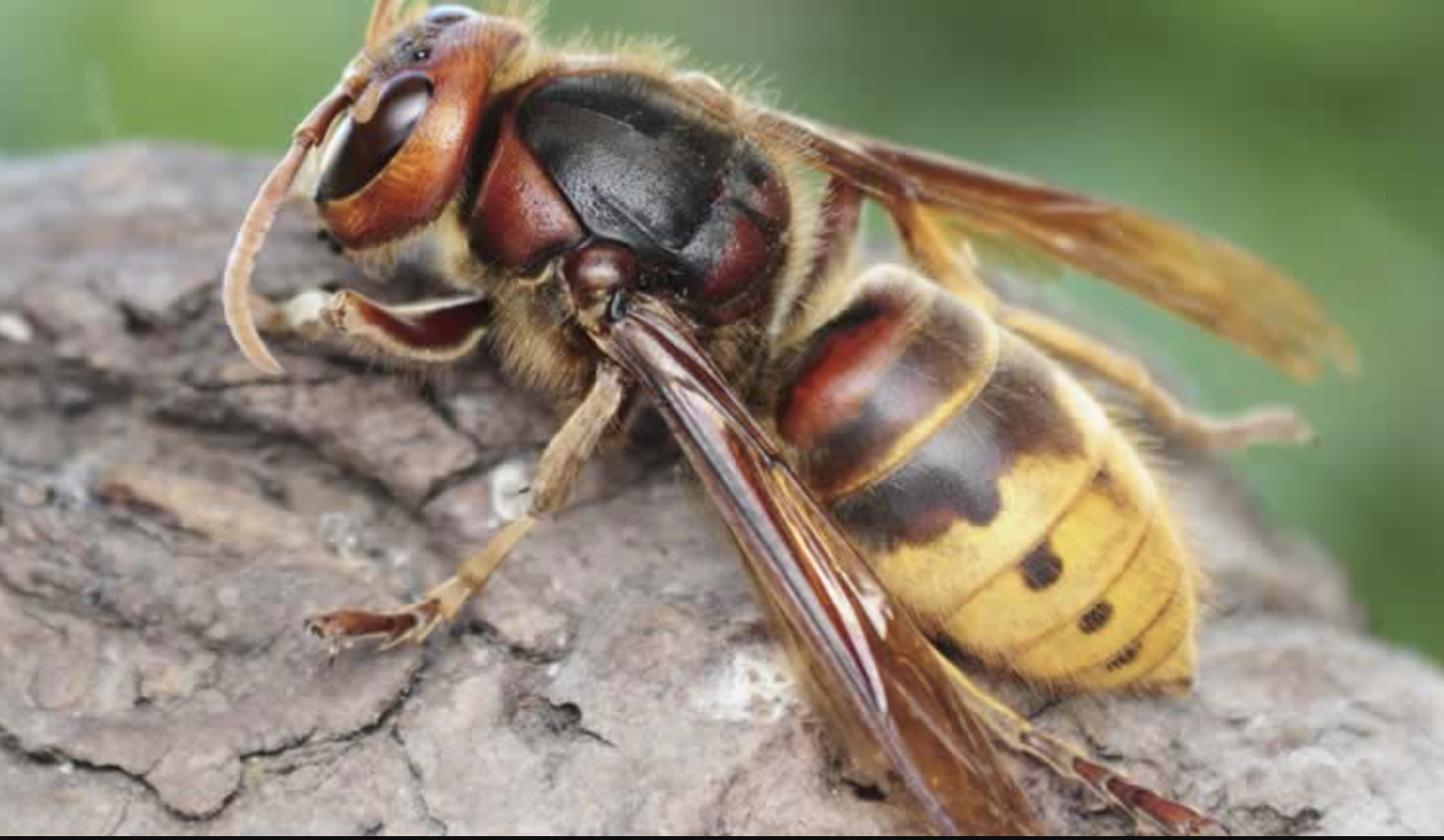 I have never been a fan of hornets and even less so when a whole nest of cheerful, orange bottom bees were wiped out in a few hours by hornets at the cottage. And as though our native European hornet isn’t enough of a nuisance, there is a ‘new risk on the block’.
It is thought that Asian hornets were inadvertently brought into France in 2004 in a shipment of goods imported from east Asia. Since then, they have spread rapidly across France into adjoining countries and more recently have crossed the Channel to the UK. They are notorious hitchhikers so probably came across in cargo or even with unaware campers, but are possibly capable of making the crossing under their own steam too.
Sadly, there has been a sharp rise in sightings of the Asian species in the UK this year. While 2021 and 2022 had only two sightings reported each year, so far this year there have been 22 confirmed sightings and 9 nests found and destroyed.
The vast majority of the sightings have been in the south of England with one reported sighting in Gloucester in 2016, but let’s face it, it’s not far to Wales from either location. Crucially, it only takes one mated queen hornet to establish a colony and so the Government’s strategy is to locate and kill every hornet and destroy all nests to prevent them from over-wintering and multiplying.
As far as humans are concerned, the sting of an Asian hornet is (apparently) comparable with the sting of our native hornet but it is the danger they pose to our bee population that is the real concern.
The Asian hornet’s ‘nickname’ of the ‘Murdering Hornet’ has been well and truly earned. They have been seen ‘hovering like a bird of prey’ outside honeybee hives, picking off bees as they come and go. They then murder them in the most barbaric way, eventually taking various body parts back to feed their own larvae. And as if that’s grim enough, when an Asian hornet locates a honeybee nest or hive, it chemically marks it by rubbing its abdomen on the surface, to attract fellow hornets. To gain easier access to the hive or nest, they then chew at the entrance, and kill any defending worker guard bees before looting the hive. They will also return to the same feeding spot again and again at regular intervals until it is exhausted. Just one Asian hornet can eat 300 honeybees in a single day and no insects in Britain have yet evolved to defend themselves – nor does it have any natural predators in this country. Although I think my Nan with a rolled up newspaper would have had a good go.
Asian hornets are smaller than native hornets and can be identified by their orange faces, yellow-tipped legs and have a wide orange segment on the black abdomen. They also have a very distinctive ‘low buzz’, much like the native hornet, I assume, and which absolutely demands your immediate attention. It is worth Googling to learn more and familiarise yourself with their appearance, especially as they are at their most active during August and September.
You can find out more and report suspected sightings in Wales at www.wbka.com/asian-hornet-reporting/
Leave a Reply