
Taken from Lynne’s weekly column ‘Green Scene’ for the Western Mail
8th July 2023

Hot Hot Hot

The Met Office has confirmed that last month was the hottest June on record – and are predicting that after a ‘temperate two weeks, the end of July and beginning of August could be even hotter than last year, with temperatures hitting 40 degrees again’.
Interestingly, whereas the promise of hot summers used to ‘lift the mood’ of the nation, reports show that more and more people are now dreading these ‘unprecedented’ temperatures – and they’re not all gardeners and farmers.
Bearing climate change in mind, there have actually been hotter Junes before the Met Office records began, and they were ‘quite common’ up to the middle of the 19th century. Whilst the Met Office only keeps a detailed national and regional temperature database extending back to 1884, before that scientists relied on a regional database known as the Central England Temperature series, or CET.
Based on that method, last month’s average CET was around 15.8°C but June 1846 holds the record on the CET table with an average temperature of 18.2°C. June of 1676 averaged 18.0°C.
But of course, while it is fascinating to go back and compare weather patterns, the big question is, ‘What is to come?’
Well, of the months with the highest June average temperature – 1676, 1762, 1798, 1822, 1826, 1846 and 1976 – only the summers of 1826 and 1976 remained ‘remarkably hot’. So, if the historical record is anything to go by, we may have already seen the hottest weeks of summer 2023. But of course, Mother Nature is in charge, so anything could happen.
Last week my weather app forecast temperatures of 8 degrees. Whilst my brother and I wondered what weather phenomenon was going to deliver the cold blast, the news reported that the ‘fake-forecast’ was down to a technical glitch. But let’s face it, I’m sure many of us wouldn’t have been that surprised by February temperatures in July!
As Lord Byron once said of July, ‘It is the month when English winter ends, only to recommence in August.’
Flamin’ June
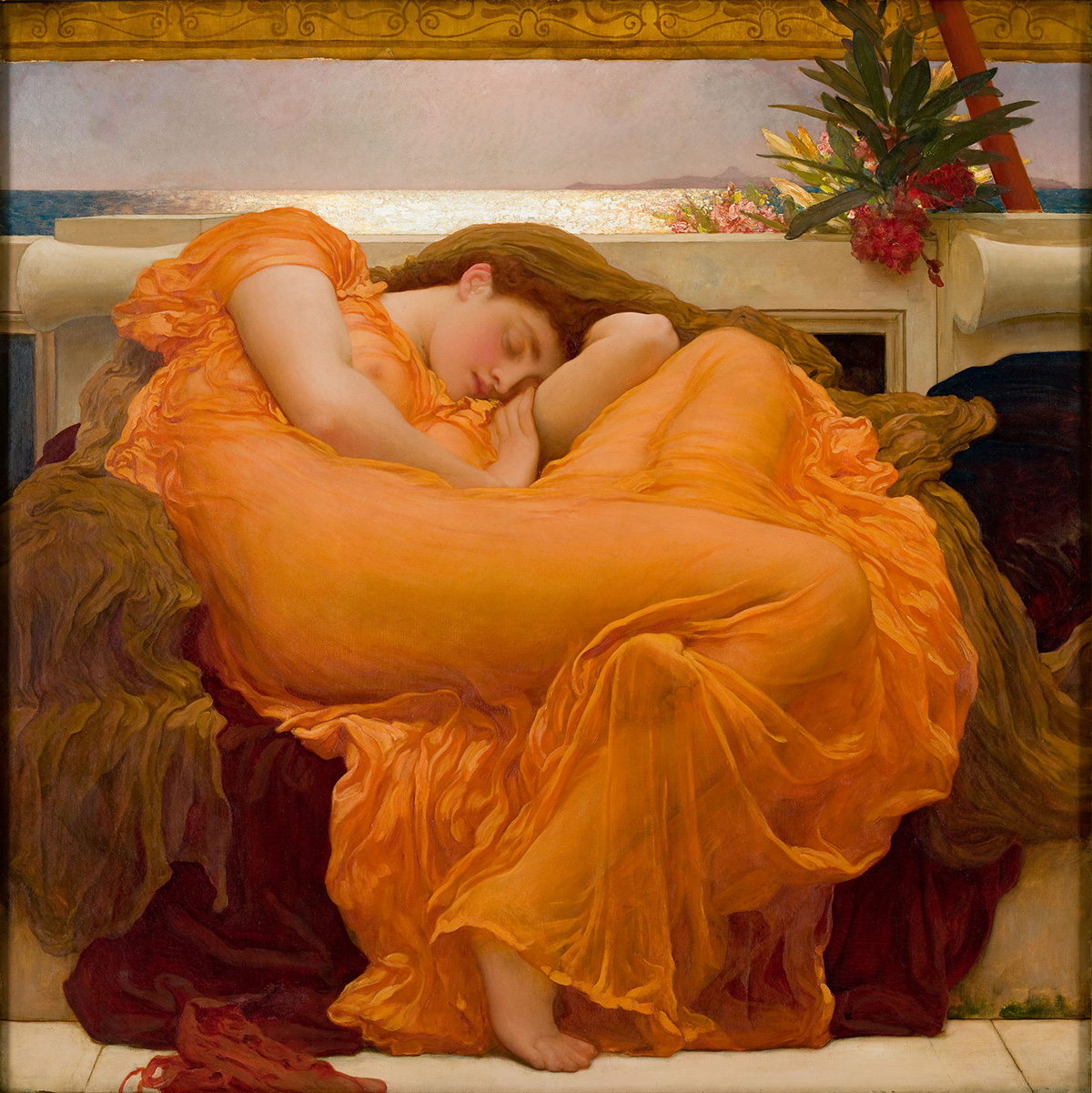 Whilst researching all this hot-weather-history, I also learnt something else. I always thought that ‘Flaming June’ referred to the month traditionally being hot, but that’s not the case. The phrase has a much more tenuous link with the weather.
‘Flaming June’ is the title of Sir Frederic Leighton’s painting of a woman in a vibrant orange dress sleeping under a canopy in the summer heat. Painted in 1895, Leighton left the interpretation open – the woman has flame-red hair, so June could have been her name, or maybe the scene took place during June, or perhaps she is the personification of the month.
Either way, I found last month’s heat ‘flamin’ challenging’ to work in and am hoping for more gentle July weather.
Cut Backs
 I have been busy cutting back a lot of ‘spent’ herbaceous plants recently, in order to encourage a second flush of blooms later in the summer. It can take a bit of courage to do, as some of the plants – like the wild geraniums – are often still blooming, albeit a bit half-heartedly after the heat. However some, like Lupins and Oriental Poppies, have completely finished flowering and will often flower again if cut back hard now. If you’re not sure which plants will benefit from ‘the chop’, do check to avoid losing late blooms or having big gaps in the border.
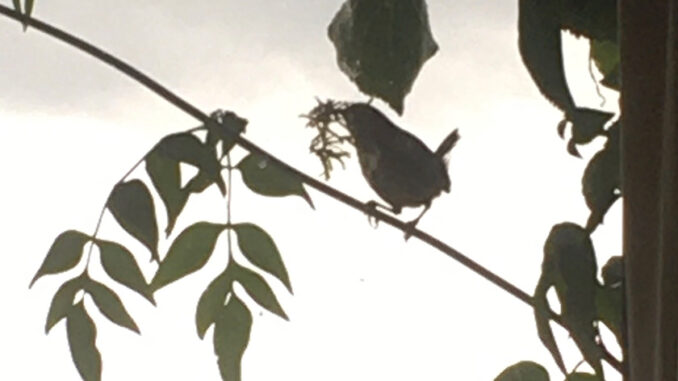
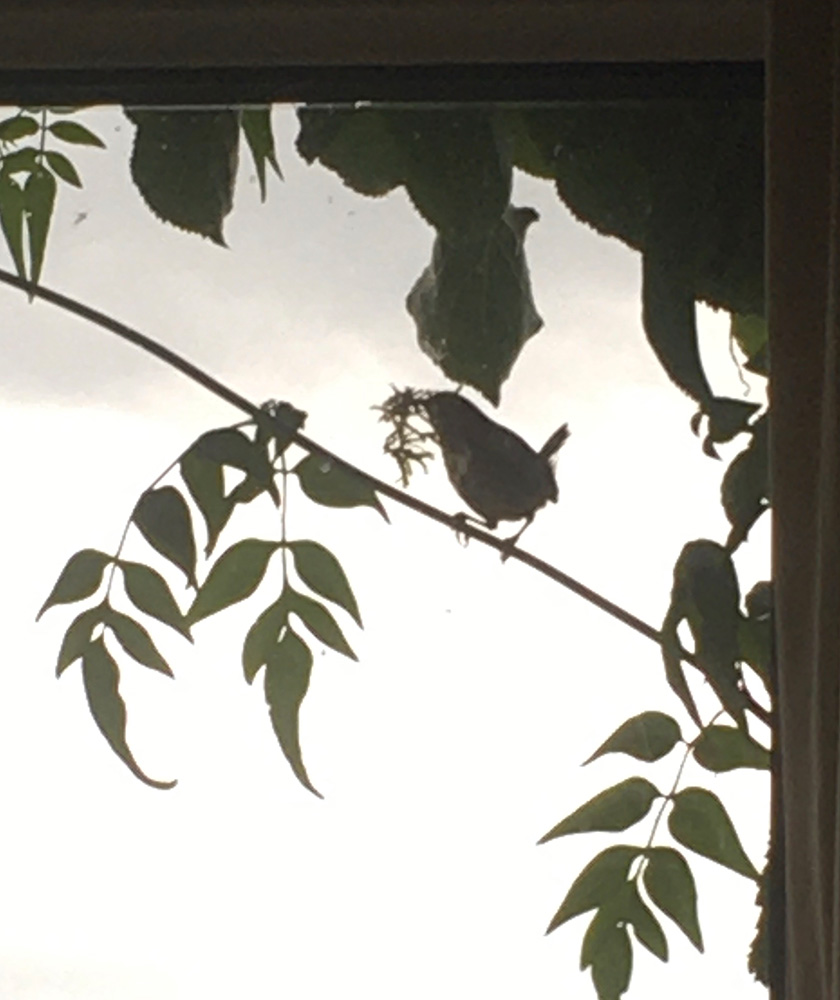
Also please go ‘softly’ whilst working in the garden now as many little garden birds have second (and later, third) broods. Just by taking the time to sit and watch for a while, I noticed a tiny little wren had built her second nest of the year amongst one clump of lupins – very unexpected. I have four wrens nesting again in the garden as well as two black birds. One wren is nesting in the jasmine just above the patio door and after a short while of us both being unsure what to do, she has realised I am no threat. One of the blackbirds is using an original nest, which has been cleverly built next to the raspberries. It never gets old watching the male pick the raspberries from his doorstep and take them back for his brood. It’s all about location, location, location.
My, My, My Dahlia
 I am always impressed by how creative people can be when they have to diversify – they say ‘necessity is the mother of invention’, but maybe that should be ‘and diversity’. As well as the much-loved farm shops, local farms have developed the familiar ‘pick your own’ fruit concept to include pumpkins, wild flowers, lavender and sunflowers. But I was particularly impressed to see Forage, in the Vale of Glamorgan, is partnering with RHS Chelsea Flower Show award-winner, Rob Evans of Pheasant Acre Plants, for their debut summer event, Pick Your Own Dahlias on Penllyn Estate Farm, just a stone’s throw from Forage itself.
I have met Rob several times at Chelsea and he is a font of horticultural knowledge. He is also generous in sharing that knowledge in a very down to earth way. You can join him for a 60-minute tour of the dahlia field on several dates through August and pick his brains for tips about growing these beautiful ‘old favourites’ . As an added bonus, each ticket includes a delightful 15-stem bunch of dahlias (chosen from 120 different varieties that have been planted) for you to take home and enjoy or pass on as a gift.
During the Victorian era, the Language of Flowers stated that dahlias were a symbol of commitment and an everlasting union, which made them popular as wedding flowers. They are also used to represent inner strength, creativity, and elegance.
Dahlias evoke wonderful memories of my nan and granddad. Granddad used to have borders full of them and nan would always have a vase or two of them in the house during the summer. They were also given away generously to friends and neighbours – usually with a newspaper-wrap of runner beans!
Dahlias are named after 18th-century Swedish botanist Anders Dahl and were actually categorised as a vegetable because their tubers are edible. Thompson & Morgan have included them in their ‘Edible Flower Guide’ and advise, ‘All dahlia flowers and tubers are edible. The flavours and textures can vary greatly depending on the soil and conditions in which they were grown. Flavours range from water chestnut through to a spicy apple or even carrot.’ More details at www.thompson-morgan.com/edible-flowers
The Forage dahlia fields in Cowbridge will be open from 2nd August – 1st October from 10am until 6pm. You are asked to book a slot on their website at www.foragefarmshop.co.uk and of course will also be able to visit the farm shop and restaurant.
Leave a Reply