

Taken from Lynne’s weekly column ‘Green Scene’ for the Western Mail
22nd February 2020

Good Health

It’s difficult to write a gardening column the week after we’ve had over a month’s rain in 48 hours without mentioning the weather.
Nature is so fickle and unpredictable. Responsible for the most stunning sunrises and sunsets only a few days before devastating Dennis wreaked havoc. The mountains we love turn into funnels channelling rainwater into swollen rivers which rage through the valleys mercilessly. It’s a fragile system.
My heart goes out to those affected by the flooding. Our homes are our safe spaces, and to have them ransacked by nature is hard to reconcile.
For those who have had their homes damaged by Storm Dennis, I’m sure your garden isn’t a priority right now, but going forward, gardens – especially vegetable gardens and allotments – will need a good feed after all this rain.
The copious amounts of rain we have had throughout the winter, leave alone last week, will have washed nutrients out of the soil leaving it depleted and ‘hungry’.
Well-rotted horse manure is a good traditional feed and should be full of worms when you work it. Worms are not generally a sign of good health, unless they are in the soil!
Soil health is often overlooked in gardening. The health of your growing medium will determine the health and yield of your crops. I have been following the No Dig method for a few years now – with mixed results. It’s tricky when you have pernicious perennial weeds like ground elder but I am persevering.
I use grass clippings as a mulch (use from regular lawn mowing, not when the grass has gone to seed or you will just be sowing grass seed in your veggie beds) and I also use straw to mulch between crops. Admittedly it doesn’t look as neat as my granddads veggie patch did but I don’t have the time that he had. The yields have been good and that’s the main thing.
Run Forest Run
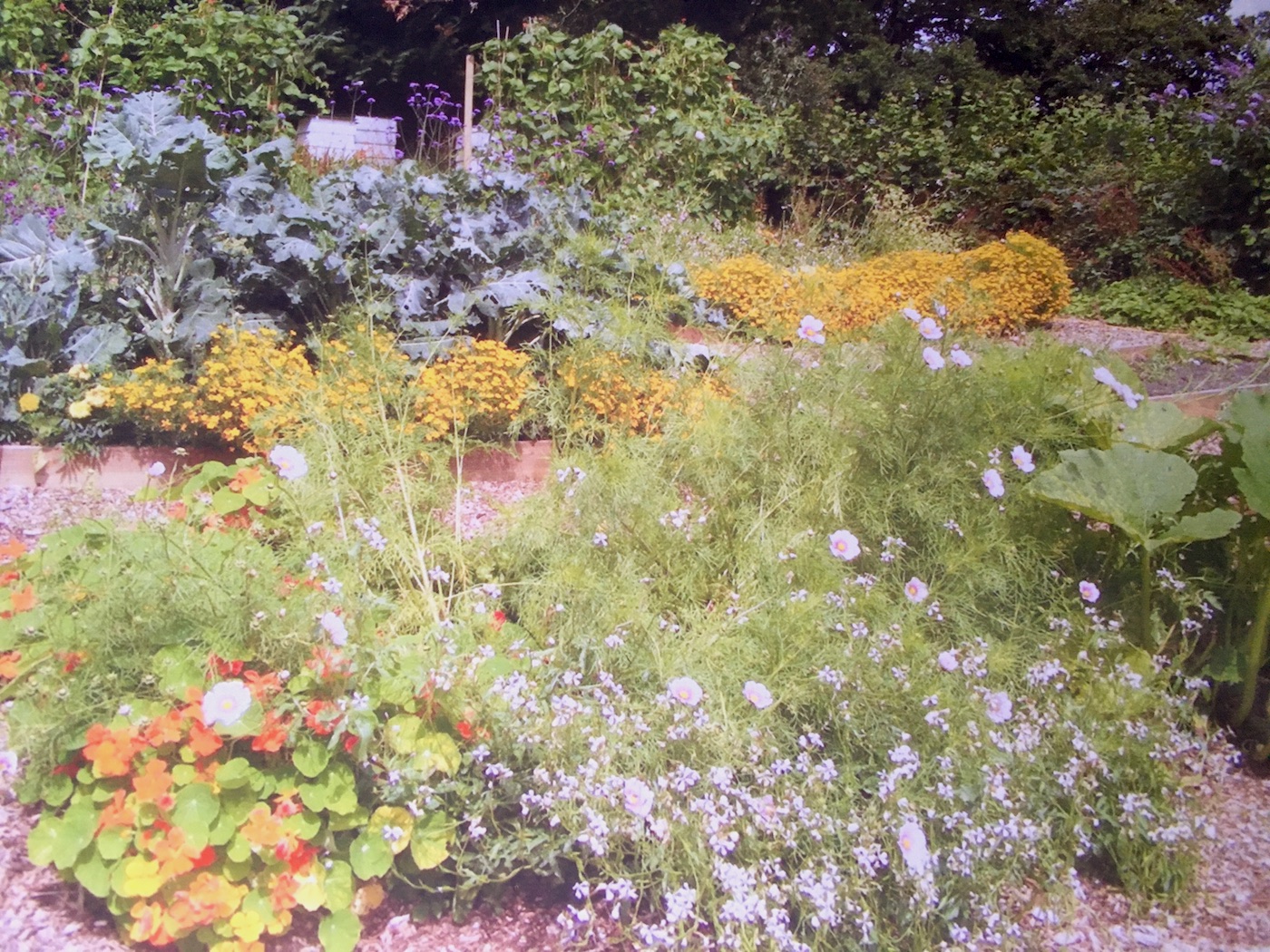 Without realising it, I have also been ‘forest gardening’. Also known as Agroforestry, it is the method of growing plants in ‘layers’ of different height. Technically there is a recommended seven-layer system to follow, but mine has been a bit more ‘flexible’. Whether by design or default, the system is the same – basically maximising the space available by allowing fruit, veg, herbs, medicinal plants and plants that benefit the soil (such as chickweed and sorrel), to be grown close together, or in a tiered system as they would organically in a forest environment.
Oblivious to it being a ‘thing’, I simply wanted to grow as much as I could in a small space and just ‘mixed’ up flowers, shrubs, herbs, veg and fruit. Obviously there is an organic amount of ‘weeds’ too – such as chickweed and sorrel – but these can be used in salads, as a treat and tonic for my chickens and, as already mentioned, they benefit the soil.
As well as making best use of any space, it pretty much ‘runs’ itself, is beneficial for pollinators and other wildlife, and is also pretty good to look at.
It seems I have been ahead of the curve for once!
Well Bread
 Next week is Real Bread Week – Launched by the Real Bread Campaign in 2010, it is the annual international celebration of ‘real bread’ and the people who make it. Its main aims are to encourage and help people to buy real bread from local, independent bakeries, to bake their own bread at home and to join the Real Bread Campaign.
I ‘loaf’ making (and eating) great bread and often experiment with veg, fruit and herbs from the garden. Any herby bread is a regular ‘go-to’ (fennel, chives and thyme are the strongest flavours) and probably the easiest, but other experiments have included beetroot and walnut, apple and courgette and spinach and a variation of all those recipes are on the internet and definitely worth a go.
My favourite way to get as many veggies into the dough as possible is a Garden Harvest Bread recipe. It tastes a bit pizza-ry, which is down to the oregano I think. You will need:
- 2 medium courgettes, grated
- 1 1/2 tbsp salt
- 2 1/2 tsp active dry yeast
- 1 tbsp granulated sugar
- ½ pint warm water
- 2 tbsp melted butter
- 3 large carrots, grated
- a handful of chopped olives
- 12 – 16 oz bread flour (the amount will vary greatly because of the moisture in the vegetables. Start with 12 oz and add more as nec)
- 1 tbsp dried oregano
- 1 tsp smoked paprika
- Olive oil for greasing the bowl
Place the courgettes in a colander and toss with 1 tbsp of salt. Set aside for five to ten minutes to let the salt draw out the moisture, then squeeze hard to remove as much liquid as possible.
Add the yeast, sugar, and warm water to a bowl and let set for ten minutes or until the yeast foams the surface. Add in melted butter, courgettes, carrots, olives, bread flour, oregano, 1/2 tbsp salt and the paprika and mix well – use a mixer if you prefer. If the dough is too sticky to form a ball, add more flour, 1 tbsp at a time. Knead to pliable dough.
Grease a bowl with olive oil and transfer dough to the bowl. Cover with a clean kitchen towel and let rise in a warm place until doubled in size, for about an hour.
Line a large baking sheet with parchment paper. Divide the dough into equal halves and shape two round loaves onto the baking sheet, making sure to leave enough room for the bread to at least double in size. Cover with a clean kitchen towel and let rise for another thirty minutes or until doubled again.
Preheat oven to 375 degrees and bake for 30-35 minutes or until the tops have browned, rotating the baking sheet halfway through. Transfer to a cooling rack and let cool.
Slice, serve and enjoy your ‘bread of Heaven!’
Leave a Reply