

Taken from Lynne’s weekly column ‘Green Scene’ for the Western Mail
15th February 2020

Dog Warming

Yogi, my terrier, is back in work with me for a couple of hours a week after her cruciate ligament issues. She is still having hydrotherapy once a fortnight, as a precautionary measure against arthritis, and I still need to be careful that she doesn’t overdo it – she is a terrier after all – but it’s fabulous just to have her back on the payroll.
Her return to work has meant that I’ve had to get her ‘work wear’ sorted out again. Especially during the wintery weather we had last week.
There are lots of dog coats to choose from but I have found the most effective are the Hurtta Waterproof Coat and the Three Peaks 3-in-1 coat, which is also waterproof but has an additional warm fleece liner. Dog’s can suffer from hyperthermia if they get too cold and can’t get warm, and a wet dog and chilly breeze is a recipe for discomfort, if not disaster.
If Yogi is still cold when we get in – before I can light the woodburner – I’ll put her super-snug Equafleece on. It’s so important to make sure our ‘best friends’ are warm and comfy – although I often wish Equafleece made fleeces for humans too.
After hydrotherapy I use the Furminator Fur Dry, which is microfibre towelling coat that wicks away the moisture from your dog’s coat. It’s also great for drying dogs after a bath as well as a wet walk.
I’m not saying Yogi is better dressed than I am but she does have two drawers all to herself in my wardrobe!
Heart Warming
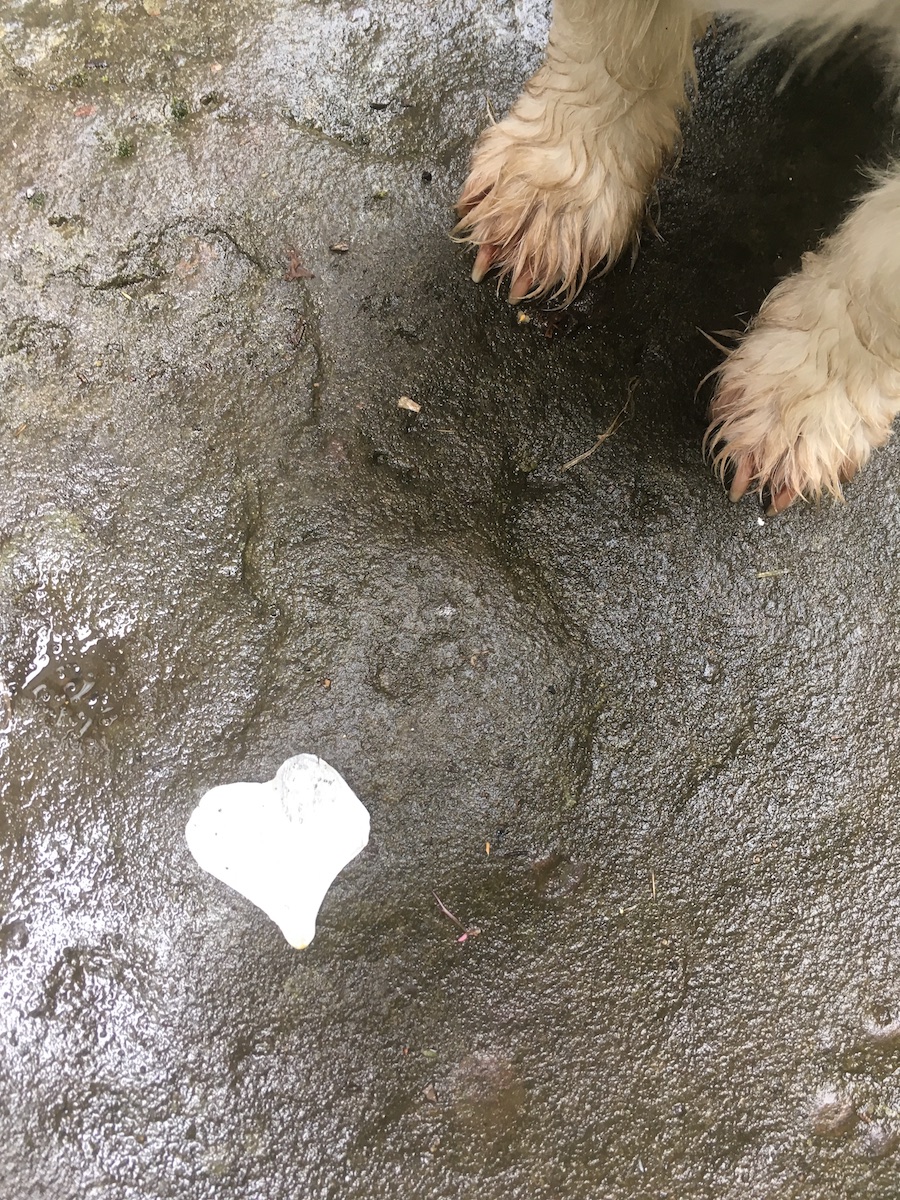
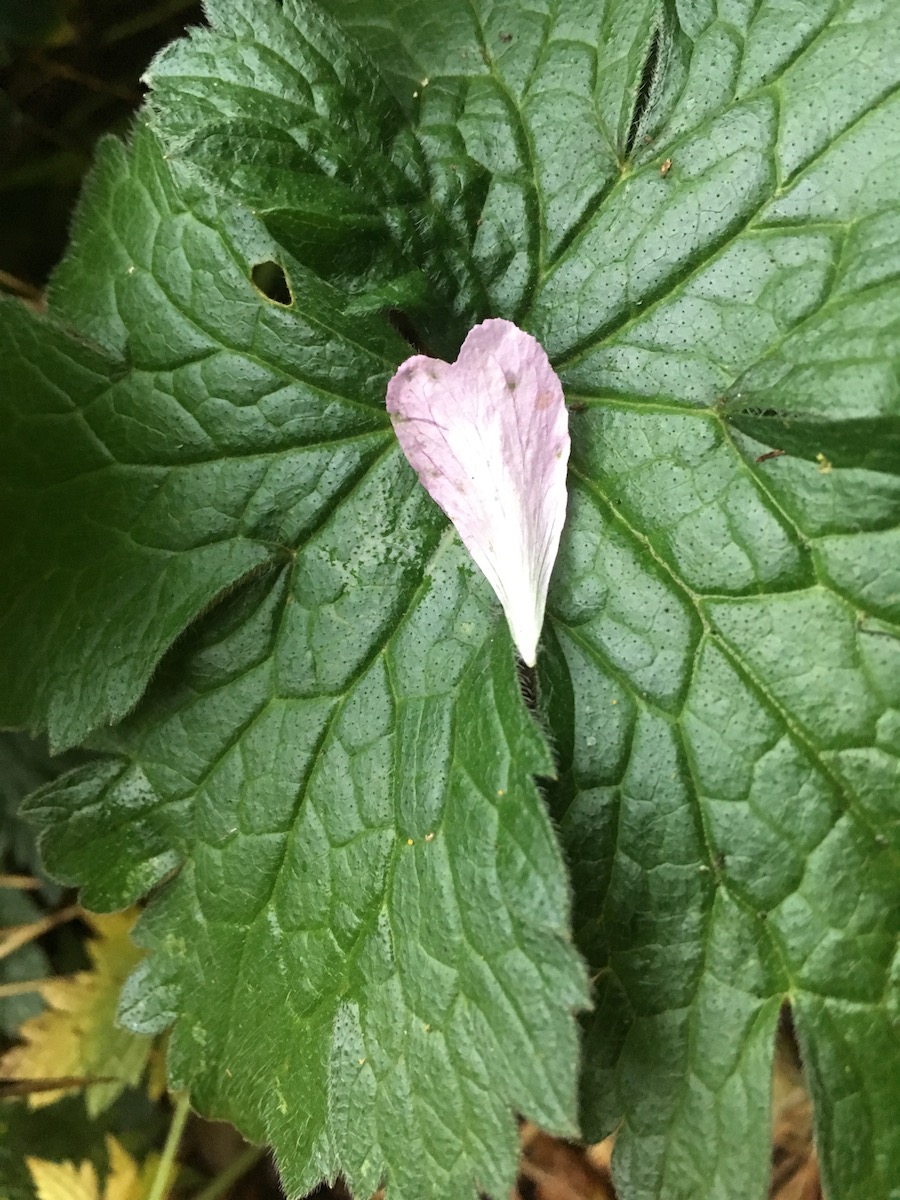 There has been no escaping the familiar heart symbol during Valentine’s but I wonder how many of you have noticed it in nature, albeit more subtle than the plump red ones we see on commercial products.
‘Heart-shaped’ is known as ‘cordiform’ and examples can be seen in the leaves of ivies, hostas, lime trees, birch and also many individual flower petals, from roses to buttercups.
It is still not known how the heart-shape came to represent love and affection, but one theory suggests that during the seventh century B.C. the Silphium plant (now thought to be extinct) was used as a form of birth control in the city-state of Cyrene.
Legend has it that the plant was so important to the local economy that “coins were minted that depicted the plant’s seedpod, which looks like the heart shape we know today.”
Whatever the reason, lets face it, you’ve got to love Nature!
Hand Warming
Wintery weather always challenges us gardeners, and layering is definitely the answer. Not layering as in propagating, but layering lots of thin clothes to trap the warmth and which are easier to discard cautiously when hard work warms you up.
My hands are still the hardest part of me to keep warm, and I have learned that one of the things that helps enormously is to have lots of pairs of gloves in the truck so that when one pair gets wet, I can change them for a dry pair.
 When I take them off (for food), I always tuck a dry pair in my coat, under my armpits – it works a treat to keep them warm and putting warm gloves on will keep your hands warmer for longer.
But one thing I didn’t know, until talking to Ranulph Fiennes recently, is that mittens keep your hands far warmer than gloves. Not so practical for gardening, but I have tried them for Yogi walking and running, and he’s right!
Mind you, given his track record, I didn’t think he would be anything else.
Mature Flower Buds
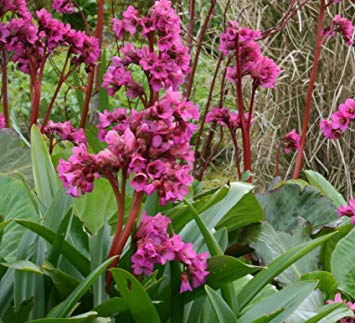 I have heard that our taste buds ‘mature’ as we get older allowing us to appreciate a wider variety of foods, and I think it’s the same with plants. I have grown to appreciate and value the efforts of plants that I used to reject as a younger gardener.
The Bergenia’s are a classic example. Bergenia codifolia (heart-shaped leaves, remember) is also known as Elephant’s Ears and Pig Squeak – the latter because when you rub two leaves together, they squeak!
They are useful evergreen ground cover plants which are easy going and don’t need much attention. They can look a little jaded at this time of year, with a thatch of dead leaves hiding their ‘blooming beauty’. Clear away the dead leaves, and some of larger live ones, and you will often discover the most beautiful cheerful pink flowers hiding beneath.
It is well worth taking the time to remove the leaves that are hiding these little gems in order to enjoy the early spring blooms – and the plant won’t mind at all.
Always a worthwhile read, thank you. The bergenia’s are lovely, I have the pink one and am keeping an eye out for the white variety.