
Taken from Lynne’s weekly column ‘Green Scene’ for the Western Mail
13th May 2023

Bloomin’ Bonkers Growth
Crikey, the grass and weeds (or ‘resilient plants’, according to the RHS) are growing at a rate of knots now. Last weekend I edged, tidied and hoed through the beds and borders for one client, and by the time I had finished I thought I would have to start again. My brother agreed saying, “I mowed Herbert Hall, and by the time I got home I bet it needed cutting again.’
I don’t recall the last couple of springs being this ‘great for growth’. They were drier and sunnier and it is obviously this year’s wet-but-warm-enough conditions that are driving the weeds (resilient plants) and grass to grow as tall as possible and set seed swiftly to ensure the best rates of dispersal, and therefore their survival.
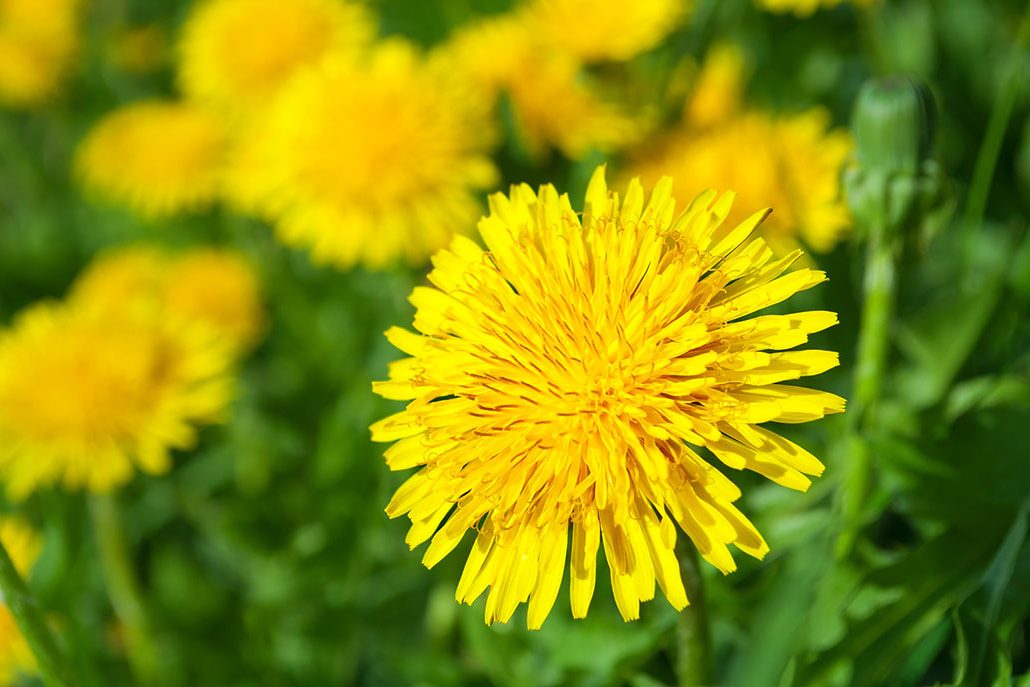
Dandelions have set seed quicker than ever this spring, and whether you see a ‘weed or a wish’, the saying goes, “One years seed, seven years weed.’
Dandelions have around 150-200 seeds per flower and up to 10 flowers per plant so an average of 15,000 seeds can be produced per dandelion plant. That’s a lot of wishes. Those seeds can be dispersed long distances by wind because they move in updrafts and they germinate immediately in the same year that they mature on the plant.
It’s not difficult to see how they could indeed be described as ‘resilient’.
Sowing Rogue
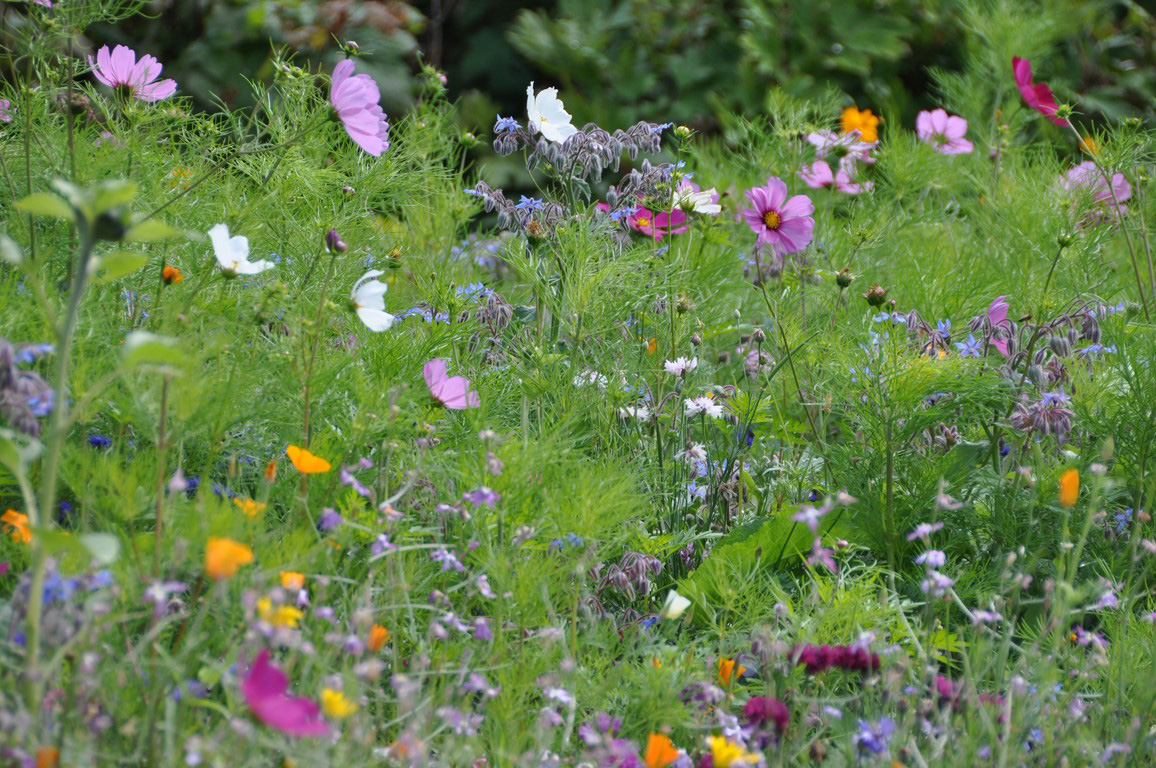
 The good news is that – in theory – these growing conditions are also good for the veg and flower seeds that you want to cultivate. If you haven’t sown yours yet, get them in the ground as soon as possible. The weather conditions can change so quickly and there is still time to have a hot, dry summer, so a good start will be helpful for them. Making the most of the good-growing conditions, I have sown lots of swathes of Cosmos seed in beds and borders – they are fantastic ‘fillers’. I have also sown pumpkin and courgette seeds directly into a couple of compost heaps – the ones that are resting so won’t be disturbed for a few months. I remember granddad using his compost heap in this way as the ‘cucurbits’ (gourd family) are hungry feeders and it is a clever way of utilising space and ‘free food’.
There are always more courgette and pumpkin seeds in a packet than I really need – even when using them for clients – and so I always pop a couple in bare patches in the flowerbeds and borders as well. I often ‘go rogue’ with packets of seeds, sowing them a bit randomly as it’s a lovely surprise when you suddenly notice peas growing up a willow panel fence or French beans growing amongst the fuchsias.
They’ve got two chances – grow or not – and, as I always say, they stand more chance of growing if they’re in the soil rather than the packet. I have also started a few random experiments with some veggie seeds but will wait to see what happens before I share more about that.
Going Wild
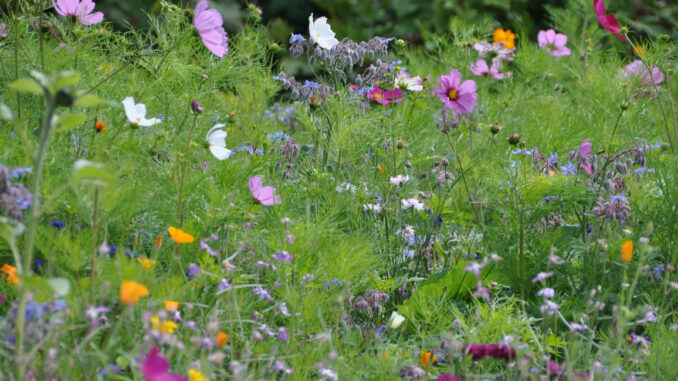
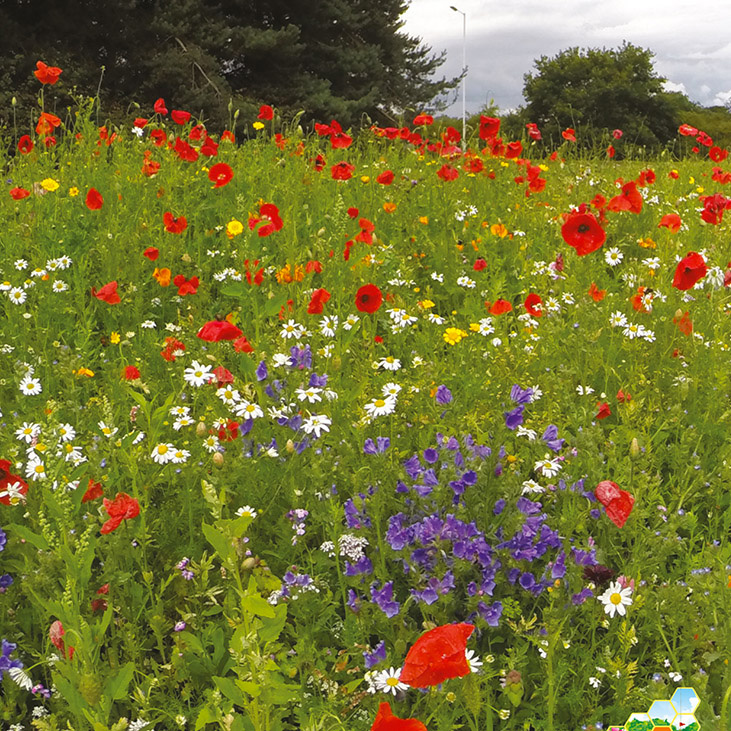
 And I’ve just sowed a lot of wild flower seed around the edge of the veg patch, on a couple of verges and on an awkward bank. It’s not too late, and they’ll provide a welcome splash of colour and food for pollinators at the end of the summer.
It is important to remember that good wild flower seed is not ‘free seed’ or even ‘cheap seed’, but it can still be cost effective, covering much bigger areas than shrubs or herbaceous plants and is often more cost effective – and safer – than strimming difficult areas. Interestingly it is also a cost effective option for large grassed areas that would normally be mown regularly. Mowing paths through swathes of wild flowers has to be one of the most fantastic ways of utilising any green space. Wild flower banks are particularly striking as the blooms are ‘displayed’ more effectively and using wild flower areas between boundaries and the main sections of a garden is an excellent ‘transitional trick’ – and treat.
I encourage everyone to ‘experiment’ with a patch of ‘properly-done’ wildflowers to see the benefits for yourself. Attracting pollinators, uplifting the mood, dealing with difficult areas, including poor soil, are just some of the boxes ticked by this under-used flower power.
Whenever I use or talk about wildflowers, there is only one company I recommend and that’s Rigby Taylor. They provided the seed for the memorable wildflower meadows at the Olympic Park back in 2012, and more locally, have provided a lot of seed for Monmouthshire Council, and a few years ago for some of the roundabouts in Blaenau Gwent. If you have seen any of those displays, you won’t have forgotten them.
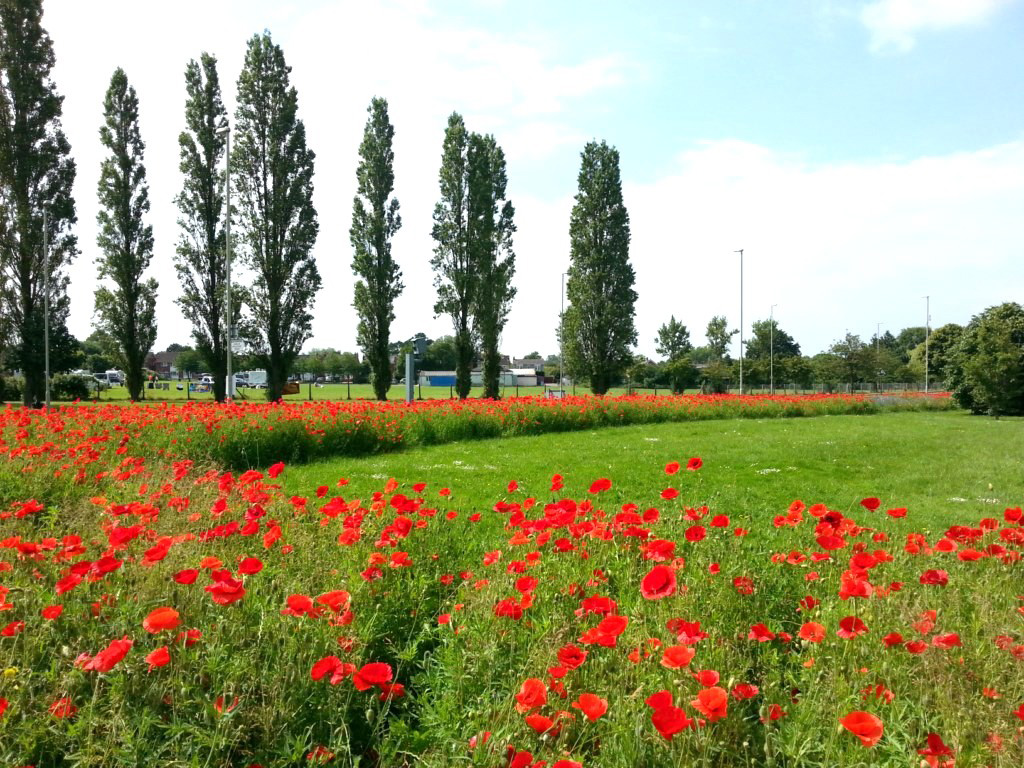 There are numerous fabulous mixes to choose from, making sure there is something suitable for every site and situation. Euroflor offers a wide range of mixes including horticultural cultivars and/or UK native and naturalised species in varying combinations. Mixes are available for spring or autumn sowing and there are 11 mixes to choose from in the Euroflor Project Pollin-8 range. This project is a major initiative at reversing the decline in pollinating insects by including high yielding nectar and pollen flower mixtures.
Or you can choose from the ‘Flora Native’ range, a collection of Native UK provenance wildflower seed mixes. This seed can be sown all year round as long as the moisture and temperature is conducive to germination and growth. Specific mixes are available for wild birds, and bees and butterflies as well as for different soils and situations, like woodland, wetland, coastal and flowering lawns.
Most people have had a bad experience using wildflower seeds simply because they used inferior seed. I am determined to change this and encourage everyone to have a patch of wildflowers in their garden, whether you go for a handful or a hectare.
David Carvey at Rigby Taylor is happy to advice on the best seed for your requirements and conditions and is also generous with practical advice. You can contact him on 07774 943629.
If all the flowers of tomorrow are in the seed of today – let’s go wild!
Leave a Reply