
Taken from Lynne’s weekly column ‘Green Scene’ for the Western Mail
20th May 2023

Bee Art(y)
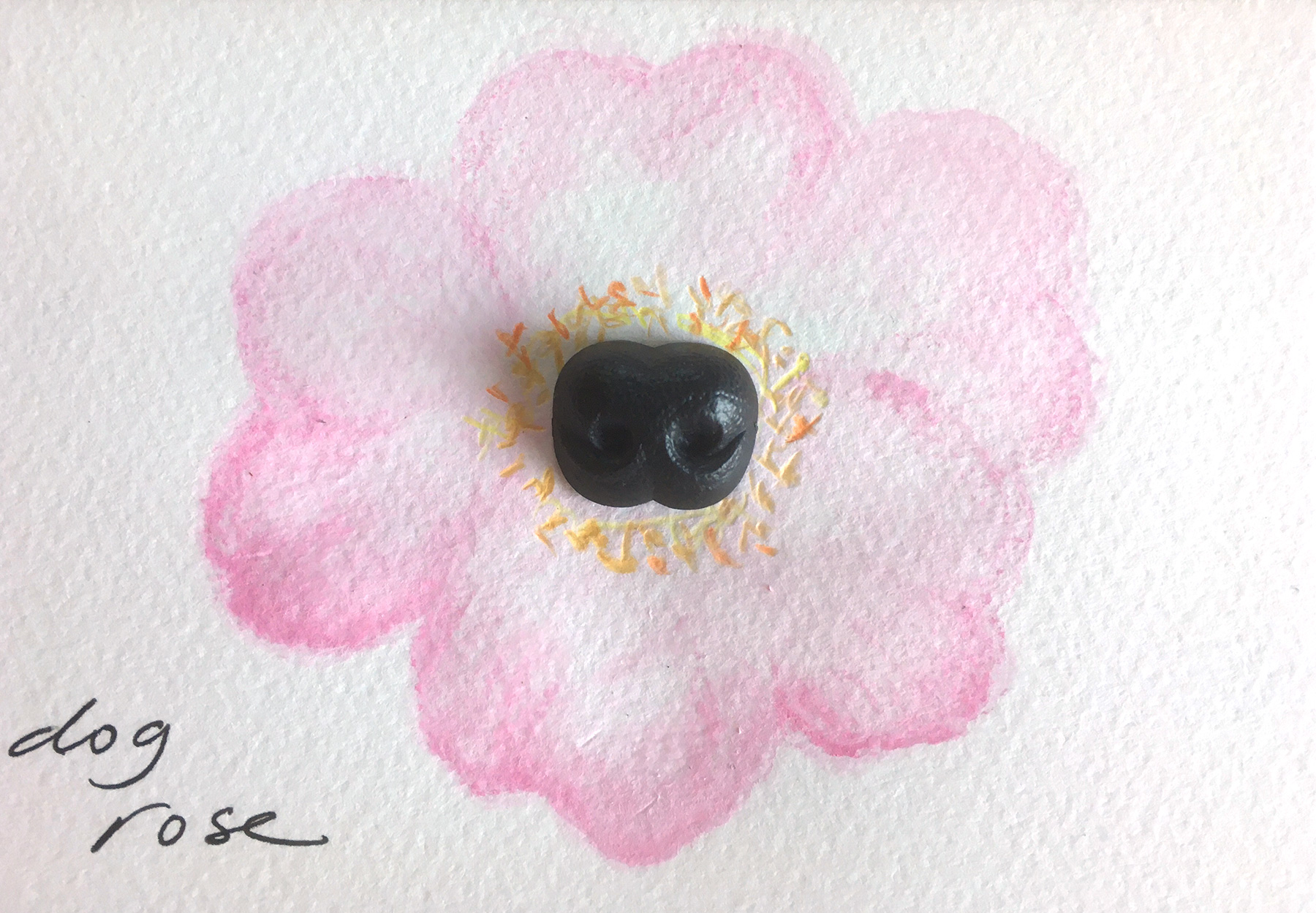
I was delighted to be asked to contribute to Bees for Development’s renowned annual Bee Art Auction. Over 100 celebrities and artists have been asked to provide a postcard size, flower or bee related ‘doodle or artwork’. Artwork has been submitted – either this year or in the past – by Bill Bailey, Martin Clunes, Hugh Bonneville, Dame Twiggy, our very own Terry Walton and Jane Hutt MS and Kenneth Branagh who famously doodled two little bees with the title, ‘Two bees or not two bees’.
As you can see, I took the opportunity to involve Yogi by submitting a ‘dog rose’ – or should it be ‘dog nose’. I’m really looking forward to seeing who buys it.
All artwork will be auctioned off at the Bee Garden Party Fundraiser hosted by Martha Kearney at the grounds of Marlborough House by kind permission of the King and Queen. Camilla is the President for Bees for Development and has her own bee hives. This year she is donating all the proceeds from her honey harvest to Bees for Development, who are currently celebrating their 30th anniversary.
Alongside a silent auction offering glamorous treats and experiences, the Bee Art auction opens online on Monday 29 May at www.bees.org and ‘bee’ concluded at the Bee Garden Party Fundraiser on Wednesday 14th June (4pm – 7.30pm) in a lively auction finale hosted by Gyles Brandreth and Charlie Ross.
Tickets for the ‘bee-there-or-be square’ Bee Garden Party Fundraiser can be bought at www.bees.org and you can also sign up to their mailing list for the opportunity to win two tickets to the party.
Sing the Blues
It’s Camassia time. I adore these bulbs – they are undemanding and often overlooked as a brilliant naturalising plant. 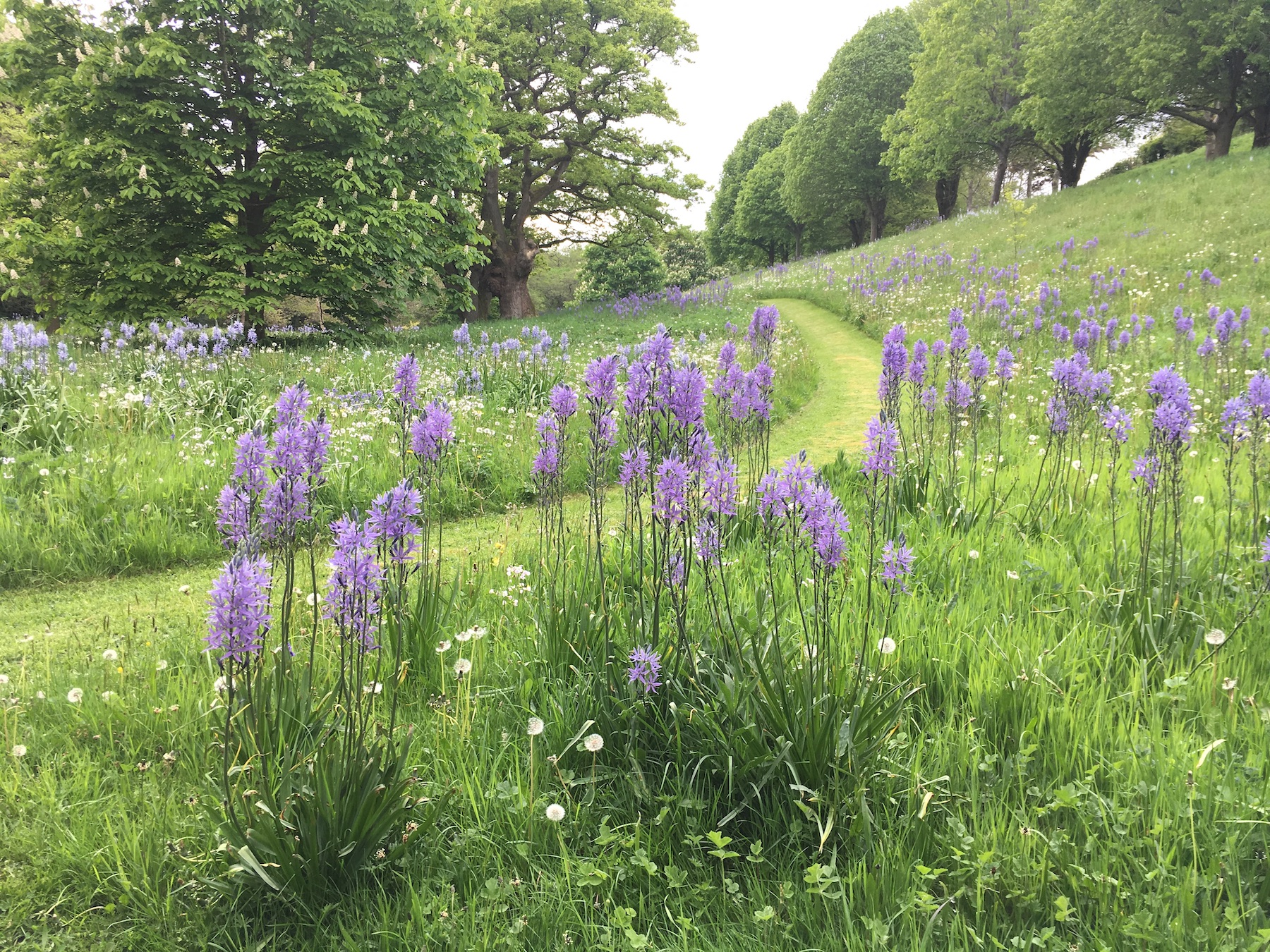 s, also known as wild hyacinths, produce tall spires of blue, white or occasionally pink star-like flowers in May and early June. Grown from bulbs that are planted in autumn, they are not only worth hosting in their own right but also prolong the ‘spring bulb’ displays.
Hailing from damp meadows and woodland in the Pacific Northwest of America, camassia roots were once a food staple for native Indian tribes and apparently have a sweet taste described as similar to a baked pear, prune or sweet chestnut. Camassias will grow in heavy, moist soils, and being completely hardy they come back year after year. Bees love them but very few pests do – another reason to include them in the garden. They also make great cut flowers.
Camassias will be happy in beds and borders providing fabulous focal points, can also be grown in containers – so you can move the ‘focal point’ to get the maximum effect and I think they’re at their most effective when naturalised in grass. You’ll need to let the leaves die down before mowing, like daffodils, so choose a spot where you are happy to let them to do this.
And when writing about blue flowering bulbs, of course I have to mention bluebells – another favourite. If you haven’t managed to visit a bluebell wood yet you still have time. I always view these ‘visits and vistas’ as top up’s, as they just fill the happy tank. And as we are in the middle of this year’s Mental Health Awareness Week, it’s a very relevant time to ‘top up’ with nature.
You can find out where the best bluebell sites are in Wales (and England, Scotland and Northern Ireland) at www.woodlandtrust.org.uk
Read ‘em and Weep
I have had quite a lot of feedback on my recent ‘weed words’ – not so much ‘weed ‘em and reap’ but more ‘read ‘em and weep’! Not only are the RHS rebranding weeds as resilient plants, Chelsea Flower Show is now referring to weeds as ‘hero plants’. Just to be clear, I am a huge fan of (most) weeds – my garden is testimony to that – and wonderfully, most ‘weeds’ are in fact medicine of sorts. It’s definitely not weeds that I have an issue with, I just don’t think anything in nature really needs a ‘rebrand’.
Horticulturist, Alys Flower wrote an interesting piece recently, ‘A Guide to Laidback Gardening’ and whilst I agreed with most of it, I think the important thing to remember is that your garden is your business. Simply garden as you choose. And for most of us that will be a sort of ‘mid-way path’ between nurture and nature.
Hoe Down
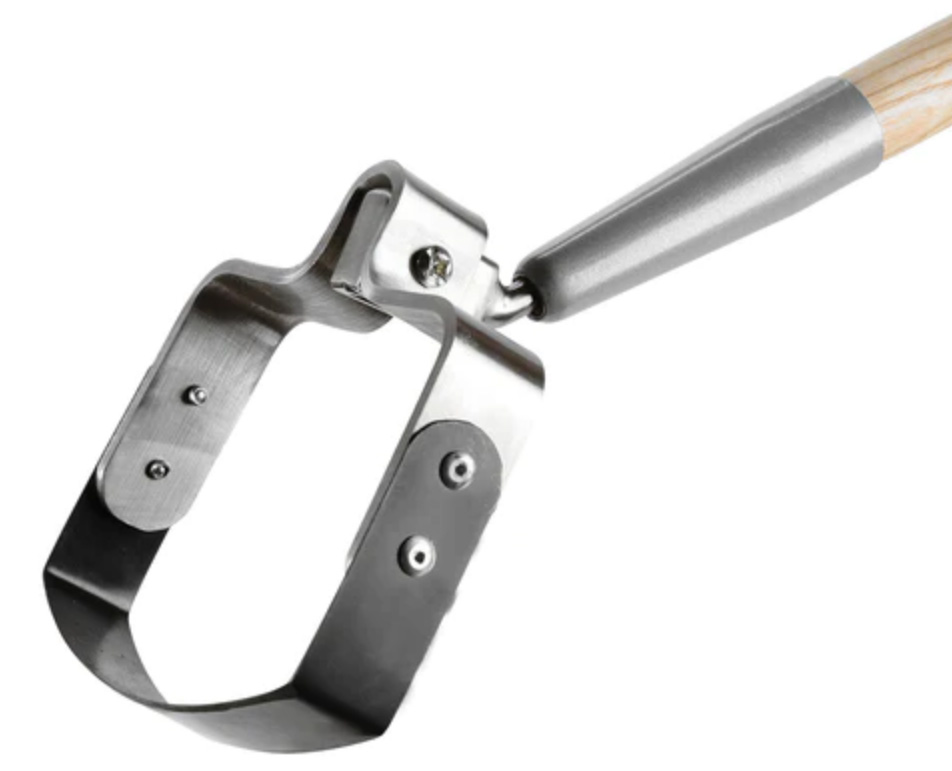 Talking of paths, whilst I am already pretty laid back about my garden at home, I do like to keep the paths through the veggie bed clear and have found the perfect tool to do it. The ‘Super-Slice’ is the grown up version of the Weed Slice (will that need to be rebranded I wonder) and the perfect width. As the name suggests, it slices through unwanted weeds (and heroic resilient plants) easily and has even won an award for its ability.
And in this month’s newsletter, no-dig expert, Charles Dowding recommends an oscillating hoe – I have never actually used one but might have to try. It is more commonly known as a Stirrup Hoe and Burgon and Ball list it as an Express Hoe. There are three basic types of hoe – the Dutch or ‘push’ hoe which as the name suggests, is pushed through soil surface, the ‘draw’ hoe, which is drawn or pulled towards you and the oscillating hoe which is designed to cut on both the forward and the back strokes as the blade is attached to the end of the handle on a pivot. Whilst very familiar with the first two, I have never tried the latter – apparently there is something quite meditative and enjoyable about using this style of hoe once you find your rhythm, so it sounds like we will get on well.
More details about the Super-Slice, Weed Slicer and all types of hoe (and other lovely traditional tools) at www.burgonandball.com
Love your ‘dog rose!’ xx