
Taken from Lynne’s weekly column ‘Green Scene’ for the Western Mail
26th January 2019
 Bird Boots
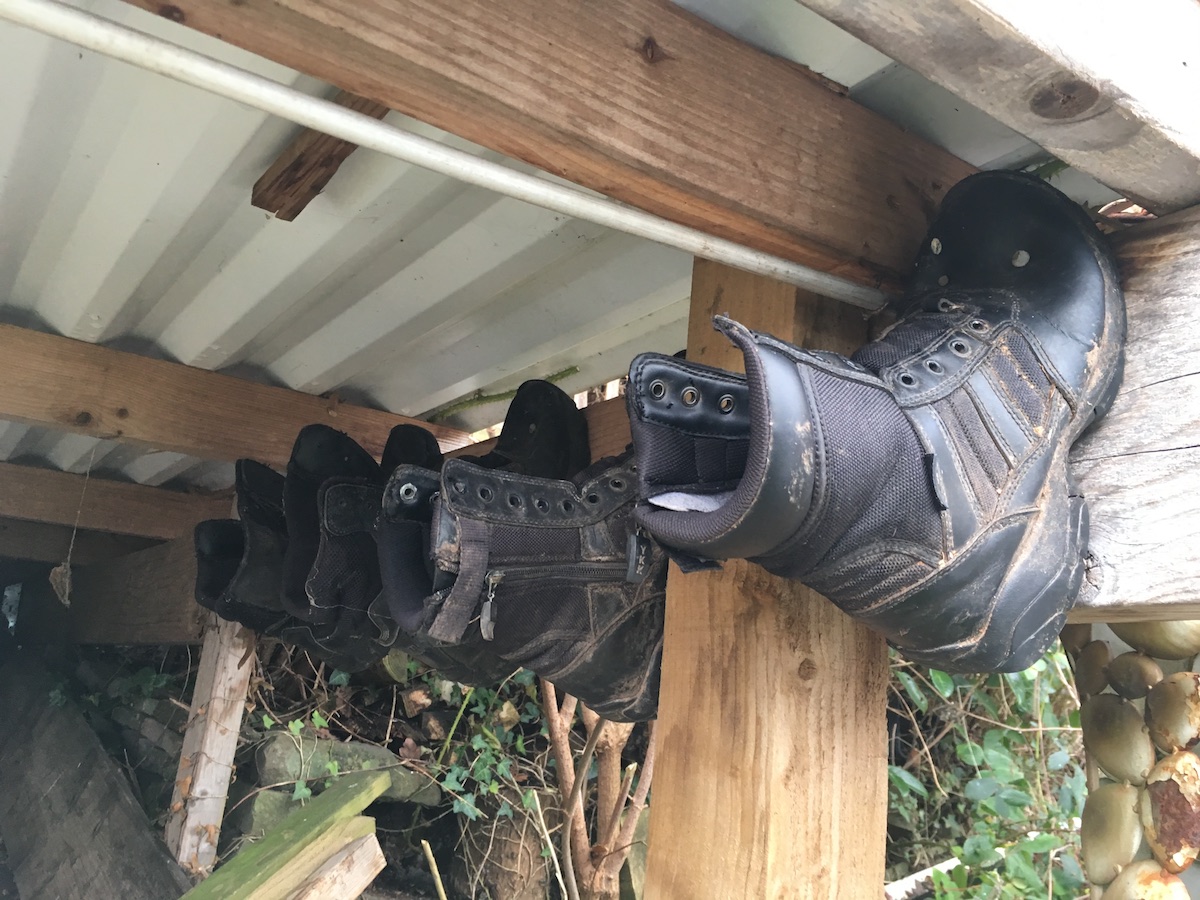
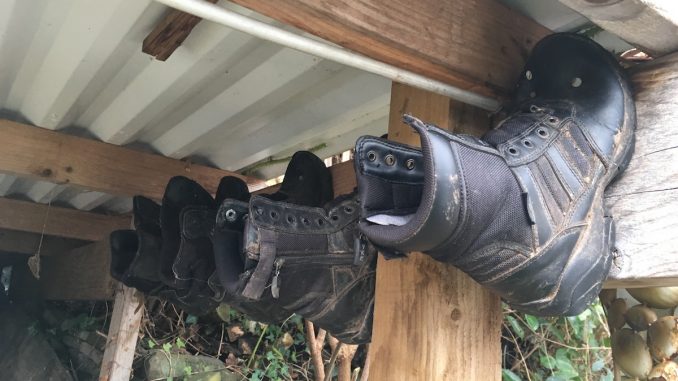
Despite being the first (and only) person to run across Wales barefoot, my work boots always become such ‘good friends’, that I just can’t part with them. Thankfully I have found a ‘boot-iful’ way to recycle them. (See photo).
I have simply nailed them to the joists in my barn for the small birds to nest in. I lodged one boot in my apple tree last year as a ‘test’ and had a little blue tit nest in it almost straight away. So I have put another pair in the apple tree (you need to secure them in the ‘v’ of a branch close to the trunk as a bird won’t use anything that is unstable), and the others in a quiet spot in the barn. I always take the laces out and fold the tongues back into the boots to make the neck of the boot as enticing and ‘nest-like’ as possible.
And every time I give Yogi, my terrier-ist a good brush, I put her fur next to the boots in the hope that the birds will not only be impressed by the boots, but also the available ‘soft furnishings’.
I’ll let you now if I get any lodgers in my ‘bird boxes’, or bird boots!
Know Your Dog
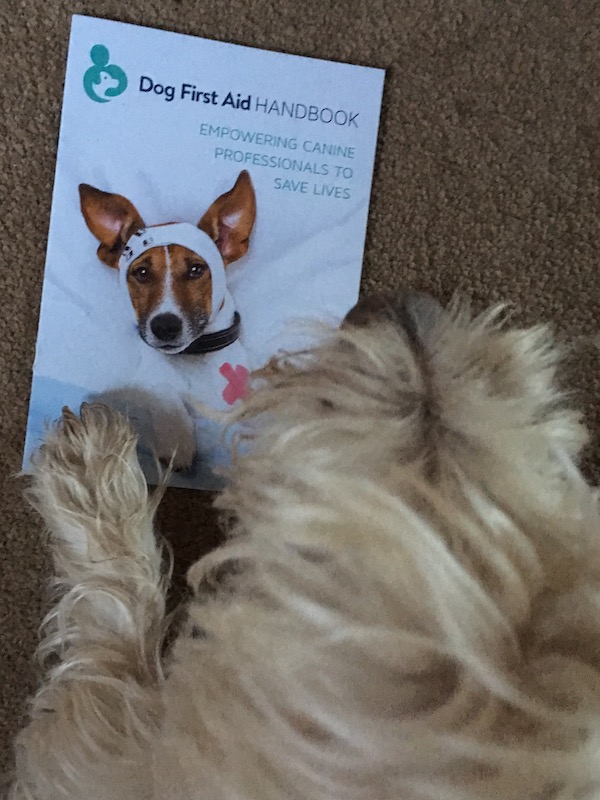 Last weekend I did a Dog’s First Aid Course, organised by Contented Pets in Abergavenny. Oh my word – I didn’t realise how lucky I have been to have had dogs all my life and not encountered any of the shocking accidents that can happen to our four-legged friends. I can’t recommend the course highly enough to all dog owners, although it is also CPD accredited for ‘doggie businesses’ too. I was embarrassed at how little I knew about one of the most important ‘players’ in my life; things like how to take her pulse, let alone what to do if anything (God forbid) was to go wrong.
The list of things I want to share with you would fill the Weekend Magazine, so I have had to pick what I think is the most important.
Firstly, please become familiar with all the toxic possibilities, and one’s that are too readily available to inquisitive or food-orientated dogs. We all know about weed killers and obvious poisons but there are so many other things that are potentially lethal around the house and garden. From Xylitol (a common sugar substitute), to Ibuprofen (resulting in liver failure about three weeks after the dog has eaten the tablets, so you may not even link the two), to blue cheese, grapes, Macadamia nuts, peanut butter (that contains Xylitol), mouldy bread, and anti-freeze – which is also in the salt they put on the roads and pavements and which the dogs will then lick off their paws.
It is a potential minefield out there for our pooches and the importance of awareness, common sense and prevention can’t be emphasised enough. Get into the habit of washing off your dog’s paws after a walk, and checking for cuts or sores, know what their resting heart rate is (the bigger the dog, the lower the heart rate, but there are exceptions. If your dog has a lower (or higher) than average resting heart rate and was taken to the vet in an emergency, then the vet would assume it was abnormal, and act accordingly, but maybe not appropriately). Basically, get to know your dog; any lumps and bumps, check for scratches and puncture wounds, and always brush off grass seeds as they can actually pierce the skin easily and do untold damage, as well as getting into eyes and ears and doing the same.
And if you find a tick on your dog, do not be tempted to use anything to remove it other than a proper tick-removing tool. If you squeeze a tick, or stress it by smothering it with Vaseline, or putting a blown-out match head on it, then it will vomit the contents of its stomach into the dog. If the tick is carrying anything unpleasant, that will be transferred to your dog. Obviously the same applies to humans!
Poisonous Plants
 Obviously I am aware that some garden plants are poisonous to dogs if ingested, Laburnum, bulbs and onions being good examples, but I was shocked to read the entire list as described by The Dog’s Trust. A few mistletoe berries can prove fatal to a pup, and the twigs of wild cherry can also kill a dog. I know apricot kernels contain cyanide but I had never really considered the possibility of a dog eating them. More details at www.dogstrust.org.uk/news-events/blog/be-careful-of-plants-that-could-be-poisonous-to-your-dog
It’s a tricky one really, and I think the ideal situation is to ensure your dog doesn’t pick up and eat what he’s not supposed to, but as they said on the course, ‘You try telling that to a Labrador’, for example. Please just raise your awareness and if at all possible, get yourself on a Dog First Aid Course.
And to end on a lighter note (and so not to panic everyone) a friend has a great picture on her wall of a black Lab sitting in front of a fridge with the words, “All food must go to the Lab for testing.”
Thank you, old tea pots, tin cans and many other”waste” items can be used like the boots xx xx