
Taken from Lynne’s weekly column ‘Green Scene’ for the Western Mail
19th January 2019
 At the Ivy
This week I have mostly been ‘at the Ivy’. No, not the posh restaurant, but the green shiny leaved, clingy stuff in the garden.
I had to strip it off the walls of my cottage in order to have new windows fitted, only to find that it had romped away up under the facia boards and into the attic, which is well out of it’s permitted boundaries.
I always struggle to maintain the ‘what survives and what dies’ status quo in the garden, and try not to be too harsh chopping things back. What most people call weeds, provide great food or habitat for insects and birds, and I try to maintain that for them, but as I say in my talks, there is a difference between a wildlife garden and a garden that has gone wild. Occasionally, I have to be less reasonable and more ruthless.
It reminds me of one of my favourite stories: a gardener purchased a beautiful little cottage with a very neglected and overgrown garden. He worked tirelessly clearing the garden, pruning, planting new trees and shrubs, laying a lawn and planting lots of beautiful flowers for the bees. A few months later, the garden looked stunning, with all the flowers in full bloom and the lawn recently mown, when the local vicar walked past and stopped to admire it.
“What a transformation! It’s beautiful. Look what God has helped you to accomplish!” he exclaimed.
“Thank you,” replied the gardener, “But don’t forget what it was like when God had it on his own!”
Last autumn, a client had also asked me to remove the ivy covering the pine end of her cottage, as it was strangling the satellite dish, and another client wanted his barn wall and roof cleared too.
I had postponed these jobs as the ivy provided food for the bees and berries for the birds, but now is a good time – before the birds start nesting again.
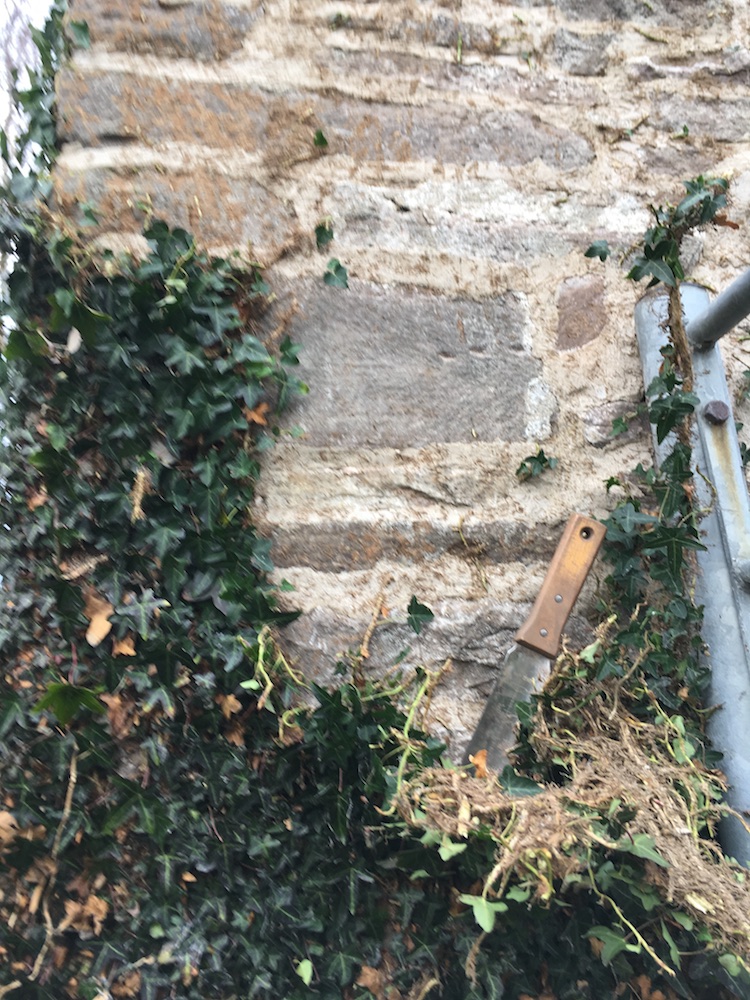
For something with no fingers, ivy can grip like Holy Hell, especially to stone. I tried a number of different ways to remove it and eventually found that my trusted Japanese Hori Hori knife was the best way, as it gets under the stems and sort of peels it back (see pic). The Hori Hori knife is also known as a ‘soil knife’ and is the perfect tool for weeding, planting and even sharpening up the edges of flowerbeds. I love mine. www.niwaki.com/store/hori-hori/
An old pair of secateurs came a close second for removing the ivy, but don’t use a good pair as you’ll ruin them.
Of course, you can cut a foot wide section out of the ivy and let the top die off before clearing it, but it takes ages to die back, looks messy and never comes off the building, or wall, clean.
And this weekend, I am planning to clear the ivy from an old cherry tree and apple tree in the garden, both of which it is slowly strangling. Ivy will kill a mature tree if left to its own devices and I sometimes wonder if ivy and brambles are about to take over the world. Oh, and it’s a good time of year to clear brambles too, before they start their bionic growth.
Pocket Guide to Pollen
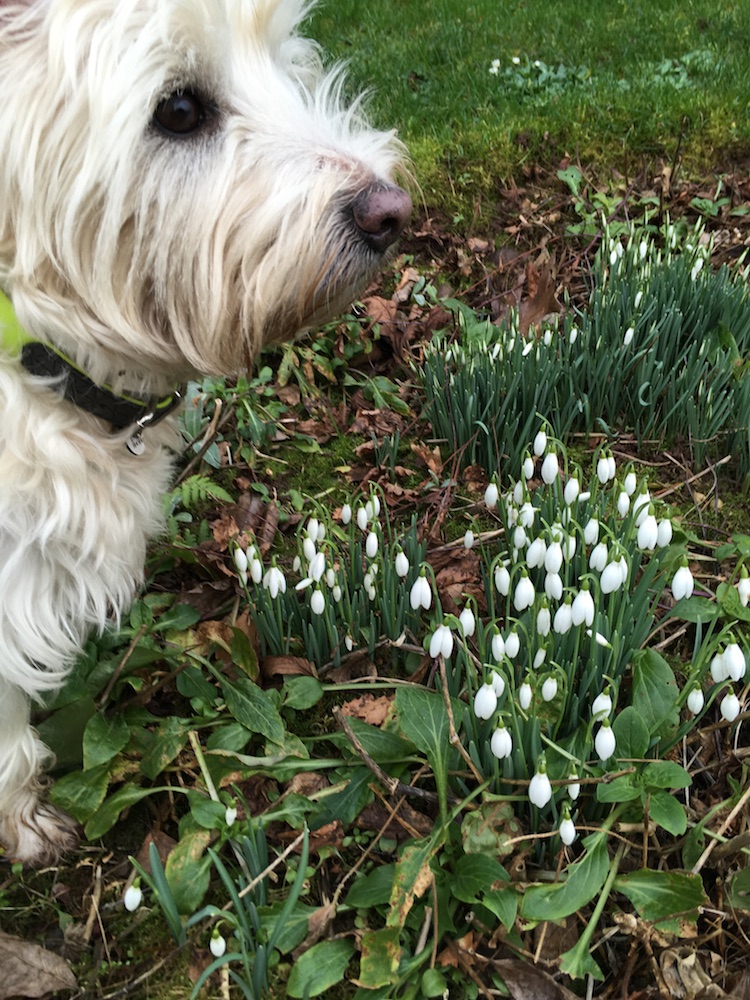 The winter months are always spent doing a lot of ‘clearing up’ in gardens (being sympathetic and mindful of the wildlife, of course) and whilst clearing a blanket of leaves in the corner of a client’s new garden, I found a fabulous carpet of snowdrops hidden underneath.
A real indicator that we are the right side of Christmas, I love snowdrops and get a lot of pleasure from watching my own honeybees harvest the bright orange pollen from the bowed heads. They are not flying in great numbers yet as it isn’t warm enough, but there have been a few visiting the white carpets in the garden.
Honeybees only leave the hive in the winter for a quick wee, which always makes me smile as we all know how tiresome it is to have to get up in the middle of the night, let alone the middle of the winter!
Bumblebees will also visit the larger; more open snowdrop flowerheads and reverse out with bright orange ‘dots’ on their legs, their pollen sacs being full of their haul.
 There is so much talk about mindfulness at the moment, which is basically about being in the moment and being aware of what is going on around you. I highly recommend sitting next to a patch of snowdrops in the sunshine, and watching the bees work their magic. Who would have thought that a pure white flower would provide such jazzy orange pollen?
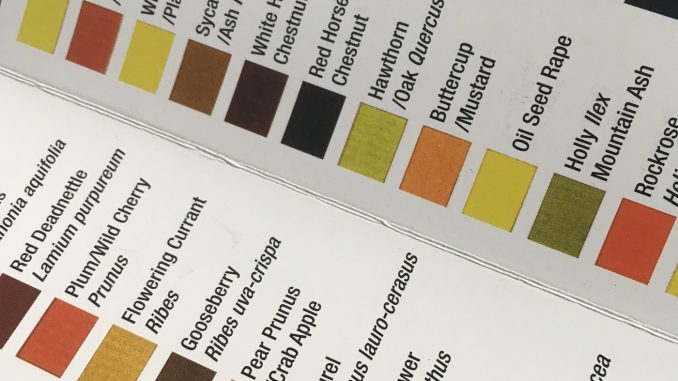
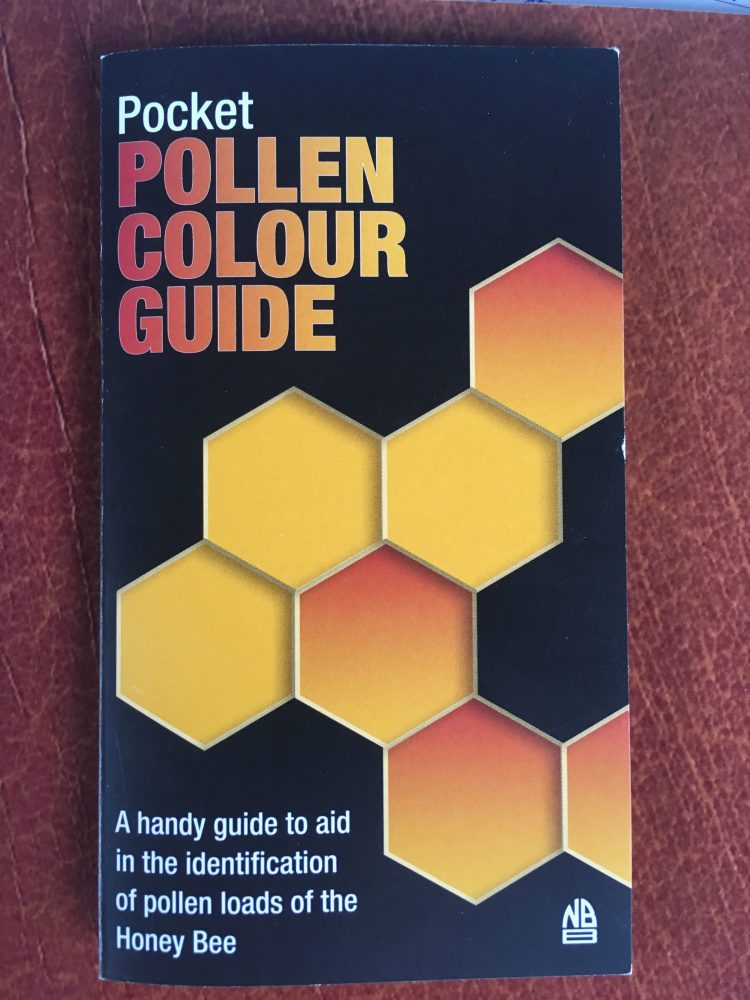
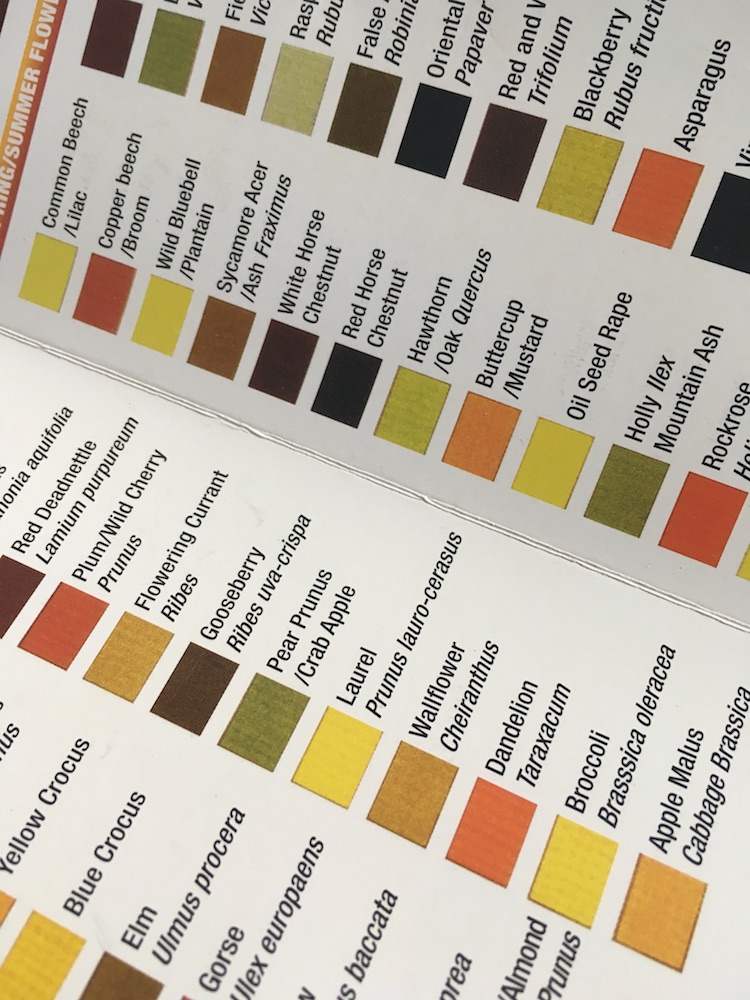 That fascination led me to discover that there is actually a Pollen Colour Guide, which will help identify which flowers the bees have been visiting, determined by the colour of the pollen they are carrying.
The plants are sectioned into spring, summer and autumn flowering and there is a handy pocket-sized version of the guide too. Visit www.beekeeping.co.uk/products/pocket-pollen-colour-guide for more details – and they are only £1 each. I challenge you to find a better way of spending £1 this week!
Leave a Reply