
Taken from Lynne’s weekly column ‘Green Scene’ for the Western Mail
4th November 2023

Hello November
Working in the garden last Sunday I wasn’t sure if the clocks had gone forward or back, it was so mild – just like a spring day. And on that note, I have already noticed some enthusiastic daffodil bulbs starting to push though the ground, so be careful not to step on them and squish them when working in beds and borders.
Late Leaf Fall
 Last year the National Trust cheerfully announced that the autumn leaf colour ‘could last well into November’ – this year as we ‘skip’ into November the leaf colour has hardly got going.
Official research suggests that over the last thirty years, leaves have started to change colour and fall later in the year – by as much as a month – something scientists attribute directly to rising levels of atmospheric carbon dioxide.
In an experiment held at Southampton University, leaves turned yellow later in the year under higher carbon dioxide concentrations, rather than lower temperatures, leading researchers to attribute the change in leaf colour to the effect of carbon dioxide on plant physiology.
Whilst spring leaf growth is strongly related to temperature, it seems autumn leaf fall may not be, as even in our colder autumns the leaves are falling later. Deciduous trees are staying greener for longer than they were 30 years ago due to spring leaves arriving earlier and autumn leaves falling later.
Dropping temperatures and shorter days ‘tell’ the trees that the growing season is over. They respond by stopping chlorophyll production and absorbing any remaining nutrients to lay down ‘essential stores’ for winter.
As the chlorophyll ebbs away from the leaves it gives rise to the orange and yellow coloured chemicals – and the red anthocyancins in trees like maples – which are our autumn colours. Scientists think the red compounds are ‘like a leaf’s winter coat, helping stave off the cold and allowing trees to absorb any last nutrients from the leaves before a cold snap kills the leaves causing them to drop.’
This process – which happens before leaf-drop – is called leaf senescence and it is during this period that trees are able to absorb the necessary nutrients back from the leaves for their wellbeing – a bit like the sap returning to a daffodil bulb once flowering has ended. Apparently climate change is disrupting leaf senescence in some species more than others, with unknown consequences. My guess is it’s not going to be good.
Obviously the lack of these returning nutrients could compromise the tree’s health and with temperatures staying warmer longer, and with spring arriving earlier, trees are experiencing longer growing periods with shorter transition times between warm days and cold frosts. This means that autumn is getting shorter and trees may not have a chance to finish absorbing the sugars and carbohydrates that remain in their green leaves before the first winter frosts. If this happens for a number of years then the tree could basically ‘starve’ which would affect its health and ultimately, lifespan.
Leaf Laws
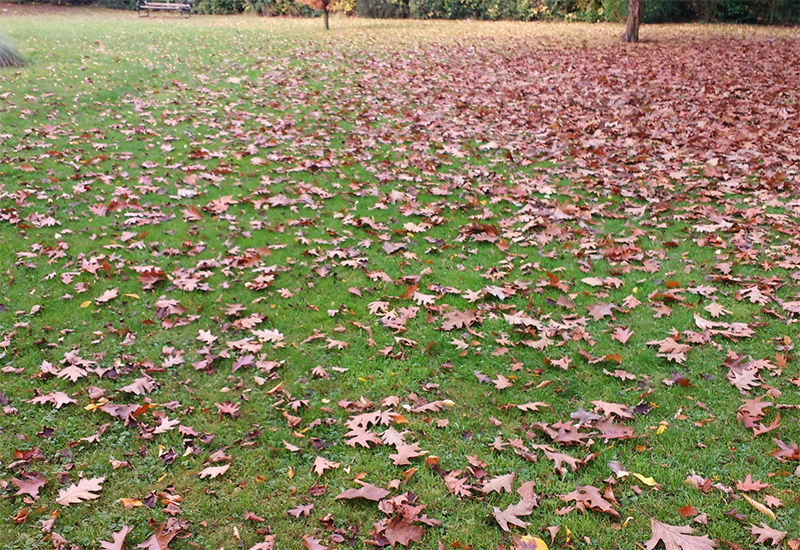 I think from a gardener’s point of view (rather than a scientist’s), the later that leaves fall the less likely they are to be collected and cleared up. That’s OK on beds and borders – where leafy blankets will be appreciated by some wildlife – but a wintery carpet of leaves left on a lawn will weaken and even kill grass.
But don’t be tempted to rake (or blow) fallen leaves into a pile around the base of a tree (as a lazy option) as that can cause disease. And I am always ‘banging on’ about keeping paths and steps leaf-free as they become so slippery when they rot. So at least try to keep these areas clear of autumn leaves when they do eventually ‘let go’.
A lot of people are anti-leaf blower and to quote Monty Don (on any controversial topic) – ‘It’s complicated.’ Whether you are a fan or not, there are laws around leaf-blowing. They include: it is unlawful to blow fallen leaves onto a road, pavement, grass verges or the highway.
And despite fallen leaves belonging to whoever owns the land that they fall onto, it is also unlawful to return fallen leaves back to someone else’s land without their permission (this includes highway land such as the road and the paths and verges running alongside it).
There have actually been prosecutions relating to these issues so don’t be-leaf you can ‘get away with it’.
Numbat News
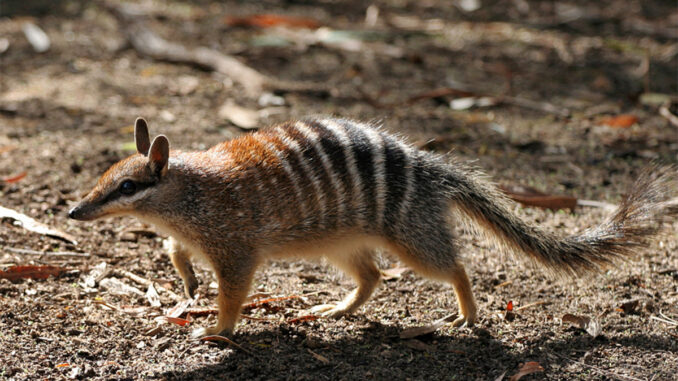
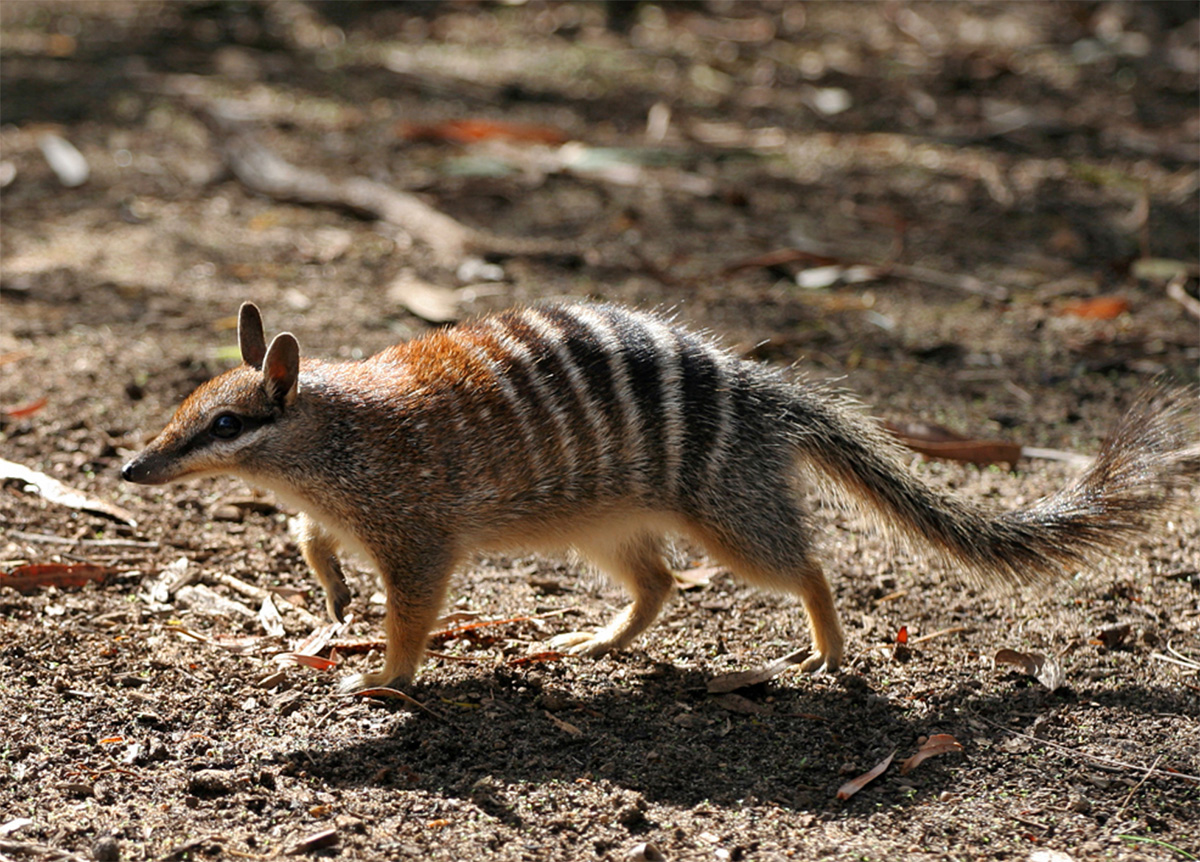 My love of ‘random reads’ has revealed that the 6th of November is World Numbat Day. Yes, you did read that right, and no, spellchecker hasn’t missed a word, although ‘numbat’ upset it hugely, resulting in lots of red underlining.
An icon of Western Australia, this little marsupial is often likened to a squirrel or anteater. Sadly their numbers are dwindling and they are in danger of disappearing forever – with one of the subspecies already becoming extinct in 1960s and the remaining subspecies being rarer than the Black Rhino and Giant Panda. They have already disappeared from the ‘other’ South Wales, the ‘New’ one, and several have recently been reintroduced to a national park in New South Wales in an attempt to save the population.
They are solitary and territorial creatures that nest in logs, tree hollows, or dig burrows to shelter during the night, and come out to feed in the daytime for termites. Like anteaters, they have powerful claws, a long snout, and a tongue that’s longer than their head. The tongue is sticky, and it’s used for retrieving termites from inside logs and leaf litter. Despite being ‘pocket-sized, and weighing only a kilogram, a numbat can get through 20,000 termites in a day.
Surprisingly, its main predator is the cat. In the UK, pet cats kill around 270 million native animals a year, with around a quarter of those kills comprising local bird species. In America that number runs into billions. House cats ultimately breed feral cat populations, and feral cats can easily kill 12 animals in a night. Foxes and birds of prey also contribute to the dwindling numbers and in some areas numbats are now protected within large feral predator-free areas. Read more at australianwildlife.org
And as a ‘polite footnote’, please be considerate of – and respectful to – animals over this bonfire weekend – not everyone enjoys fireworks. Thank you.
It’s funny that, only a few minutes before reading your article, I was looking out at the big tree next to our fire station and realised that the leaves are only now turning to gold. Last year the tree was bare by this time.
Our two dogs and two cats have mixed reactions to fireworks but overall that are not fans of the bangs and flashes. On the other hand, our Bengal Eagle Owl, who lives in an aviary in our garden, can always be found on the ground when our local display is going off. The reason is that he gets a better view of the bright lights from the ground than on his perch! He seems to enjoy it all.
You and Yogi enjoy your Sunday.