
Taken from Lynne’s weekly column ‘Ask Lynne’ for the Western Mail. 16th April 2016

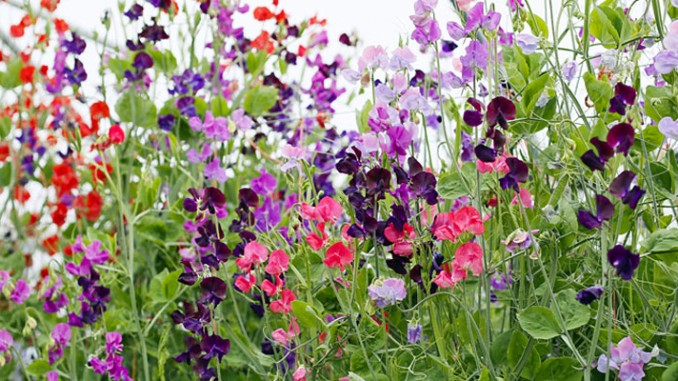
I sowed sweet peas into those little cardboard pots and they have grown really big – do I leave them in the cardboard pots when I re-pot them and how big a pot do I pot them up into? When can they go into the garden?
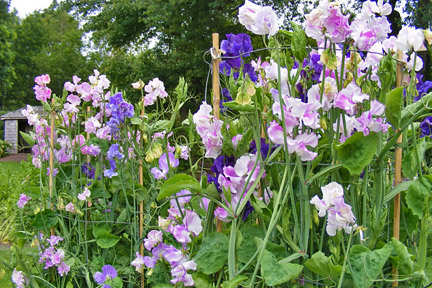 In theory you are supposed to be able to leave the plants in cardboard (or coir fibre or peat) pots and roots should grow through – that way there is little disturbance to the root system. However I’m not a big fan of that method as I think the pot can become a barrier to the roots, restricting their path and resulting in slow growth. You could either completely remove the plants from their pots before planting out or make sure the bottom of the cardboard pot is removed to allow for freer root growth. Tearing away the top of the pot will also help, or planting deeply enough that the top is completely below soil level. Wetting the pot will make tearing easier. But if you do that, you might as well remove the whole pot.
Sweet peas are normally sown in deep pots as they are deep rooting, but I always sow my sweet peas in the cardboard middle of toilet rolls as they are deep and there is no bottom, and then plant them straight out into the garden once ready (after soaking and removing the cardboard tube).
To stop your sweet peas falling over or becoming tangled its good practise to pinch them out just above a set of leaves to promote bushier growth. This will also delay growth if the weather is unfavourable for planting. Sweet peas are hardy annuals so can be planted out once the weather has reliably started to warm up. Mine went out last week.
If they’ve been raised indoors in a warm environment then its best to harden them off for a week by putting them outside during the day and bringing them in at night.
I have been nagging my husband to get plants ready for the vegetable garden but as yet the greenhouse is still bare. He says it is cheaper and easier to buy the young plants from the garden centres but I say home sown is best – can you back me up?
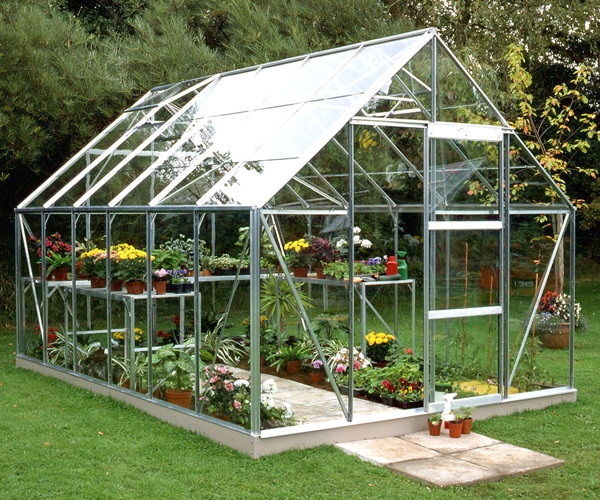 Er, not really I’m afraid. I think home grown is best from a satisfaction point of view and would be cheaper if you have all the materials and facilities to hand but to be honest, by the time you factor in your time and also the very real risk of losing tender seedlings in their very early stages (a friend lost a load of hers last year as she went away and her partner forgot to water them), the cost differences are probably negligible. I always remember another friend telling me about his first year’s foray into growing his own. By the time he had bought a greenhouse, built the raised beds, prepared and tended his crops when it came to harvesting them he worked out that each tomato, for example, had cost about £35.00 It’s a rather extreme example but a real consideration nonetheless!
I wouldn’t stress about it too much, try getting your young plants from the garden centre this year and see if you can taste a difference! You may be pleasantly surprised.
Is it true that I can use coffee grounds (or grinds, I’m never sure which) to deter slugs?
 Well, it depends – they do deter slugs but rather extraordinarily, experts have warned that gardeners who use coffee grounds as one of the more popular organic alternatives to slug pellets are doing so in contravention of EU regulations. The Royal Horticultural Society even published the warning in a copy of it’s magazine, The Garden, a few years ago, to the surprise of many readers.
The caffeine in coffee has indeed been found to keep slugs and snails at bay and spent coffee can also be used as a mulch or to improve compost. The RHS says the latter is within the law, but a gardener who uses coffee to kill or deter a slug could fall foul of the regulations and, in theory, face heavy fines.
Whilst there is little possibility of police arresting someone sprinkling coffee around their brassicas, apparently the rules are there to stop people using “home-made remedies in a dangerous manner”.
EU rules state that any active ingredient or chemical must be explicitly approved for use and placed on an EU list of pesticides. As neither coffee nor caffeine has been through a UK or EU test, its impact on the environment, on gardeners themselves, and other garden creatures is not known, and its use as a slug deterrent is thus unauthorised.
So I’ll let you decide if you can or can’t!
It may be a contravention of the pesticide laws, but not if the coffee is being used as a deterrent, rather than a killer. But what about rhubarb leaf jus? Just crazy rules that need ignoring.