
Taken from Lynne’s weekly column ‘Green Scene’ for the Western Mail
14th June 2025

Speed Well

My client’s know that I am a stickler for leaving some ‘weeds’ in beds and borders – not through laziness or a lack of knowledge but due to the fact that they work hard and add something. Speedwell – so called because it really does ‘speed well’ through the beds and borders – is providing great ground cover and pretty little blue flowers in profusion right now. The funny thing is that whilst some gardeners will pull up and remove speedwell from their gardens, the same gardeners then go and buy lobelia – for it’s little blue flowers – to add to beds and borders.
In some cultures, speedwell was believed to possess magical properties and was used in rituals and charms to bring good luck, protect against evil spirits, and even heal various ailments. Some folklore also associates speedwell with eye-related catastrophes, warning that if you picked the flower then a bird would peck your eyes out, or your mother’s eyes would drop out. This was largely connected to speedwell’s other name, ‘bird’s-eye’, referring to the little white centre in the flower.
Sleep-Bee Head
 My sniffari’s with Yogi (short, slow walks where I get to notice wonderful things in hedgerows) resulted in ‘sniffari shots’ of bees sleeping in flowers last week.
We were out and about early when the mornings were still a bit chilly, and it was just heart-warming to see the bumble bees still fast asleep in the flower-heads of various plants.
Honey bees were, of course, still sensibly tucked up in hives and natural bee nests.
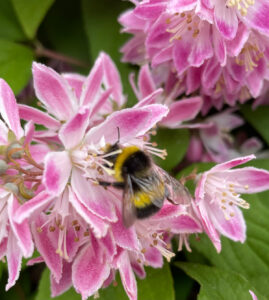
There is something so cute about the thought of the bigger, fluffier bumble bees just falling asleep where they are when they are full.
Not unlike some people I know.
Pollen Perspective
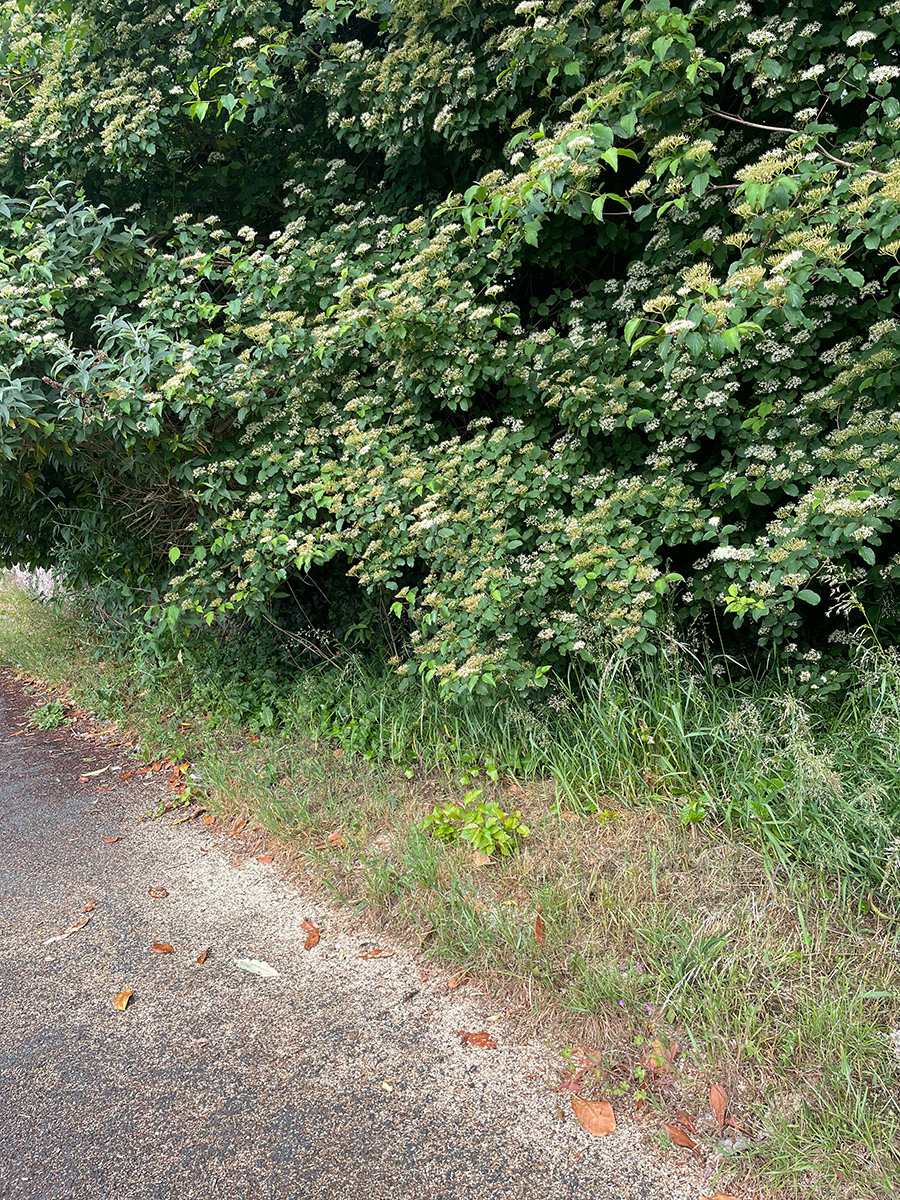 Hay fever sufferers will know that it has been a particularly bad year for pollen this year. If, as a non-sufferer, you wonder what all the fuss is about – as you don’t really see the pollen particles in the air – then this photo of the ‘pollen drop’ under a large viburnum should demonstrate just how much pollen can be produced by a single shrub.
Warmer temperatures encourage more pollen production, often resulting in ‘pollen bombs’ and apparently wind-pollinated trees, like birch, can produce 5 million pollen grains in a single season.
To put it all in perspective, some people may react adversely to as little as 10 grains per cubic metre of air, while others require a much higher count – such as 50 or more per cubic metre of air – to cause irritation. When you realise that during peak pollen seasons, like June and July, the count can be as high as 200 or even 800 grains per cubic metre, you can’t help but seriously sympathise with all those who suffer.
Green, Green Fingers of Home
I wasn’t at all surprised to learn that recent research revealed that ‘the Welsh’ lead the way when it comes to time spent gardening. I was more surprised to learn that the research was conducted by a savings platform called Raisin to uncover the similarities between the nation’s savings and gardening habits. Apparently gardeners mirror effective savers in many ways, as both require patience and a long term strategy to see the full benefits. It reminds me of a friend saying, ‘It’s alright for you gardener’s as you spend half your time in ‘beds’ and still ‘rake’ it in’!
The nationwide survey of 2,000 people found Wales is the UK’s most dedicated region when it comes to gardening, with residents spending more than one day a month (27 hours) tending to their outdoor spaces. This equated to a third more time spent gardening than the UK average of just 17 hours. Cardiff was identified as the most green fingered city with residents spending a full day (24 hours) gardening each month. I’m not convinced it’s not more than that to be honest.
If you want to more about the parallels between nurturing a garden and building healthy saving habits – and tips to help you succeed in both – visit www.raisin.co.uk/grow-your-savings
Solstice Blessings
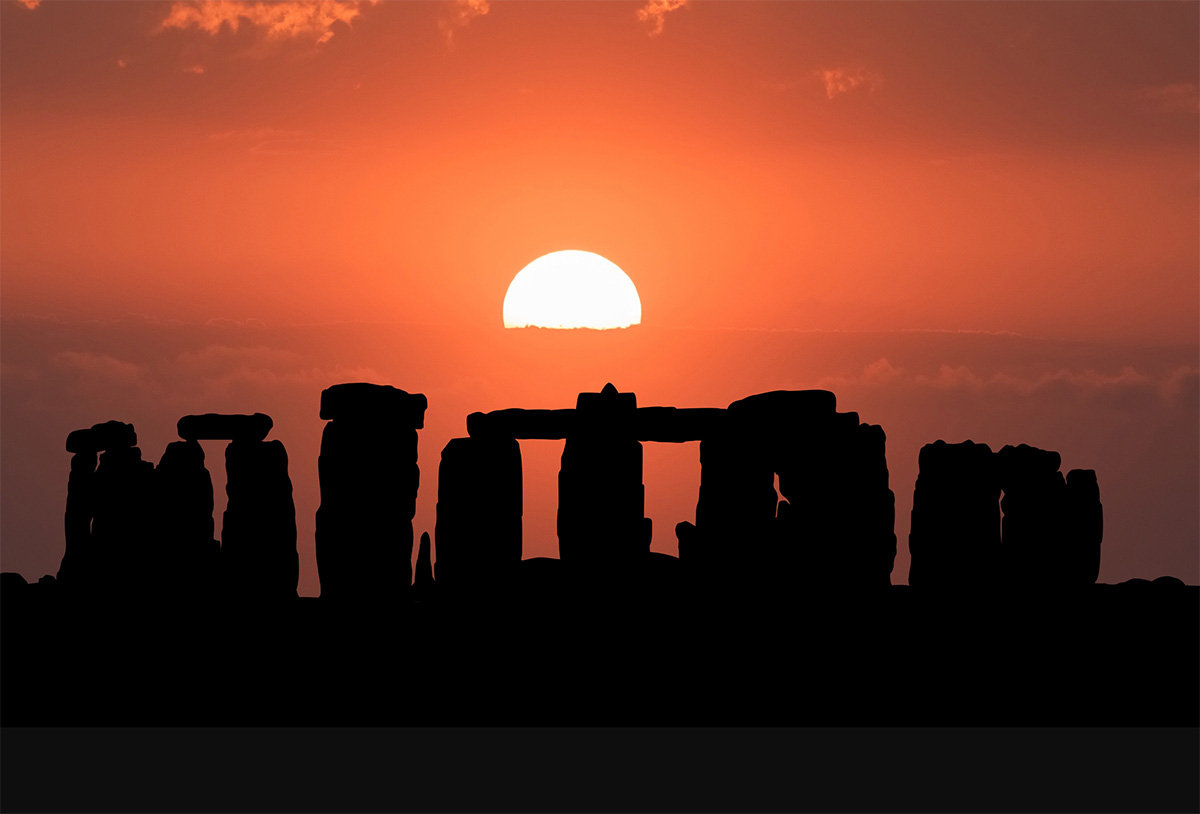 Next Saturday (21st) is the Summer Solstice. Whilst it’s often referred to as ‘the longest day of the year’, that’s not technically correct as it’s actually the day of the year with the most hours of daylight. And neither is it correct that all days have 24 hours in them. Most days are either longer or shorter than 24 hours, with only 4 days a year have precisely 24 hours to them.
And sounding a little pedantic, reminded me of this:
Him: The one thing I can’t stand is nit-picking pedantry.
Her: That’s two things.
Anyway, back to the summer solstice, which marks the end of spring and the start of summer. Despite being widely thought to last a whole day, the summer solstice only represents an annual moment when the sun is at the northernmost point from the earth’s equator.
Whilst the summer solstice date rotates between the 20th and 21st of June every year, this year in the UK, the summer solstice will occur on Saturday, 21st of June 2025, at 3:41 a.m. Precisely.
The dates of the equinoxes and solstices vary because a year in our calendar does not exactly match the time it takes the Earth to complete an orbit around the Sun – the length of the tropical year.
Despite being the longest day of the year, the summer solstice doesn’t have the earliest sunrise of the year either. Generally, the earliest sunrises occur before the summer solstice.
There are numerous ways to celebrate the summer solstice – apart from visiting Stonehenge – with the most popular being greeting the sun at dawn or thanking it at dusk. Or both, of course. I’m sure the summit of Pen y Fan will be busy.
If you are planning an early morning hike, next Saturday the sun will rise around 4.44 am. It’ll set at around 9.22 pm, giving us around 16 hours and 38 minutes of daylight. The winter solstice, on the other hand, occurring on 21st December this year (at 3.02 pm), is the shortest day of the year (you know what I mean, I’m not going through that again) when the sun will rise at approximately 8:03 am and set at approximately 4:56 pm, resulting in a day with about 7 hours and 53 minutes of daylight.
The moral of this section is to make the most of the lighter-for-longer summer days; winter will be here soon enough.
Another lovely piece from you once again. My front garden is inundated with brambles (long explanation). However, I am reluctant to attack them for now, because of the number of Bumblebees and Honeybees that are attracted to the open flowers. I keep looking, but I have yet to see a sleeping Bumblebee. I do however, have a very large Bumblebee, which frequently comes into the house when the doors are open, stays awhile and then goes on its way again. Even the animals are used to its appearance now! Stay safe.