
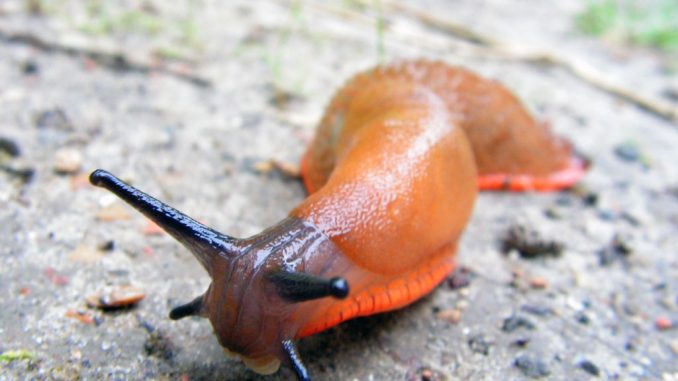
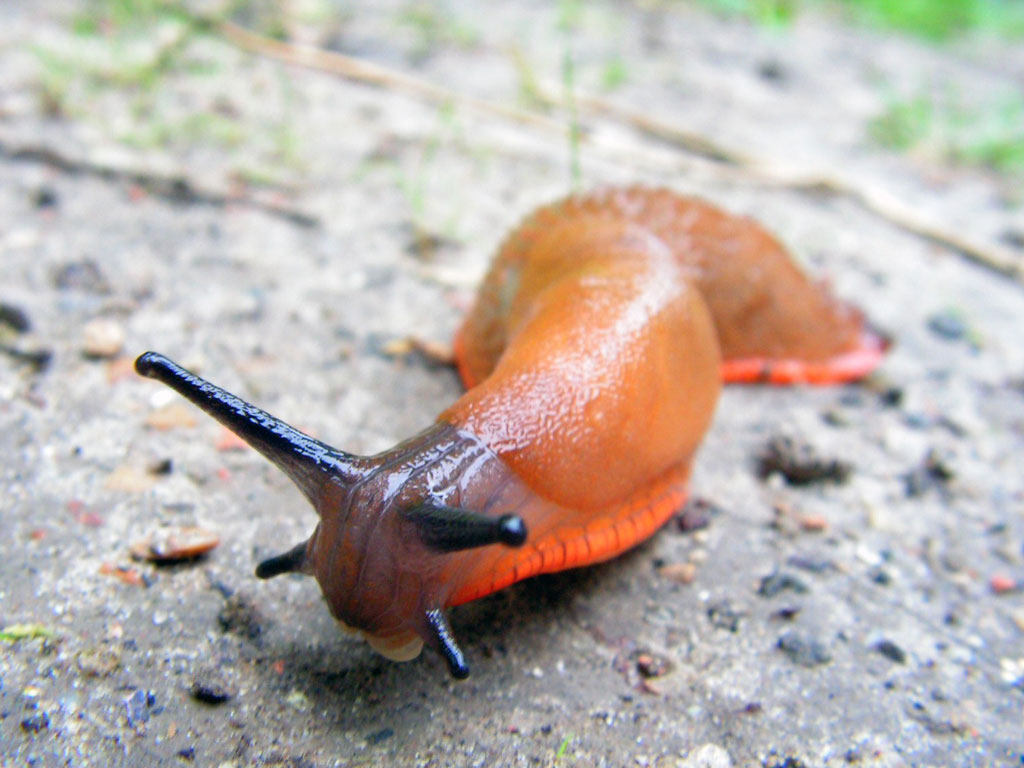
I had a lovely time handing out awards at the Blaenau Gwent in Bloom Award ceremony last week (and nice to see Huw Daniels too). Its always nice being in a room full of gardener’s, all sharing tips, knowledge, frustrations and queries. One of the most talked about topics was slugs.
Apparently this year has been a bumper year for slugs; they remain active when temperatures remain above 5C (41F) and last winter December 2015 was the warmest since records began in 1910, with temperatures around 7.9C (46F). This made it feel more like April or May which meant slugs didn’t go into hibernation but kept eating and breeding through the winter months.
This has earned them the name of ‘Sleepless Slugs’. And as they are also growing in size, the media has referred to them as super-sized sleepless slugs – sounds a bit like a ‘fly-on-the-wall, Channel 4 documentary to me!
The average British garden usually has as many as 20,000 slugs – and they can lay as many as 200 eggs per cubic metre (my brother wondered why nobody has tried to cross a slug with a chicken yet!)
A decline in many of the slugs’ predators, such as frogs and toads and hedgehogs, is also a factor and spurred on by the prediction that slug numbers could increase year on year by 10%, Harper Adams University are using tracking devices to monitor slugs behaviour and feeding patterns.
So how do you get a tracker inside a slug? With tiny tools and surgery, it turns out. Slugs are anaesthetised in a chamber of carbon dioxide before a small cut is made, and the tracker inserted. Each chip contains a unique tracking number that responds to radio signals emitted by the tracking device – which looks a bit like a metal detector.
Hundreds of tagged slugs are released into the fields, and researchers go and track them at night to build up a daily picture of how the slugs move and cluster.
They have already found that slugs congregate in patches in fields or gardens. These patches normally form in areas where the soil moisture is high, or even waterlogged. They are being called ‘slug utopias’ and it seems that if you have a lot of slug activity in your garden it could be because you are unlucky enough to be hosting a ‘slug utopia’ …
They have also found that slugs spend more time just below the soil surface than we realised – which makes sense as many of the questions I get asked about damaged foliage indicate slug activity but the person dismisses it, as they haven’t actually seen any.
Anyway, slugs aside, thank you once again to the organisers and enthusiastic participants of Blaenau Gwent in Bloom; see you next year!
Leave a Reply