
Taken from Lynne’s weekly column ‘Green Scene’ for the Western Mail
29th October 2022

Shrunken Apple Heads
I always enjoyed carving a pumpkin for Halloween – largely as my two pet pigs, Frank and Edna, would enjoy the results the week after. Over the years neighbours and friends stacking up old pumpkins at their field gate became as much of a tradition as Halloween itself. Sadly both pigs passed away in spring of last year, so there will be no pumpkins at the cottage or the field gate again this year.
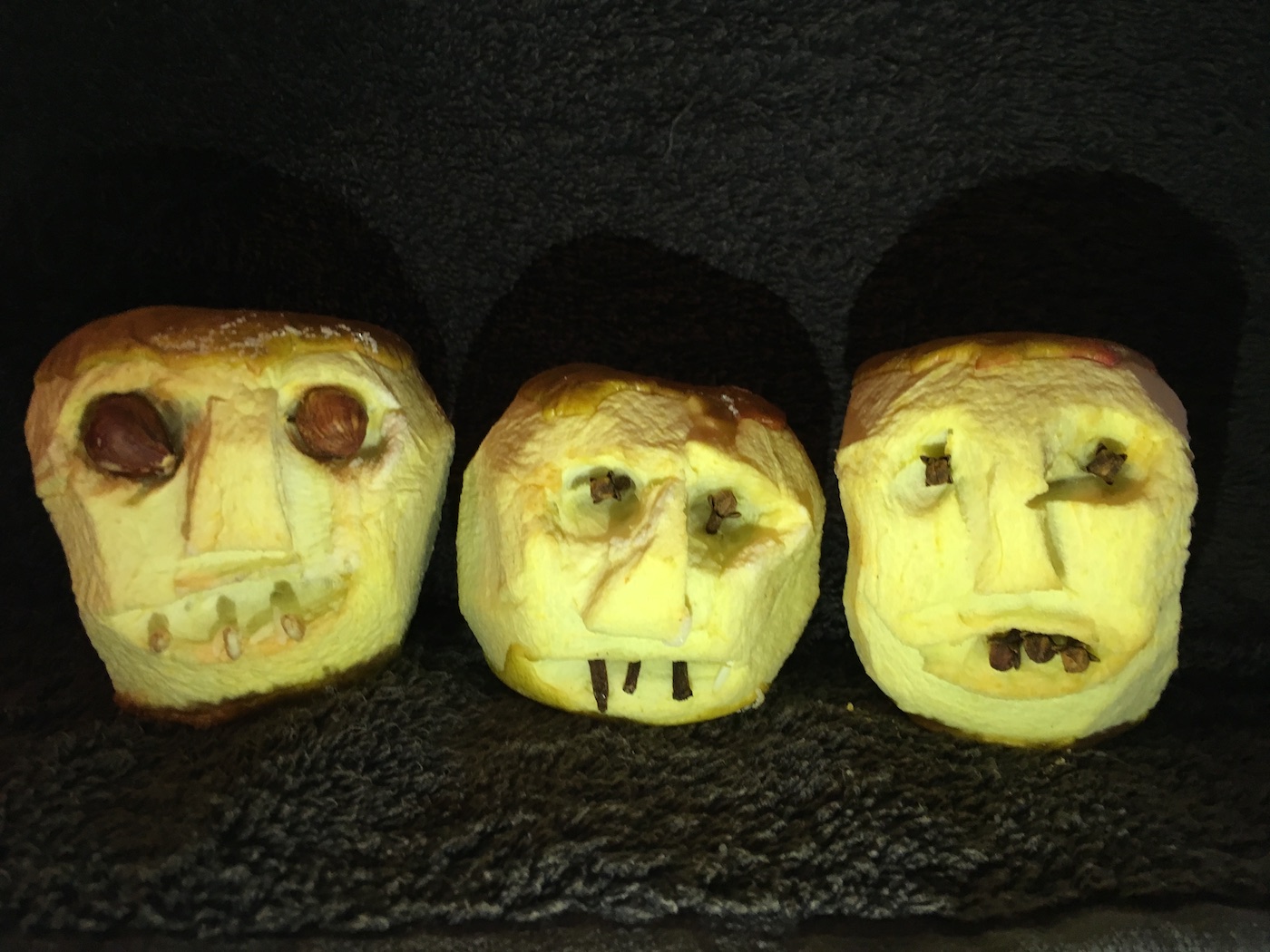
Mostly for the purpose of the column, last Halloween I looked for an alternative to carving pumpkins and I didn’t have to look very far to find the spooky Shrunken Apple Heads. The shrunken heads, made from peeled, carved, and dried apples, are just as much fun to create as carving a pumpkin but quicker and easier. Apparently Granny Smiths are the apple of choice but I picked up a couple of ‘Discovery’ windfalls out of my garden, which seem to have been ‘fit for purpose’.
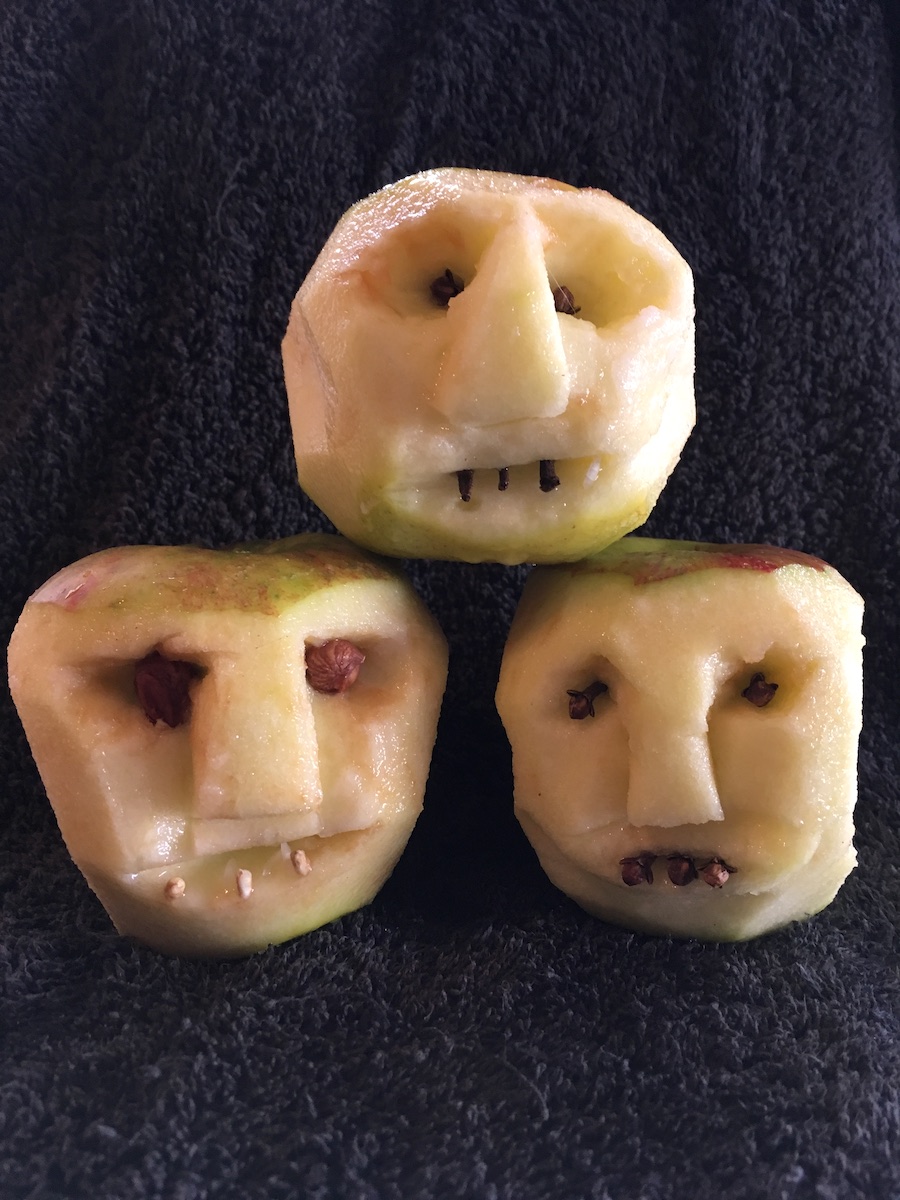 So basically all you do is peel the apple and carve the apple to resemble a skull. All my pumpkin carving stood me in good stead as my three apples turned out well but it might be as well to allow one or two for practice. I used cloves and hazelnuts for the eyes and grains of rice and more cloves for the teeth. You could have a look on the Internet, or in your store cupboard, for some other interesting options.
Then take half a lemon, dip the cut side in salt and rub it over the apple, squeezing a bit as you go to get the juice into the crevices and cuts, to stop the apple going brown.
The instructions said to leave the carved apples in a warm, dry spot for several days, when the apple will shrink, and the features will distort. There’s nowhere warm enough to do that in my house – that’s why airing cupboards were so useful – so I put them in the oven on a very low heat for the day. Keep an eye on them or you may end up with baked apples.
Insert a stick or small branch into the bottom of the head and place it in a vase to display them, or simply sit them on a windowsill.
Recycle Pumpkins Responsibly
I have read a lot about putting pumpkins out in your garden for wildlife to enjoy after Halloween, but please do it responsibly. Birds will certainly enjoy pumpkin as it softens but so will squirrels so be warned, you could be creating a problem by encouraging them. Always keep the pumpkins off the ground, as whilst hedgehogs love the sweet flesh, they can’t digest the fibrous fruit – Because they’re savoury, they are often called vegetables although they are technically fruit. This can lead to all sorts of stomach problems.
And please don’t just chuck your old pumpkins on the mountain either. Although they are technically safe for horses and ponies to eat, they don’t know when enough is enough which can unintentionally lead to over-eating and poisoning problems.
Chickens love pumpkin flesh – especially when cooked – but again regulate the amount they are given.
The best thing to do with your old carved pumpkin (if you don’t know anyone with pigs) is to put them on a compost heap. If you haven’t got one, take them to your allotment and ask someone if they will put them on theirs.
For Gourds-sake please be a Hallow-Queen and dispose of them responsibly.
Divine Nerines
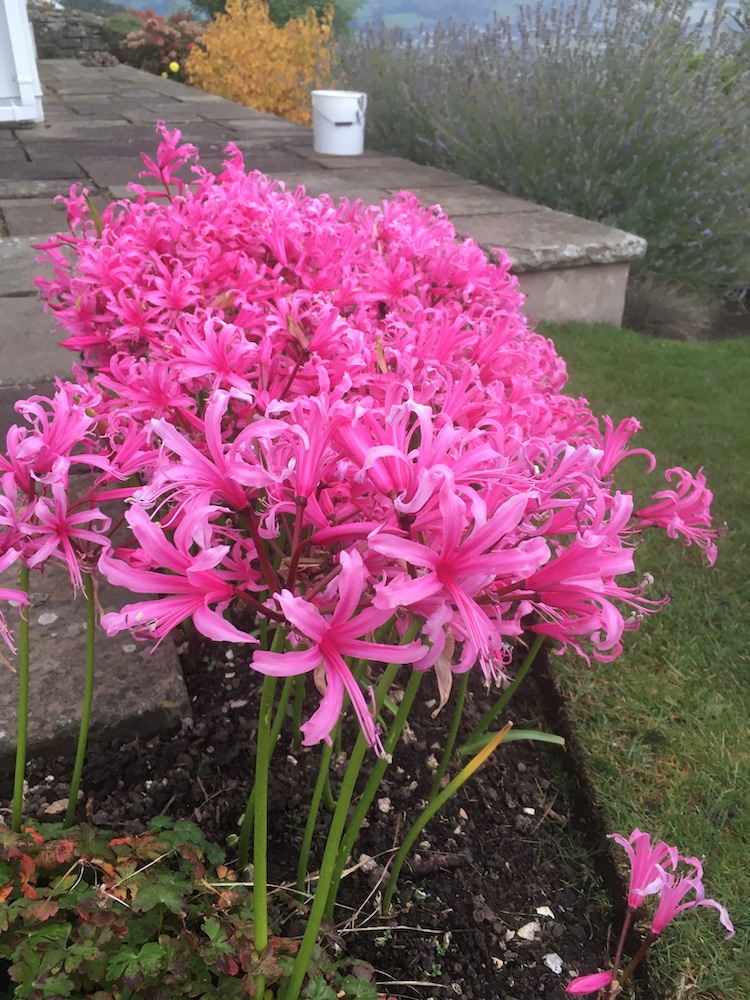 One of my absolute garden favourites is in all its glory in the flowerbeds now. Nerines – Despite me paring them with ‘divine’, they are actually pronounced ‘nuh-reen’. They are such under-appreciated, hard working plants (herbaceous perennial bulbs), delivering the most spectacular displays. And they also make fantastic cut flowers, lasting indoors for ages. I mix mine with some lavender spikes but they are equally as effective on their own and even just a single flower in a bud vase will brighten up a windowsill – I always try to keep a small vase of fresh flowers, or cut herbs, next to my computer to ease my screen-time. It is well worth Googling ‘flower displays using Nerines’ as there are some lovely ideas.
Most commonly found in a vivid pink, they are varieties in white, burnt orange, various shades of pink and a gorgeous deep red.
Also known as the Guernsey Lily, you will probably find them in your garden centre now in pots in full flower. They can be planted straight into borders, tubs or even displayed in the house whilst in flower and planted outside when the blooms die back. Alternatively, you can buy and plant the bulbs in early spring about 2” below the surface and 6 “ apart.
Nerines can be susceptible to slug damage as the flower-heads develop, but will be left alone by rabbits.
I.V.B
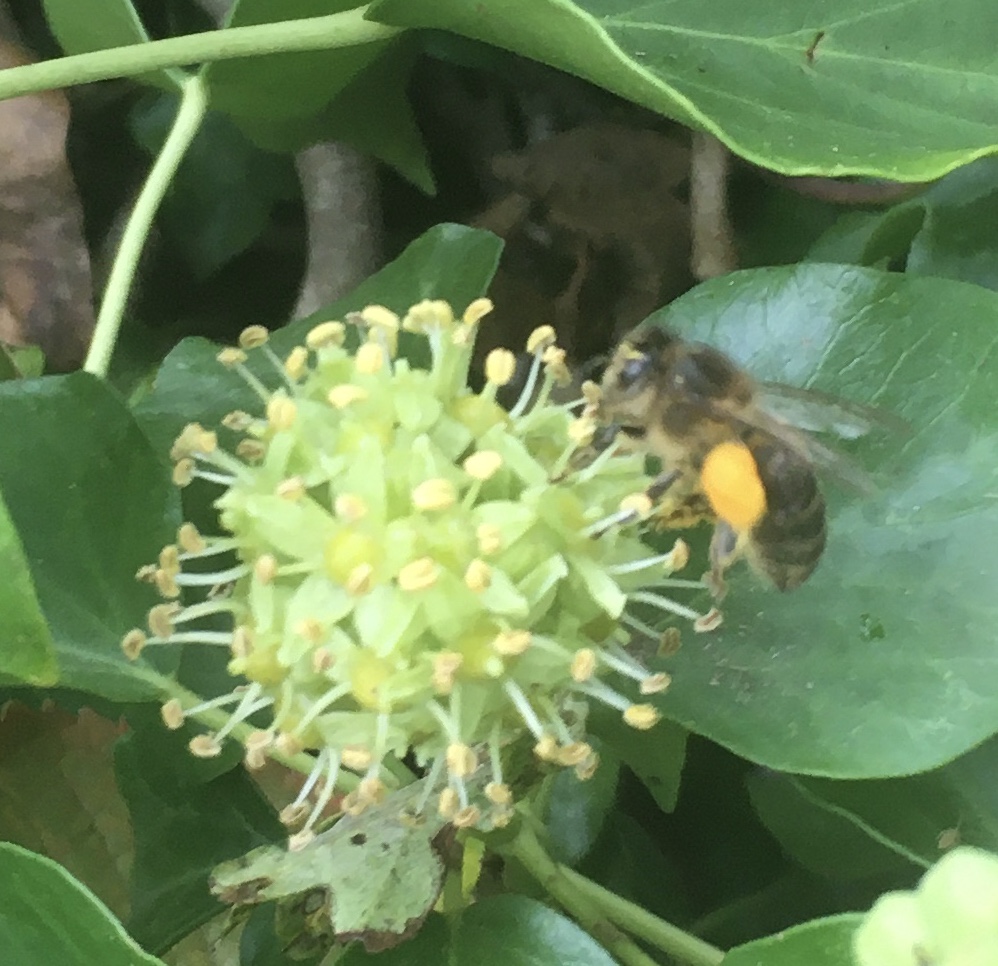 I have taken more time to notice ‘the little things’ this week. Sparrows splashing about in the birdbath and puddles, the little vole that lives in the wall opposite the kitchen window scurrying about his business, and the sweet scent of the ivy flowers – which have just been alive with bees in the autumn sunshine. Ivy flowers provide a great source of late food and therefore winter stores for the honeybees, as well as pollen and nectar for other bees and pollinators, so don’t be in too much of a hurry to cut it back.
It is worth noting that a lot of the bees you see on the ivy now may well be ivy bees – which look very much like honey bees but are actually solitary bees. The ivy bee was first recorded in the UK in 2001, and is now common in much of Southern England and Wales. As its name suggests, ivy is it’s main source of food and they will be busy visiting ivy flowers through October and November.
Another excellent read.
P.S. I seem to no longer be friends with you on Facebook. I hope I have not offended you in some way.