
Taken from Lynne’s weekly column ‘Green Scene’ for the Western Mail
3rd February 2024

Seed Swap Saturday

Seeing as I nearly forgot to tell you about the Big Garden Birdwatch that happened last weekend, I am getting in early-ish with the Monmouth Seed Swap. Taking place on Saturday 17th February between 10am-1pm at Bridges Centre, Monmouth, you will be able to swap saved seed, bought seed, plants, bulbs, edibles and ornamental – and I’m sure anything else (ish) gardening related.
There will be a number of experts on-hand to answer questions and sprinkle a little motivation – should it be needed. Adam Alexander, the Seed Detective, is a fascinating chap to talk to – as fascinating as his book was to read. It is so informative and a lovely ‘chatty’ read. I really enjoyed it. As a natural storyteller, his website is well worth a visit too – for advice as well as anecdotes. www.theseeddetective.co.uk
No Dig expert, Cherry Taylor – who is also holding a number of workshops throughout 2024 – will also be at the Seed Swap. I am a converted ‘no-digger’ and highly recommend exploring the method, if you haven’t already. Cherry will be able to answer all of your ‘no dig’ questions. More details at www.cherrysnodiggarden.co.uk
And bean seed expert, Sue Young will be generous with advice too – and who doesn’t want to grow beans – even Jack did! Sue experiments and searches out new bean varieties, manages a successful wildflower meadow, and has written a book, ‘Growing Beans: A diet for healthy people and planet.’ It’s another really interesting book, which brings together Susan’s 10 years of experimentation with multiple varieties of beans. She clearly explains how to sow, grow, harvest, dry, store and cook them, and shares her six ‘must grow’ varieties.
Entry to the Seed Swap is free, although all donations are welcome. Don’t worry if you haven’t got anything seedy or ‘planty’ to swap – your company will do nicely.
Phone 07803 853681 for more details.
Imbolc Celebrations
As well as bringing relief that January is now in the rear-view mirror (I’m sure it was a 6-week month this year), Thursday 1st February also celebrated Imbolc. It marks halfway between the winter solstice and the vernal equinox, and embraces the increasing daylight and the gradual return of warmth outdoors.
It is considered to be good time to start seed sowing, both literally and metaphorically whether out in your garden or in pots indoors (adhering to conditions needed for the seeds) – or even ‘sowing seeds’ for a new project or adventure. It is thought that sowing seeds on Imbolc aligns with the earth’s reawakening and the potential for new beginnings.
As the saying goes, ‘Don’t judge your life by what you harvest, but by the seeds you sow’.
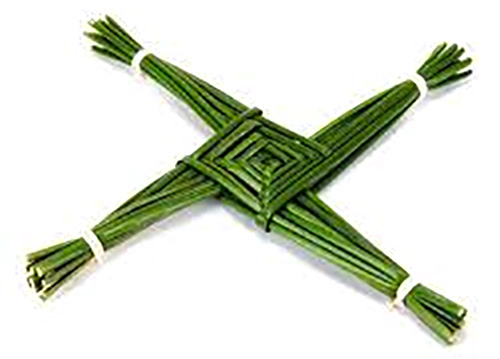 Imbolc celebrations needn’t be confined to Thursday, so as well as sowing seeds now, you could celebrate this weekend by making a Brigid’s Cross – a decorative cross made from rushes or straw that is hung in the home as a symbol of protection and good fortune. There are lots of different versions online but the photo shows what you are aiming to create.
Some herbs are particularly relevant to Imbolc rituals and in celebrations to honour the returning light and to set intentions for the year ahead. You could simply make a little bouquet or add them to your Brigid’s Cross.
Bay is said to honour the goddess Brigid and to bring prosperity and success. It is also believed to have purifying and protective properties. Basil is associated with love, prosperity, and protection.
Sage is also known for its purifying and protective properties, making it a great choice for Imbolc rituals and celebrations. It is also associated with wisdom and clarity of mind, making it a great choice for setting intentions for the year ahead. Lavender is known for its calming and relaxing properties and Rosemary – also associated with memory, purification, and protection – is believed to have energizing and uplifting properties, which can help to bring new life and vitality to your Imbolc celebrations.
I have got a beautiful silver acorn that I carry with me and apparently it is considered to be particularly relevant around Imbolc, as a talisman to invoke your endurance and personal growth. From little acorns … and all that.
Bird Groups
 I was watching a ‘mischief’ of magpies last week. That description of a group of magpies suited them perfectly, but other names for a group of the characterful birds includes a gulp, tidings or tribe of magpies.
I am fascinated by the collective nouns for birds, with my favourite probably being a ‘murder of crows’, which comes from ancient superstitions about the birds being emissaries of death. Some descriptions are rooted in science, with ‘a watch of nightingales’ paying homage to the species’ nocturnal waking patterns.
‘A fall of woodcock’ refers to their courting dance. In the fall (autumn), woodcocks come together to search for food, rest, and engage in courting displays which involve intricate aerial dances, melodious calls, and visually stimulating courtship rituals, all aimed at attracting potential mates. I have only ever seen solitary woodcock, and imagine that this ‘group performance’ would be amazing to watch.
‘A gaggle of geese’ is based on their noisy and boisterous calls whilst on land. When they are in the air – and much more serene – they are known as a flock or skein. ‘A parliament of owls’ comes from Greek mythology, specifically Athena, the goddess who symbolised democracy and was always accompanied by an owl.
Other collective nouns that appear to be harder to fathom include the fabulous ‘deceit of lapwings’, ‘a pitying of turtledoves’, whilst of course ‘an ostentation of peacocks’ makes perfect sense.
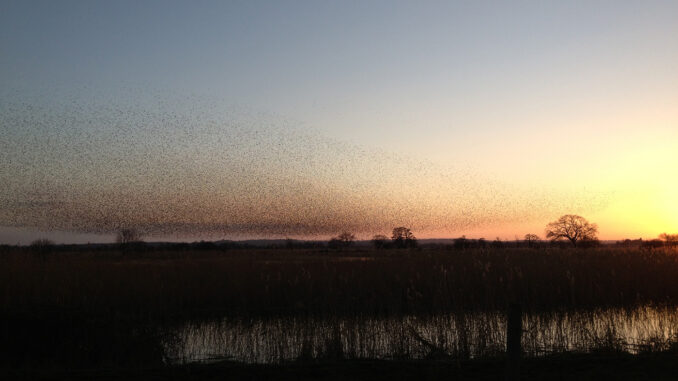
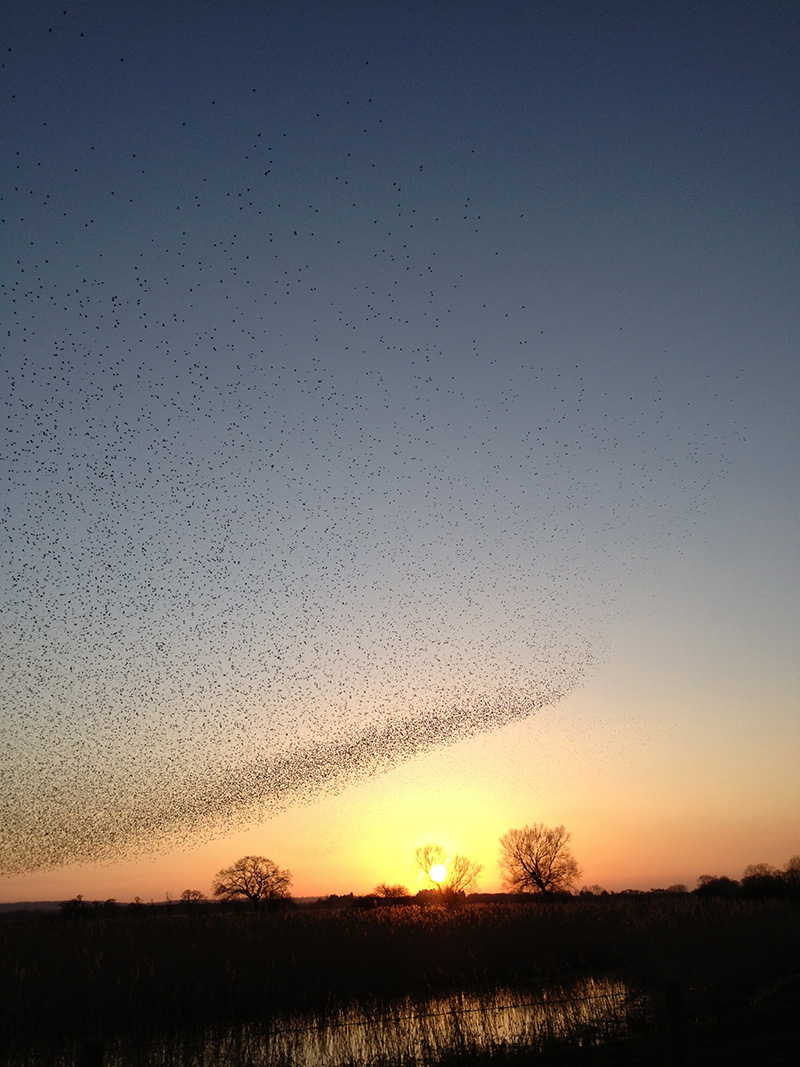
Although I haven’t seen a fall of woodcock, I have seen a murmuration of starlings and it was one of the most wonderful sights – and strangely emotional. Recently shown on Countryfile and filmed at Newport Wetlands, I watched my acrobatic displays on the Somerset Levels. Do put it on your ‘bucket list’ you won’t be disappointed. And make sure you take an old coat and keep your hood up – as well as being mesmerising, when tens of thousands of birds fly over you it can get messy!
Leave a Reply