
Taken from Lynne’s weekly column ‘Green Scene’ for the Western Mail
6th June 2020

Respect Your Elder
 June is officially the start of the meteorological summer, a little ironic when we can see the two record breaking driest and hottest months in our rear view mirror and the temperatures are feeling autumnal as I write this.
The astrological summer starts on the summer solstice, which is the 20th June this year and which, of course, is also the longest day. Although for many, it’s already been the longest year.
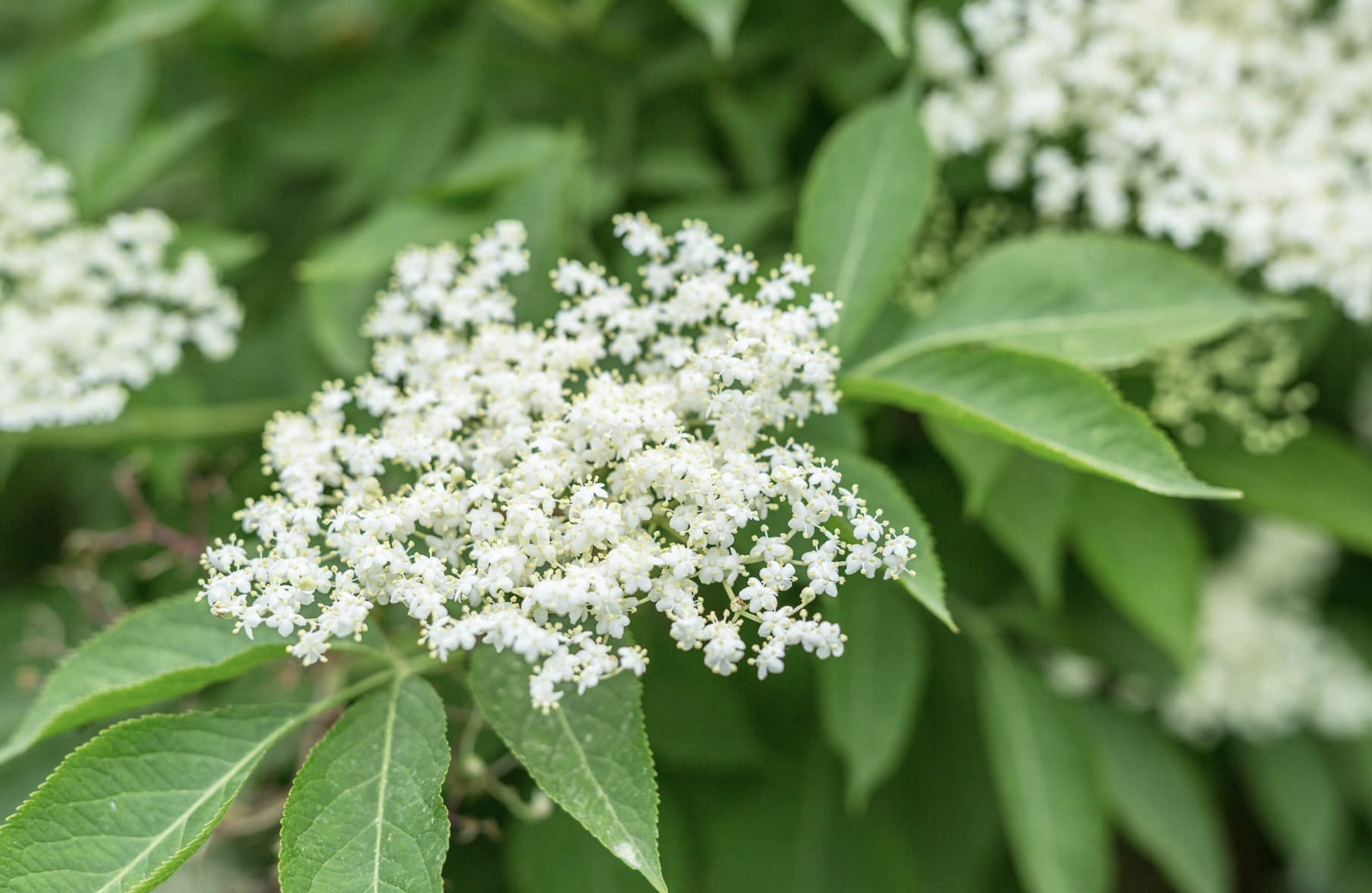
Folklore has it that summer starts once the elderflowers are fully out, and it ends when the elderberries take over. Like everything else in the garden and hedgerows, it’s a great year for elderflower blossom this year. Elderflower syrup and wine are great favourites with the foragers but remember that superstition says that you should always ask permission from the ‘Elder Mother’ before picking, to avoid incurring her wrath and maybe even a curse.
Elderflowers should always be picked when it’s dry and sunny, (if wet they go bitter) and early in the morning as the scent is at it’s strongest. The flowers can be eaten straight from the tree and the pollen is sweet, whilst the petals a bit tart. It’s a good combination and can be sprinkled over desserts and salads for extra flavour, interest and a good conversation starter.
Elderflower cordial is traditionally used to alleviate sinus problems, colds, flu, and bronchitis. As kids, we were given a glass of it as soon as we had a sniffle and I recall it working well, although it’s probably not so good if you are trying to ‘swerve sugar’.
As well as the traditional cordial, wine, jellies and even champagne, elderflowers make a lovely fragrant vinegar, and I recently discovered – with necessity being the mother of invention – that elderflower vinegar and cordial can be combined to make a lovely ‘flowery’ salad dressing.
The elder leaves are far more pungent than fragrant, and as such are great for deterring midges and flies. Crush them and rub on your skin. We always used to crush them and put them in the browband of our horse’s bridles to keep the flies away – with varying degrees of success, I have to add.
Daisy Daisy
 I have just found out that one of my favourite plants actually causes a great divide amongst gardeners.
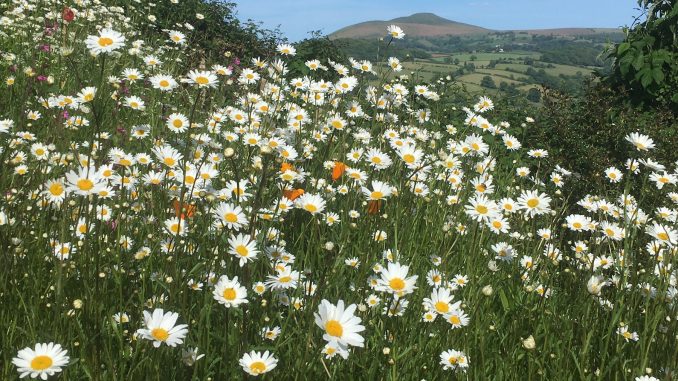
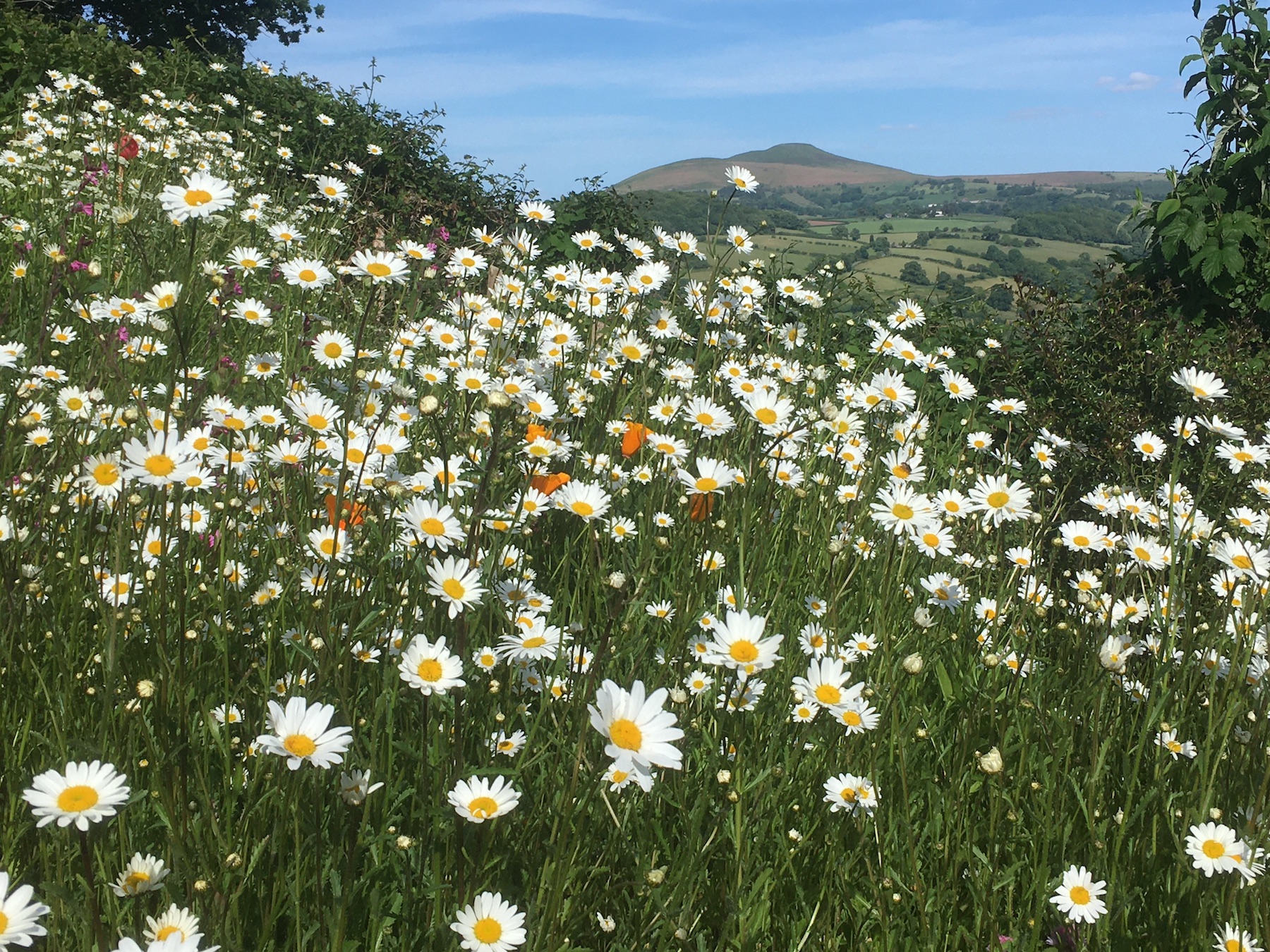
The ‘dog daisy’ is an extremely hard-working and undemanding plant, which I think provides great value for money for the gardener and wildlife. However, I have discovered that a lot of my fellow gardeners regard them as an invasive weed that just self-seeds everywhere and ‘takes over’. ‘A pretty take over though’, I continue to argue in its defence.
I tend to call them ‘ox eyed daisies’, although they have as many names as fans (or haters), including marguerites, moon daisies and field daisies. And, of course, ‘those tall daisies you see on the side of the road’. Their Latin name is Leucanthemum vulgare with ‘vulgare’ meaning common, although one gardener insists it refers to them being ‘vulgar’ as in ‘lacking good taste’. Who would have thought such a pretty little thing could cause such a divide? “Bit like some of my exes,’ muttered my brother.
The leaves can be eaten raw or cooked, and young spring shoots can be finely chopped and added to salads and to soups. Some people find them a bit pungent and prefer it cooked. The root can also be consumed raw and the flowers can be tossed into a salad or pickled.
I have been heartened to receive photos from readers of their own ‘let ‘em go wild’ lawns. Lots of you will now be keeping them, or parts of them, that way. Iolo will be thrilled.
Whilst chatting to a friend about all things ‘daisy’ recently, I learned that the dandelion is sometimes referred to as the Irish Daisy. I love that idea, and think it’s a great marketing tool for encouraging people to leave dandelions in their lawn for the bees. Watch out for that in my column next spring!
All Tooled Up
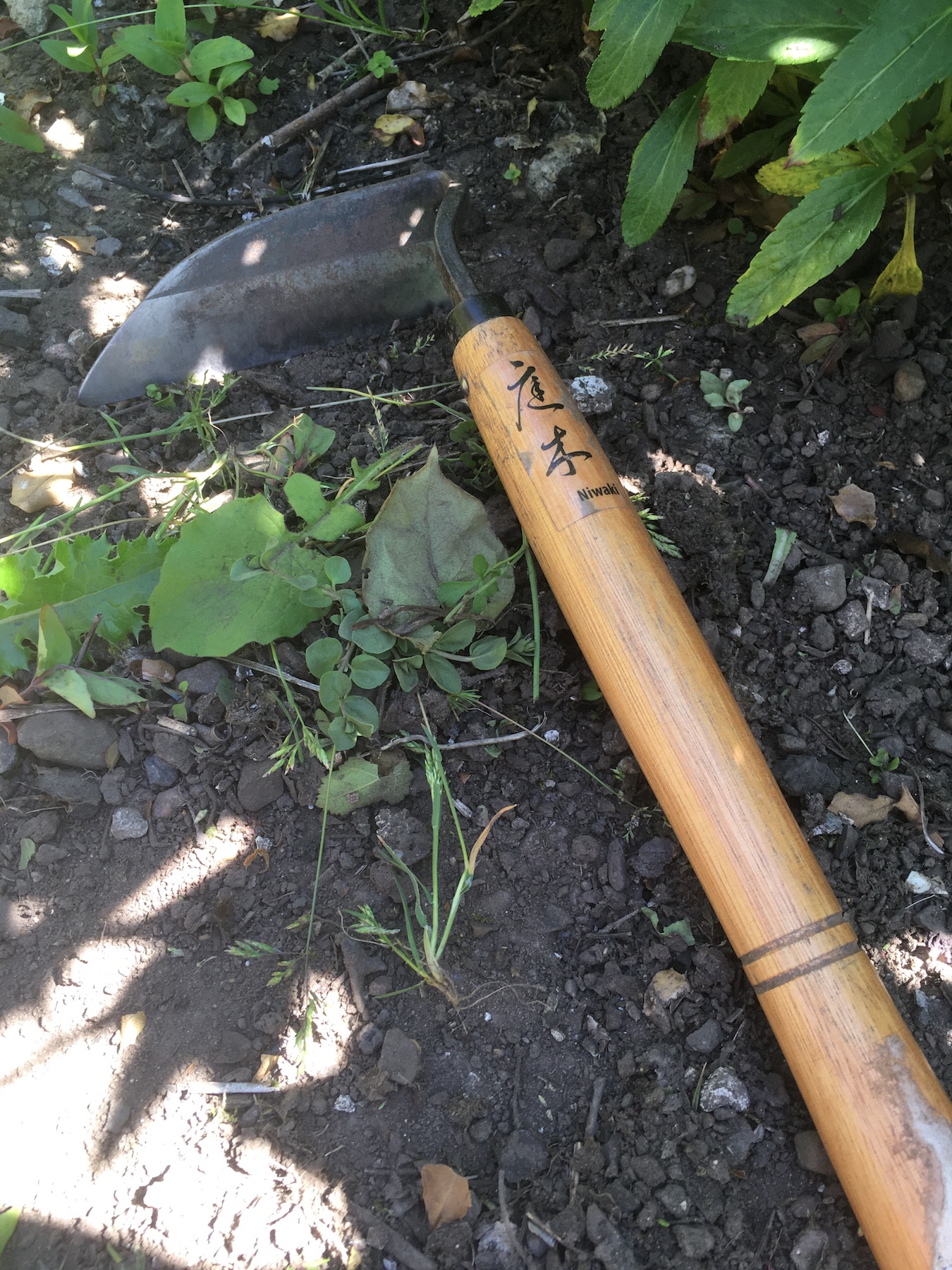 During the dry spell I have discovered a fabulous new gardening tool. I have never been a real fan of hoeing, and Dad taught us the traditional method of hand pulling weeds and forking through flowerbeds. As a result, I’m more than familiar with a ‘bent back’ but as I get older (!) it’s not so easy to sustain. I now hoe where I can, but this ‘new’ little tool allows me to get into all those hard to reach places, and all whilst kneeling down – a natural evolutionary stage of gardening.
The Japanese Weeding Hoe from Niwaki is fabulous for hoeing off small weeds before they take over and the pointy bit will also winkle out larger perennial weeds like the Irish Daisies! At £18.00 I think it is also great value for money. I love the Niwaki website, and have a lot of the beautiful Japanese tools. The Hori Hori knife is used most days and the shears and secateurs are light and sharp – just what you need when using them all day. The Hori Hori knife is £24 – but make sure you don’t accidentally click on the hand forged one, which is £759.00.
More t’riffic tools at https://www.niwaki.com/store/digging-weeding-and-other-stuff/
Another of my (and Monty Don’s) favourite hand tools is the Dutch style trowel. I got mine from Tools for Self Reliance in Crickhowell (www.tfsrcymru.org.uk) but they are also available online too.
I love all of my tools, they are like friends and all have a story to tell. I am a great believer in the saying, ”If the tools are bad, nature’s voice is muffled.”
hi, enjoy your articles each week, you mentioned last week the elderflower re making wine, champagne etc does this apply to the pink elder as well as we have wo trees in our garden full of flower. Many thanks