
 I bet you didn’t know that Sunday is National Don’t Step On A Bee Day – set up by Thomas and Ruth Roy of Wellcat Herbs in the States, who thought up the special day to encourage their children to be careful where they trod whilst barefoot.
I can honestly say that beekeeping is the most fascinating subject I have ever experienced – the more you learn, the more you realise you don’t know. And after being taught by one of the most incredible local beekeepers over 6 years ago, I also freely admit to having developed into an ‘extensive beekeeper’ rather than an intensive one. Director of Bees for Development, Nicola Bradbear summarises the difference as being, “Extensive beekeeping is as the bees would survive in the wild (or similar) whereas intensive beekeeping is far more industrial. Extensive methods are less stressful for bees and reduced stress promotes health and resilience. Natural reproduction among a large population ensures genetic fitness and genes and natural selection protect the population – not medicines.”
In the Caribbean some populations of bees are becoming more tolerant to Varroa, not as a consequences of an intensive breeding programme but through natural decline of weak colonies and survival of strong colonies. It’s fascinating stuff.
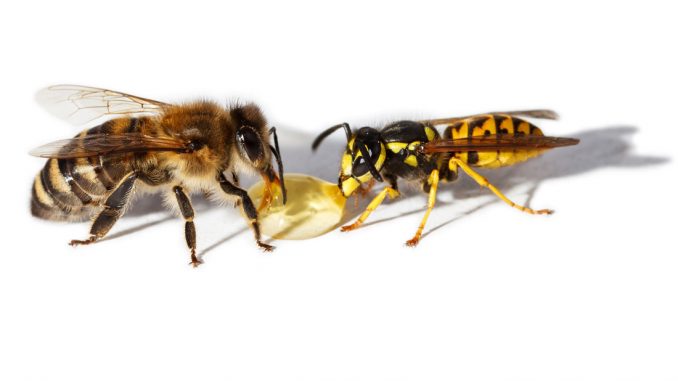
A friend was called out to ‘rescue’ a swarm of honey bees last week only to find that they were actually wasps. When asked the difference, he immediately replied, “ Bees are fat, furry and useful; wasps are skinny, hunters and useless.” He is partly right – although, despite their unpopularity, wasps are extremely beneficial to humans. Nearly every pest insect on Earth is preyed upon by a wasp species, either for food or as a host for its parasitic larvae. Apparently wasps are so adept at controlling pest populations that the agriculture industry now regularly deploys them to protect crops. As omnivores they are predators and will hunt prey whereas it is thought that bees evolved from wasps and later became vegetarian (and better tempered).
If you are unlucky enough to step on a bee, or a wasp, on Sunday or any day, then there are also some pretty interesting theories for reliving the sting too. They include applying any of the following – toothpaste, chilli paste, Mum roll on deodorant, mint leaves, a copper coin, lavender oil, a slice of raw onion, WD40 (honestly), plantain leaves mixed with saliva as a poultice and even putting a clothes peg on the sting for 10 minutes!
I have to be honest, the only one that I can vouch for is the plantain leaves, chewed up and held on the sting – the others you’ll have to try for yourselves!
Leave a Reply