

Taken from Lynne’s weekly column ‘Green Scene’ for the Western Mail
20th September 2025

Prepare to go Potty

Despite the harsh growing conditions this summer, there still appears to be a glut of some veggies. I have had a generous and regular supply of runner beans – and carrots for Yogi – from a neighbour, some delicious little tomatoes from a client, and copious amounts of figs from another client – and that’s without the all-you-can-eat supply of apples, pears damsons and plums from various places of work, neighbours and friends.
I admit to being beaten by nature this year when it comes to growing my own, but next year I will be back in the game – even if it’s just a few large pots by the cottage, and which I can keep watered and rabbit/pigeon/chicken/mouse free.
The looming winter months are a good time to plan changes like that. Have a look for suitable pots and containers that you like – remembering the usefulness of things like old tin baths and dustbins (which will need drainage holes). Research veggies that will grow happily in containers, although most veggies are now available as ‘dwarf options’ suitable for containerising.
But don’t limit your choice to dwarf varieties. Many ‘normal’ veggies will grow happily in containers, including beetroot, broad beans, carrots, dwarf French beans, herbs, peas, potatoes, radishes, rocket, runner beans, chillies and peppers, salad leaves, salad onions, salad turnips, and tomatoes.
And think about, and decide on, appropriate places to put them. You could even get them ready for sowing up next spring. Being containerised, the growing medium is really important so choose a soil based peat-free compost or ideally make up your own growing medium by mixing soil, well-rotted manure, and (home made) compost, and also sort out a good reliable water source which is close to the pots and containers. It sounds obvious but the further you have to carry watering cans of water, for example, the more likely ‘growing your own’ will lose it’s appeal and all get abandoned. I got hold of an IBC for storing water this year, and will get that set up for next season. This level of preparation may seem a bit too enthusiastic or premature for some but I think it’s a nice project to have during the winter and will be less pressure when the spring does come.
Get Pickled
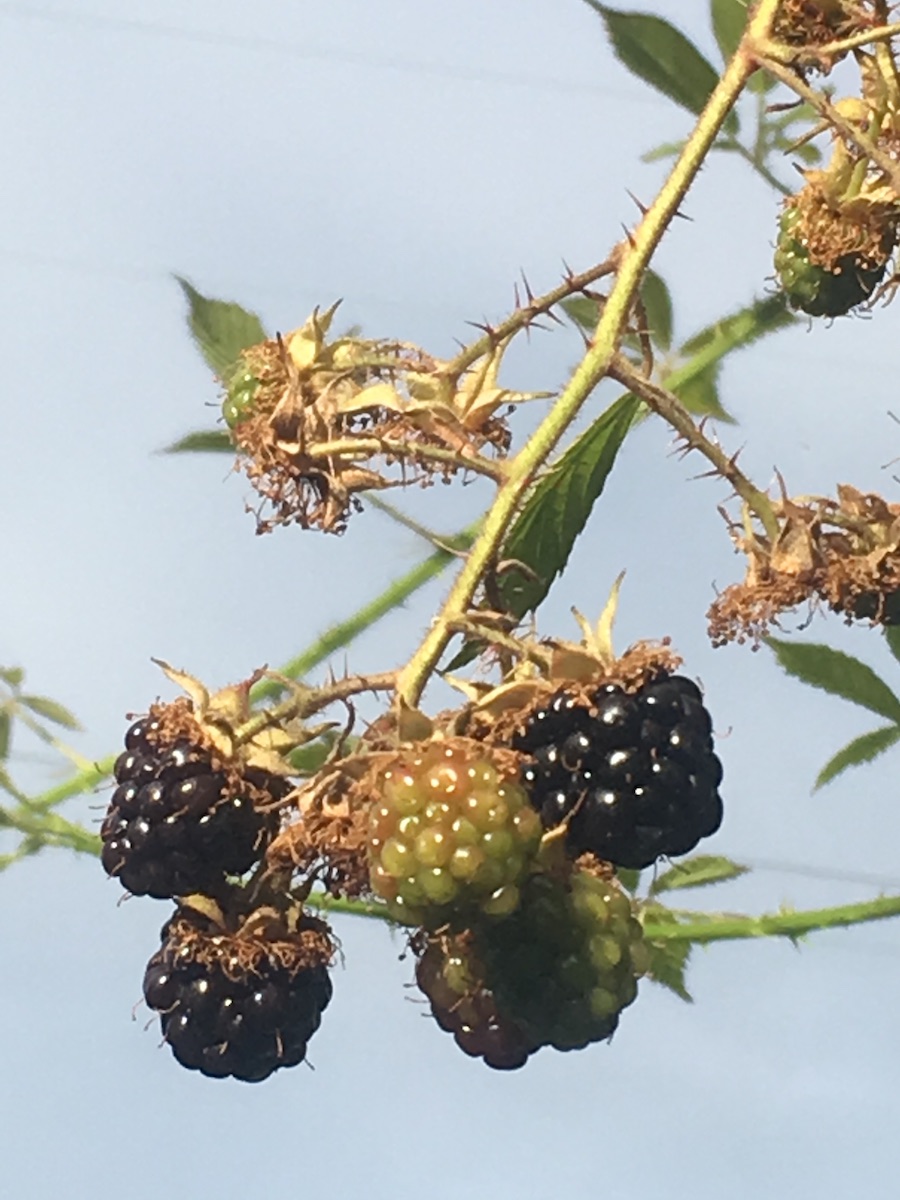 Back to this autumn and in the hedgerows blackberries have been plentiful – as have sloes, hazelnuts and rosehips – all ensuring ‘treats’ of syrups, flavoured gin, jams and preserves through the winter. And hopefully, all having been picked with respect and reverence for wildlife, landowners and nature itself.
Pickles, preserves, jams, and jars of general deliciousness are definitely more readily available to purchase now – there was a time they were only found in someone’s larder, and used as ‘currency’ or a token of gratitude – but do try to make some of your own at home too. It’s much easier than you’d think and there is no shortage of instructions and tips online.
One client makes the most exquisite green tomato jam – far nicer than the more traditional green tomato chutney and easier to make (I think). Another client pickles just about anything she can get into a jar. Delicacies (or experiments) I have taste-tested include pickled sprouts, strawberries, mushrooms and even watermelon rind. All have been technically successful although not all appreciated by all tasters.
Of course, you pickling and preserving isn’t just for gluts of seasonal veg. Other vegetables can be used all year round. Pickled veg is enjoying centre stage and positive reviews at the moment for all the health and gut benefits it can offer. It doesn’t have to be confined to kimchi-as-you-know-it, have some fun experimenting.
Wind Beneath My Things
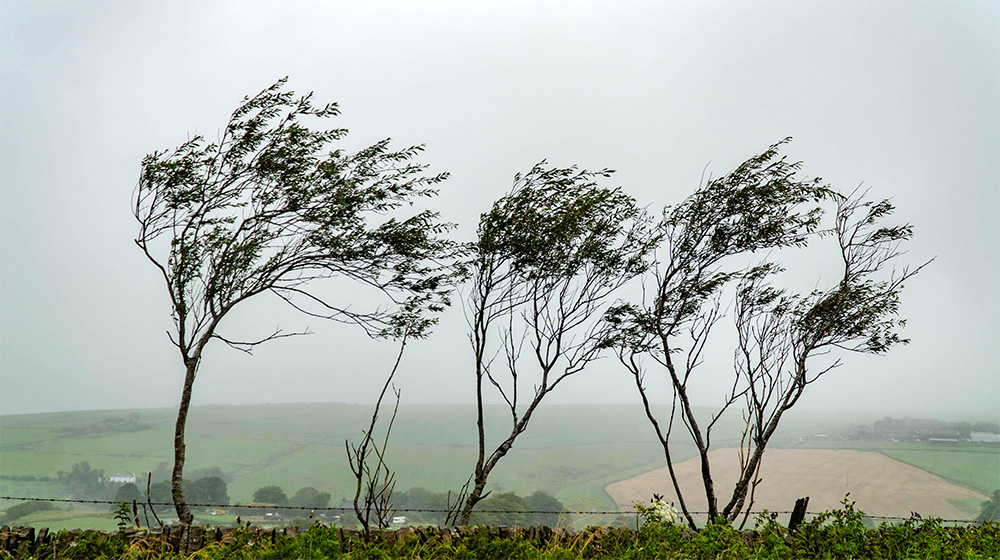 After the strong winds last Monday – when one of the lads in work commented that it was windy enough to blow the sugar out of your tea and my brother muttered, ‘those were the good old days, you’re not allowed to have sugar in tea these days’ – I fully recommend that you check your garden and outside areas for anything that may potentially be blown away, down or that could just generally fall victim to strong winds. I am sure that we will get more high winds and storms during the next few months.
Check structures like trellis work, fences, greenhouses and shed roofs are secure and fix or at least ‘prop’ them where necessary. Although it is always better to do things properly. Last year I used a breeze block to keep a Perspex sheet in place on the roof of my lean-to greenhouse, until I got around to screwing it in place. The wind lifted the sheet and the block, which landed in the yard on top of the oil pipe feeding the boiler. Thankfully it only kinked it, which stopped the oil and was annoying enough, but it could have been a lot messier if it had severed the pipe. You couldn’t have made that up. Prevention is definitely better than cure.
Think about patio and garden furniture too – a lot of it is made lighter these days for ease of moving around but that also makes it easier to be blown into next door’s garden. Take down hanging baskets that could become projectiles, and stake any newly planted or vulnerable young trees. A friend always turns her trampoline upside down too, as one year it ended up in next door’s garden. We should all know by now not to underestimate the power of the weather.
Preservation Preparation
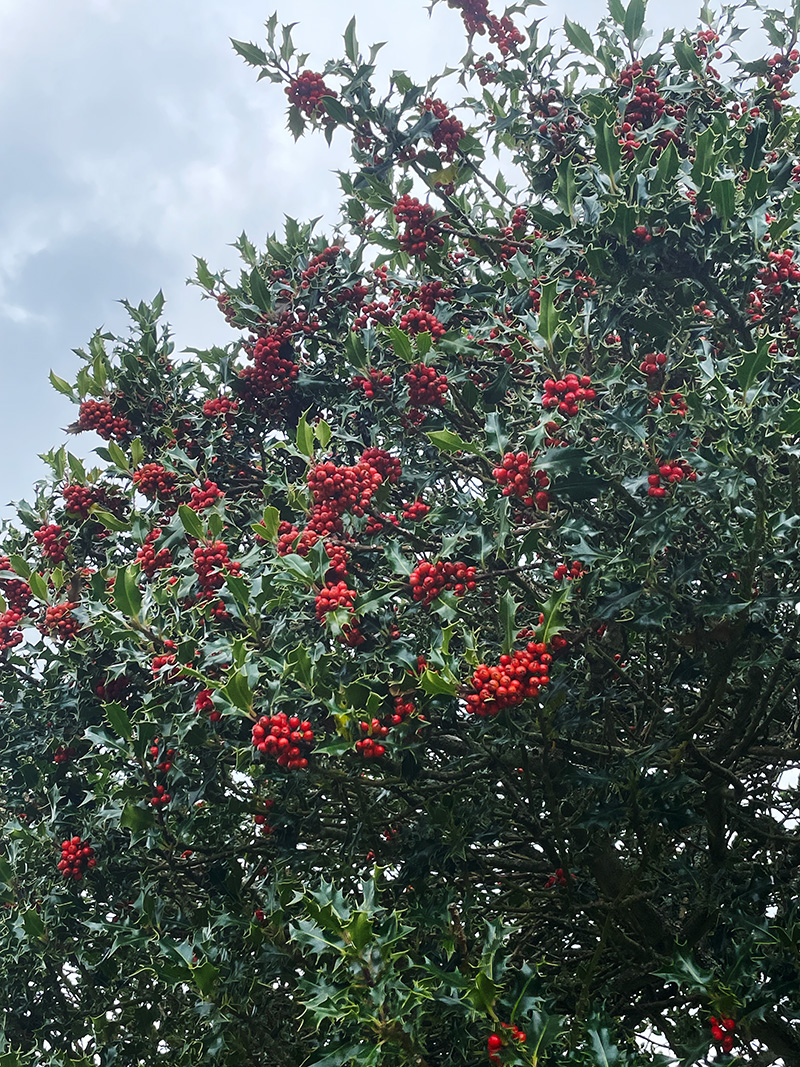 I’m reticent to use the ‘C’ word at this time of year but I noticed these holly berries (see photo) in work last week. I don’t think I have ever seen holly berries out and ripe so early.
If you use ‘real’ holly for your Christmas wreaths and decorations now would be a good time to pick some sprigs (don’t go mad, remember it’s more useful to the birds) and preserve it by glycerinating it for the festive season. The process will take a couple of weeks to complete and the preserved springs will last for months, until you need them for the festivities. There are lots of instructions for using glycerine in this way online.
Ornamental grasses react well to this method too, keeping them supple for indoor decoration, and you can also glycerine colourful autumnal foliage for decoration later in the year.
Leave a Reply