
Taken from Lynne’s weekly column ‘Green Scene’ for the Western Mail
20th July 2019
 Ouch
Ouch

There are days when you are gardening and everything is just like a Walt Disney story; the weather is just right, you feel good, the job goes well and everyone is happy. Then there are the other days; days when the sun is crisping the back of your neck, machinery won’t start, you are tripping over your feet and horse flies are treating you like an ‘all you can eat buffet’.
Interestingly, it is only the female horse flies that bite.
‘Why doesn’t that surprise me?’ sighed my brother with a well-practised emoji-esque eye roll.
Female flies require a blood meal before they are able to reproduce effectively and to aid in their egg development. Their teeth are like little saw blades, which they use to rip and slice flesh apart, rather than make a puncture wound like most other insects. Tearing the skin causes the blood to seep out as the horsefly licks it up.
Horse flies love long damp grass and therefore are often at their most annoying alongside lakes, streams and rivers – the places where we are strimming at the moment!
After years of sharing the ‘best kept secret’ insect repellent, I still find Avon’s Skin So Soft the best thing to repel them, and midges, and it is still used by the SAS and fishermen. You need to buy the original body spray, not the scented (as in photo).
Horse flies are also a nightmare for horses, not surprisingly, at this time of year and a friend swears by a H-Trap she found on the Internet. The H-Trap simply attracts and traps the female horse flies and boasted a 95% reduction in population in recent tests.
The traps are recommended for use around swimming pools too, where horseflies are attracted to the shine of the water and there is a lot of bare flesh to feast on.
www.horseflytrap.co.uk for more details.
On the Mend
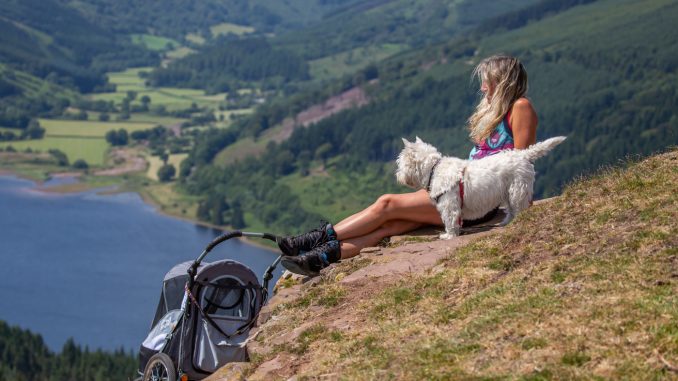
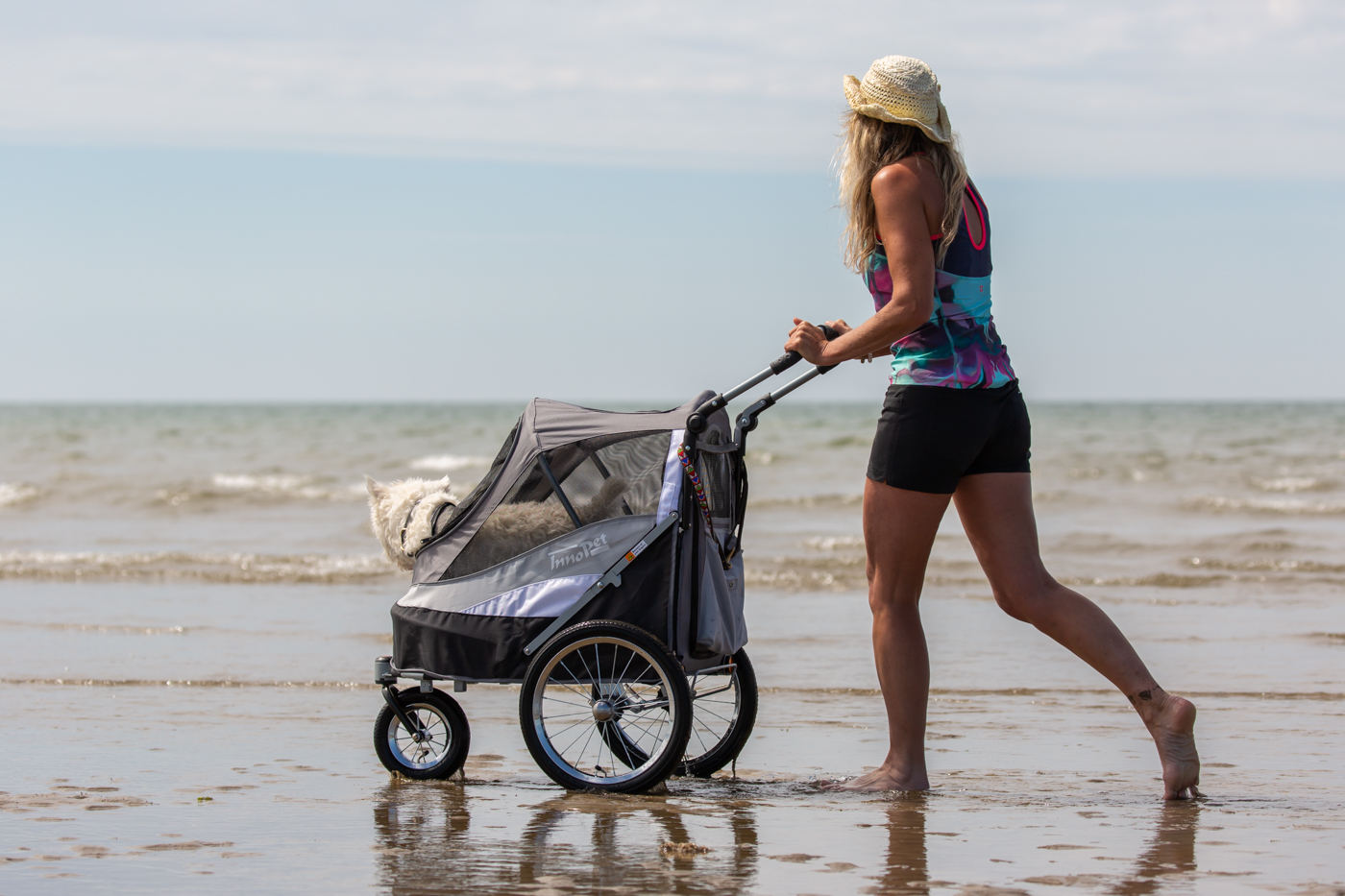 Thank you for all your enquiries about Yogi’s leg. Two months ago she snapped her cruciate ligament and was ‘signed off’ from work, walks and running for 6 months. After a bit of research I found a wonderful Dog Sporty Stroller, which enabled us to get back out on the hills and run and walk together again (well, one of us was walking and running anyway, the other was enjoying the ride).
As our confidence has grown, we have even been able to reach the very tops of our favourite mountains in our Sporty Stroller and have a day at the beach. The fresh air is helping Yogi to heal well. She is able to have short walks out of her ‘chariot’ now, and then just jump back in when she’s tired. Having the Stroller meant that I could ‘chauffeur’ her down to the water’s edge and she could have a paddle. It has been an absolute God Send.
Pets Own Us, in Covent Garden, who supplied the Stroller, have been so touched by Yogi’s ‘pup-dates’ and progress that they are offering a £20 discount off any of their Pet Strollers if you quote Yogi20. Offer ends at the end of July and you can find out more at www.petsownus.co.uk
And thank you to Steve Thomas for taking the photos.
Corker of an Idea
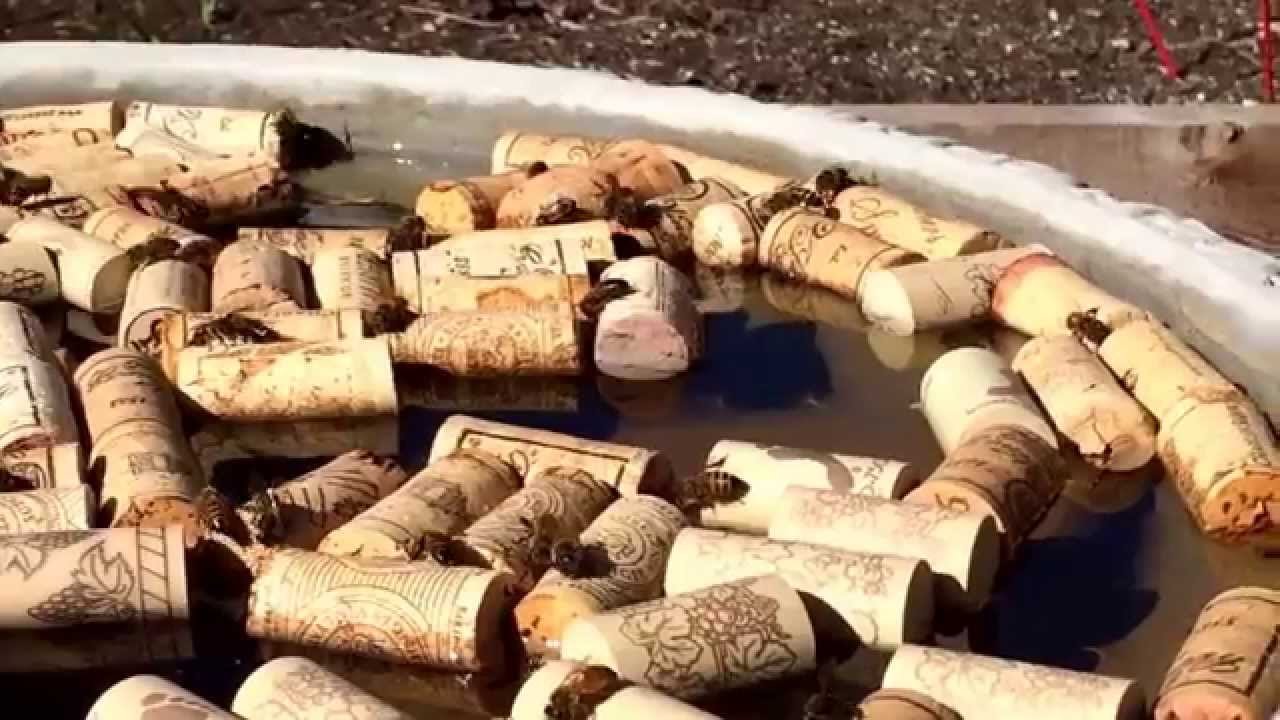 Please don’t forget to make sure the bees (and birds) have water to drink in this hot, dry weather. Birds will also love a cooling bath and they are very entertaining to watch, by way of reciprocation.
I have been recommending making little ‘watering, or drinking, holes’ for bees since I started keeping honeybees over 10 years ago. I started by making them out of shallow dishes and then the upturned lids of dustbins, with logs and stones for the bees to stand on. Bees, nor butterflies, can drink from deep water and in hot weather all their shallow watering holes quickly dry up, meaning drinking water is hard for them to find.
Earlier this year, I read about filling shallow dishes with marbles and water so the bees and butterflies could stand on the marbles to drink – a more trendy watering hole if you like. And a few months later as I noticed a couple of wine corks float in a recycling box filled with rainwater, I wondered if that would work for the bees. It does.
Simply fill a bowl or suitable container with water and float lots of corks on the top. Bees and butterflies will use them to stand on to drink and it means the water doesn’t have to be too shallow (as with marbles) and therefore not replaced as often. Don’t make the water deep enough for any thing else to drown in it though. Honestly, I have learned that helping one aspect of wildlife all too often can hinder another!
Always use ‘dirty’ water, rather than clean tap water, if possible – the rain water from a water butt is ideal. Bees need to smell water to find it and ‘dirty’ water smells more than the clean, fresh stuff.
And now when some one raises an eyebrow at you popping the cork on another bottle of Prosecco, you can tell them that you are simply helping the bees!
Leave a Reply